Tag: Cassini

  • Sonda Cassini

    Sonda Cassini

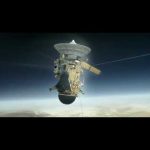
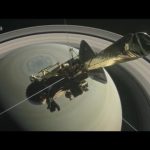
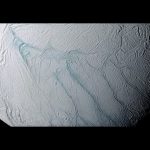
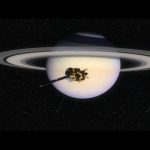
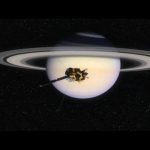
    Sonda Cassini a explorat Saturn timp de 13 ani, surprinzând imagini uimitoare ale inelelor subțiri și lunilor misterioase. Soarele eclipsat creează un halou strălucitor, iar Enceladus ascunde un ocean subteran posibil locuibil. Polul nord al planetei dezvăluie un curent hexagonal unic în Sistemul Solar.

    #uvt
    ❗Alege TU următorul subiect! ► https://tinyurl.com/cristianpresura
    ❗Devino membru ► https://tinyurl.com/membruyoutube
    ❗Primește răspunsuri direct pe whatsapp

    #uvt https://patreon.com/cristianpresura

    🔸 PAYPAL ► paypal.me/cristianpresura
    🔸 DONORBOX ► https://donorbox.org/cristianpresura

    ❗TikTok ► https://www.tiktok.com/@cristian.presura
    ❗Facebook ► https://www.facebook.com/presura
    ❗Facebook page ► https://www.facebook.com/stiintaclub
    ❗Instagram ► https://www.instagram.com/cristianpresura/
    ❗Twitch ► https://www.twitch.tv/cristian_presura
    ❗Discord ► https://www.discord.gg/presura
    ❗Reddit ► https://www.reddit.com/r/presura/

    📙 Carte ► “Fizica Povestita”: https://bit.ly/2YsKaAc
    📙 Carte ► “O calatorie prin Univers”: https://bit.ly/3pdOfGp
    📙 Carte ► “Care e diferența dintre un copil și un laptop?” https://bit.ly/3h4auLZ

    🔊 Spotify Podcast ► https://spoti.fi/3dbvYo6
    🔊 MixCloud Podcas ► https://www.mixcloud.com/StiintaClub/
    ❗Asociația “Știinta pentru toți” ► https://www.presura.ro/

    Seria Fizica Cool #seriacool https://tinyurl.com/2s437srj
    Seria shorts: https://tinyurl.com/yw8b4sab
    Seria carte “Fizica Povestită” #fizicapovestita https://tinyurl.com/966kzam9
    Seria „Dicţionarul de idei şi ideologii (#2i)”: https://tinyurl.com/muryddb5
    Seria “Deschis la cercetare”: https://tinyurl.com/2p9dtb6k
    Fizica pentru începători: https://tinyurl.com/4xbc67c2
    Fizica cuantică: https://tinyurl.com/mr2d7acu
    Fizica nucleara: https://tinyurl.com/3yv3kr5r
    Fizica spațiului: https://tinyurl.com/3kc5jz95
    Călătorie prin Univers: https://tinyurl.com/mv6sxxrb
    Teoria relativității: https://tinyurl.com/2m8umyew
    Fizica simplă: https://tinyurl.com/24j6ekje
    Fizica avansată: https://tinyurl.com/39chd56e
    Fizica mediului inconjurator: https://tinyurl.com/5n86xdzc
    Cum sa ne protejam? https://tinyurl.com/mmyvr3n7
    Fizica 5G: https://tinyurl.com/2p9b3j6r
    Podcast “Întâlnirea cu fizica”: https://tinyurl.com/5n8hsswe

    #stiinta #fizica #science #tehnologie #technology #cristianpresura
  • First Light Detected from Gravitational Wave Event on This Week @NASA – October 20, 2017

    First Light Detected from Gravitational Wave Event on This Week @NASA – October 20, 2017

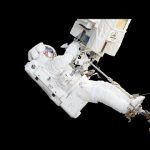
    For the first time, NASA scientists have detected light tied to a gravitational-wave event. The gravitational wave – caused by an explosive merger of two neutron stars, about 130 million light-years from Earth – produced a gamma-ray burst and a rarely seen flare-up called a “kilonova”. The phenomenon was captured by our Fermi, Swift, Hubble, Chandra and Spitzer missions, along with dozens of NASA-funded ground-based observatories. Also, Trio of Station Spacewalks Completed, Fresh Findings from Cassini, and Test of SLS RS-25 Flight Engine!

    This video is available for download from NASA’s Image and Video Library: https://images.nasa.gov/#/details-NHQ_20171023_This%20Week%20@%20NASA.html

  • Farewell to Cassini on This Week @NASA – September 15, 2017

    Farewell to Cassini on This Week @NASA – September 15, 2017

    On Sept. 15, our Cassini spacecraft concluded its remarkable mission with a plunge into Saturn’s atmosphere. This was the last of 22 close orbits Cassini made between Saturn and its rings as part of the mission’s Grand Finale. No other spacecraft has ever explored this unique region. Although the spacecraft may be gone after the finale, the enormous amount of data collected about Saturn, its magnetosphere, rings and moons during this last dive is expected to yield new discoveries for decades. Also, Recovering from Irma, New Crew Launches to the Space Station, Successful Orion Chute Test and Shane Kimbrough in Washington!

    This video is available for download from NASA’s Image and Video Library: https://images.nasa.gov/#/details-NHQ_2017_0915_Farewell%20to%20Cassini%20on%20This%20Week%20@NASA%20%E2%80%93%20September%2015,%202017.html

  • Cassini End of Mission Commentary

    Cassini End of Mission Commentary

    On Sept. 15, NASA’s Cassini spacecraft completed its remarkable story of exploration with an intentional plunge into Saturn’s atmosphere, ending its mission after nearly 20 years in space. Live commentary of Cassini’s end of mission activities was shown on NASA TV and the agency’s website. Launched in 1997, Cassini arrived in orbit around Saturn in 2004 on a mission to study the giant planet, its rings, moons and magnetosphere.

    This video is available for download from NASA’s Image and Video Library: https://images.nasa.gov/#/details-NHQ_2017_0915_Cassini%20End%20of%20Mission%20Commentary.html

  • NASA Previews Cassini End of Mission Activities

    NASA Previews Cassini End of Mission Activities

    On Sept. 13, NASA held a news conference from the agency’s Jet Propulsion Laboratory, in Pasadena, California to discuss details of final mission activities for the agency’s Cassini mission to Saturn. On Sept. 15, the Cassini spacecraft will complete its remarkable story of exploration with an intentional plunge into Saturn’s atmosphere, ending its mission after nearly 20 years in space.

  • Cassini diving into history

    Cassini diving into history

    Following over a decade of ground-breaking discoveries, Cassini is now approaching its mission end.

    With little fuel left to correct the NASA’s spacecraft trajectory, it has been decided to end the mission by plunging it into Saturn’s atmosphere on 15 September 2017. In the process, Cassini will burn up, satisfying planetary protection requirements to avoid possible contamination of any moons of Saturn that could have conditions suitable for life. These include Saturn’s largest moon Titan and Enceladus, which has a liquid ocean under its icy crust.

    The grand finale is not only a spectacular way to complete this extraordinary mission, but will also return a bounty of unique scientific data that was not possible to collect during the previous phases of the mission. Cassini has never ventured into the area between Saturn and its rings before, so the new set of orbits is almost like a whole new mission.

    These close orbits will provide the highest resolution observations ever achieved of the inner rings and the planet’s clouds. The orbits will also give the chance to examine in situ the material in the rings and plasma environment of Saturn. It will also probe the planet’s magnetic field at close distances.

    This video explains Cassini ‘s final operations, what the Cassini-Huygens mission has taught us about Saturn, the potential for life on its moons and the promise of more science to come.

    More about Cassini-Huygens:
    http://www.esa.int/Our_Activities/Space_Science/Cassini-Huygens

  • Whitson Receives Call from President Trump on This Week @NASA – April 28, 2017

    Whitson Receives Call from President Trump on This Week @NASA – April 28, 2017

    On April 24 aboard the International Space Station, NASA astronaut Peggy Whitson set a new record for cumulative time spent in space by a U.S. astronaut. President Donald Trump marked the milestone with a call from the Oval Office, with First Daughter Ivanka Trump, and NASA astronaut Kate Rubins – to the station, where Whitson was joined by NASA’s Jack Fischer. Whitson, who in 2008 became the first woman to command the space station, also holds the record for most spacewalks by a female astronaut. NASA worked with the Department of Education, on behalf of the White House, to make the president’s call to the station available to schools across America. Whitson encouraged students to think about how the steps they take in the classroom today could someday help NASA make the next giant leap in space exploration. Also, First Live 4K Broadcast from Space, Kate Rubins Visits National Institutes of Health, Cassini Begins its Grand Finale, and 2017 Astrobiology Science Conference!

  • Oceans Beyond Earth on This Week @NASA – April 14, 2017

    Oceans Beyond Earth on This Week @NASA – April 14, 2017

    Two long-running NASA missions are providing new details about ocean bearing moons of Jupiter and Saturn – further heightening scientific interest in these and other “ocean worlds” in our solar system and beyond. The details – discussed during an April 13 NASA science briefing – include the announcement by the Cassini mission that a key ingredient for life has been found in the ocean on Saturn’s moon Enceladus. Meanwhile, researchers using the Hubble Space Telescope observed a probable plume erupting from the surface of Jupiter’s moon Europa, at the same location where Hubble saw evidence of a plume in 2014. Researchers say this could be circumstantial evidence of water erupting from the moon’s interior. Hubble’s monitoring of plume activity on Europa and Cassini’s long-term investigation of Enceladus are laying the groundwork for NASA’s Europa Clipper mission, which is being planned for launch in the 2020s. Also, Expedition 50 Returns Home Safely, Next Space Station Crew at Launch Site, Student Launch Event, Groundbreaking for New Lab, and Yuri’s Night, First Space Shuttle Mission Celebrated!

  • NASA Reveals New Discoveries on Oceans Beyond Earth During Science Briefing

    NASA Reveals New Discoveries on Oceans Beyond Earth During Science Briefing

    During a NASA science briefing on April 13, representatives from the agency discussed new results about ocean worlds in our solar system based on data gathered by NASA’s Cassini spacecraft and the Hubble Space Telescope.

    The two veteran missions are providing tantalizing new details about icy, ocean-bearing moons of Jupiter and Saturn, further enhancing the scientific interest of these and other “ocean worlds” in our solar system and beyond.

    New research from Cassini indicates that hydrogen gas, which could potentially provide a chemical energy source for life, is pouring into the ocean of Saturn’s icy moon Enceladus from hydrothermal vents in the seafloor. The Cassini spacecraft detected the hydrogen in the plume of gas and icy material spraying from Enceladus during its deepest dive through the plume on Oct. 28, 2015.This means that ocean microbes — if any exist there — could use the hydrogen to produce energy

    NASA’s Hubble Space Telescope saw a probable plume of material erupting from the moon’s surface on 2016, at the same location where Hubble saw evidence of a plume in 2014. These images bolster evidence that the Europa plumes could be a real phenomenon, flaring up intermittently in the same region on the moon’s surface.

    Both Cassini and Hubble investigations are laying the groundwork for NASA’s Europa Clipper mission, which is being planned for launch in the 2020s.

  • NASA Cassini Mission Prepares for “Grand Finale” on This Week @NASA – April 7, 2017

    NASA Cassini Mission Prepares for “Grand Finale” on This Week @NASA – April 7, 2017

    NASA held a news conference April 4 at the Jet Propulsion Laboratory, with participation from NASA headquarters, to preview the final phase of the Cassini spacecraft’s mission to Saturn. On April 26, Cassini will begin its “Grand Finale” – a series of deep dives between the planet and its rings. No other mission has ever explored this unique region that is so close to the planet. Cassini will make 22 orbits that swoop between the rings and the planet before ending its 20-year mission on Sept. 15, with a final plunge into Saturn. The mission team hopes to gain powerful insights into the planet’s internal structure and the origins of the rings, obtain the first-ever sampling of Saturn’s atmosphere and particles coming from the main rings, and capture the closest-ever views of Saturn’s clouds and inner rings. Also, Next Space Station Crew Travels to Launch Site, New Target Launch Date for Orbital ATK Mission to ISS, Lightfoot Visits Industry Partners, Human Exploration Rover Challenge, and John Glenn Interred at Arlington National Cemetery.

  • NASA Previews ‘Grand Finale’ of Cassini Saturn Mission

    NASA Previews ‘Grand Finale’ of Cassini Saturn Mission

    NASA held a news conference April 4, at the agency’s Jet Propulsion Laboratory (JPL) in Pasadena, California, to preview the beginning of Cassini’s final mission segment, known as the Grand Finale, which begins in late April. The briefing was shown live on NASA Television and on the agency’s website.

    Cassini has been orbiting Saturn since June 2004, studying the planet, its rings and its moons. A final close flyby of Saturn’s moon Titan on April 22 will reshape the Cassini spacecraft’s orbit so that it begins its final series of 22 weekly dives through the unexplored gap between the planet and its rings. The first of these dives is planned for April 26. Following these closer-than-ever encounters with the giant planet, Cassini will make a mission-ending plunge into Saturn’s upper atmosphere on Sept. 15.

  • Google+ Hangout with NASA’s Cassini Solstice Mission to Saturn

    Google+ Hangout with NASA’s Cassini Solstice Mission to Saturn

    NASA hosted a Google+ Hangout to discuss extraordinary new images of Saturn taken by the Cassini spacecraft. Participants in the hangout learned what’s ahead in the next few years of the Cassini mission from panelists Kunio Sayanagi, Cassini imaging team associate, Hampton University, VA., Carolyn Porco, Cassini imaging team lead, Space Science Institute, Boulder, CO., Linda Spilker, Cassini project scientist, NASA’s Jet Propulsion Laboratory, Pasadena, CA., and Earl Maize, Cassini program manager, NASA’s Jet Propulsion Laboratory, Pasadena, CA.

  • ESA Euronews: Segredos de Saturno

    ESA Euronews: Segredos de Saturno

    Há algumas décadas, para observar Saturno, os cientistas recorriam a
    telescópios. Hoje em dia, os segredos de Saturno e da sua misteriosa lua Titã são revelados graças aos dados e imagens enviados pela missão Cassini-Huygens. Saturno nunca antes visto, é o tema de Space esta semana.

  • ESA Euronews: Los secretos de Saturno

    ESA Euronews: Los secretos de Saturno

    Hasta hace algunas décadas para ver Saturno la ciencia tenía que mirar a
    través de telescópios. Hoy Saturno y su misteriosa luna Titán son nuevos
    conocidos gracias a la misión Cassini-Huygens que desde 2004 envía imágenes y datos. Una aventura que está cambiando la percepción que hasta ahora teníamos de nuestro Sistema Solar.

  • ESA Euronews: Der Saturn gibt seine Geheimnisse preis

    ESA Euronews: Der Saturn gibt seine Geheimnisse preis

    Noch vor einigen Jahrzehnten konnte man den Saturn nur mit dem Teleskop
    beobachten. Heute lüftet die Cassini-Huygens-Mission mit ihren Bildern die
    Geheimnisse des Saturnsystems und liefert Antworten auf entscheidende
    wissenschaftliche Fragen.