Tag: caves

  • Why CAVES – Astrobiology

    Why CAVES – Astrobiology

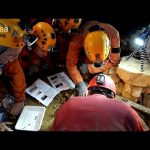
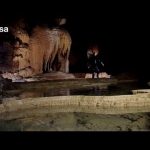
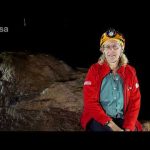
    NASA’s director of Astrobiology Institue, Penelope Boston, explains why caves are interesting to astrobiologists.

    Caves are little studied areas and can resemble environments found on other planets. Caves exist on the Moon and Mars and could be used by astronauts for shelter when we explore our Solar System

    Recorded during a workshop on astrobiology and caves in Sardinia, Italy in 2015.

    ESA’s CAVES course – Cooperative Adventure for Valuing and Exercising human behaviour and performance Skills – is a two-week course that prepares astronauts to work safely and effectively in multicultural teams in an environment where safety is critical – in caves.

    ★ Subscribe: http://bit.ly/ESAsubscribe and click twice on the bell button to receive our notifications.

    Check out our full video catalog: http://bit.ly/SpaceInVideos
    Follow us on Twitter: http://bit.ly/ESAonTwitter
    On Facebook: http://bit.ly/ESAonFacebook
    On Instagram: http://bit.ly/ESAonInstagram
    On Flickr: http://bit.ly/ESAonFlickr

    We are Europe’s gateway to space. Our mission is to shape the development of Europe’s space capability and ensure that investment in space continues to deliver benefits to the citizens of Europe and the world. Check out http://www.esa.int/ESA to get up to speed on everything space related.

    Copyright information about our videos is available here: http://www.esa.int/spaceinvideos/Terms_and_Conditions
  • CAVES 2019

    CAVES 2019

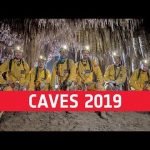
    In September 2019 in Slovenia, astronauts from five space agencies around the world took part in ESA’s CAVES training course – Cooperative Adventure for Valuing and Exercising human behaviour and performance Skills.

    The six ‘cavenauts’ were ESA astronaut Alexander Gerst, NASA astronauts Joe Acaba and Jeanette Epps, Roscosmos cosmonaut Nikolai Chub, Canadian Space Agency astronaut Joshua Kutryk and Japan’s space agency JAXA’s Takuya Onishi.

    The three-week course prepares astronauts to work effectively in multicultural teams in an environment where safety is critical.

    As they explored the caves, they encountered caverns, underground lakes and strange microscopic life. They tested new technology and conducted science – much like life on the International Space Station.

    Inhospitable and hard to access, caves are untouched worlds and hold many scientific secrets. The astronauts performed a dozen experiments and were on the lookout for signs of life that has adapted to the extremes. They paid special attention to their environment, monitoring air and water quality, and looking for signs of pollution.

    Read more about CAVES on the website: http://bit.ly/ESACavesWebsite

    Follow the CAVES campaigns on the blog: http://bit.ly/CavesnPangaeaBlog

    Credits: ESA–E. Procopio

    ★ Subscribe: http://bit.ly/ESAsubscribe and click twice on the bell button to receive our notifications.

    Check out our full video catalog: http://bit.ly/SpaceInVideos
    Follow us on Twitter: http://bit.ly/ESAonTwitter
    On Facebook: http://bit.ly/ESAonFacebook
    On Instagram: http://bit.ly/ESAonInstagram
    On Flickr: http://bit.ly/ESAonFlickr

    We are Europe’s gateway to space. Our mission is to shape the development of Europe’s space capability and ensure that investment in space continues to deliver benefits to the citizens of Europe and the world. Check out http://www.esa.int/ESA to get up to speed on everything space related.

    Copyright information about our videos is available here: http://www.esa.int/spaceinvideos/Terms_and_Conditions
    #ESA
    #ESACaves
    #Cavenauts

  • Pangaea – geology training for space exploration

    Pangaea – geology training for space exploration

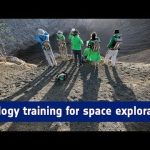
    ESA’s Pangaea training course prepares astronauts and space engineers to identify planetary geological features during future missions to the Moon, Mars and asteroids.

    The Pangaea campaign – named after the ancient supercontinent – provides the crew with introductory and practical knowledge to find interesting rock samples and assess the most likely places to find traces of life on other planets. Leading European planetary geologists share their insights into the geology of the Solar System.

    Theoretical work is followed by field trips to the Ries impact crater in Germany, the sedimentary environment of Geopark Bletterbach in the Italian Dolomites and the volcanic landscapes of the Geopark of Lanzarote, Spain.

    Pangaea is the first step in preparing European astronauts to become planetary explorers on missions to other planets, allowing them to effectively communicate with science advisors on Earth.

    Through Pangaea, Europe is also developing operational concepts for surface missions where astronauts and robots work together, among themselves and with scientists and engineers on Earth, using the best field geology and planetary observation techniques.

    More about Pangaea: http://bit.ly/ESACaves

    Pangaea blog: http://bit.ly/PangaeaBlog

    Credits: Film director, video shooting and editing: Sirio Sechi

    ★ Subscribe: http://bit.ly/ESAsubscribe

  • Lava tube fly-through

    Lava tube fly-through

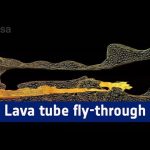
    The “Cueva de los Verdes” lava tube in Lanzarote, Spain, is one of the world’s largest volcanic cave complexes with a total length of about 8 km.

    Geology experts from ESA’s Pangaea-X campaign mapped most of the lava tube system as part of a project supported by local authorities Cabildo of Lanzarote and the University of Padova, Italy. The data was acquired in November 2017 by Leica Geosystems.

    The map comes alive in great detail in 3D, helping institutions to protect the subterranean environment. The map also provides scientific data to study the origins of the tube and its peculiar formations.

    Pangaea-X is a test campaign that brings together geology, high-tech survey equipment and space exploration. Learn more about the science and technology behind this campaign visiting http://blogs.esa.int/pangaea

  • CAVES 2016: The visible face

    CAVES 2016: The visible face

    Scenes from training of six astronauts who will spend six nights underground in a cave in Sardinia, Italy. After a week of training, the astronauts descend into the caves to set up basecamp 800 m underground.

    One of the last unexplored environments on our planet, caves offer parallels to exploring space. ESA’s underground training course “Cooperative Adventure for Valuing and Exercising human behaviour and performance Skills” – CAVES – prepares astronauts over two weeks to work safely and effectively in multicultural teams.

    This year’s participants are an even more international team than ever, including ESA’s Pedro Duque, NASA’s Jessica Meir and Richard Arnold, Japan’s astronaut Aki Hoshide, China’s Ye Guangfu and Russia’s Sergei Korsakov.

    The similarities between caving and spaceflight are highlighted throughout the course. Speleologists and astronauts adopt the ‘buddy system’, and both astronaut trainers and CAVES instructors repeat the same mantras of “slow is fast,” “check your gear, and then trust it,” and “always be aware of where you are and where your buddy is”.

    Follow the underground adventure on Twitter with @ESA_Caves, and on the CAVES blog: http://blogs.esa.int/caves/.

  • Caves 2013: Discovery

    Caves 2013: Discovery

    Members of the CAVES 2013 crew talk about exploring inside the Sa Grutta cave – comparing their experience to arriving on the surface of a planet like Mars, where you don’t quite know what to expect.

    CAVES, ESA’s unique training programme for astronauts, takes place over a couple of weeks in Sardinia’s Supramonte. Six astronauts spend two weeks deep in caves, in the dark and cold. They are separated from the outside world, doing scientific research and daily tasks together, as a group, just like in space. Moving in the cave system is also comparable to spacewalking with the use of harnesses and safety devices.

    Read more about CAVES on our dedicated website (esa.int/caves) and read more about the CAVES 2013 campaign in the blog (blogs.esa.int/CAVES2013)

    ESA­­­­–V. Crobu & S. Sechi

    (Italian subtitles also available)