Tag: caving

  • Why CAVES – Astrobiology

    Why CAVES – Astrobiology

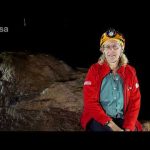
    NASA’s director of Astrobiology Institue, Penelope Boston, explains why caves are interesting to astrobiologists.

    Caves are little studied areas and can resemble environments found on other planets. Caves exist on the Moon and Mars and could be used by astronauts for shelter when we explore our Solar System

    Recorded during a workshop on astrobiology and caves in Sardinia, Italy in 2015.

    ESA’s CAVES course – Cooperative Adventure for Valuing and Exercising human behaviour and performance Skills – is a two-week course that prepares astronauts to work safely and effectively in multicultural teams in an environment where safety is critical – in caves.

    ★ Subscribe: http://bit.ly/ESAsubscribe and click twice on the bell button to receive our notifications.

    Check out our full video catalog: http://bit.ly/SpaceInVideos
    Follow us on Twitter: http://bit.ly/ESAonTwitter
    On Facebook: http://bit.ly/ESAonFacebook
    On Instagram: http://bit.ly/ESAonInstagram
    On Flickr: http://bit.ly/ESAonFlickr

    We are Europe’s gateway to space. Our mission is to shape the development of Europe’s space capability and ensure that investment in space continues to deliver benefits to the citizens of Europe and the world. Check out http://www.esa.int/ESA to get up to speed on everything space related.

    Copyright information about our videos is available here: http://www.esa.int/spaceinvideos/Terms_and_Conditions
  • CAVES 2019

    CAVES 2019

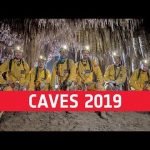
    In September 2019 in Slovenia, astronauts from five space agencies around the world took part in ESA’s CAVES training course – Cooperative Adventure for Valuing and Exercising human behaviour and performance Skills.

    The six ‘cavenauts’ were ESA astronaut Alexander Gerst, NASA astronauts Joe Acaba and Jeanette Epps, Roscosmos cosmonaut Nikolai Chub, Canadian Space Agency astronaut Joshua Kutryk and Japan’s space agency JAXA’s Takuya Onishi.

    The three-week course prepares astronauts to work effectively in multicultural teams in an environment where safety is critical.

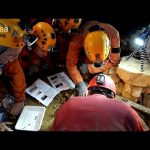
    As they explored the caves, they encountered caverns, underground lakes and strange microscopic life. They tested new technology and conducted science – much like life on the International Space Station.

    Inhospitable and hard to access, caves are untouched worlds and hold many scientific secrets. The astronauts performed a dozen experiments and were on the lookout for signs of life that has adapted to the extremes. They paid special attention to their environment, monitoring air and water quality, and looking for signs of pollution.

    Read more about CAVES on the website: http://bit.ly/ESACavesWebsite

    Follow the CAVES campaigns on the blog: http://bit.ly/CavesnPangaeaBlog

    Credits: ESA–E. Procopio

    ★ Subscribe: http://bit.ly/ESAsubscribe and click twice on the bell button to receive our notifications.

    Check out our full video catalog: http://bit.ly/SpaceInVideos
    Follow us on Twitter: http://bit.ly/ESAonTwitter
    On Facebook: http://bit.ly/ESAonFacebook
    On Instagram: http://bit.ly/ESAonInstagram
    On Flickr: http://bit.ly/ESAonFlickr

    We are Europe’s gateway to space. Our mission is to shape the development of Europe’s space capability and ensure that investment in space continues to deliver benefits to the citizens of Europe and the world. Check out http://www.esa.int/ESA to get up to speed on everything space related.

    Copyright information about our videos is available here: http://www.esa.int/spaceinvideos/Terms_and_Conditions

    #ESA
    #ESACaves
    #Cavenauts

  • CAVES 2016: The visible face

    CAVES 2016: The visible face

    Scenes from training of six astronauts who will spend six nights underground in a cave in Sardinia, Italy. After a week of training, the astronauts descend into the caves to set up basecamp 800 m underground.

    One of the last unexplored environments on our planet, caves offer parallels to exploring space. ESA’s underground training course “Cooperative Adventure for Valuing and Exercising human behaviour and performance Skills” – CAVES – prepares astronauts over two weeks to work safely and effectively in multicultural teams.

    This year’s participants are an even more international team than ever, including ESA’s Pedro Duque, NASA’s Jessica Meir and Richard Arnold, Japan’s astronaut Aki Hoshide, China’s Ye Guangfu and Russia’s Sergei Korsakov.

    The similarities between caving and spaceflight are highlighted throughout the course. Speleologists and astronauts adopt the ‘buddy system’, and both astronaut trainers and CAVES instructors repeat the same mantras of “slow is fast,” “check your gear, and then trust it,” and “always be aware of where you are and where your buddy is”.

    Follow the underground adventure on Twitter with @ESA_Caves, and on the CAVES blog: http://blogs.esa.int/caves/.