Tag: Churyumov–Gerasimenko

  • Latest from Rosetta

    Latest from Rosetta

    Three years after the Rosetta mission officially ended in 2016, scientists met at ESA’s ESTEC facility in The Netherlands to discuss the latest findings at the final Science Working Team (SWT) meeting.

    From the launch in 2004, to its arrival at comet 67P in 2014, Rosetta has been an emotional and inspiring mission. Its findings have furthered our understanding of comets and changed our perceptions of how the Solar System formed.

    The mission produced an enormous amount of data which will keep many scientists busy for years. The OSIRIS camera, for example, took 100 000 images. These are archived – with the analysis of images recently providing further insight into the comet’s activity.

    Rosetta’s legacy of cometary science and data is not just continuing to produce more work, however, it’s also inspiring the next generation of scientists. Some began working on Rosetta as students and are now taking their experience forward onto ESA’s future Comet Interceptor mission.

    Further insight into the comet’s activity: http://bit.ly/CometCollapsingCliffsAndBouncingBoulders

    ★ Subscribe: http://bit.ly/ESAsubscribe and click twice on the bell button to receive our notifications.

    Check out our full video catalog: http://bit.ly/SpaceInVideos
    Follow us on Twitter: http://bit.ly/ESAonTwitter
    On Facebook: http://bit.ly/ESAonFacebook
    On Instagram: http://bit.ly/ESAonInstagram
    On Flickr: http://bit.ly/ESAonFlickr

    We are Europe’s gateway to space. Our mission is to shape the development of Europe’s space capability and ensure that investment in space continues to deliver benefits to the citizens of Europe and the world. Check out http://www.esa.int/ESA to get up to speed on everything space related.

    Copyright information about our videos is available here: http://www.esa.int/spaceinvideos/Terms_and_Conditions

    #ESA
    #Rosetta
    #SpaceExploration

  • Rosetta: the story continues

    Rosetta: the story continues

    This short movie shares an impression of some of the scientific highlights from Rosetta’s mission at Comet 67P/Churyumov–Gerasimenko, as told through the voices of scientists working with Rosetta’s vast dataset, two years after the mission ended.

    Rosetta launched in 2004 and travelled for ten years to its destination before deploying the lander Philae to the comet’s surface. Following the comet along its orbit around the Sun, Rosetta studied the comet’s surface changes, its dusty, gassy environment and its interaction with the solar wind. Even though scientific operations concluded in September 2016 with Rosetta’s own descent to the comet’s surface, analysis of the mission’s data will continue for decades.

    Credits: This is an ESA Web TV production. The video contains artist impressions of the spacecraft (credit: ESA/ATG medialab) and animations/infographics by ESA. Images of the comet are from Rosetta’s OSIRIS and NAVCAM cameras, as well as Philae’s CIVA camera (credits: ESA/Rosetta/MPS for OSIRIS Team MPS/UPD/LAM/IAA/SSO/INTA/UPM/DASP/IDA – CC BY SA 4.0; ESA/Rosetta/NavCam – CC BY-SA IGO 3.0; ESA/Rosetta/Philae/CIVA). Ground-based images were provided by Colin Snodgrass/Alan Fitzsimmons/Liverpool Telescope. The plasma visualisation is based on modelling and simulation by Technische Universität Braunschweig and Deutsches Zentrum für Luft- und Raumfahrt, and visualised by Zuse-Institut Berlin. The animation of Philae’s flight across the surface is based on data from Philae’s ROMAP, RPC-MAG, OSIRIS, ROLIS, CIVA CONSERT, SESAME and MUPUS instrument teams, the Lander Control Centre at DLR and the Science Operation and Navigation Center at CNES.

    Learn more about #Rosetta: http://bit.ly/RosettaMissionESA

    ★ Subscribe: http://bit.ly/ESAsubscribe

    Check out our full video catalog: http://bit.ly/SpaceInVideos
    Follow ESA on Twitter: http://bit.ly/ESAonTwitter
    On Facebook: http://bit.ly/ESAonFacebook
    On Instagram: http://bit.ly/ESAonInstagram
    On Flickr: http://bit.ly/ESAonFlickr

    ESA is Europe’s gateway to space. Our mission is to shape the development of Europe’s space capability and ensure that investment in space continues to deliver benefits to the citizens of Europe and the world. Check out http://www.esa.int/ESA to get up to speed on everything space related.

    Copyright information about our videos is available here: http://www.esa.int/spaceinvideos/Terms_and_Conditions

  • Rosetta’s final images

    Rosetta’s final images

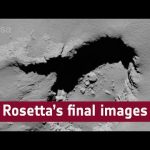
    Enjoy this compilation of with the last images taken by Rosetta’s high resolution OSIRIS camera during the mission’s final hours at Comet 67P/Churyumov-Gerasimenko. As it moved closer towards the surface it scanned across an ancient pit and sent back images showing what would become its final resting place.

    Browse all images via the Archive Image Browser: https://imagearchives.esac.esa.int

    Credits: Images: ESA/Rosetta/MPS for OSIRIS Team MPS/UPD/LAM/IAA/SSO/INTA/UPM/DASP/IDA – CC BY-SA 4.0
    Image compilation: ESA–D. C. Jimeno and M. P. Ayucar

    ★ Subscribe: http://bit.ly/ESAsubscribe

    Learn more: http://bit.ly/RosettaImageArchiveComplete

  • Reconstructing Philae’s flight

    Reconstructing Philae’s flight

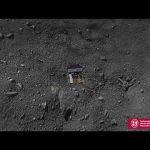
    Data from both the Philae lander and Rosetta orbiter experiments, as well as simulation results based on Philae’s mechanical design have been used to reconstruct the lander’s attitude and motion during its descent and touchdowns on Comet 67P/Churyumov-Gerasimenko on 12 November 2014.

    The new animation presented today, one year after Philae touched down on the comet, focuses on Philae’s dramatic two-hour flight from Agilkia to Abydos.

    More details in the Rosetta blog: http://blogs.esa.int/rosetta/2015/11/12/reconstructing-philaes-flight-across-the-comet/

    Credits: The video was prepared with inputs from the ROMAP, RPC-MAG, OSIRIS, ROLIS, CIVA CONSERT, SESAME and MUPUS instrument teams as well as from the Lander Control Centre at DLR and Science Operation and Navigation Center at CNES.

  • How big is Rosetta compared with the comet?

    How big is Rosetta compared with the comet?

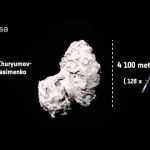
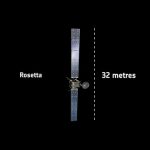
    This short animation explains the relative sizes of the Rosetta spacecraft and comet 67P/Churyumov–Gerasimenko. Rosetta is 32 m from tip to tip of the solar wings. The comet measures 4.1 km along its longest length, 128 times the width of Rosetta.

    Unlike typical artist’s impressions, this image is scaled to convey the vast difference in size between Rosetta and the comet, even when the spacecraft is in a close 10 km orbit, as depicted here.

    Rosetta reached 10 km distance from the comet centre by October 2014.

    Credits: ESA

  • Rosetta: close orbits to lander deployment (annotated)

    Rosetta: close orbits to lander deployment (annotated)

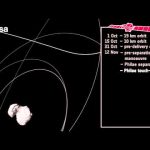
    Animation showing Rosetta’s orbit in the lead up to, during and after lander separation.

    The animation begins on 1 October 2014, when Rosetta is orbiting about 19 km from Comet 67P/Churyumov–Gerasimenko (all distances refer to the comet’s centre). The animation shows the transition to the close 10 km orbit by mid-October, and then the steps taken to move onto the pre-separation trajectory.

    On the day of landing, 12 November, Rosetta makes a further manoeuvre 2–3 hours before separation to move to 22.5 km from the comet centre to deploy the lander, Philae. While Philae descends to the surface over a period of seven hours, Rosetta makes another manoeuvre to maintain visibility with the lander. A series of ‘relay phase’ manoeuvres then move Rosetta out to a distance of about 50 km, before moving first to a 30 km orbit and later to an orbit at about 20 km by early December.

    The speed of the animation slows during the separation and lander phase to better highlight these events. The comet shape and rate of rotation is real – the comet rotates with a period of about 12.4 hours.

    Credits: ESA

  • #RosettaAreWeThereYet – Where are YOU going?

    #RosettaAreWeThereYet – Where are YOU going?

    We don’t know where you’re going, but we do know that Rosetta is about to arrive at comet 67P/Churyumov-Gerasimenko. Join the adventure and share your ‘are we there yet?’ photos to win great prizes.

    More details and competition rules at ‪http://www.esa.int/RosettaAreWeThereYet.

  • How big is Rosetta compared with the comet?

    How big is Rosetta compared with the comet?

    This short animation explains the relative sizes of the Rosetta spacecraft and comet 67P/Churyumov–Gerasimenko.

    Rosetta is 32 m from tip to tip of the solar wings. Assuming the comet measures about 4 km across, that’s 125 times the width of Rosetta.

    Unlike typical artist’s impressions, this image is scaled to convey the vast difference in size between Rosetta and the comet, even when the spacecraft is in a close 10 km orbit, as depicted here.

    Rosetta arrives at the comet at an altitude of 100 km in the first week of August, and will move progressively closer over the following two months, with the intention to orbit at an altitude of just 10 km, depending on the comet’s activity. For Philae’s deployment in November, Rosetta will come to within a few kilometres of the surface.

    The comet depicted in this animation is an artist’s impression.

    #Rosettaarewethereyet

    Credits: ESA

  • Are we there yet?

    Are we there yet?

    After a 10-year journey, Rosetta and Philae are impatient to arrive at their destination!

    In July 2014, the public were invited to join the “Rosetta, are we there yet?” campaign, a photo contest to support the last leg of the spacecraft’s epic 10-year voyage to comet 67P/Churyumov–Gerasimenko.

    This video is also available in the following languages:
    German: https://youtu.be/MbsJ04OF4K8
    Spanish: https://youtu.be/caHYr3m-QLc
    French: https://youtu.be/7Xuxy0s6QEY
    Italian: https://youtu.be/z_qN3HdLPzM

    More videos in the series are available in this playlist:
    https://www.youtube.com/playlist?list=PLbyvawxScNbui_Ncl9uQ_fXLOjS4sNSd8

    Credits: ESA/Design & Data

    #Rosettaarewethereyet

  • Rosetta puts on the brakes

    Rosetta puts on the brakes

    Rosetta is about to put on the brakes to ensure that it is on target for comet 67P/Churyumov-Gerasimenko.

    This video explains the crucial orbit correction manoeuvres that are required to slow down Rosetta’s speed, relative to the comet, from 750 metres per second to just one metre per second between 21 May and 5 August. By then, nine thruster burns (including one test burn in early May) will have reduced the distance between them from one million kms to just under 200 kms.

    We also see the first images of the comet from the spacecraft’s OSIRIS camera (Optical, Spectroscopic and Infrared Remote Imaging System), taken between 24 March and 4 May 2014. As the spacecraft gets closer to the comet, further images will improve the orbital corrections and provide more details about the comet’s shape, size and rotation.

    MIRO, built by an international team for the European Space Agency, will start taking measurements from late May onwards and will measure gases released from the comet as it approaches the Sun.