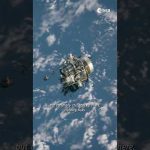
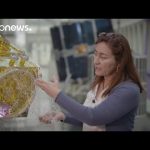
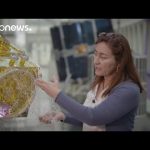
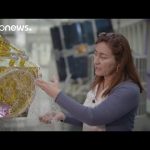
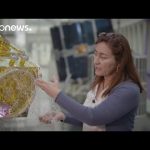
Researchers took one of the heaviest, bulkiest parts of an Earth-orbiting satellite, placed it in a plasma wind tunnel, then proceeded to melt it into vapour. Their goal was to better understand how satellites burn up during reentry, to minimise the risk of endangering anyone on the ground.
Taking place as part of our Clean Space initiative, the fiery testing occurred inside a plasma wind tunnel, reproducing reentry conditions, at the DLR German Aerospace Center’s site in Cologne.
A magnetotorquer – designed to interact magnetically with Earth’s magnetic field to shift satellite orientation – was heated to several thousands of degrees C within the hypersonic plasma.
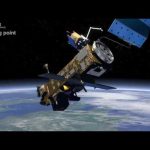
As part of a larger effort called CleanSat, we are developing technologies and techniques to ensure future low-orbiting satellites are designed according to the concept of ‘D4D’ – design for demise – ensuring they will burn up entirely when they reenter the atmosphere.
We are Europe’s gateway to space. Our mission is to shape the development of Europe’s space capability and ensure that investment in space continues to deliver benefits to the citizens of Europe and the world. Check out http://www.esa.int/ESA to get up to speed on everything space related.
Every week, on average, a substantial, inert satellite drops into our atmosphere and burns up. Monitoring these reentries and warning European civil authorities has become routine work for ESA’s space debris experts.
Each year, about 100 tonnes of defunct satellites, uncontrolled spacecraft, spent upper stages and discarded items like instrument covers are dragged down by Earth’s upper atmosphere, ending their lives in flaming arcs across the sky.
Some of these objects are big and chunky, and pieces of them survive the fiery reentry to reach the surface. Our planet, however, is a big place, mostly covered by water, and much of what falls down is never seen by anyone, sinking to the bottom of some ocean, or landing far from human habitation.
While still in orbit, these and many other objects are tracked by a US military radar network, which shares the data with ESA, since Europe has no such capability of its own.It’s the task of ESA’s Space Debris team to look at these data and issue updates to ESA Member States and partner civil authorities around the globe.
The European Space Agency (ESA) is part of an international effort to monitor and – ultimately – tackle space debris. This junk – accumulated in orbit since the dawn of the space age sixty years ago – poses an increasing risk to operational spacecraft.
ESA is developing missions to tackle the problem to help prevent a serious collision in space. The Agency is also monitoring possible dangers caused by fragments of redundant spacecraft falling to Earth, such as China’s space station Tiangong-1 – due to enter the atmosphere in the coming months.
Space debris has become a pressing issue, with objects in orbit flying out of control, posing a risk to satellites and to astronauts. We attended a meeting of space debris experts at ESA’s ESTEC technology base in the Netherlands to find out more about what can be done to deal with the problem.
O lixo espacial é um problema premente na órbita da Terra. Existem milhões de objetos a voar pelo espaço, descontrolados, colocando em perigo satélites e astronautas.
Em busca de uma solução para evitar uma colisão trágica para lá da última fronteira ou, quem sabe, o infortúnio de um qualquer detrito cair e atingir alguém na Terra, cerca de 200 cientistas reúnem-se todos os anos na Holanda, na base da Agência Espacial Europeia (ESA, na sigla original), para debater a limpeza do espaço e confrontar ideias sobre o desenvolvimento, por exemplo, de satélites mais seguros no fim de vida.
Existem quase 8000 toneladas de lixo espacial em órbita, incluindo cerca 29.000 objetos com mais de dez centímetros e mais de um milhão pequenos demais para poderem ser seguidos.
As colisões acontecem e todos os pedaços, mesmo os mais pequenos de apenas um milímetro, revelam-se perigosos, sublinha a diretora do gabinete da ESA para a limpeza do espaço.
I detriti spaziali sono un problema sempre più urgente. In orbita ci sono circa 8mila tonnellate di detriti spaziali: 29mila oggetti di oltre 10 centimetri e più di un milione di frammenti troppo piccoli per essere tracciati. Sono un pericolo per i satelliti e per gli astronauti. Le collisioni sono possibili, perciò ogni detrito rappresenta un pericolo.
Ogni anno 200 esperti in materia di spazzatura spaziale si riuniscono nella sede dell’Esa per affrontare la questione. Tra loro ci sono i rappresentanti delle agenzie spaziali e delle aziende che producono satelliti e razzi.
Körülbelül 8 000 tonna törmelék kering az űrben. 29 000 10 cm méretű, és több mint egymillió darab ennél is kisebb tárgy.
Az ütközések megtörténnek, és minden törmelék veszélyt jelent. Ezen a ponton még egy nagyon kicsi törmelék is jelentős, mert a sebessége, amivel utazik, ha egy másik testet vagy műholdat elér, felrobbanthatja azt, így még a legapróbb törmelékeknek is fontos a szerepük.
Minden évben 200 európai űrkutatási szakember találkozik az Európai Űrügynökség, az ESA hollandiai technológiai központjában, hogy megvitassák a fontos kérdéseket.
Ők képviselik a fontosabb szereplőket, és mindannyian egyetértenek abban, hogy mit kell tenniük.
Καλωσήλθατε στην εκπομπή Space. Ας ρίξουμε μια προσεκτική ματιά στο πιεστικό πρόβλημα των «διαστημικών σκουπιδιών». Υπάρχουν εκατομμύρια τέτοια αντικείμενα στο διάστημα εκτός ελέγχου. Ενέχουν κινδύνους για τους δορυφόρους και τους αστροναύτες. Τι μπορεί να γίνει; Βρισκόμαστε στη βάση του Ευρωπαϊκού Οργανισμού Διαστήματος στην Ολλανδία.
Υπάρχουν περίπου 8.000 τόνοι διαστημικών σκουπιδιών σε τροχιά — 29.000 αντικείμενα εντοπισμένα μεγέθους πάνω από 10 εκατοστά και πάνω από ένα εκατομμύριο μικρά «διαστημικά σκουπίδια .
Dans ce numéro de Space, Jeremy Wilks s’est penché sur l’épineuse question des débris spatiaux, avec les experts du centre européen de technologie spatiale de l’Agence Spatiale Européenne, aux Pays-Bas.
Este mes estamos observando de cerca el apremiante problema de los desechos espaciales. Literalmente hay millones de objetos en órbita volando fuera de control. ¿Qué se puede hacer?.
Estamos en el Centro Europeo de Investigación y Tecnología Espacial de los Países Bajos para averiguarlo.
Se estima que hay 8.000 toneladas de desechos espaciales orbitando: 29.000 objetos rastreados de más de 10 centímetros de tamaño y más de un millón de fragmentos demasiado pequeños para poder seguir.
Haz colisiones y cada pedazo de escombro es un peligro.
ESA’s proposed e.Deorbit mission plans to demonstrate the retrieval and disposal of a derelict satellite from low-Earth orbit. The mission needs to capture a massive, drifting object left in an uncertain state, which may well be tumbling rapidly. Several capture mechanisms are being studied in parallel – including casting a net.
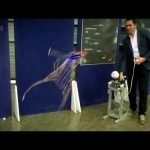
Polish company SKA Polska won this new ESA Member State’s first competitive contract to design a prototype net gun that could be tested in microgravity on a parabolic flight. Wojtek Gołebiowski of SKA Polska brought it along to the Industry Days of ESA’s Clean Space initiative – tasked with safeguarding both terrestrial and orbital environments – in May 2016. The net gun is comparatively low power (because it was designed for weightlessness) but here he demonstrates how it works on some low-flying drones. Results from firing the net, which is multi-coloured to make it easier to track by cameras, are being used to sharpen the fidelity of software models of net behaviour.
ESA’s Clean Space initiative is studying an active debris removal mission called e.Deorbit, which will target an ESA-owned derelict satellite in low orbit, capture it, then safely burn it up in a controlled atmospheric reentry. e.Deorbit will be the world’s first active debris removal mission, and will provide an opportunity for European industries to showcase their technological capabilities to a global audience.