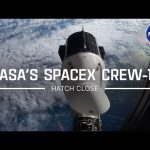
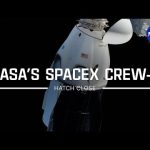
The four members of NASA’s SpaceX Crew-10 mission — NASA astronauts Anne McClain and Nichole Ayers, JAXA (Japan Aerospace Exploration Agency) astronaut Takuya Onishi, and Roscosmos cosmonaut Kirill Peskov — prepare to head to Earth as the hatches are closed on their spacecraft. Undocking is scheduled for Friday, Aug. 8, at 6:05 p.m. ET (2205 UTC).
During their nearly five months on the space station, Crew-10 contributed to the more than 200 scientific demonstrations and experiments taking place in orbit. These included physiological and psychological studies, material flammability tests for future spacecraft designs, and testing a backup lunar navigation solution.
Watch as the four members of NASA’s SpaceX Crew-9 mission—NASA astronauts Nick Hague, Suni Williams, Butch Wilmore, and cosmonaut Aleksandr Gorbunov—begin the final preparations for their return to Earth, currently targeted for Tuesday, March 18.
After entering their SpaceX Dragon spacecraft, the spacecraft’s hatch will be closed on the Crew-9 explorers. After hatch closure, Crew-9 is scheduled to undock from the International Space Station at 1:05 a.m. EDT (0505 UTC) on Tuesday, March 18.
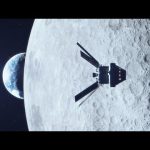
Watch live as NASA’s Orion spacecraft performs a close approach of the lunar surface on its way to a distant retrograde orbit, a highly stable orbit thousands of miles beyond the Moon. During the Artemis I flight test, launched on Nov. 16, Orion will travel 280,000 miles (450,000 km) from Earth and 40,000 miles (64,000 km) beyond the far side of the Moon, carrying science and technology payloads to expand our understanding of lunar science, technology developments, and deep space radiation.
Through Artemis missions, NASA will land the first woman and the first person of color on the Moon, paving the way for a long-term lunar presence and serving as a steppingstone to send astronauts to Mars. We are going.
A sonification of data recorded by the Italian Spring Accelerometer (ISA) aboard the BepiColombo Mercury Planetary Orbiter spacecraft during the flyby of Venus on 10 August 2021. The accelerometer data was converted to frequency to be made audible to the human ear. The resulting sound is rich with interesting effects due to the planet’s gravity acting on the spacecraft structure, the response of the spacecraft to the rapid temperature changes, and the change in reaction wheel velocity as they work hard to compensate for these effects.
The audio has been matched to the timing that the images seen in this movie were captured, in the moments after closest approach.
We are Europe’s gateway to space. Our mission is to shape the development of Europe’s space capability and ensure that investment in space continues to deliver benefits to the citizens of Europe and the world. Check out https://www.esa.int/ to get up to speed on everything space related.
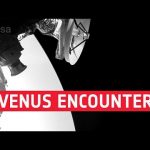
A stunning sequence of 89 images taken by the monitoring cameras on board the European-Japanese BepiColombo mission to Mercury, as the spacecraft made a close approach of Venus on 10 August 2021.
The sequence includes images from all three Monitoring Cameras (MCAM) onboard the Mercury Transfer Module, which provides black-and-white snapshots in 1024 x 1024 pixel resolution. It is not possible to image with the high-resolution camera suite during the cruise phase. The images have been lightly processed to enhance contrast and use the full dynamic range. A small amount of optical vignetting is seen in the corners of some of the images.
The first image is from MCAM 1, and was taken at 13:41:02 UTC, prior to close approach. As such, the spacecraft was still on the nightside of the planet, but the dayside can just be seen creeping into view. Part of the spacecraft’s solar array can also be seen.
The second image was taken by MCAM 2 at 13:51:56 UTC, two seconds after closest approach. With the Venus surface just 552 km away, the planet fills the entire field of view. The camera is not able to image detail of the planet’s atmosphere. The image also captures the Mercury Planetary Orbiter’s medium gain antenna and magnetometer boom.
The rest of the sequence is from MCAM 3, while the spacecraft was pointed at Venus, and then as it slews away and gradually recedes from view, covering the time period 13:53:56 UTC on 10 August until 12:21:26 UTC on 11 August. The high gain antenna of the Mercury Planetary Orbiter is also seen changing orientation as it points towards Earth.
The music accompanying the compilation was composed especially for the occasion, by @Anna Phoebe.
The images were captured during the second of two Venus flybys, and the third of nine flybys overall. The flybys are gravity assist manoeuvres needed to help steer the spacecraft on course for Mercury. During its seven-year cruise to the smallest and innermost planet of the Solar System, BepiColombo makes one flyby at Earth, two at Venus and six at Mercury in order to approach the orbit around Mercury. Its first Mercury flyby will take place 1-2 October 2021 from a distance of just 200 km.
BepiColombo, which comprises ESA’s Mercury Planetary Orbiter and the Mercury Magnetospheric Orbiter of @JAXA | 宇宙航空研究開発機構, is scheduled to reach its target orbit around the smallest and innermost planet of the Solar System in 2025. The spacecraft will separate and enter into their respective orbits before starting their science mission in early 2026 .
Credit: ESA/BepiColombo/MTM, CC BY-SA 3.0 IGO
Music composed by Anna Phoebe, with additional soundscapes by Mark McCaughrean
★ Subscribe: http://bit.ly/ESAsubscribe and click twice on the bell button to receive our notifications.
We are Europe’s gateway to space. Our mission is to shape the development of Europe’s space capability and ensure that investment in space continues to deliver benefits to the citizens of Europe and the world. Check out https://www.esa.int/ to get up to speed on everything space related.
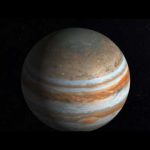
NASA’s Juno spacecraft made its latest close flyby of Jupiter Feb. 2 — passing about 2,700 miles above the planet’s clouds. This was the fourth close flyby since Juno began orbiting Jupiter last year on July 4. During these close passes instruments on the spacecraft probe beneath the cloud cover to collect scientific data about the planet’s structure, atmosphere and magnetosphere. This information could help us better understand the planetary systems being discovered around other stars. Also, Cassini Sees Saturn’s Rings in Greater Detail, The Most Extreme Blazars, NASA at Super Bowl Event, NASA at NBA Black Heritage Celebration, and
Day of Remembrance!
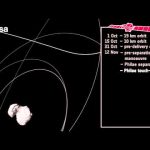
Animation showing Rosetta’s orbit in the lead up to, during and after lander separation.
The animation begins on 1 October 2014, when Rosetta is orbiting about 19 km from Comet 67P/Churyumov–Gerasimenko (all distances refer to the comet’s centre). The animation shows the transition to the close 10 km orbit by mid-October, and then the steps taken to move onto the pre-separation trajectory.
On the day of landing, 12 November, Rosetta makes a further manoeuvre 2–3 hours before separation to move to 22.5 km from the comet centre to deploy the lander, Philae. While Philae descends to the surface over a period of seven hours, Rosetta makes another manoeuvre to maintain visibility with the lander. A series of ‘relay phase’ manoeuvres then move Rosetta out to a distance of about 50 km, before moving first to a 30 km orbit and later to an orbit at about 20 km by early December.
The speed of the animation slows during the separation and lander phase to better highlight these events. The comet shape and rate of rotation is real – the comet rotates with a period of about 12.4 hours.
Venus is our mysterious neighbour, a strange world where the Sun rises in the west and sets in the east, and a day lasts longer than a year. ESA’s Venus Express mission has spent the last eight years gathering data to offer science a fresh insight into the atmosphere and climate of the planet, including a daring aerobraking manœuvre this summer that revealed previously unknown waves in the upper atmosphere.