Tag: Clouds

  • A dragon made of clouds is singing to Earth

    A dragon made of clouds is singing to Earth

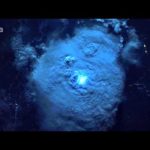
    What if satellite cloud data could become music? Meet Hakuryu — a dragon born as the European Space Agency’s EarthCARE satellite, singing a song of peace for our planet.

    EarthCARE is the European Space Agency’s most advanced Earth Explorer launched to date, equipped with instruments that help us understand clouds and aerosols in new and unprecedented ways.

    It is a collaboration between ESA and the Japanese Aerospace Exploration Agency, JAXA, who designed and developed the satellite’s Cloud Profiling Radar (CPR) instrument. JAXA called EarthCARE Hakuryu, which is Japanese for White Dragon.

    Hakuryu now lends its name to the title of a groundbreaking immersive installation that creates an audiovisual story from EarthCARE cloud and aerosol data in a way that has never been seen or heard before.

    Through data sonification, Hakuryu transforms over thirty types of data into immersive soundscapes and music. Clouds become choirs as Hakuryu sings to Earth, with voices from notable public, scientific and ESA figures joined by those needing care most – people from the frontline of climate change, displacement and conflict.

    Adding to this, data from atmospheric elements such as rain, snow, dust and smoke are rendered as rich environmental sonic textures. Simultaneously the same data is transformed into clouds, creating a vibrant trail behind an animated white dragon. Viewers slowly fly with Hakuryu, in a beautiful representation of Earth as it moves from day into night on its journey around the sun.

    The film you see here comprises one entire EarthCARE orbit around our planet. It is running live all week at ESA’s Living Planet Symposium in Vienna, from 23 to 27 June 2025, as an immersive installation. Following its debut, Hakuryu will travel the world in a variety of ways soon to be revealed.

    More about EarthCARE: https://esa.int/earthcare

    More about the EarthCARE DISC: https://earth.esa.int/eogateway/activities/earthcare-disc

    Visit the artist’s website: https://www.jamieperera.com/

    Credits:
    Artist: Jamie Perera

    Visual programming: Tekja (Jacopo Hirschstein)

    Sonification programmer: N3xtcoder (Jonathan Moore) & Adrian Lewis

    ESA development & production: Bjoern Frommknecht, Peter Bickerton, Shannon Mason and the EarthCARE Data, Innovation and Science Cluster (DISC)

    Installation production: Lorenza Versace

    Additional audio development: Danny Bright

    ★ Subscribe: http://bit.ly/ESAsubscribe and click twice on the bell button to receive our notifications.

    Check out our full video catalog: http://bit.ly/SpaceInVideos
    Follow us on Twitter: http://bit.ly/ESAonTwitter
    On Facebook: http://bit.ly/ESAonFacebook
    On Instagram: http://bit.ly/ESAonInstagram
    On LinkedIn: https://bit.ly/ESAonLinkedIn
    On Pinterest: https://bit.ly/ESAonPinterest
    On Flickr: http://bit.ly/ESAonFlickr

    We are Europe’s gateway to space. Our mission is to shape the development of Europe’s space capability and ensure that investment in space continues to deliver benefits to the citizens of Europe and the world. Check out https://www.esa.int/ to get up to speed on everything space related.

    Copyright information about our videos is available here: https://www.esa.int/ESA_Multimedia/Terms_and_Conditions
  • Have you ever seen the inside of a cloud? ☁️ #shorts

    Have you ever seen the inside of a cloud? ☁️ #shorts

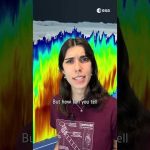
    After being launched not even a month ago, EarthCARE has returned its first results.

    This was the first time we were able to see the internal structure and dynamics of clouds from space.

    These are the first results from EarthCARE’s Cloud Profiling Radar instrument, provided by JAXA, which will be followed by the first results from EarthCARE’s three other instruments in the next weeks and months.

    Excited for what’s to come?

    📹 ESA – European Space Agency
    🎞️ JAXA/NICT/ESA

    #ESA #Clouds #EarthCARE

  • Earth views from space – 1 hour long in 4K!

    Earth views from space – 1 hour long in 4K!

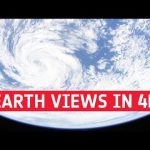
    Watch over one hour of our planet, seen from the International Space Station, in 4K resolution. This compilation was made from video taken by ESA astronauts, mostly by Thomas Pesquet during his first mission, Proxima, and ESA astronaut Alexander Gerst on his second mission, Horizons, as well as footage from Samantha Cristoforetti’s Futura mission and Paolo Nespoli’s Vita mission.

    Flying 400 km above our amazing planet Earth, the Space Station travels at 28 800 km/h to stay in orbit. The videos are in real time and not sped up or edited. Most of the scenes were filmed in the European-built Cupola module, the Space Station’s observatory.

    On 21 April 2001, the first ESA astronaut Umberto Guidoni arrived at the Space Station. Since then, the Space Station has grown immensely, as have the number of Europeans to have worked in it, together with the science experiments performed in orbit.

    Europe contributes around 8% of the running costs of the International Space Station, but has built a large part of the structure, including ESA’s Columbus laboratory, the Cupola observatory, the Tranquillity and Harmony modules, as well as the computers that collect data and provide navigation, communications and operations for the Russian segment.

    ESA also provided the Space Station with supplies and boosted its orbit through five Automated Transfer Vehicles, the heaviest and most versatile Space Station supply ferry. This programme evolved into the European Service Modules that ESA is supplying for @NASA’s Artemis programme, taking humans forward to the Moon and thus continuing the exemplary international collaboration beyond Earth’s orbit.

    Since Umberto’s mission, there have been 26 further ESA astronaut missions to the International Space Station, with astronauts flying to Station on either the Russian Soyuz or US Space Shuttle spacecraft.

    Thomas Pesquet’s second mission, Alpha, is the 28th mission for ESA, with ESA astronaut Matthias Maurer already lined up for his first flight later this year, and ESA astronaut Samantha Cristoforetti scheduled for the 30th ESA International Space Station mission in 2022.

    ★ Subscribe: http://bit.ly/ESAsubscribe and click twice on the bell button to receive our notifications.

    Check out our full video catalog: http://bit.ly/SpaceInVideos
    Follow us on Twitter: http://bit.ly/ESAonTwitter
    On Facebook: http://bit.ly/ESAonFacebook
    On Instagram: http://bit.ly/ESAonInstagram
    On Pinterest: https://bit.ly/ESAonPinterest
    On Flickr: http://bit.ly/ESAonFlickr

    We are Europe’s gateway to space. Our mission is to shape the development of Europe’s space capability and ensure that investment in space continues to deliver benefits to the citizens of Europe and the world. Check out https://www.esa.int/ to get up to speed on everything space related.

    Copyright information about our videos is available here: https://www.esa.int/ESA_Multimedia/Terms_and_Conditions

    #ESA
    #InternationalSpaceStation
    #EarthFromSpace

  • Weather vs. Climate | Meet the experts

    Weather vs. Climate | Meet the experts

    Ice and snow can be a hot topic when talking about climate. The polar regions are very fragile and can tell us a lot about how Earth’s climate is changing. Andrew Shepherd of the University of Leeds is a leading climate scientist working with ESA and NASA. In this episode he explains how we can separate the effects of weather versus climate from data records and the role of space in studying changes to our planet in real-time and in the future.

    Learn more: http://bit.ly/ExpeditionHome12_18YearsOld

    ★ Subscribe: http://bit.ly/ESAsubscribe and click twice on the bell button to receive our notifications.

    Check out our full video catalog: http://bit.ly/SpaceInVideos
    Follow us on Twitter: http://bit.ly/ESAonTwitter
    On Facebook: http://bit.ly/ESAonFacebook
    On Instagram: http://bit.ly/ESAonInstagram
    On Flickr: http://bit.ly/ESAonFlickr

    We are Europe’s gateway to space. Our mission is to shape the development of Europe’s space capability and ensure that investment in space continues to deliver benefits to the citizens of Europe and the world. Check out http://www.esa.int/ESA to get up to speed on everything space related.

    Copyright information about our videos is available here: http://www.esa.int/spaceinvideos/Terms_and_Conditions

    #ESA
    #MeetTheExperts
    #ExpeditionHome

  • NASA Explorers S3 E4: Chasing Clouds

    NASA Explorers S3 E4: Chasing Clouds

    “Earth science is a subject far too big for one country, one agency, to tackle all by itself.” So #NASAExplorers team up with researchers from around the country and the planet to answer some big questions about fires, clouds and climate from the Western Pacific, where we still have a lot to learn about the interaction between fires and cloud formation. #S3E4

  • Horizons mission time-lapse – highlights

    Horizons mission time-lapse – highlights

    Experience magical moments from ESA astronaut Alexander Gerst’s Horizons mission in this time-lapse of highlights from space.

    Combining thousands of images taken by Alexander over more than six months, this Ultra High Definition video provides a glimpse into spacecraft operations and the beauty of Earth as seen from the International Space Station.

    Marvel at orbital sunrises, dancing auroras, city lights, oceans, clouds, the Milky Way, the release of cargo vehicles, a Soyuz launch and more against the thin band of atmosphere that surrounds our planet.

    Watch in 4K resolution for the best effect and find even more of Alexander’s images on Flickr at https://www.flickr.com/photos/astro_alex/

    Music is Quantum and Time by Igor Dvorkin, Duncan Pittock and Ellie Kidd sourced from the Audio Network library.

    Follow Alexander and the #Horizons mission on social media via http://bit.ly/AlexanderGerstESA and on http://bit.ly/HorizonsBlogESA

    ★ Subscribe: http://bit.ly/ESAsubscribe and click twice on the bell button to receive our notifications.

    Check out our full video catalog: http://bit.ly/SpaceInVideos
    Follow ESA on Twitter: http://bit.ly/ESAonTwitter
    On Facebook: http://bit.ly/ESAonFacebook
    On Instagram: http://bit.ly/ESAonInstagram
    On Flickr: http://bit.ly/ESAonFlickr

    ESA is Europe’s gateway to space. Our mission is to shape the development of Europe’s space capability and ensure that investment in space continues to deliver benefits to the citizens of Europe and the world. Check out http://www.esa.int/ESA to get up to speed on everything space related.

    Copyright information about our videos is available here: http://www.esa.int/spaceinvideos/Terms_and_Conditions

  • Space Station 20th: longest continuous timelapse from space

    Space Station 20th: longest continuous timelapse from space

    Since the very first module Zarya launched from Baikonur Cosmodrome on 20 November 1998, the International Space Station has delivered a whole new perspective on this planet we call home. Join us as we celebrate 20 years of international collaboration and research for the benefit of Earth with ESA astronaut Alexander Gerst’s longest timelapse yet.

    In just under 15 minutes, this clip takes you from Tunisia across Beijing and through Australia in two trips around the world. You can follow the Station’s location using the map at the top right-hand-side of the screen alongside annotations on the photos themselves.

    This timelapse comprises approximately 21 375 images of Earth all captured by Alexander from the International Space Station and shown 12.5 times faster than actual speed.

    Music is Orbital Horizons, an original composition by Los Angeles-based musician Matt Piper.

    Participate in further Space Station celebrations via social media using hashtag #SpaceStation20th.

    Download this video: http://bit.ly/LongestTLFromISS

    Follow Alexander and the Horizons mission on social media via http://bit.ly/AlexanderGerstESA and on http://bit.ly/HorizonsBlogESA.

    ★ Subscribe: http://bit.ly/ESAsubscribe

    Check out our full video catalog: http://bit.ly/SpaceInVideos
    Follow ESA on Twitter: http://bit.ly/ESAonTwitter
    On Facebook: http://bit.ly/ESAonFacebook
    On Instagram: http://bit.ly/ESAonInstagram
    On Flickr: http://bit.ly/ESAonFlickr

    ESA is Europe’s gateway to space. Our mission is to shape the development of Europe’s space capability and ensure that investment in space continues to deliver benefits to the citizens of Europe and the world. Check out http://www.esa.int/ESA to get up to speed on everything space related.

    Copyright information about our videos is available here: http://www.esa.int/spaceinvideos/Terms_and_Conditions

  • NASA Balloon Observes Rare Electric Blue Clouds

    NASA Balloon Observes Rare Electric Blue Clouds

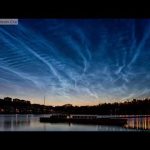
    On the cusp of our atmosphere live a thin group of seasonal electric blue clouds. Read the story: https://go.nasa.gov/2QPcrOD
    Forming fifty miles above the poles in summer, these clouds are known as noctilucent clouds or polar mesospheric clouds — PMCs. A recent NASA long-duration balloon mission observed these clouds over the course of five days at their home in the mesosphere. The resulting photos, which scientists have just begun to analyze, will help us better understand turbulence in the atmosphere, as well as in oceans, lakes, and other planetary atmospheres, and may even improve weather forecasting.

    Music credit: “In The End” By Andrew John Skeet [PRS], Andrew Michael Britton [PRS], David Stephen Goldsmith [PRS] from Killer Tracks
    Credits: David Fritts (GATS): Scientist
    Joy Ng (USRA): Producer
    Mara Johnson-Groh (Wyle Information Systems): Writer Tom Bridgman (GST): Data Visualizer
    William Putman (NASA/GSFC): Data Visualizer

    This video is public domain and along with other supporting visualizations can be downloaded from the Scientific Visualization Studio at: http://svs.gsfc.nasa.gov/13073

  • Horizons mission time-lapse – from Alaska to the Andes

    Horizons mission time-lapse – from Alaska to the Andes

    Ever wondered what it feels like to fly from Alaska to the Andes in 260 seconds? ESA astronaut Alexander Gerst captured this timelapse footage of Alaska, the USA and South America while orbiting Earth on board the International Space Station.

    This timelapse is made up of 6,375 images shown 12.5 times faster than actual speed. Music is Our Oasis by Miriam Speyer, sourced from Audio Network Limited.

    ★ Subscribe: http://bit.ly/ESAsubscribe

    Follow Alexander and the Horizons mission on social media via http://bit.ly/AlexanderGerstESA and on http://bit.ly/HorizonsBlogESA.

  • Horizons mission time-lapse – Australia and New Zealand

    Horizons mission time-lapse – Australia and New Zealand

    Māori, as native New Zealanders, refer to their islands as “Aotearoa” or “the land of the long white cloud”. This timelapse from ESA astronaut Alexander Gerst shows Australia and New Zealand shrouded in cloud from the unique viewpoint of the International Space Station.

    Comprised of 5,175 photos, this timelapse is 12.5 times faster than actual speed and is set to the soundtrack “Try or Die” sourced from Audio Network Limited.

    ★ Subscribe: http://bit.ly/ESAsubscribe

    Follow Alexander and the Horizons mission on social media via http://bit.ly/AlexanderGerstESA and on http://bit.ly/HorizonsBlogESA.

  • Striking lightning from space

    Striking lightning from space

    Lightning illuminates the area they strike on Earth but their flash can be seen from space too. This timelapse was made from 49 images taken 400 km above Earth in 2012 by an astronaut on the International Space Station travelling at 28 800 km/h. At these distances a camera flash is pointless, but our planet moves by so quickly images can end up being blurred.

    ESA’s Nightpod camera aid compensates for the motion of the Station. The target stays firmly centred in frame so the final image is in focus. Astronauts can set up the device to take ultra-sharp images automatically using off-the-shelf cameras.

    The steady progression of frames seen in this video with the target staying in centre frame would be nearly impossible without Nightpod.