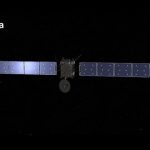
Rosetta is about to put on the brakes to ensure that it is on target for comet 67P/Churyumov-Gerasimenko.
This video explains the crucial orbit correction manoeuvres that are required to slow down Rosetta’s speed, relative to the comet, from 750 metres per second to just one metre per second between 21 May and 5 August. By then, nine thruster burns (including one test burn in early May) will have reduced the distance between them from one million kms to just under 200 kms.
We also see the first images of the comet from the spacecraft’s OSIRIS camera (Optical, Spectroscopic and Infrared Remote Imaging System), taken between 24 March and 4 May 2014. As the spacecraft gets closer to the comet, further images will improve the orbital corrections and provide more details about the comet’s shape, size and rotation.
MIRO, built by an international team for the European Space Agency, will start taking measurements from late May onwards and will measure gases released from the comet as it approaches the Sun.
Space missions have been chasing comets since the launch of the Giotto spacecraft in 1985. NASA’s Stardust mission flew through a comet’s tail in 2006 and brought a sample of dust back to Earth. Glycene was found in this sample, one of the four basic amino acids in our DNA. We can make a fake comet on Earth using a recipe of water ice, liquid nitrogen and fine carbon particles. By testing the fake comet and simulating the conditions of space, this will help scientists interpret data from ESA’s latest comet chaser – Rosetta. With ESA’s comet chaser Rosetta expectations are great : for the first time a probe will be flying alongside a comet and even placing a lander on its surface.
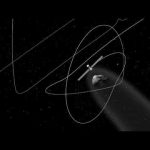
After a ten year journey through space, ESA’s Rosetta spacecraft will reach comet 67P/Churyumov-Gerasimenko in August 2014. After catching up with the comet Rosetta will slightly overtake and enter orbit from the ‘front’ of the comet as both the spacecraft and 67P/CG move along their orbits around the Sun. Rosetta will carry out a complex series of manoeuvres to reduce the separation between the spacecraft and comet from around 100 km to 25-30 km. From this close orbit, detailed mapping will allow scientists to determine the landing site for the mission’s Philae lander. Immediately prior to the deployment of Philae in November, Rosetta will come to within just 2.5 km of the comet’s nucleus.
This animation is not to scale; Rosetta’s solar arrays span 32 m, and the comet is approximately 4 km wide.
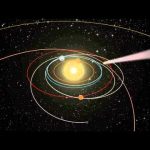
Rosetta’s journey from launch in March 2004 to comet 67P/Churyumov-Gerasimenko in August 2014, including 3 flybys of Earth and 1 of Mars. By January 2014 Rosetta is about 9 million kilometres from comet 67P/CG. By early May, Rosetta will be 2 million kilometres from the comet and at the end of May the spacecraft will execute a major rendezvous manoeuvre to line it up for orbit insertion at the start of August.
The comet and planets are not to scale.
Az üstökösök évszázadok óta felcsigázták az emberek fantáziáját. Az Európai Űrügynökség Rosetta nevű missziója megkísérel műszereket eljuttatni egy üstökös felszínére.
Szénből, porból és vízjégből álló égitestek, amelyek a Naphoz közelítve annak fénye miatt csóvát fejlesztenek a maguk mögött húzott törmelékből. Több okból is érdekesek a tudomány számára, de a legizgalmasabb kérdés, hogy van-e közük a földi élet eredetéhez.
A Space üstökösvadász stábjának első útja Jénába, a türingiai tartományi csillagvizsgálóba vezet. A tudósok itt azon dolgoznak, hogy megállapítsák, mi maradt a darabjaira hullott ISON üstökösből. A gyanú az volt, hogy az égitest megsemmisült, de kérdéses volt, hogy a magnak maradtak-e látható darabkái. Azonban napfelkeltéig a tudósoknak nem sikerült megpillantaniuk az ISON maradványait.
Mindeközben Svájcban a berni egyetem kutatói vízjégből, folyékony nitrogénből és szénből mesterséges üstököst állítanak elő. Az így elkészült mintával vákuumkamrában kísérleteznek: arra kíváncsiak, milyen folyamatok mennek végbe egy üstökös felszínén.
Mindezek a kísérletek és megfigyelések csak előkészületek az igazi nagy dobásra: az Európai Űrközpont Rosetta fedőnevű missziója megkísérel műszereket eljuttatni egy üstökös felszínére, és onnan mintákat szállítani.
Ez azért tölti el lelkesedéssel a tudósokat, mert az utolsó hasonló akció, a NASA Csillagpor (Stardust) nevű küldetése meglepő eredményeket hozott. Akkor egy szondát reptettek át a Halley üstökös csóváján, és az így megszerzett minta glicint, egy fontos, DNS-alkotó aminosavat is tartalmazott. Tehát nem életet, de az élet egyik fontos alkotóelemét – ez pedig felveti az üstökösök szerepét a földi élet kialakulásában.
– A földi élethez meghatározott típusú, úgynevezett balkezes aminosavak szükségesek. A kémia elő tud állítani bal és jobbekezes aminosavakat is, de az élet ezek közül csak a balkezeseket használja és szeretnénk érteni, hogy miért – magyarázta az Euronews riporterének Hermann Böhnhardt, a Max Planck Intézet kutatója – Nem tudjuk, de szeretnénk tudni, hogy az üstökösökben található aminosavak jobb vagy balkezesek, mert ha balkezesek, akkor ez újabb arra utaló jel, hogy talán az élet, vagy legalábbis annak alkotóelemei az űrből kerültek a Földre.
A tudományos közösség abban reménykedik, hogy az üstökösöket érintő kérdések sokaságára kapnak választ 2014-ben, ha a Rosetta misszója sikerrel zárul.
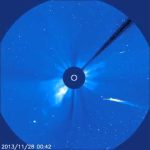
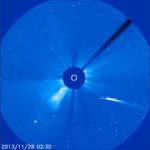
The ESA/NASA SOHO satellite watched as Comet ISON made its closest approach to the Sun on 28 November, at a distance of around 1.2 million kilometres from the Sun’s visible surface. Did it survive? Early reports suggested that only the comet’s tail continued to follow along ISON’s orbit. Further observations will reveal if a chunk of the comet’s nucleus survived. See the latest images: http://soho.esac.esa.int/hotshots/index.html/
Comet ISON on the approach to the Sun. It entered the SOHO LASCO C3 field of view at 01:41 UT on 27 November. This video covers over 24 hours of the journey so far. Will ISON survive its closest approach with the Sun? Stay tuned: http://soho.esac.esa.int/hotshots/index.html/