We are Europe’s gateway to space. Our mission is to shape the development of Europe’s space capability and ensure that investment in space continues to deliver benefits to the citizens of Europe and the world. Check out https://www.esa.int/ to get up to speed on everything space related.
Space for Education 2030 is the evolution of the ESA education programme. Take a look at what the Education office has in store for students and young people of all ages at the dawn of a new space era, for them to acquire the right skills needed to achieve a sustainable and secure future, and sustain Europe’s great ambitions in space.
★ Subscribe: http://bit.ly/ESAsubscribe and click twice on the bell button to receive our notifications.
We are Europe’s gateway to space. Our mission is to shape the development of Europe’s space capability and ensure that investment in space continues to deliver benefits to the citizens of Europe and the world. Check out https://www.esa.int/ to get up to speed on everything space related.
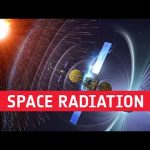
Cosmic radiation is considered to be the main health hazard for humans on exploration missions. Far away from the protection of Earth’s magnetic field, the radiation doses could be up to 700 times higher than on our planet.
For long-term human activity at the Moon, we need to monitor the lunar radiation environment directly.
Two sources of radiation are of concern: galactic cosmic radiation from outside the galaxy and the unpredictable but virulent charged particles coming from our own Sun.
Cosmic radiation is always there, and it is also the main source of radiation for increasing the crew’s risk of cancer in missions to the Moon and Mars. The solar events deliver a high amount of radiation in a short period of time, leading to radiation sickness, with symptoms such as nausea and fatigue.
★ Subscribe: http://bit.ly/ESAsubscribe and click twice on the bell button to receive our notifications.
We are Europe’s gateway to space. Our mission is to shape the development of Europe’s space capability and ensure that investment in space continues to deliver benefits to the citizens of Europe and the world. Check out https://www.esa.int/ to get up to speed on everything space related.
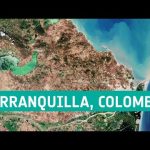
Barranquilla lies strategically next to the delta of the Magdalena River, one of the main rivers in Colombia, flowing northwards for around 1500 km through the west half of the country before emptying into the Caribbean Sea.
Owing to large quantities of sediment, as seen by the extensive sediment plume at its mouth and the brownish colour of its waters, the Magdalena requires frequent dredging of its main channel to allow access to Barranquilla’s port for oceangoing vessels.
We are Europe’s gateway to space. Our mission is to shape the development of Europe’s space capability and ensure that investment in space continues to deliver benefits to the citizens of Europe and the world. Check out https://www.esa.int/ to get up to speed on everything space related.
Get to know the ESA Astronaut Class of 2022 as they answer the following questions: – Why did you apply to become an astronaut? – Tell us about your background – How did you feel when you found out you would be part of ESA’s Astronaut Class of 2022? – What excites you most about human exploration, and how do you see yourself as part of this challenge? – What message do you have for young people today who are passionate about space and science?
00:00 – 00:02 – Intro 00:03 – 05:20 – Sophie Adenot from France 05:21 – 07:48 – Pablo Álvarez Fernández from Spain 07:49 – 11:33 – Meganne Christian from the United Kingdom 11:34 – 15:59 – Anthea Comellini from Italy 16:00 – 19:50 – Rosemary Coogan from the United Kingdom 19:51 – 23:45 – Sara García Alonso from Spain 23:46 – 27:10 – Raphaël Liégeois from Belgium 27:11 – 32:19 – John McFall from the United Kingdom 32:20 – 35:58 – Andrea Patassa from Italy 35:59 – 40:41 – Carmen Possnig from Austria 40:42 – 45:30 – Arnaud Prost from France 45:31 – 48:41 – Amelie Schoenenwald from Germany 48:42 – 54:05 – Marco Sieber from Switzerland 54:06 – 56:23 – Aleš Svoboda from Czech Republic 56:24 – 1:02:09 – Sławosz Uznański from Poland 1:02:10- 1:04:55 – Marcus Wandt from Sweden 1:04:56 – 1:08:47 – Nicola Winter from Germany
We are Europe’s gateway to space. Our mission is to shape the development of Europe’s space capability and ensure that investment in space continues to deliver benefits to the citizens of Europe and the world. Check out https://www.esa.int/ to get up to speed on everything space related.
ESA’s new class of astronauts was announced in Paris on 23 November 2022. It includes career astronauts, reserve astronauts and astronauts with a physical disability for a feasibility project.
Last year and for the first time since 2008, ESA launched a call for applications and it received more than 22 500 valid applications. At an event on 23 November, ESA revealed which of these were successful. The event was moderated by Louise Houghton.
We are Europe’s gateway to space. Our mission is to shape the development of Europe’s space capability and ensure that investment in space continues to deliver benefits to the citizens of Europe and the world. Check out https://www.esa.int/ to get up to speed on everything space related.
Short animation featuring key moments of the Mars Sample Return campaign: from landing on Mars and securing the sample tubes to launching them off the surface and ferrying them back to Earth.
NASA and the European Space Agency (ESA) are developing plans for one of the most ambitious campaigns ever attempted in space: bringing the first samples of Mars material safely back to Earth for detailed study. European scientists are part of an international team giving advice on what samples to choose for return and the best analysis methods to use once they land on Earth.
The diverse set of scientifically curated samples being collected by NASA’s Mars Perseverance rover could help scientists answer the question of whether ancient life ever arose on the Red Planet.
Bringing samples of Mars to Earth for future study would happen in several steps with multiple spacecraft, and in close collaboration between ESA and NASA.
The first step of the campaign began with the arrival of the Perseverance rover at Jezero Crater on 18 February 2021.
ESA will give robotic assistance with the Sample Transfer Arm. The 2.5 m robotic arm will pick up the tubes filled with precious material from Mars and transfer them to a rocket for a launch into martian orbit.
The European Earth Return Orbiter will then be the first interplanetary spacecraft to capture samples in orbit and make a return trip between Earth and Mars.
This strategic partnership with NASA will be the first to return samples from another planet. The samples to be returned are thought to be the best opportunity to reveal the early evolution of Mars, including the potential for life.
Credit: @NASA/ESA/@NASA Jet Propulsion Laboratory/@NASA Goddard/@NASA’s Marshall Space Flight Center
★ Subscribe: http://bit.ly/ESAsubscribe and click twice on the bell button to receive our notifications.
We are Europe’s gateway to space. Our mission is to shape the development of Europe’s space capability and ensure that investment in space continues to deliver benefits to the citizens of Europe and the world. Check out https://www.esa.int/ to get up to speed on everything space related.
ESA’s Council at Ministerial level taking place on 22-23 November 2022. It is a crucial milestone as Europe sets out its ambitions and plans for space activities in the coming years and decades.
We want to strengthen Europe’s space sector and ensure we continue to serve European citizens by, for example: Tick preparing new groundbreaking missions to make new scientific discoveries, tick observing the Earth to make sure we collect enough data to mitigate climate change, Tick launching new nav satellites to improve GPS signals across Europe Tick and supporting entrepreneurs and space related businesses.
Stay tuned and find out more about what we are putting on the table at CM22.
★ Subscribe: http://bit.ly/ESAsubscribe and click twice on the bell button to receive our notifications.
We are Europe’s gateway to space. Our mission is to shape the development of Europe’s space capability and ensure that investment in space continues to deliver benefits to the citizens of Europe and the world. Check out https://www.esa.int/ to get up to speed on everything space related.
We are Europe’s gateway to space. Our mission is to shape the development of Europe’s space capability and ensure that investment in space continues to deliver benefits to the citizens of Europe and the world. Check out https://www.esa.int/ to get up to speed on everything space related.
The region of the Sundarbans appears in dark shades of green in this image, while the adjacent areas in brighter colours are densely populated and dominated by agriculture.
The Sundarbans National Park, established in 1984 and a designated @UNESCO World Heritage Site, is a core region within the Bengal Tiger Reserve. The almost extinct Bengal tiger is the national animal of Bangladesh and is considered the second largest tiger in the world.
We are Europe’s gateway to space. Our mission is to shape the development of Europe’s space capability and ensure that investment in space continues to deliver benefits to the citizens of Europe and the world. Check out https://www.esa.int/ to get up to speed on everything space related.
Galileo is Europe’s largest satellite constellation – and the world’s most accurate satnav system. The work on Galileo began two decades ago with two test GIOVE satellites, followed by a series of operational launches.
The two GIOVE satellites, the first Galileo In-Orbit Validation satellite and all 34 Galileo Full Operational Capability satellites were tested at ESA’s ESTEC Test Centre, Europe’s largest satellite testing facility.
On this day the very last satellite in the Galileo First Generation series leaves the site, and the people responsible for readying them for space have gathered to say goodbye. Next will come the Galileo Second Generation satellites, already in development.
Galileo is managed and funded by the European Union. The @EuropeanCommission, ESA and EUSPA (the EU Agency for the Space Programme) have signed an agreement by which ESA acts as design authority and system development prime on behalf of the Commission and EUSPA as the exploitation and operation manager of Galileo/EGNOS. ★ Subscribe: http://bit.ly/ESAsubscribe and click twice on the bell button to receive our notifications.
We are Europe’s gateway to space. Our mission is to shape the development of Europe’s space capability and ensure that investment in space continues to deliver benefits to the citizens of Europe and the world. Check out https://www.esa.int/ to get up to speed on everything space related.
The Space Launch System (SLS) rocket with the Orion spacecraft aboard lifted off at 07:47 CET from @NASA’s Kennedy Space Center in Florida, USA on 16 November 2022.
The most powerful rocket ever built sent NASA’s Orion spacecraft and ESA’s European Service Module (ESM) to a journey beyond the Moon and back. No crew will be on board Orion this time, and the spacecraft will be controlled by teams on Earth.
ESM provides for all astronauts’ basic needs, such as water, oxygen, nitrogen, temperature control, power and propulsion.
Much like a train engine pulls passenger carriages and supplies power, the European Service Module will take the Orion capsule to its destination and back.
We are Europe’s gateway to space. Our mission is to shape the development of Europe’s space capability and ensure that investment in space continues to deliver benefits to the citizens of Europe and the world. Check out https://www.esa.int/ to get up to speed on everything space related.
Space Rider is an uncrewed robotic laboratory about the size of two minivans. After launch on Vega-C, this reusable spacecraft will stay in low orbit for about two months, conducting research in microgravity or observing the Earth or deep space. At the end of its mission, Space Rider will return to Earth with its payloads to be unloaded and refurbished for another flight.
Credit: ESA/Frame by Frame
★ Subscribe: http://bit.ly/ESAsubscribe and click twice on the bell button to receive our notifications.
We are Europe’s gateway to space. Our mission is to shape the development of Europe’s space capability and ensure that investment in space continues to deliver benefits to the citizens of Europe and the world. Check out https://www.esa.int/ to get up to speed on everything space related.
At the Thales Alenia Space test facility in Cannes, France, the massive door of the thermal vacuum chamber was opened after a month of rigorous testing of ESA’s Euclid mission to explore the dark Universe. In Cannes the fully integrated spacecraft was subjected to the conditions of space and its subsystems were fully tested for the first time. With the Euclid space telescope, scientists hope to learn more about dark matter and dark energy which could make up more than 95% of our Universe.
The film includes soundbites from ESA Euclid Mission and Payload Manager: Alexander Short and ESA Euclid VIS-Instrument Engineer: Magdalena Szafraniec.
★ Subscribe: http://bit.ly/ESAsubscribe and click twice on the bell button to receive our notifications.
We are Europe’s gateway to space. Our mission is to shape the development of Europe’s space capability and ensure that investment in space continues to deliver benefits to the citizens of Europe and the world. Check out https://www.esa.int/ to get up to speed on everything space related.
The archipelago is the largest island of the Azores autonomous region of Portugal.
The island has a region called Furnace Valley which is famous for its volcanic landscape. Local cooking methods have been influenced by their surroundings.
Cozido das Furnas is a specialty, stew type dish in the region and is prepared by lowering a pot filled with meat and vegetables into the valleys hot springs and leaving to cook for around 5 hours.
★ Subscribe: http://bit.ly/ESAsubscribe and click twice on the bell button to receive our notifications.
We are Europe’s gateway to space. Our mission is to shape the development of Europe’s space capability and ensure that investment in space continues to deliver benefits to the citizens of Europe and the world. Check out https://www.esa.int/ to get up to speed on everything space related.
Going to the Moon was the first step. Staying there is the next ambition.
ESA is a key partner in NASA’s Artemis programme, which aims to return people to the Moon by the end of the decade. Dozens of other international public and private missions are setting their sights on the lunar surface in the coming years.
But to achieve a permanent and sustainable presence on the Moon, reliable and autonomous lunar communications and navigation services are required.
This is why ESA is working with its industrial partners on the Moonlight initiative, to become the first off-planet commercial telecoms and satellite navigation provider.
Following their launch, three or four satellites will be carried into lunar orbit by a space tug and deployed one by one, to form a constellation of lunar satellites. The number and specification of these satellites are currently being defined.
The constellation’s orbits are optimised to give coverage to the lunar south pole, whose sustained sunlight and polar ice make it the focus of upcoming missions.
Moonlight will provide data capacities sufficient to serve these planned and future missions, with a navigation service that enables accurate real-time positioning for all lunar missions.
★ Subscribe: http://bit.ly/ESAsubscribe and click twice on the bell button to receive our notifications.
We are Europe’s gateway to space. Our mission is to shape the development of Europe’s space capability and ensure that investment in space continues to deliver benefits to the citizens of Europe and the world. Check out https://www.esa.int/ to get up to speed on everything space related.
The first clue came when the star mysteriously darkened in late 2019. An immense cloud of obscuring dust formed from the ejected surface as it cooled. Astronomers have now pieced together a scenario for the upheaval. And the star is still slowly recovering; the photosphere is rebuilding itself. And the interior is reverberating like a bell that has been hit with a sledgehammer, disrupting the star’s normal cycle. This doesn’t mean the monster star is going to explode any time soon, but the late-life convulsions may continue to amaze astronomers.
We are Europe’s gateway to space. Our mission is to shape the development of Europe’s space capability and ensure that investment in space continues to deliver benefits to the citizens of Europe and the world. Check out https://www.esa.int/ to get up to speed on everything space related.
Sentinel-2 takes us over Mount Makalu in the Himalayas where Swedish explorer, mountaineer and climate campaigner, Carina Ahlqvist, led a climb in 2018. At 8485 meters high, Makalu is the fifth highest mountain in the world.
We are Europe’s gateway to space. Our mission is to shape the development of Europe’s space capability and ensure that investment in space continues to deliver benefits to the citizens of Europe and the world. Check out https://www.esa.int/ to get up to speed on everything space related.
Galileo has grown to become Europe’s single largest satellite constellation, and the world’s most accurate satellite navigation system, delivering metre-level positioning to more than 3.5 billion users around the globe.
It all began at ESTEC’s Test Centre, Europe’s largest satellite testing facility. This is where the very first positioning fix took place in March 2013, after the launch into orbit of the initial four IOV satellites. Following that, all 34 Galileo Full Operational Capability satellites also passed by ESTEC for their pre-flight testing. This 3000 sq. m environmentally-controlled complex, operated and managed by European Test Services for ESA, hosts an array of test equipment able to simulate all aspects of spaceflight, from the noise and vibration of launch to the vacuum and temperature extremes of Earth orbit. The production line at manufacturer OHB in Germany completed one new satellite every six weeks. After integration each satellite was then shipped to the ESTEC Test Centre for a three-month test campaign, after which it would be accepted by the Agency and declared ready for flight. Some facilities have had to be adapted specifically for Galileo, and the ESTEC Test Centre had to institute new security protocols because this was the first time that satellites with security restrictions were being tested at the site. Today there are 28 of these Galileo First Generation satellites in service, with 10 more due to be launched in the next years. Upgraded Galileo Second Generation satellites are under development and will follow them into orbit later this decade. Members of ESA’s Galileo team and ETS look back on this massive testing effort that established Galileo was ready for space.
*About Galileo* : Galileo is managed and funded by the European Union. The European Commission, ESA and EUSPA (the EU Agency for the Space Programme) have signed an agreement by which ESA acts as design authority and system development prime on behalf of the Commission and EUSPA as the exploitation and operation manager of Galileo/EGNOS.
★ Subscribe: http://bit.ly/ESAsubscribe and click twice on the bell button to receive our notifications.
We are Europe’s gateway to space. Our mission is to shape the development of Europe’s space capability and ensure that investment in space continues to deliver benefits to the citizens of Europe and the world. Check out https://www.esa.int/ to get up to speed on everything space related.
Our astronaut Samantha Cristoforetti had to test if she could walk in microgravity with Velcro shoes, as it was portrayed in the space-cult movie ‘2001: A Space Odyssey’. As you can see, yes, you can, but very slowly.
Credit: ESA / @NASA
★ Subscribe: http://bit.ly/ESAsubscribe and click twice on the bell button to receive our notifications.
We are Europe’s gateway to space. Our mission is to shape the development of Europe’s space capability and ensure that investment in space continues to deliver benefits to the citizens of Europe and the world. Check out https://www.esa.int/ to get up to speed on everything space related.
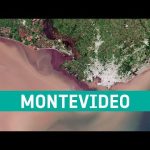
Montevideo is the southernmost capital city in the Americas and is known for its beaches – visible east of the city. The Rambla of Montevideo, the city’s famous promenade, stretches for 27 km along the coast – making it one of the longest esplanades in the world.
We are Europe’s gateway to space. Our mission is to shape the development of Europe’s space capability and ensure that investment in space continues to deliver benefits to the citizens of Europe and the world. Check out https://www.esa.int/ to get up to speed on everything space related.
Meet Hera, our very own asteroid detective. Together with two CubeSats – Milani the rock decoder and Juventas the radar visionary – Hera is off on an adventure to explore Didymos, a double asteroid system that is typical of the thousands that pose an impact risk to planet Earth.
Suitable for kids and adults alike, this episode of ‘The Incredible Adventures of Hera’ details the miniaturised James-Bond-style technology that Hera and its CubeSats will carry aboard with them to explore their asteroid target.
We are Europe’s gateway to space. Our mission is to shape the development of Europe’s space capability and ensure that investment in space continues to deliver benefits to the citizens of Europe and the world. Check out https://www.esa.int/ to get up to speed on everything space related.
The 11th annual ESA Open Day at ESTEC took place on Sunday 2 October 2022, opened by ESA Director General Josef Aschbacher and Head of ESTEC and ESA Director of Technology, Engineering and Quality Torben Henriken with ESA astronauts Matthias Mauruer and André Kuipers. Visitors were able to meet space scientists and engineers and see and learn all about the work carried out at Europe’s largest space establishment.
★ Subscribe: http://bit.ly/ESAsubscribe and click twice on the bell button to receive our notifications.
We are Europe’s gateway to space. Our mission is to shape the development of Europe’s space capability and ensure that investment in space continues to deliver benefits to the citizens of Europe and the world. Check out https://www.esa.int/ to get up to speed on everything space related.
Famous for its musical and artistic cultural heritage millions of tourists flock to the Venetian archipelago every year. Snaking through the central districts is the Grand Canal, with the Santa Lucia train station at its northern end and the Saint Mark Basin at its southern end.
We are Europe’s gateway to space. Our mission is to shape the development of Europe’s space capability and ensure that investment in space continues to deliver benefits to the citizens of Europe and the world. Check out https://www.esa.int/ to get up to speed on everything space related.
Enjoy a meteor shower with our tips: 1. Allow your eyes to adjust to the dark. 2. Use a red flashlight to preserve night vision. 3. Wear warm clothes. 4. Lie on a deck chair or mattress. 5. Enjoy the cosmic show!
★ Subscribe: http://bit.ly/ESAsubscribe and click twice on the bell button to receive our notifications.
We are Europe’s gateway to space. Our mission is to shape the development of Europe’s space capability and ensure that investment in space continues to deliver benefits to the citizens of Europe and the world. Check out https://www.esa.int/ to get up to speed on everything space related.
This Ariane 6 combined tests model will be used to validate the entire launch system during its ground phase in readiness for the inaugural launch of the first Ariane 6 rocket.
We are Europe’s gateway to space. Our mission is to shape the development of Europe’s space capability and ensure that investment in space continues to deliver benefits to the citizens of Europe and the world. Check out https://www.esa.int/ to get up to speed on everything space related.
What hobbies do you take part in during your free time? ⏳
ESA astronaut Samantha Cristoforetti’s day onboard the #ISS usually starts at around 7:00 GMT. During a typical day, she will run experiments and maintenance, exercise, and participate in daily task meetings. Once all the work is done, she gets free time to relax. Find out what she likes to do in her free time.
We are Europe’s gateway to space. Our mission is to shape the development of Europe’s space capability and ensure that investment in space continues to deliver benefits to the citizens of Europe and the world. Check out https://www.esa.int/ to get up to speed on everything space related.
The image depicts the fragmented coast, part of the Indus River Delta. A river delta forms when sediment carried from the river enters a stagnant body of water, creating an alluvial fan, which in this case extends 150 km along the coastline. The Indus River, visible on the right, veers through the Sindh Province and is one of the longest rivers in the world, rising in Tibet and flowing around 3000 km before emptying into the Arabian Sea.
We are Europe’s gateway to space. Our mission is to shape the development of Europe’s space capability and ensure that investment in space continues to deliver benefits to the citizens of Europe and the world. Check out https://www.esa.int/ to get up to speed on everything space related.
This sequence was taken by Solar Orbiter’s Extreme Ultraviolet Imager using the Full Sun Imager telescope, and shows the Sun at a wavelength of 17 nanometers. This wavelength is emitted by gas in the Sun’s atmosphere with a temperature of around one million degrees. The colour on this image has been artificially added because the original wavelength detected by the instrument is invisible to the human eye.
Credit: ESA & @NASA /Solar Orbiter/EUI Team
★ Subscribe: http://bit.ly/ESAsubscribe and click twice on the bell button to receive our notifications.
We are Europe’s gateway to space. Our mission is to shape the development of Europe’s space capability and ensure that investment in space continues to deliver benefits to the citizens of Europe and the world. Check out https://www.esa.int/ to get up to speed on everything space related.
At Europe’s Spaceport in French Guiana, a test model of the Ariane 6’s central core has been assembled for the first time. Ariane 6 is the first Ariane rocket to be assembled horizontally, which is simpler and less costly than more traditional vertical assembly. One of the P120C boosters can be seen from different angles during installation, before the rocket’s central core is moved to its launchpad and placed upright in its mobile gantry. With the central core and boosters in place, combined tests validate compatibility between all components of the complete launch system.
★ Subscribe: http://bit.ly/ESAsubscribe and click twice on the bell button to receive our notifications.
We are Europe’s gateway to space. Our mission is to shape the development of Europe’s space capability and ensure that investment in space continues to deliver benefits to the citizens of Europe and the world. Check out https://www.esa.int/ to get up to speed on everything space related.
Back in July we tested a new capability for the Space Station. Filled with dry trash & foam, this big trash bag was jettisoned from a depressurised airlock on the #ISS & it burned up harmlessly in the Earth’s atmosphere.
Credits: Samantha Cristoforetti/ESA
★ Subscribe: http://bit.ly/ESAsubscribe and click twice on the bell button to receive our notifications.
We are Europe’s gateway to space. Our mission is to shape the development of Europe’s space capability and ensure that investment in space continues to deliver benefits to the citizens of Europe and the world. Check out https://www.esa.int/ to get up to speed on everything space related.
The Copenhagen-Malmö Port stretches 10 km between Zealand and Amager and 7 km along the Sound. Adjacent to the modern port facilities a star-shaped fortification, known as Kastellet, can be seen. A relic of Copenhagen’s past, this fortress is more than 340 years old.
We are Europe’s gateway to space. Our mission is to shape the development of Europe’s space capability and ensure that investment in space continues to deliver benefits to the citizens of Europe and the world. Check out https://www.esa.int/ to get up to speed on everything space related.
In this week’s edition of the Earth from Space programme, the Copernicus Sentinel-2 mission takes us over the department of Bouches-du-Rhône in southern France. It is from here where the first Meteosat Third Generation Imager satellite set sail on its journey to Europe’s Spaceport in French Guiana.
We are Europe’s gateway to space. Our mission is to shape the development of Europe’s space capability and ensure that investment in space continues to deliver benefits to the citizens of Europe and the world. Check out https://www.esa.int/ to get up to speed on everything space related.
ESA astronaut Samantha Cristoforetti will soon complete her second mission to the International Space Station, Minerva.
She was launched from Kennedy Space Center in late April, and since then has supported many European and international science experiments, as well as taken responsibility for all operations within the US Orbital Segment. In July 2022 she performed her first spacewalk, during which she carried out work in the Russian segment to bring the European Robotic Arm into operation.
This report provides a summary of the Minerva Mission, which will end shortly with Samantha’s return to Earth.
We are Europe’s gateway to space. Our mission is to shape the development of Europe’s space capability and ensure that investment in space continues to deliver benefits to the citizens of Europe and the world. Check out https://www.esa.int/ to get up to speed on everything space related.
Keeping fit and doing daily exercise is very important for astronauts on the ISS. Check out ESA astronaut Samantha Cristoforetti’s video of what exercise she did in space today. What kind of exercise have you completed on Earth today?
We are Europe’s gateway to space. Our mission is to shape the development of Europe’s space capability and ensure that investment in space continues to deliver benefits to the citizens of Europe and the world. Check out https://www.esa.int/ to get up to speed on everything space related.
Shanghai, China is a significant global financial centre and it is also the site of one of the worlds busiest container ports because of its strategic location on the Yangtze River delta.
We are Europe’s gateway to space. Our mission is to shape the development of Europe’s space capability and ensure that investment in space continues to deliver benefits to the citizens of Europe and the world. Check out https://www.esa.int/ to get up to speed on everything space related.
The final pre-launch preparations for the first Meteosat Third Generation (MTG) satellite are underway. The first satellite, called MTG-I1, built by a European industrial consortium led by Thales Alenia Space carries two imagers: an advanced Flexible Combined Imager and, in a first for Europe, a Lightning Imager that will allow the earlier detection of storms and extreme weather events, as well as improve aviation safety.
Building on the long-standing partnership between ESA and Eumetsat, the MTG-I1 will be one of six satellites operating in a fleet, of three at a time, to ensure the continuity of data from the previous Meteosat satellites over the next 20 years. The first Meteosat was launched in 1977 and this third generation of spacecraft will be the most advanced yet, with improved image resolution and providing close to real time data for users, or ‘nowcasting’ of fast-developing, high-impact weather.
The launch is currently scheduled for the end of 2022.
The film includes soundbites from ESA Director of Earth Observation Programmes: Simonetta Cheli, ESA Meteosat Programme Manager: Paul Blythe, ESA Meteosat Third Generation Payload Manager: Donny Aminou and EUMETSAT, Meteosat Third Generation Programme Manager: Alexander Schmid.
★ Subscribe: http://bit.ly/ESAsubscribe and click twice on the bell button to receive our notifications.
We are Europe’s gateway to space. Our mission is to shape the development of Europe’s space capability and ensure that investment in space continues to deliver benefits to the citizens of Europe and the world. Check out https://www.esa.int/ to get up to speed on everything space related.
This week’s edition of the Earth from Space programme features a Copernicus Sentinel-2 image of melt ponds in the province of Avannaata in West Greenland.
We are Europe’s gateway to space. Our mission is to shape the development of Europe’s space capability and ensure that investment in space continues to deliver benefits to the citizens of Europe and the world. Check out https://www.esa.int/ to get up to speed on everything space related.
Our astronaut Samantha Cristoforetti has become the new commander of the @iss, taking over from fellow Expedition 67 crew member @olegmks.
Samantha is the fifth European commander of the Space Station, following in the footsteps of our previous astronauts Frank De Winne, Alexander Gerst, Luca Parmitano and Thomas Pesquet. She‘s also the first European female to occupy the position.
We are Europe’s gateway to space. Our mission is to shape the development of Europe’s space capability and ensure that investment in space continues to deliver benefits to the citizens of Europe and the world. Check out https://www.esa.int/ to get up to speed on everything space related.
These spectacular images feature the spiral galaxy IC 5332, taken by the @NASA/ESA Hubble Space Telescope and the NASA/ESA/ @Canadian Space Agency James Webb Space Telescope. The images display the powerful capabilities that both world-leading space telescopes provide, especially when combining their data.
We are Europe’s gateway to space. Our mission is to shape the development of Europe’s space capability and ensure that investment in space continues to deliver benefits to the citizens of Europe and the world. Check out https://www.esa.int/ to get up to speed on everything space related.