Enjoy the inaugural flight of ESA’s new Vega-C rocket. The principal payload of this flight is LARES-2, a scientific mission of @AsiTV. Also onboard are six European research CubeSats.
We are Europe’s gateway to space. Our mission is to shape the development of Europe’s space capability and ensure that investment in space continues to deliver benefits to the citizens of Europe and the world. Check out https://www.esa.int/ to get up to speed on everything space related.
Enjoy the inaugural flight of ESA’s new Vega-C rocket. The principal payload of this flight is LARES-2, a scientific mission of @AsiTV. Also onboard are six European research CubeSats.
We are Europe’s gateway to space. Our mission is to shape the development of Europe’s space capability and ensure that investment in space continues to deliver benefits to the citizens of Europe and the world. Check out https://www.esa.int/ to get up to speed on everything space related.
Enjoy the inaugural flight of ESA’s new Vega-C rocket. The principal payload of this flight is LARES-2, a scientific mission of the @AsiTV. Also onboard are six European research CubeSats.
We are Europe’s gateway to space. Our mission is to shape the development of Europe’s space capability and ensure that investment in space continues to deliver benefits to the citizens of Europe and the world. Check out https://www.esa.int/ to get up to speed on everything space related.
Webb’s first observations were selected by a group of representatives from NASA, ESA, CSA, and the Space Telescope Science Institute:
– WASP-96b: Webb’s detailed observation of this hot, puffy planet outside our solar system reveals the clear signature of water, along with evidence of haze and clouds that previous studies of this planet did not detect. With Webb’s first detection of water in the atmosphere of an exoplanet, it will now set out to study hundreds of other systems to understand what other planetary atmospheres are made of.
– Carina Nebula: Webb’s look at the ‘Cosmic Cliffs’ in the Carina Nebula unveils the earliest, rapid phases of star formation that were previously hidden. Looking at this star-forming region in the southern constellation Carina, as well as others like it, Webb can see newly forming stars and study the gas and dust that made them.
– Southern Ring: This planetary nebula, an expanding cloud of gas that surrounds a dying star, is approximately 2,000 light years away. Here, Webb’s powerful infrared eyes bring a second dying star into full view for the first time. From birth to death as a planetary nebula, Webb can explore the expelling shells of dust and gas of aging stars that may one day become a new star or planet.
– Stephan’s Quintet: Webb’s view of this compact group of galaxies, located in the constellation Pegasus, pierced through the shroud of dust surrounding the center of one galaxy, to reveal the velocity and composition of the gas near its supermassive black hole. Now, scientists can get a rare look, in unprecedented detail, at how interacting galaxies are triggering star formation in each other and how the gas in these galaxies is being disturbed.
– SMACS 0723: Webb has delivered the deepest and sharpest infrared image of the distant Universe so far – and in only 12.5 hours. This new image, a color composite of multiple exposures each about two hours long, is approximately the size of a grain of sand held at arm’s length. This deep field uses a lensing galaxy cluster to find some of the most distant galaxies ever detected. This image only scratches the surface of Webb’s capabilities in studying deep fields and tracing galaxies back to the beginning of cosmic time.
We are Europe’s gateway to space. Our mission is to shape the development of Europe’s space capability and ensure that investment in space continues to deliver benefits to the citizens of Europe and the world. Check out https://www.esa.int/ to get up to speed on everything space related.
ESA’s newest launcher stands nearly 35m tall when its four stages and payload are fully stacked. For its inaugural flight, VV21, the main payload is LARES-2, a scientific mission of @AsiTV.
We are Europe’s gateway to space. Our mission is to shape the development of Europe’s space capability and ensure that investment in space continues to deliver benefits to the citizens of Europe and the world. Check out https://www.esa.int/ to get up to speed on everything space related.
The ESA/ @JAXA-HQ BepiColombo mission has made its second gravity assist of planet Mercury, capturing new close-up images as it steers closer towards Mercury orbit in 2025.
The closest approach took place at 09:44 UTC (11:44 CEST) on 23 June 2022, about 200 km above the planet’s surface. Images from the spacecraft’s three monitoring cameras (MCAM), along with scientific data from a number of instruments, were collected during the encounter.
We are Europe’s gateway to space. Our mission is to shape the development of Europe’s space capability and ensure that investment in space continues to deliver benefits to the citizens of Europe and the world. Check out https://www.esa.int/ to get up to speed on everything space related.
This concluding part of ESA’s ‘Analog-1’ project took place as part of a larger multi-agency, multi-rover campaign, organised by the @DLR. The Autonomous Robotic Networks to Help Modern Societies, ARCHES, project probed the ability of autonomous robots to collaborate and share data on a networked basis.
ESA’s four-wheeled, two-armed Interact rover was built by the Agency’s Human Robot Interaction Lab and modified for the rugged slopes of the volcano. This robot formed part of a team consisting of two DLR rovers – Lightweight Rover Units 1 and 2 – along with a fixed ‘lunar’ lander supplying WiFi and power to the rovers, plus a drone for surface mapping. The Karlsruhe Institute of Technology contributed the centipede-like Scout crawler, optimised for tough terrain, which could also serve as a relay between Interact and the lander, boosting its effective area of operations.
We are Europe’s gateway to space. Our mission is to shape the development of Europe’s space capability and ensure that investment in space continues to deliver benefits to the citizens of Europe and the world. Check out https://www.esa.int/ to get up to speed on everything space related.
ESA’s XMM-Newton has X-rayed this beautiful cosmic creature, known as the Manatee Nebula, pinning down the location of unusual particle acceleration in its ‘head’.
The Manatee Nebula, or W50, is thought to be a large supernova remnant created when a giant star exploded around 30 000 years ago, flinging its shells of gases out across the sky. It is one of the largest such features known, spanning the equivalent size of four full Moons.
Unusually for a supernova remnant, a black hole remains in its core. This central ‘microquasar’, known as SS 433, emits powerful jets of particles travelling at speeds close to a quarter the speed of light that punch through the gassy shells, creating the double-lobed shape.
SS 433 is identified by the red dot in the middle of the image. The X-ray data acquired by XMM-Newton are represented in yellow (soft X-rays), magenta (medium energy X-rays) and cyan (hard X-ray emission), while red is radio and green optical wavelengths imaged by the Very Large Array and the Skinakas Observatory in Greece, respectively. @NASA NuSTAR and Chandra data were also used for the study (not shown in this image).
The nebula attracted attention in 2018 when the High-Altitude Water Cherenkov Observatory, which is sensitive to very high energy gamma-ray photons, revealed the presence of highly energetic particles (hundreds of tera electron volts), but could not pinpoint from where within the Manatee the particles were originating.
XMM-Newton was crucial in homing in on the region of particle acceleration in the X-ray jet blasting from the Manatee’s head, which begins about 100 light years away from the microquasar (represented by the magneta and cyan colours towards the left side SS 433) and extends to approximately 300 light years (coinciding with the radio ‘ear’ where the shock terminates).
Samar Safi-Harb of the University of Manitoba, Canada, who led the study, says “thanks to the new XMM-Newton data, supplemented with NuSTAR and Chandra data, we believe the particles are getting accelerated to very high energies in the head of the Manatee through an unusually energetic particle acceleration process. The black hole outflow likely made its way there and has been re-energized to high-energy radiation at that location, perhaps due to shock waves in the expanding gas clouds and enhanced magnetic fields.”
The nebula acts as a nearby laboratory for exploring a wide range of astrophysical phenomena associated with the outflows of many galactic and extragalactic sources and will be subject to further investigation. Furthermore, follow-up studies by ESA’s future Athena X-ray observatory will provide even more sensitive details about the inner workings of this curious cosmic Manatee.
Credits: S. Safi-Harb et al (2022)
★ Subscribe: http://bit.ly/ESAsubscribe and click twice on the bell button to receive our notifications.
We are Europe’s gateway to space. Our mission is to shape the development of Europe’s space capability and ensure that investment in space continues to deliver benefits to the citizens of Europe and the world. Check out https://www.esa.int/ to get up to speed on everything space related.
“After Euclid’s lifetime, it will just be floating in space. What if future beings found Euclid? How would they know anything about the humanity of the people?” – Tom Kitching, lead scientist of Euclid’s VIS instrument.
The team behind ESA’s Euclid mission has come together to create something special – a personal and collective galaxy-shaped fingerprint painting that has been attached to the spacecraft ready to launch into space. The collaborative nature of the artwork reflects the collaborative nature of the Euclid project overall; in both cases, people have come together to build something unique.
The Fingertip Galaxy was created by visual artist Lisa Pettibone and Euclid instrument scientist Tom Kitching. Since the very first fingerprint was pressed down in 2019, over 250 scientists and engineers have contributed to the piece of art.
So why a galaxy? Euclid is a galaxy-imaging machine that will observe billions of galaxies out to 10 billion light-years to make a 3D map of the Universe. The mission’s ultimate aim is to explore dark matter and dark energy.
“Although Euclid has always been beautiful in concept and materials, it didn’t really say anything about the people involved and humanity as a whole. We asked ourselves whether we could do something artistic that would speak to people,” says Lisa.
Scientists and engineers involved in Euclid were invited to dip their fingertips in paint and make their mark on a large piece of paper.
“We wanted something authentic, not perfect, and not shaped too much,” continues Lisa. “The result is a piece of art with a wonderful energy to it that captures all the energy of the people involved.”
The artwork was photographed and engraved onto a plaque using lasers at Mullard Space Science Laboratory – the same lasers that are used to etch parts for satellites. The plaque was fixed to Euclid and revealed at a ‘Goodbye Euclid’ event on 1 July 2022, when Euclid left Thales Alenia Space in Turin to head to Cannes for final testing as a complete system.
Euclid’s project scientist René Laureijs suggested adding text to the plaque to explain the thoughts behind it. Continuing the artistic nature of the project, poet Simon Barraclough wrote a dedicated poem, from which a short extract was chosen to be etched on to the plaque in a typewriter font that swirls around the galaxy of fingerprints. This video ends with Simon reading part of Since his poem.
Lisa summarises the Fingertip Galaxy: “It is adding an element of humanity to a dark, vast space, where as far as we can see there is no other intelligent life.”
Credit: Filmmaker/composer: Sam Charlesworth Fingertip Galaxy creators: Tom Kitching and Lisa Pettibone Poet: Simon Barraclough – ‘Unextraordinary Light (For Euclid)’ Special thanks: ESA, Euclid mission team, Mullard Space Science Laboratory Additional media: @NASA, Jeremy Perkins from unsplash.com
★ Subscribe: http://bit.ly/ESAsubscribe and click twice on the bell button to receive our notifications.
We are Europe’s gateway to space. Our mission is to shape the development of Europe’s space capability and ensure that investment in space continues to deliver benefits to the citizens of Europe and the world. Check out https://www.esa.int/ to get up to speed on everything space related.
This week’s edition of the Earth from Space programme features an impressive, wide-angled view of Patagonia and the Falkland Islands (Islas Malvinas), captured by the Copernicus Sentinel-3 mission.
We are Europe’s gateway to space. Our mission is to shape the development of Europe’s space capability and ensure that investment in space continues to deliver benefits to the citizens of Europe and the world. Check out https://www.esa.int/ to get up to speed on everything space related.
A 50-metre asteroid out there has lingered at the top of risk lists around the globe. Initial observations showed 2021 QM1 had a chance of striking Earth in 2052, and frustratingly, follow-up observations soon became impossible. Not only was it outshone by the Sun at a pivotal moment, but QM1 has been receding from view as it moves away from Earth in its current orbit.
ESA’s Near-Earth Object Coordination Centre together with the European Southern Observatory made finding and assessing the risk from 2021 QM1 a top priority, and this June they had a chance to capture the risky asteroid as it edged away from the brilliant Sun. Now extremely faint in the sky, it would take one of the best telescopes in the world to spot it, and if they do, it will be the faintest asteroid ever detected. Did the team find our risky asteroid? Will it, one day, find us?
★ Subscribe: http://bit.ly/ESAsubscribe and click twice on the bell button to receive our notifications.
We are Europe’s gateway to space. Our mission is to shape the development of Europe’s space capability and ensure that investment in space continues to deliver benefits to the citizens of Europe and the world. Check out https://www.esa.int/ to get up to speed on everything space related.
A beautiful sequence of 56 images taken by the monitoring cameras on board the ESA/JAXA BepiColombo mission as the spacecraft made its second close flyby of its destination planet Mercury on 23 June 2022.
The compilation includes images from two monitoring cameras (MCAM) onboard the Mercury Transfer Module, which provides black-and-white snapshots at 1024 x 1024 pixel resolution. The MCAMs also capture parts of the spacecraft: MCAM-2 sees the Mercury Planetary Orbiter’s medium-gain antenna and magnetometer boom, while the high-gain antenna is in the MCAM-3 field-of-view.
The image sequences lasted about 15 minutes starting soon after closest approach to Mercury, which was at an altitude of 200 km. The first sequence showcases images taken by MCAM-2, starting from a distance of around 920 km from the surface of the planet and finishing at about 6099 km. The second sequence shows images from MCAM-3 covering a similar distance range (approximately 984 km – 6194 km).
Since MCAM-2 and MCAM-3 are located on either side of the spacecraft, and the image acquisition alternated quickly between the two cameras with about 15-20 seconds between them, the final sequence shows a composite of the two views, giving an impression of the complete planet receding behind the spacecraft.
During the flyby it was possible to identify various geological features that BepiColombo will study in more detail once in orbit around the planet. While craters dominate the landscape, numerous volcanic plains can also be made out, as well as roughly linear ‘scarps’ – cliff-like features created by tectonic faulting. In this flyby, the planet’s largest impact basin Caloris was seen for the first time by BepiColombo, its highly-reflective lavas on its floor making it stand out against the darker background as it rotated into the MCAM-2 field of view.
The gravity assist manoeuvre was the second at Mercury and the fifth of nine flybys overall. During its seven-year cruise to the smallest and innermost planet of the Solar System, BepiColombo makes one flyby at Earth, two at Venus and six at Mercury to help steer it on course to arrive in Mercury orbit in 2025. The Mercury Transfer Module carries two science orbiters: ESA’s Mercury Planetary Orbiter and JAXA’s Mercury Magnetospheric Orbiter. They will operate from complementary orbits to study all aspects of mysterious Mercury from its core to surface processes, magnetic field and exosphere, to better understand the origin and evolution of a planet close to its parent star.
We are Europe’s gateway to space. Our mission is to shape the development of Europe’s space capability and ensure that investment in space continues to deliver benefits to the citizens of Europe and the world. Check out https://www.esa.int/ to get up to speed on everything space related.
In this week’s edition of the Earth from Space programme, the Copernicus Sentinel-2 mission takes us over Lake Balkhash, the largest lake in Central Asia.
We are Europe’s gateway to space. Our mission is to shape the development of Europe’s space capability and ensure that investment in space continues to deliver benefits to the citizens of Europe and the world. Check out https://www.esa.int/ to get up to speed on everything space related.
In this week’s edition of the Earth from Space programme, we explore part of the Glacier Bay National Park and Preserve, Alaska, with Copernicus Sentinel-2.
We are Europe’s gateway to space. Our mission is to shape the development of Europe’s space capability and ensure that investment in space continues to deliver benefits to the citizens of Europe and the world. Check out https://www.esa.int/ to get up to speed on everything space related.
An educational in-flight call with ESA astronaut Samantha Cristoforetti on board the International Space Station for teachers and students in Europe, connecting live with local events organised by ESERO Italy, ESERO Portugal and ESERO Luxembourg.
★ Subscribe: http://bit.ly/ESAsubscribe and click twice on the bell button to receive our notifications.
We are Europe’s gateway to space. Our mission is to shape the development of Europe’s space capability and ensure that investment in space continues to deliver benefits to the citizens of Europe and the world. Check out https://www.esa.int/ to get up to speed on everything space related.
One of the surprising discoveries coming out of Gaia data release 3, is that Gaia is able to detect starquakes – tiny motions on the surface of a star – that change the shapes of stars, something the observatory was not originally built for.
Previously, Gaia already found radial oscillations that cause stars to swell and shrink periodically, while keeping their spherical shape. But Gaia has now also spotted other vibrations that are more like large-scale tsunamis. These nonradial oscillations change the global shape of a star and are therefore harder to detect.
Nonradial oscillation modes cause a star’s surface to move while it rotates, as shown in the animation. Dark patches are slightly cooler than bright patches, giving rise to periodic changes in the brightness of the star. The frequency of the rotating and pulsating stars was increased 8.6 million times to shift them into the audible range of humans.
Credit: ESA/Gaia/DPAC, CC BY-SA 3.0 IGO. Acknowledgement: Animation and sonification were created by: Dr. Joey Mombarg, KU Leuven, Belgium. Based on information from Gaia Data Release 3: Pulsations in main-sequence OBAF stars as observed by Gaia by the Gaia Collaboration, De Ridder et al., 2022, submitted to A&A. Van Reeth et al. 2015, ApJS 218, id.2, 32 pp. Mombarg et al. 2021, A&A 650, id.A58, 23 pp.
★ Subscribe: http://bit.ly/ESAsubscribe and click twice on the bell button to receive our notifications.
We are Europe’s gateway to space. Our mission is to shape the development of Europe’s space capability and ensure that investment in space continues to deliver benefits to the citizens of Europe and the world. Check out https://www.esa.int/ to get up to speed on everything space related.
Since its launch in 2013 ESA’s Gaia observatory has been mapping our galaxy from Lagrange point 2, creating the most accurate and complete multi-dimensional map of the Milky Way. By now two full sets of data have been released, the first set in 2016 and a second one in 2018. These data releases contained stellar positions, distances, motions across the sky, and colour information, among others. Now on 13 June 2022 a third and new full data set will be released. This data release will contain even more and improved information about almost 2 billion stars, Solar System objects and extragalactic sources. It also includes radial velocities for 33 million stars, a five-time increase compared to data release 2. Another novelty in this data set is the largest catalogue yet of binary stars in the Milky Way, which is crucial to understand stellar evolution.
We are Europe’s gateway to space. Our mission is to shape the development of Europe’s space capability and ensure that investment in space continues to deliver benefits to the citizens of Europe and the world. Check out https://www.esa.int/ to get up to speed on everything space related.
In this week’s edition of the Earth from Space programme, the Copernicus Sentinel-1 mission takes us over Singapore, the only city-island-nation and one of the busiest ports in the world.
We are Europe’s gateway to space. Our mission is to shape the development of Europe’s space capability and ensure that investment in space continues to deliver benefits to the citizens of Europe and the world. Check out https://www.esa.int/ to get up to speed on everything space related.
This animated preview of flight VV21 illustrates gantry rollout and liftoff from Europe’s Spaceport in French Guiana, stage and fairing separations, and deployment of the Italian Space Agency’s LARES-2 scientific payload and six research CubeSats. Vega-C represents a dramatic capability boost compared to its predecessor, Vega, which has flown since 2012. With new first and second stages and an uprated fourth stage, Vega-C increases performance from Vega’s 1.5 t to about 2.2 t in a reference 700 km polar orbit and handles larger payloads.
We are Europe’s gateway to space. Our mission is to shape the development of Europe’s space capability and ensure that investment in space continues to deliver benefits to the citizens of Europe and the world. Check out https://www.esa.int/ to get up to speed on everything space related.
Satellite images of our planet have become essential to our survival, offering a new outlook of our world. With rising seas being one of the biggest threats to society, satellite altimeter missions such as Copernicus Sentinel-6 are essential in monitoring global and regional changes in sea level.
Unbeknown to many, the island of Crete, Greece, plays an important role in the Copernicus satellite altimetry constellation and on an international stage. Satellite altimetry data have to be continuously monitored at the ESA’s Permanent Facility for Altimetry Calibration where different techniques have pioneered the use of transponders to provide the best measurements to validate satellite altimeters in space soon after launch.
This documentary explains how measurements are taken from the top of the White Mountains to make sure users get the best data on sea height from satellite altimetry.
It features interviews with Craig Donlon, Head of ESA’s Earth Surfaces and Interior Earth and Mission Science Division and Stelios Mertikas, Director of Laboratory of Geodesy & Geomatics Engineering at the @Technical University of Crete.
We are Europe’s gateway to space. Our mission is to shape the development of Europe’s space capability and ensure that investment in space continues to deliver benefits to the citizens of Europe and the world. Check out https://www.esa.int/ to get up to speed on everything space related.
We are Europe’s gateway to space. Our mission is to shape the development of Europe’s space capability and ensure that investment in space continues to deliver benefits to the citizens of Europe and the world. Check out https://www.esa.int/ to get up to speed on everything space related.
Interview with ESA astronaut Matthias Maurer after the conclusion of his 177-day mission on the International Space Station. During his time in orbit, Matthias supported over 35 European experiments and even more international experiments on board. The outcomes of these experiments will advance our knowledge in areas ranging from human health to materials science, benefiting life on Earth and the future of space exploration. Other highlights included his spacewalk to improve and maintain the Space Station.
We are Europe’s gateway to space. Our mission is to shape the development of Europe’s space capability and ensure that investment in space continues to deliver benefits to the citizens of Europe and the world. Check out https://www.esa.int/ to get up to speed on everything space related.
Earth’s oceans are huge heat stores, soaking up 93% of the excess heat from human activity over the past 70 years. Ocean currents redistribute heat around the planet, from the Equator to the poles. Where this ocean heat goes influences weather patterns and regional climate. As well as absorbing heat, oceans are a natural carbon sink, absorbing a quarter of carbon dioxide emissions from human activity. This has led to the acidification of ocean water, threatening marine life.
The amount of heat and carbon dioxide absorbed depends on a number of ocean variables, all of which can be measured from space.
We are Europe’s gateway to space. Our mission is to shape the development of Europe’s space capability and ensure that investment in space continues to deliver benefits to the citizens of Europe and the world. Check out https://www.esa.int/ to get up to speed on everything space related.
ESA’s Juice mission has entered its final phase of development, with the spacecraft moving to an @Airbus Defence and Space facility in Toulouse, France, for the next round of testing. The spacecraft has been fully integrated, and these tests will be done in full flight configuration, as Juice is scheduled for launch from Europe’s Spaceport in Kourou, French Guiana, in April 2023.
The Juice mission is a perfect example of collaboration between several national space agencies and European industry. Its objective is to explore the gas giant Jupiter, its environment, and three of its moons: Europa, Callisto and Ganymede. By studying this planetary system, ESA hopes to learn more about the icy worlds around Jupiter and the origins and possibility of life in our Universe
We are Europe’s gateway to space. Our mission is to shape the development of Europe’s space capability and ensure that investment in space continues to deliver benefits to the citizens of Europe and the world. Check out https://www.esa.int/ to get up to speed on everything space related.
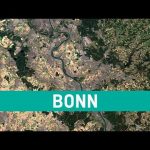
This week’s edition of the Earth from Space programme features a Copernicus Sentinel-2 image of Bonn, one of the oldest cities in Germany, where ESA’s Living Planet Symposium 2022 (https://lps22.esa.int/frontend/index.php?folder_id=4254&page_id=) will take place on 23–27 May.
We are Europe’s gateway to space. Our mission is to shape the development of Europe’s space capability and ensure that investment in space continues to deliver benefits to the citizens of Europe and the world. Check out https://www.esa.int/ to get up to speed on everything space related.
An informative and creative trip into lunar geology using a very special cheesecake recipe in the context of ESA’s Moon Bread recipe challenge. Planetary scientist and ESA Young Graduate Trainee Xiaochen Zhang explains how the Moon formed and evolved using live baking examples.
ESA invites all bakers to try out a special banana bread recipe that contains the main chemical elements found on the Moon. The social media initiative is set to heat up ovens across Europe in the countdown to the first Artemis mission to lunar orbit – one that gets its temperature and power under control by the European Service Module.
We are Europe’s gateway to space. Our mission is to shape the development of Europe’s space capability and ensure that investment in space continues to deliver benefits to the citizens of Europe and the world. Check out https://www.esa.int/ to get up to speed on everything space related.
Solar Orbiter is a space mission of international collaboration between ESA and @NASA.
Solar Orbiter’s closest approach to the Sun, known as perihelion, took place on 26 March. The spacecraft was inside the orbit of Mercury, at about one-third the distance from the Sun to the Earth, and its heatshield was reaching around 500°C. But it dissipated that heat with its innovative technology to keep the spacecraft safe and functioning.
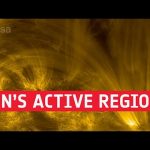
The Extreme Ultraviolet Imager (EUI) on the ESA/NASA Solar Orbiter spacecraft captured this movie on 17 March 2022. It shows the Sun’s appearance at a wavelength of 17 nanometers. This is an extreme ultraviolet wavelength of light that is emitted by the upper atmosphere of the Sun. Known as the corona, this layer of the Sun’s atmosphere exists at a temperature of around one million degrees. EUI takes both full disc images using the Full Sun Imager (FSI) telescope, as well as detailed images of a smaller region using the High Resolution Imager (HRIEUV) telescope.
On 17 March, Solar Orbiter was at roughly a third of the Earth’s distance from the Sun (0.378 AU), and heading for a close approach on 26 March, placing its payload closer to the Sun than any previous solar telescope.
This movie shows FSI’s view of the Sun before zooming in on an active region with HRIEUV. Active regions are where the Sun’s magnetic field bursts out from its interior in loops that rise into the atmosphere. As gas flows around the loops and cools back down on its way to the surface it creates the phenomenon called coronal rain.
Another intriguing feature of this image is the bright gas that makes delicate, lace-like patterns across the Sun. This is called coronal ‘moss’. It usually appears around the footprints, referred to by solar physicists as footpoints, of large coronal loops that are too hot to be seen in the EUI images.
The colour on this image has been artificially added because the original wavelength detected by the instrument is invisible to the human eye.
Credit: ESA & NASA/Solar Orbiter/EUI Team
★ Subscribe: http://bit.ly/ESAsubscribe and click twice on the bell button to receive our notifications.
We are Europe’s gateway to space. Our mission is to shape the development of Europe’s space capability and ensure that investment in space continues to deliver benefits to the citizens of Europe and the world. Check out https://www.esa.int/ to get up to speed on everything space related.
ESA invites all bakers to try out a special banana bread recipe courtesy of Sens’Astro that contains the main chemical elements found on the Moon with a social media challenge inspired by World Baking Day, celebrated on 17 May.
Bakers of all ages are invited to share their results with pictures or videos on social media using the hashtag #ESABakes. The deadline for pastry chefs to submit their cakes is 24 May 2022.
Here are the ingredients: – 3 bananas – 2 eggs – 1 yoghurt (125 ml) – 80 g wheat flour – 30 g oat flour – 40 g almond powder – 100 g chocolate chips – 2 tablespoons maple syrup – 1 teaspoon vanilla extract – 1 teaspoon baking powder – 1 pinch of salt – 1 handful of nuts
We are Europe’s gateway to space. Our mission is to shape the development of Europe’s space capability and ensure that investment in space continues to deliver benefits to the citizens of Europe and the world. Check out https://www.esa.int/ to get up to speed on everything space related.
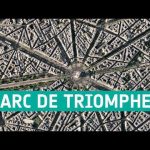
This week’s edition of the Earth from Space programme features a striking, high-resolution image of the Arc de Triomphe, in Paris, captured by Planet SkySat – a fleet of satellites that have just joined ESA’s Third Party Mission Programme.
We are Europe’s gateway to space. Our mission is to shape the development of Europe’s space capability and ensure that investment in space continues to deliver benefits to the citizens of Europe and the world. Check out https://www.esa.int/ to get up to speed on everything space related.
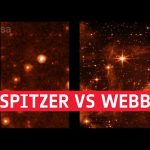
This comparison between @NASA’s Spitzer Space Telescope’s Infrared Array Camera and Webb’s Mid-Infrared Instrument shows a part of the Large Magellanic Cloud. A small satellite galaxy of the Milky Way providing a dense star field to test Webb’s performance.
We are Europe’s gateway to space. Our mission is to shape the development of Europe’s space capability and ensure that investment in space continues to deliver benefits to the citizens of Europe and the world. Check out https://www.esa.int/ to get up to speed on everything space related.
How are space technologies such as earth observation, satellite communications, and navigation systems being applied to our greatest global challenges like climate change, deforestation and disaster resilience? Find out more in this Space Bites talk by David Taverner, Senior Director at Caribou Space.
David Taverner’s career has focused on using space, mobile, internet and renewable energy technology to address challenges in developing countries. Caribou Space works with governments, space agencies, development agencies and private companies – to use space technology for positive impact on society, economy and environment. David supports the UK Space Agency International Partnership Programme, a £150 million fund to use space technology to benefit developing countries. David has also supported ESA’s Earth Observation for Sustainable Development programme, helping define its future strategy and plan.
Space Bites is a series of lectures about space exploration promoted by the ESA Directorate of Human and Robotic Exploration in order to increase the awareness of the importance of space exploration.
Due to Covid-19 restrictions, the lecture was hosted online via video conference.
★ Subscribe: http://bit.ly/ESAsubscribe and click twice on the bell button to receive our notifications.
We are Europe’s gateway to space. Our mission is to shape the development of Europe’s space capability and ensure that investment in space continues to deliver benefits to the citizens of Europe and the world. Check out https://www.esa.int/ to get up to speed on everything space related.
The Crew Dragon capsule carrying ESA astronaut Matthias Maurer and @NASA astronauts Raja Chari, Thomas Marshburn and Kayla Barron home from the International Space Station splashed down off the coast of Florida, USA, on Friday 6 May 2022 at 05:43 BST/06:43 CEST.
Its return marks the end of Crew-3’s almost six-month stay in orbit and the end of Matthias’s first mission, known as Cosmic Kiss.
Crew-3 undocked from the International Space Station in Crew Dragon spacecraft Endurance at 06:20 BST/07:20 CEST Thursday 5 May.
When a Crew capsule splashes down, it is met by nearby ships with experts ready to bring it on board, open the hatch, and welcome the astronauts home. After initial medical checks, the crew is transported by helicopter to shore.
Now that his mission has come to an end, Matthias will return to ESA’s European Astronaut Centre in Cologne, Germany, where he will participate in post-flight debriefings, provide samples for scientific evaluation and readapt to Earth’s gravity with the support of ESA experts.
We are Europe’s gateway to space. Our mission is to shape the development of Europe’s space capability and ensure that investment in space continues to deliver benefits to the citizens of Europe and the world. Check out https://www.esa.int/ to get up to speed on everything space related.
Dive into our navigation activities and hear about the projects, goals, challenges and work environment from ESA staff working in the Navigation Directorate and the Directorate for Technology, Engineering and Quality.
We are Europe’s gateway to space. Our mission is to shape the development of Europe’s space capability and ensure that investment in space continues to deliver benefits to the citizens of Europe and the world. Check out https://www.esa.int/ to get up to speed on everything space related.
Crew Dragon capsule Endurance, carrying ESA astronaut Matthias Maurer and @NASA astronauts Raja Chari, Thomas Marshburn and Kayla Barron, undocked from the International Space Station at 06:20 BST/07:20 CEST Thursday 5 May. The autonomous undocking marked the start of Crew-3’s return to Earth after almost six months in orbit.
Crew-3’s return will take approximately 23.5 hours. Their spacecraft will splash down off the coast of Florida, USA, where ships will be waiting to bring it aboard and welcome the astronauts home.
This return also marks the end of Matthias’s first space mission, Cosmic Kiss. During his time on Station, Matthias supported over 35 European and many more international experiments in microgravity. He also supported International Space Station operations and maintenance and performed a spacewalk with NASA astronaut Raja Chari on 23 March 2022.
After initial medical checks, Crew-3 crew members will be transported by helicopter to shore where a plane will be waiting to bring Matthias back to ESA’s European Astronaut Centre in Cologne, Germany, for his post-flight debriefings and rehabilitation.
We are Europe’s gateway to space. Our mission is to shape the development of Europe’s space capability and ensure that investment in space continues to deliver benefits to the citizens of Europe and the world. Check out https://www.esa.int/ to get up to speed on everything space related.
For the first time since mid 2011, ESA has two astronauts living and working together aboard the International Space Station. Watch a conversation between Samantha Cristoforetti and Matthias Maurer in this rare moment for Europe in space.
The astronauts’ meeting marks a brief crossover between the start of Samantha’s second space mission, Minerva, and Matthias’s final days in orbit for his first mission, Cosmic Kiss.
Samantha arrived with Crew-4 on 28 April in @SpaceX Crew Dragon Freedom, while Matthias will depart with Crew-3 in SpaceX Crew Dragon Endurance in May after almost six months on the Station.
In this video Matthias is impressed by Samantha’s floating ability and says it’s like she never left. Samantha confirms weightless was the thing she missed the most on Earth and talks about the differences on Station since her Italian Space Agency ASI-sponsored Futura mission in 2014-15.
Matthias is pleased with what he’s achieved in his time on Station, including the science he’s supported and the spacewalk he performed. He wishes Samantha all the best for her mission as she wishes him a safe return to Earth.
We are Europe’s gateway to space. Our mission is to shape the development of Europe’s space capability and ensure that investment in space continues to deliver benefits to the citizens of Europe and the world. Check out https://www.esa.int/ to get up to speed on everything space related.
ESA Academy is ESA’s overarching programme for undergraduate to PhD level students. Through a tailored transfer of space know-how and interaction with space professionals, ESA Academy takes students through a learning path that enriches and complements their academic education. In this session, participants will be informed on the different opportunities, ranging from training courses to the manufacturing of satellites, and what it takes to participate in them. Finally, the presenters will provide some insight into the evolving, future, ESA Academy programme.
We are Europe’s gateway to space. Our mission is to shape the development of Europe’s space capability and ensure that investment in space continues to deliver benefits to the citizens of Europe and the world. Check out https://www.esa.int/ to get up to speed on everything space related.
ESA has a number of programmes open to young professionals who are either still studying or have little to no work experience. Join this session to hear about what ESA has to offer. The programmes coordinator together with a few colleagues will share their insight and let you discover which path could lead to your future career!
We are Europe’s gateway to space. Our mission is to shape the development of Europe’s space capability and ensure that investment in space continues to deliver benefits to the citizens of Europe and the world. Check out https://www.esa.int/ to get up to speed on everything space related.
We asked our followers on social media to send in questions they would like to ask the ESA HR Department. This is your opportunity to hear the answers first hand. Have fun learning more about careers and recruitment here at ESA!
0:00-0:21 Introduction 0:21-1:08 What does a typical job interview at ESA look like? 1:08-2:00 How many careers paths can one start at ESA? 2:00- 3:02 I’m a girl and my dream is to become an astronaut. Is this possible? 3:02- 3:27 Do you respond to all applications? 3:27-4:02 How long does an application usually take to process? 4:02-4:26 Any jobs for space enthusiasts over the age of 40? 4:26-5:33 Do you really accept all ages? 5:33-6:52 Can I get into ESA without a background in space? 6:52-8:12 I’m puzzled by the ESA pay scale, are salaries negotiable? 8:12-9:16 What skillset and qualifications does a successful ESA applicant possess? 9:16-10:08 What is your funniest interview experience? 10:08- 10:54 is it hard to get a job at ESA? 10:54-12:11 What kind of benefits do ESA staff get? 12:11-12:58 Anything like free massages? 12:58- 14:06 Why is a masters degree required? 14:06- 15:01 How do you filter candidates? 15:01- 16:17 Do unsuccessful applicants go into a careers black hole? 16:17-16:52 Join us at ESA!
We are Europe’s gateway to space. Our mission is to shape the development of Europe’s space capability and ensure that investment in space continues to deliver benefits to the citizens of Europe and the world. Check out https://www.esa.int/ to get up to speed on everything space related.
Once the preparatory work has been completed, and the satellite developed and manufactured, the next step is launch and operations with a view to ensuring that it fulfils its original mission objectives. The post-launch phase can span many years, often as long or longer than the developmental phase. Some ESA scientific satellites even continue to operate beyond their original planned lifespan.
Join ESA experts working in launchers, operations, mission management and scientific data processing to find out what happens in the final phases of the mission when all the planning and development comes to fruition.
We are Europe’s gateway to space. Our mission is to shape the development of Europe’s space capability and ensure that investment in space continues to deliver benefits to the citizens of Europe and the world. Check out https://www.esa.int/ to get up to speed on everything space related.