It turns out water is great at blocking radiation. But using water as a protection system has its challenges.
A team from the Polymer Chemistry and Biomaterials Group (PBM) at Ghent University in Belgium is looking into a new option: superabsorbent polymers (SAPs).
These materials might be safer and more effective than water alone.
SAPs can soak up hundreds of times their weight in liquid, similar to those “grow monster” toys that expand in water. When swollen with liquid, they’re called “hydrogels.”
📹 ESA – European Space Agency 📸 Lenny Van Daele/Johan Dubruel
In 2022 NASA’s DART spacecraft made history, and changed the Solar System forever, by impacting the Dimorphos asteroid and measurably shifting its orbit around the larger Didymos asteroid. In the process a plume of debris was thrown out into space.
The latest modelling, available on the preprint server arXiv and accepted for publication in the September volume of The Planetary Science Journal, shows how small meteoroids from that debris could eventually reach both Mars and Earth – potentially in an observable (although quite safe) manner.
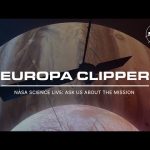
Join mission experts as they discuss NASA’s Europa Clipper mission to an ocean moon of Jupiter and answer your questions live. Submit questions in the chat using #AskNASA.
Clipper is set to launch on a journey to discover the secrets hidden under this moon’s icy crust. Does Europa have conditions to support life?
Europa Clipper is set to launch in October 2024 from NASA’s Kennedy Space Center in Florida. It will arrive at Jupiter in 2030. Learn more about the mission: https://science.nasa.gov/mission/europa-clipper/
Drones are being raced at Delft University of Technology’s ‘Cyber Zoo’ to test the performance of neural-network-based AI control systems planned for next-generation space missions.
The drones have to complete a course as fast as possible, showing how quickly and efficiently they can react, just like a spacecraft would need to in space.
Normally, spacecraft manoeuvres are planned on the ground and then uploaded to the spacecraft to be carried out. But space is full of unpredictable events! Whenever the spacecraft deviates from its planned path for whatever reason, it has to use a lot of fuel and resources to get back on track.
Instead, with this alternative AI control system that’s being tested here, the spacecraft would continuously recalculate and adjusts its path in real-time from wherever it is. This approach would be much more efficient because the spacecraft could handle unexpected changes better and use fewer resources to stay on course.
Ganymede is the primary scientific target of the Jupiter Icy Moons Explorer, Juice, mission. With a diameter of about 5260 km, larger than that of Pluto and Mercury, Ganymede tops the Solar-System moons’ size chart. It is the seventh moon from the gas giant (and the third among the Galilean satellites) and orbits Jupiter at a distance of more than 1 million kilometres. Researchers believe there is tidal heating on Ganymede, although to a much smaller degree than on Io and Europa. This heat could drive some tectonic activity and provide one of the necessary conditions for life to emerge: a source of energy.
This high-resolution mapping of the surface can help constrain the moon’s composition and mineralogy, and assess how habitable Ganymede could be by searching for biosignatures. Observations at various wavelengths will allow astronomers to study non-water-ice material to determine the distribution of biologically essential elements—such as carbon or oxygen—and other important elements—such as magnesium and iron—on the planetary body. The mission will also shed light on the origin and evolution of the materials on the surface by exploring which substances form at Ganymede and which are brought in from the plasma environment around the moon.
To study Ganymede in detail, Juice will enter orbit around it, becoming the first spacecraft to orbit a moon in the outer Solar System. The dedicated orbital tour is expected to last about eight months and will be the final stage of the mission.
📹 @EuropeanSpaceAgency
★ Subscribe: http://bit.ly/ESAsubscribe and click twice on the bell button to receive our notifications.
We are Europe’s gateway to space. Our mission is to shape the development of Europe’s space capability and ensure that investment in space continues to deliver benefits to the citizens of Europe and the world. Check out https://www.esa.int/ to get up to speed on everything space related.
Could Earth-based microbes survive a trip to Mars? Yes! That’s why we made sure our Perseverance Mars rover met cleanliness requirements before leaving our home planet. Dr. Moogega Cooper from the NASA Jet Propulsion Laboratory is here to fill us in. #CountdownToMars
When someone mentions autism, Hollywood movies like Mozart and the Whale or Rain Man, may come to mind. The actors in these movies do depict autistic characteristics but they are often dramatised. For instance, they are portrayed as high-functioning, possessing advanced math skills and having photographic memory – while completely lacking any social skills. While some people suffering from autism do have extraordinary skills, many are of just above average or even average intelligence.
Read more: https://www.richardvanhooijdonk.com/en/advances-artificial-intelligence-robots-help-children-autism-reach-full-potential/
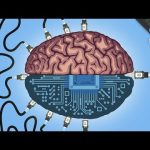
Scientists Are Convinced Mind Transfer Is the Key to Immortality http://motherboard.vice.com/blog/scientists-are-convinced-mind-transfer-is-the-key-to-immortality
“Call it mind transfer, uploading, brain backup, whatever—the idea of copying the human brain to a computer so it can live on without the body has a strong hold on futurists, neuroscientists, and folks that just want to live forever.”
Engineering a memory with LTD and LTP http://www.nature.com/nature/journal/v511/n7509/full/nature13294.html
“It has been proposed that memories are encoded by modification of synaptic strengths through cellular mechanisms such as long-term potentiation (LTP) and long-term depression (LTD).”
If your brain were a computer, how much storage space would it have? http://io9.com/if-your-brain-were-a-computer-how-much-storage-space-w-509687776
“The comparison between the human brain and a computer is not a perfect one, but it does lend itself to some interesting lines of inquiry. For instance: what is the storage capacity of your brain?”
____________________
DNews is dedicated to satisfying your curiosity and to bringing you mind-bending stories & perspectives you won’t find anywhere else! New videos twice daily.