Tag: coverage

  • Ice coverage – the global thaw

    Ice coverage – the global thaw

    One of the causalities of climate change is the diminishing ice cover, affecting our planet in a number of ways. Our satellites observe the planet’s cryosphere and provide key information to understand and respond to global thawing.

    ★ Subscribe: http://bit.ly/ESAsubscribe and click twice on the bell button to receive our notifications.

    Check out our full video catalog: http://bit.ly/SpaceInVideos
    Follow us on Twitter: http://bit.ly/ESAonTwitter
    On Facebook: http://bit.ly/ESAonFacebook
    On Instagram: http://bit.ly/ESAonInstagram
    On Flickr: http://bit.ly/ESAonFlickr

    We are Europe’s gateway to space. Our mission is to shape the development of Europe’s space capability and ensure that investment in space continues to deliver benefits to the citizens of Europe and the world. Check out http://www.esa.int/ESA to get up to speed on everything space related.

    Copyright information about our videos is available here: http://www.esa.int/spaceinvideos/Terms_and_Conditions

    #ESA
    #ClimateChange
    #IceMelt
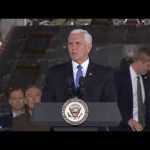
  • NASA Provides Coverage of the National Space Council Meeting

    NASA Provides Coverage of the National Space Council Meeting

    NASA’s Kennedy Space Center in Florida hosted a meeting of the National Space Council, chaired by Vice President Mike Pence on Wednesday, Feb. 21. This was the second meeting of the council, which President Trump reestablished last year. “Moon, Mars, and Worlds Beyond: Winning the Next Frontier” included testimonials from leaders in the civil, commercial, and national security sectors about the importance of the United States’ space enterprise.

    This video is available for download from NASA’s Image and Video Library: https://images.nasa.gov/details-KSC-20180221-VP-CDC01-0001_Vice_President_Mike_Pence_National_Space_Council_Meeting_SSPF-3183467.html

  • Galileo coverage

    Galileo coverage

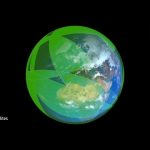
    Europe’s Galileo satellite navigation system has entered its initial operational phase, offering positioning, velocity and timing services to suitably equipped users worldwide. It takes a minimum of four Galileo satellites to be visible in the local sky to fix a receiver’s position. This animation shows how service availability increases as the overall number of satellites in the Galileo constellation goes up.

    Read more about Galileo’s Initial Service:
    http://www.esa.int/Our_Activities/Navigation/Galileo_begins_serving_the_globe

  • NASA Lands Car-Size Rover Beside Martian Mountain

    NASA Lands Car-Size Rover Beside Martian Mountain

    NASA’s most advanced Mars rover Curiosity has landed on the Red Planet. The one-ton rover, hanging by ropes from a rocket backpack, touched down onto Mars Sunday to end a 36-week flight and begin a two-year investigation.

    The Mars Science Laboratory (MSL) spacecraft that carried Curiosity succeeded in every step of the most complex landing ever attempted on Mars, including the final severing of the bridle cords and flyaway maneuver of the rocket backpack.

  • NASA-TV’s Curiosity Landing Coverage Begins Aug. 5

    NASA-TV’s Curiosity Landing Coverage Begins Aug. 5

    The Mars Science Laboratory, the hardest mission ever attempted in planetary robotic exploration is about to prove its mettle with the landing of its Curiosity rover on the Red Planet. Live coverage begins at 11:30 p.m. Eastern on NASA TV.

  • NASA TV Hosts 2012 Venus Transit

    NASA TV Hosts 2012 Venus Transit

    Pre-ingress coverage from NASA Headquarters in Washington, DC, of the last-in-a-lifetime event.

  • ORBITAL DEBRIS SAFELY PASSES INTERNATIONAL SPACE STATION

    ORBITAL DEBRIS SAFELY PASSES INTERNATIONAL SPACE STATION

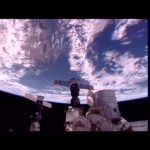
    A small piece of Cosmos 2251 satellite debris safely passed by the International Space Station at 2:38a.m. EDT, Saturday March 24 allowing the six Expedition 30 crew members onboard the orbiting complex to exit their Soyuz spacecraft and resume normal activities.

    The crew sheltered in the two Soyuz spacecraft as a precaution, the third time in station history that a crew has had to shelter in place due to the possibility of a conjunction with orbital debris and the first since June 2011. NASA’s Expedition 30 Commander Dan Burbank and Russian cosmonauts Anton Shkaplerov and Anatoly Ivanishin were in their Soyuz TMA-22 spacecraft attached to the Poisk module on the space-facing side of the Zvezda service module, while cosmonaut Oleg Kononenko, NASA’s Don Pettit and Andre Kuipers of the European Space Agency were in their Soyuz TMA-03M spacecraft on the Earth-facing side of the Zarya module.

    The piece of debris was a remnant of a Feb. 10, 2009 collision between the dormant Cosmos 2251 satellite and an operational Iridium 33 communications satellite. The collision added about 2,000 trackable items to the orbital debris catalog. At the time of closest approach, the debris was moving from left to right in front of the station at an estimated overall miss distance of between 11 and 14 kilometers and a radial miss distance of 120 meters.