Tag: Cupola

  • Orbital Thanksgiving in 360° | Cosmic Kiss

    Orbital Thanksgiving in 360° | Cosmic Kiss

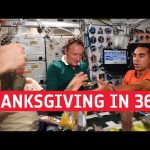
    Feel like a guest and join ESA astronaut Matthias Maurer and his Expedition 66 crew mates enjoying a festive Thanksgiving meal on board the International Space Station in 360°. Explore the space station’s dining area and see what’s on the menu for this year’s orbital Thanksgiving.

    Matthias says: “One of the best things about international collaboration, beyond our daily work on science and operations, is sharing international celebrations and culture. I’m thankful for all my crew mates up here on the International Space Station and everyone supporting our mission from Earth”.

    Matthias was launched to the International Space Station on Crew Dragon Endurance as part of Crew-3 at 02:03 GMT/03:03 CET Thursday 11 November 2021. His ESA mission is known as Cosmic Kiss and will see him live and work in orbit for approximately six months.

    Follow Matthias: https://bit.ly/ESACosmicKiss

    ★ Subscribe: http://bit.ly/ESAsubscribe and click twice on the bell button to receive our notifications.

    Check out our full video catalog: http://bit.ly/SpaceInVideos
    Follow us on Twitter: http://bit.ly/ESAonTwitter
    On Facebook: http://bit.ly/ESAonFacebook
    On Instagram: http://bit.ly/ESAonInstagram
    On LinkedIn: https://bit.ly/ESAonLinkedIn
    On Pinterest: https://bit.ly/ESAonPinterest
    On Flickr: http://bit.ly/ESAonFlickr

    We are Europe’s gateway to space. Our mission is to shape the development of Europe’s space capability and ensure that investment in space continues to deliver benefits to the citizens of Europe and the world. Check out https://www.esa.int/ to get up to speed on everything space related.

    Copyright information about our videos is available here: https://www.esa.int/ESA_Multimedia/Terms_and_Conditions

    #ESA
    #360
    #CosmicKiss
  • Cupola in 360° | Cosmic Kiss

    Cupola in 360° | Cosmic Kiss

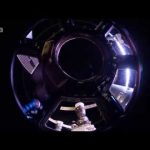
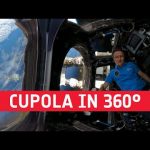
    Join ESA astronaut Matthias Maurer inside the seven-windowed cupola, the International Space Station’s “window to the world” and pan around to enjoy the view.

    The ESA – European Space Agency-built Cupola is the favourite place of many astronauts on the International Space Station.

    It serves not only as a unique photo spot, but also for observing robotic activities of the Canadian Space Agency’s robotic arm Canadarm2, arriving spacecraft and spacewalks.

    Just outside the cupola and behind Matthias is a portion of the Soyuz MS-19 crew ship docked to the Rassvet module and the Prichal docking module attached to the Nauka multipurpose laboratory service module.

    Matthias was launched to the International Space Station on Crew Dragon Endurance as part of Crew-3 at 02:03 GMT/03:03 CET Thursday 11 November. His ESA mission on board is known as Cosmic Kiss and will see him live and work for approximately six months in orbit.

    Follow Matthias: https://bit.ly/ESACosmicKiss

    ★ Subscribe: http://bit.ly/ESAsubscribe and click twice on the bell button to receive our notifications.

    Check out our full video catalog: http://bit.ly/SpaceInVideos
    Follow us on Twitter: http://bit.ly/ESAonTwitter
    On Facebook: http://bit.ly/ESAonFacebook
    On Instagram: http://bit.ly/ESAonInstagram
    On LinkedIn: https://bit.ly/ESAonLinkedIn
    On Pinterest: https://bit.ly/ESAonPinterest
    On Flickr: http://bit.ly/ESAonFlickr

    We are Europe’s gateway to space. Our mission is to shape the development of Europe’s space capability and ensure that investment in space continues to deliver benefits to the citizens of Europe and the world. Check out https://www.esa.int/ to get up to speed on everything space related.

    Copyright information about our videos is available here: https://www.esa.int/ESA_Multimedia/Terms_and_Conditions

    #ESA
    #360
    #CosmicKiss

  • Paxi on the ISS: A view of Earth

    Paxi on the ISS: A view of Earth

    Our alien friend Paxi, ESA Education’s mascot, went to visit American astronaut Mark Vande Hei on board the International Space Station. Vande Hei shows Paxi the views outside of the Cupola, the biggest window on Earth in the International Space Station.

    Credit: ESA/NASA

    ★ Subscribe: http://bit.ly/ESAsubscribe

    Visit ESAKids: http://bit.ly/ESAKids

    #ESA
    #Paxi
    #InternationalSpaceStation

  • Full Space Station tour with Thomas (in French)

    Full Space Station tour with Thomas (in French)

    ESA astronaut Thomas Pesquet’s in-depth tour of the International Space Station in French, recorded during his Proxima mission.
    Thomas performed around 60 scientific experiments for ESA and France’s space agency CNES and other Station partners.

    The mission is part of ESA’s vision to use Earth-orbiting spacecraft as a place to live and work for the benefit of European society while using the experience to prepare for future voyages of exploration further into the Solar System.

    More about the Proxima mission: http://www.esa.int/proxima
    Connect with Thomas Pesquet: http://thomaspesquet.esa.int

  • Space Station fitness

    Space Station fitness

    ESA astronaut Thomas Pesquet gives a guided tour of the International Space Station’s exercise machines. Staying fit is important on Earth but even more so in space as bones and muscle are used less in microgravity and tend to waste away. Astronauts spend around two hours every day doing fitness routines.

    The Space Station has three types of exercise machines: a treadmill (T2), an exercise bicycle (CEVIS) and a weight-lifting machine (ARED).

    Thomas is spending six months on the International Space Station as part of his Proxima mission. During Proxima, Thomas will perform around 50 scientific experiments for ESA and France’s space agency CNES as well as take part in many research activities for the other Station partners.

    The mission is part of ESA’s vision to use Earth-orbiting spacecraft as a place to live and work for the benefit of European society while using the experience to prepare for future voyages of exploration further into the Solar System.

    Connect with Thomas Pesquet: http://thomaspesquet.esa.int

  • Capturing a dragon

    Capturing a dragon

    ESA astronaut Thomas Pesquet with NASA astronauts Shane Kimbrough and Peggy Whitson in the Cupola observatory using the International Space Station’s 16-m robotic arm to grapple the SpaceX Dragon cargo spaceship.

    The video is sped up 20 times with this recording lasting 45 minutes 30 seconds at normal speed. It shows Shane and Thomas monitoring the spacecraft’s approach scanning the monitors, ready to step in if necessary. Thomas took manual control of the robotic arm and extended it to grapple the vehicle when 11 m from the Station. The Dragon CRS-10 flight was launched on 19 February 2017 and berthed with the Space Station four days later.

    The spacecraft carried over 1500 kg of supplies including NASA’s Stratospheric Aerosol and Gas Experiment, or SAGE III, to monitor aerosols, ozone and other gases in Earth’s high atmosphere by looking at the sunlight and moonlight as they pass through. SAGE III is mounted on ESA’s Hexapod – a six-legged tracker that points the facility in the right direction.

    Inside the spacecraft was also France’s CNES space agency Fluidics experiment to probe how fluids behave in weightlessness.
    Thomas is spending six months on the International Space Station as part of his Proxima mission. During Proxima, Thomas will perform around 50 scientific experiments for ESA and France’s space agency CNES as well as take part in many research activities for the other Station partners.

    The mission is part of ESA’s vision to use Earth-orbiting spacecraft as a place to live and work for the benefit of European society while using the experience to prepare for future voyages of exploration further into the Solar System.

    Connect with Thomas Pesquet: http://thomaspesquet.esa.int

  • Space Station 360: Tranquility (Node 3)

    Space Station 360: Tranquility (Node 3)

    Explore the International Space Station’s Tranquility module from all angles on your mobile phone or headset

    Node-3 Tranquility provides life-support for the International Space Station. Part of Tranquility is ESA’s Cupola observation module, a seven-window dome-shaped structure from where the Space Station’s robotic arm, Canadarm 2, is operated as it offers a panoramic view of space and Earth. Launched on Space Shuttle flight STS-130 in February 2010, Node-3 was
    attached to the port side of Node-1 Unity.
    Read more on ESA’s Node-3 minisite: http://www.esa.int/Our_Activities/Human_Spaceflight/Node-3_Cupola

    Explore Node 3 in Flickr, Facebook or YouTube format with your mobile phone and virtual-reality headset, or take the full tour including all Space Station modules with videos and extra information below. This is the final Space Station module in 360°.

    Flickr:
    https://flic.kr/p/Gwv64b

    Facebook:
    https://www.facebook.com/EuropeanSpaceAgency/videos/10153501665600667/

    Full tour:
    http://www.esa.int/Our_Activities/Human_Spaceflight/International_Space_Station/Highlights/International_Space_Station_panoramic_tour

  • Nighttime fisheye timelapse

    Nighttime fisheye timelapse

    This timelapse video from space was taken by ESA astronaut Alexander Gerst from the Cupola observatory module on the International Space Station as it orbited Earth at around 400 km altitude. As the Space Station passes over Earth at night we can see city lights and lightning.

    The International Space Station travels at 28 800 km/h meaning that it only takes 90 minutes to circle Earth completely. Each orbit the Station moves around 2200 km to the West in relation to 90 minutes before.

    Astronauts often use normal consumer digital cameras to take pictures of Earth through Europe’s observatory module Cupola in their spare time. Setting the camera to take an image every few seconds and then playing the images back quickly create this timelapse effect.

    Alexander worked as a geophysicist and volcanologist before he was chosen as an ESA astronaut in 2009. His Blue Dot mission includes an extensive scientific programme of experiments in physical science, biology, and human physiology as well as radiation research and technology demonstrations. All experiments chosen make use of the out-of-this-world laboratory to improve life on Earth or prepare for further human exploration of our Solar System.

  • Aurora Australis from Space Station

    Aurora Australis from Space Station

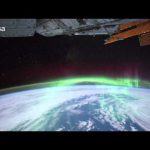
    André took this video of Aurora Australis from the European Cupola module in the Space Station. The beautiful phenomenon is caused by bursts of particles from the Sun pouring down Earth’s magnetic field into the atmosphere.