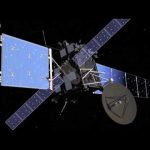
This footage is from 20 January 2014, when ESA’s Rosetta spacecraft awoke from deep space hibernation, more than 800 million kilometres from Earth. After spending 31 months in a power-saving sleep mode to conserve energy while travelling through the cold, outer regions of the Solar System, Rosetta successfully reactivated and sent a signal back to Earth — a simple “Hello, world!” that marked the beginning of one of the most ambitious space missions in history. Rosetta went on to become the first spacecraft to rendezvous with a comet (67P/Churyumov–Gerasimenko), orbit it, and deploy a lander, Philae, to its surface.
On 19 March 2025, our Euclid mission released its first batch of survey data, including a preview of its deep fields. Here, hundreds of thousands of galaxies in different shapes and sizes take centre stage and show a glimpse of their large-scale organisation in the cosmic web.
📹 ESA – European Space Agency 📸 ESA /Euclid/Euclid Consortium/@NASA, image processing by J.-C. Cuillandre, E. Bertin, G. Anselmi Euclid Deep Field South, 70x zoom: ESA/Euclid/Euclid Consortium/NASA, image processing by J.-C. Cuillandre, E. Bertin, G. Anselmi
On 19 March 2025, our Euclid mission released its first batch of survey data, revealing an astonishing view of the cosmic web.
With just one scan of its deep fields, Euclid has already detected 26 million galaxies, some as far as 10.5 billion light-years away! This is just a preview of what’s to come, as Euclid will continue mapping the Universe in unprecedented detail.
What’s in this first release? – Three vast mosaics covering 63 square degrees of the sky – A catalogue of 380 000 galaxies, classified with AI + citizen scientists – 500 new gravitational lens candidates, almost all never seen before – The first hints of Euclid’s full cosmic atlas, which will eventually cover one-third of the sky
This data is a huge leap forward in understanding how galaxies are distributed across the Universe and how dark matter and dark energy shape the cosmos.
Over the next six years, Euclid will revisit these deep fields 30 to 52 times, uncovering billions of galaxies and pushing the astrophysics’ boundaries.
📹 @europeanspaceagency 📸 ESA /Euclid/Euclid Consortium/@NASA, image processing by J.-C. Cuillandre, E. Bertin, G. Anselmi Euclid Deep Field South, 70x zoom: ESA/Euclid/Euclid Consortium/NASA, image processing by J.-C. Cuillandre, E. Bertin, G. Anselmi
Witness the breathtaking beauty of our cosmic neighbor—the Andromeda galaxy—located 2.5 million light-years away. This spiral disk galaxy appears elliptical from Earth due to its tilted orientation. In this panoramic view, young blue stars shimmer along the galaxy’s outer rim, while older yellowish stars cluster toward the bright central hub, resembling the yolk of a cosmic fried egg. 🍳💫
This vibrant portrait is the result of over 10 years of observations and more than 600 snapshots captured by the Hubble Space Telescope. Altogether, it reveals the mesmerizing glow of 200 million stars scattered across the galaxy’s immense 200,000-light-year-wide disk. As the camera zooms into the central region, a dense sea of ancient stars comes into view. Panning across the galaxy’s expanse, we see intricate patterns of dark dust clouds weaving through space, while vibrant blue star clusters stand out along the edges, signaling regions of ongoing star formation. 🌌✨
Prepare to be amazed as we explore one of the largest and most detailed galactic images ever captured—offering a glimpse into the heart of a distant galaxy, yet eerily similar to our own Milky Way.
📸 NASA, ESA, B. Williams (University of Washington), G. Bacon (STScI) 🎶 Rain Clouds – Beautiful Visions
The AI-powered innovation transforming space medicine. Astronauts can now perform expert-level ultrasounds without Earth-based guidance—keeping them healthy on deep-space missions while paving the way for smarter, more accessible healthcare on Earth.
The future of exploration starts here!
📸 ESA/NASA – Alexander Gerst 📹 ESA – European Space Agency
ESA’s Euclid mission is on a quest to unveil the nature of two elusive ‘dark’ entities. As the renowned theoretical physicist Stephen Hawking remarked in 2013, “The missing link in cosmology is the nature of dark matter and dark energy”.
During the last 70 years, scientists have made enormous progress in understanding the very initial phases of the Universe and its evolution to the present day. Thanks to advances in observations and theoretical modelling, a clear picture has emerged of how stars form, and how galaxies grow and interact with each other, coming together to form groups and clusters.
Yet, fundamental mysteries remain. 95% of the Universe appears to be made up of unknown ‘dark’ matter and energy. Dark matter and energy affect the motion and distribution of visible sources but do not emit, reflect or absorb any light. And scientists do not know what these dark entities actually are.
To address this question, Euclid will create a great map of the large-scale structure of the Universe across space and time by observing with unprecedented accuracy billions of galaxies out to 10 billion light-years. This is not easy, and making sure that Euclid is up to the task has required the expertise and dedication of many people over several years of work.
This video captures the journey behind the Euclid mission, from a human and intensely visual perspective. It shows tiny screws, winding cables and shiny surfaces in a whole new light, revealing how each piece comes together to form the space telescope. Be drawn in by awe-inspiring photos of the cosmos, and stay for the seemingly choreographed ballet of teamwork necessary to assemble and test the spacecraft, before being swept away by the emotion of the launch into space.
Euclid’s adventure has begun. With its observations during the coming years, it will help us uncover the missing link in cosmology and open the gate to the ‘dark’ side of the Universe.
Credit: ESA/Studio Redgrove CC BY-SA 3.0 IGO
★ Subscribe: http://bit.ly/ESAsubscribe and click twice on the bell button to receive our notifications.
We are Europe’s gateway to space. Our mission is to shape the development of Europe’s space capability and ensure that investment in space continues to deliver benefits to the citizens of Europe and the world. Check out https://www.esa.int/ to get up to speed on everything space related.
ESA’s Euclid mission will create a 3D-map of the Universe that scientists will use to measure the properties of dark energy and dark matter and uncover the nature of these mysterious components. The map will contain a vast amount of data, it will cover more than a third of the sky and its third dimension will represent time spanning 10 billion years of cosmic history.
But dealing with the huge and detailed set of novel data that Euclid observations will produce is not an easy task. To prepare for this, scientists in the Euclid Consortium have developed one of the most accurate and comprehensive computer simulations of the large-scale structure of the Universe ever produced. They named this the Euclid Flagship simulation.
Running on large banks of advanced processors, computer simulations provide a unique laboratory to model the formation and evolution of large-scale structures in the Universe, such as galaxies, galaxy clusters, and the filamentary cosmic web they form. These state-of-the-art computational techniques allow astrophysicists to trace the motion and behavior of an extremely large number of dark-matter particles over cosmological volumes under the influence of their own gravitational pull. They replicate how and where galaxies form and grow, and are used to predict their distribution across the celestial sphere.
Explore the Euclid Flagship simulation in this video and get a sneak preview of the structure of the dark Universe, as we currently model it. New insights will be brought to you by the Euclid mission in the coming years.
Credits: ESA/Euclid Consortium/Cacao Cinema The authors kindly acknowledge the use of the Splotch package: http://www.mpa-garching.mpg.de/~kdolag/Splotch
★ Subscribe: http://bit.ly/ESAsubscribe and click twice on the bell button to receive our notifications.
We are Europe’s gateway to space. Our mission is to shape the development of Europe’s space capability and ensure that investment in space continues to deliver benefits to the citizens of Europe and the world. Check out https://www.esa.int/ to get up to speed on everything space related.
ESA’s latest astrophysics mission, Euclid, lifted off on a Space X Falcon 9 from Cape Canaveral in Florida, USA, at 17:12 CEST on 1 July 2023.
Euclid has now started its month-long journey to Sun-Earth Lagrange point L2, located 1.5 million kilometres from Earth, in the opposite direction from the Sun.
The telescope will survey one third of the sky with unprecedented accuracy and sensitivity. By observing billions of galaxies out to 10 billion light-years, it will create the most extensive 3D-map of the Universe, with the third dimension representing time.
ESA’s Euclid mission is designed to explore the composition and evolution of the dark Universe. Euclid will chart how the Universe has expanded and how large-scale structure is distributed across space and time, revealing more about the role of gravity and the nature of dark energy and dark matter.
Four weeks after launch, Euclid will enter its orbit around L2. Once in orbit, mission controllers will start the activities to verify all functions of the spacecraft, check out the telescope and finally turn the instruments on. Following this, scientists and engineers will be engaged in an intense two-month phase of testing and calibrating Euclid’s scientific instruments, and preparing for routine observations. The telescope begins its early phase of the survey of the Universe three months after launch.
We are Europe’s gateway to space. Our mission is to shape the development of Europe’s space capability and ensure that investment in space continues to deliver benefits to the citizens of Europe and the world. Check out https://www.esa.int/ to get up to speed on everything space related.
ESA’s latest astrophysics mission, Euclid, lifted off on a Space X Falcon 9 from Cape Canaveral in Florida, USA, at 17:12 CEST on 1 July 2023.
Euclid has now started its month-long journey to Sun-Earth Lagrange point L2, located 1.5 million kilometres from Earth, in the opposite direction from the Sun.
The telescope will survey one third of the sky with unprecedented accuracy and sensitivity. By observing billions of galaxies out to 10 billion light-years, it will create the most extensive 3D-map of the Universe, with the third dimension representing time.
ESA’s Euclid mission is designed to explore the composition and evolution of the dark Universe. Euclid will chart how the Universe has expanded and how large-scale structure is distributed across space and time, revealing more about the role of gravity and the nature of dark energy and dark matter.
Four weeks after launch, Euclid will enter its orbit around L2. Once in orbit, mission controllers will start the activities to verify all functions of the spacecraft, check out the telescope and finally turn the instruments on. Following this, scientists and engineers will be engaged in an intense two-month phase of testing and calibrating Euclid’s scientific instruments, and preparing for routine observations. The telescope begins its early phase of the survey of the Universe three months after launch.
We are Europe’s gateway to space. Our mission is to shape the development of Europe’s space capability and ensure that investment in space continues to deliver benefits to the citizens of Europe and the world. Check out https://www.esa.int/ to get up to speed on everything space related.
ESA’s Euclid space telescope is nearly ready for launch. The spacecraft arrived in Florida on 30 April for final tests and checks, and now being integrated with the SpaceX Falcon 9 rocket that will carry it into space.
For the team at ESA’s European Space Operations Centre (ESOC) in Darmstadt, Germany, this means that the most intense phase of their work is about to begin. To prepare themselves, the team has simulated the launch operations, tackling issues ranging from team members falling ill to a computer mouse being taped over.
Euclid is ESA’s space telescope designed to explore the dark Universe. The mission will create the largest, most accurate 3D map of the Universe ever produced across 10 billion years of cosmic time. Euclid will explore how the Universe has expanded and how large-scale structure is distributed across space and time, revealing more about the role of gravity and the nature of dark energy and dark matter.
Euclid is targeted to launch on a SpaceX Falcon 9 rocket from Cape Canaveral in Florida, USA, at 11:11 local time / 16:11 BST / 17:11 CEST on Saturday 1 July 2023. A back-up launch date of Sunday 2 July 2023 is foreseen.
Credit: ESA – European Space Agency
★ Subscribe: http://bit.ly/ESAsubscribe and click twice on the bell button to receive our notifications.
We are Europe’s gateway to space. Our mission is to shape the development of Europe’s space capability and ensure that investment in space continues to deliver benefits to the citizens of Europe and the world. Check out https://www.esa.int/ to get up to speed on everything space related.
ESA’s Euclid mission is designed to explore the composition and evolution of the dark Universe. The space telescope will create a great map of the large-scale structure of the Universe across space and time by observing billions of galaxies out to 10 billion light-years, across more than a third of the sky. Euclid will explore how the Universe has expanded and how structure has formed over cosmic history, revealing more about the role of gravity and the nature of dark energy and dark matter.
Euclid is a fully European mission, built and operated by ESA, with contributions from NASA. The Euclid Consortium – consisting of more than 2000 scientists from 300 institutes in 13 European countries, the US, Canada and Japan – provided the scientific instruments and scientific data analysis. ESA selected Thales Alenia Space as prime contractor for the construction of the satellite and its Service Module, with Airbus Defence and Space chosen to develop the Payload Module, including the telescope. NASA provided the near-infrared detectors of the NISP instrument.
More about Euclid: esa.int/euclid
★ Subscribe: http://bit.ly/ESAsubscribe and click twice on the bell button to receive our notifications.
We are Europe’s gateway to space. Our mission is to shape the development of Europe’s space capability and ensure that investment in space continues to deliver benefits to the citizens of Europe and the world. Check out https://www.esa.int/ to get up to speed on everything space related.
Visualisation of how the Rosetta spacecraft wakes up from deep space hibernation, 673 million kilometres from the Sun, on 20 January 2014.
Prior to entering hibernation on 8 June 2011, Rosetta was oriented so that its solar arrays faced the Sun, and it began rotating once per minute for stability. The only devices left running were its computer and several heaters.
Rosetta’s computer is programmed to carry out a sequence of events to re-establish contact with the Earth on 20 January, starting with an ‘alarm clock’ at 10:00 GMT. Immediately after, the star trackers begin to warm up. Around 6 hours later the thrusters are fired and the slow rotation stops. A slight adjustment is made to Rosetta’s orientation to ensure that the solar arrays now face the Sun. Then the star trackers switch on to determine its attitude. The spacecraft rotates towards Earth, and the transmitter is switched on. Then Rosetta’s high-gain antenna points to Earth and the signal is sent. The journey takes 45 minutes before the signal is received and mission controllers can begin to check Rosetta’s health, ready for the next phase of the mission.
The first opportunity for receiving a signal on Earth is between 17:30 GMT and 18:30 GMT.