Tag: deployment test

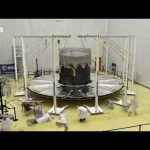
  • Gaia sunshield deployment time-lapse sequence

    Gaia sunshield deployment time-lapse sequence

    Time-lapse sequences from the deployment test of the Gaia Deployable Sunshield Assembly (DSA) on 10 October 2013, in the cleanroom at Europe’s spaceport in Kourou.

    Since the DSA will operate in microgravity, it is not designed to support its own weight in the one-g environment at Earth’s surface. Therefore, during deployment testing on the ground, the DSA panels are attached to a system of support cables and counterweights that bears their weight, preventing damage and providing a realistic test environment.

    Once in space, the sunshield has two purposes: to shade Gaia’s sensitive telescopes and cameras, and to provide power to operate the spacecraft. Gaia will always point away from the Sun, so the underside of the skirt is partially covered with solar panels to generate electricity.

    Credit: ESA
  • Gaia sunshield deployment test

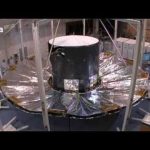
    Gaia sunshield deployment test

    Gaia Deployable Sunshield Assembly (DSA) integrated onto the spacecraft and undergoing deployment testing at Astrium Toulouse. Since the DSA will operate in microgravity, it is not designed to support its own weight in the one-g environment at Earth’s surface. During deployment testing, the DSA panels are attached to a system of support cables and counterweights that bears their weight, preventing damage and providing a realistic test environment. The support system is clearly visible in the video.

    As the DSA deploys, the flight model thermal tent comes into view and the mechanically representative dummy payload can be seen through the aperture in the tent. Towards the end of the deployment sequence, the flight model service module comes into view.

    This test demonstrated correctness of alignment following integration, confirmed the deployment functionality and verified the flatness of the deployed DSA.

    The video shows an edited, time-lapse sequence from the deployment of the DSA during a test campaign; the entire deployment sequence takes about 20 minutes.