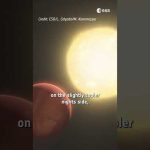
Scientists might have just found the first glory on a world outside our Solar System! “Glory” are colourful concentric rings of light that occur only under peculiar conditions. If confirmed, this finding could shed light on the mysterious atmosphere of the scorching hot gas giant WASP-76b.
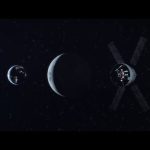
At 4:52 p.m. EST (21:52 UTC), the Orion spacecraft will perform a burn burn to enter a distant retrograde orbit around the Moon, an orbit that is high altitude from the surface of the Moon and opposite the direction of the Moon travels around Earth. Live coverage will begin at 4:30 p.m. EST (21:30 UTC).
At 1:47 a.m. EST (6:47 UTC) on November 16, NASA’s Orion spacecraft launched aboard the Space Launch System (SLS), the world’s most powerful rocket, from historic Launch Complex 39B at NASA’s Kennedy Space Center on a path to the Moon, officially beginning the Artemis I mission. This mission is the first integrated test of NASA’s deep space exploration systems: the Orion spacecraft, the SLS rocket, and Kennedy Space Center ground systems.
Astronomers have pushed NASA’s Hubble Space Telescope to its limits by finding what they believe is the most distant, ancient object ever seen in the universe. Its light traveled 13.2 billion years to reach Hubble, roughly 150 million years longer than the previous record holder. The age of the universe is 13.7 billion years. The dim object is a tiny, compact galaxy of blue stars that existed 480 million years after the big bang, only four percent of the universe’s current age. It is so small, more than one hundred similarly-sized mini-galaxies would be needed to make up our Milky Way.
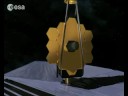
Seen here in this short movie, the JWST is the successor to the NASA/ESA Hubble Space Telescope and, with a six-metre mirror, it will be almost three times the size of Hubble.