Tag: DLR

  • Ariane 6 upper stage installed for tests | Timelapse

    Ariane 6 upper stage installed for tests | Timelapse

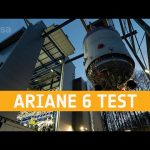
    This timelapse video shows the hot firing model of the Ariane 6 upper stage being installed on the P5.2 test stand at the @DLR German Aerospace Center in Lampoldshausen, Germany on 16 February 2021.

    After arrival from the @ArianeGroup facilities in Bremen, this 5.4 m-diameter upper stage was hoisted out of its container, tilted vertical and installed on the test stand.

    Tests will simulate all aspects of flight including stage preparation such as fuelling with liquid oxygen and liquid hydrogen, and draining its tanks.

    Data will be gathered on non-propulsive ballistic phases, tank pressurisation to increase performance, Vinci engine reignitions, exhaust nozzle manoeuvres, ending with passivation where all remaining internal energy is removed. Tests will typically last about 18 hours each.

    ★ Subscribe: http://bit.ly/ESAsubscribe and click twice on the bell button to receive our notifications.

    Check out our full video catalog: http://bit.ly/SpaceInVideos
    Follow us on Twitter: http://bit.ly/ESAonTwitter
    On Facebook: http://bit.ly/ESAonFacebook
    On Instagram: http://bit.ly/ESAonInstagram
    On Flickr: http://bit.ly/ESAonFlickr

    We are Europe’s gateway to space. Our mission is to shape the development of Europe’s space capability and ensure that investment in space continues to deliver benefits to the citizens of Europe and the world. Check out https://www.esa.int/ to get up to speed on everything space related.

    Copyright information about our videos is available here: https://www.esa.int/ESA_Multimedia/Terms_and_Conditions

    #ESA
    #VinciEngine
    #Ariane6

  • Luca meets space cyber assistant Cimon

    Luca meets space cyber assistant Cimon

    ESA astronaut Luca Parmitano tested new functionality for the astronaut aid Cimon relating to mood detection and enjoyed a few favourite songs on the first weekend of February 2020, his last weekend in space for the Beyond mission on the International Space Station.

    Short for Crew Interactive Mobile CompanioN, Cimon is a 3D-printed plastic sphere designed to test human-machine interaction in space. It was developed and built by Airbus in Friedrichshafen and Bremen, Germany, on behalf of German aerospace centre DLR and uses artificial intelligence software by IBM Watson. Ludwig Maximilians University Clinic in Munich (LMU) is in charge of the project’s scientific aspects. Cimon was first used by ESA astronaut Alexander Gerst during his 2018 Horizons.

    Cimon weighs around 5 kg on Earth and has a display screen at its centre. Its main aim is to support and increase astronaut efficiency by displaying and explaining information needed to carry out scientific experiments and repairs.

    Other applications include mobile photography and videography and the ability to document experiments, search for objects and maintain an inventory. Cimon can also see, hear and understand what it observes and is equipped with an autonomous navigation system, allowing astronauts to issue voice commands like you would to virtual assistants like Alexa, Siri or Cortana on the ground.

    Circling our planet at 28 800 km/h the International Space Station offers space for six astronauts to conduct experiments for researchers all over the world in weightlessness as well as test and demonstrate techniques needed to further explore our Solar System.

    Europe’s laboratory Columbus was launched over 10 years ago and more than 200 experiments have been done inside. Columbus houses as many disciplines as possible in a small volume, from astrobiology to solar science through metallurgy and psychology. Countless papers have been published drawing conclusions from experiments performed in Columbus, and Cimon is another example of the research conducted in space.

    Follow Luca: http://bit.ly/ESALucaParmitano

    ★ Subscribe: http://bit.ly/ESAsubscribe and click twice on the bell button to receive our notifications.

    Check out our full video catalog: http://bit.ly/SpaceInVideos
    Follow us on Twitter: http://bit.ly/ESAonTwitter
    On Facebook: http://bit.ly/ESAonFacebook
    On Instagram: http://bit.ly/ESAonInstagram
    On Flickr: http://bit.ly/ESAonFlickr

    We are Europe’s gateway to space. Our mission is to shape the development of Europe’s space capability and ensure that investment in space continues to deliver benefits to the citizens of Europe and the world. Check out http://www.esa.int/ESA to get up to speed on everything space related.

    Copyright information about our videos is available here: http://www.esa.int/spaceinvideos/Terms_and_Conditions

    #ESA
    #LucaParmitano
    #MissionBeyond

  • What is the origin of the Moon?

    What is the origin of the Moon?

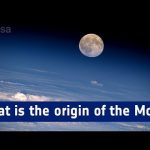
    The Moon has been circling the Earth for over four billion years, but where did it come from?

    In this video, Ralf Jaumann, planetary geologist at the German Aerospace Centre, DLR, discusses the four theories that could explain the origin of the Earth-Moon system.

    There are four theories about the origin of the Earth-Moon system.

    The first is that Earth captured a celestial body in its orbit. Another possibility is that a rapidly rotating Earth could have thrown material out to form the Moon around it. A third theory is that Earth and the Moon formed at the same time out of the same material. Today, most scientists believe the Moon is ‘Earth’s child’ – a large body collided with Earth, destroying our planet’s mantle and sending material into orbit from which the Moon formed. This ‘big splash’ theory would explain why the Moon’s rocks are similar to those on Earth.

    Find out more about the why and how of lunar exploration on ESA’s interactive guide of the Moon: https://lunarexploration.esa.int/#/intro

    ★ Subscribe: http://bit.ly/ESAsubscribe and click twice on the bell button to receive our notifications.

    Check out our full video catalog: http://bit.ly/SpaceInVideos
    Follow ESA on Twitter: http://bit.ly/ESAonTwitter
    On Facebook: http://bit.ly/ESAonFacebook
    On Instagram: http://bit.ly/ESAonInstagram
    On Flickr: http://bit.ly/ESAonFlickr

    ESA is Europe’s gateway to space. Our mission is to shape the development of Europe’s space capability and ensure that investment in space continues to deliver benefits to the citizens of Europe and the world. Check out http://www.esa.int/ESA to get up to speed on everything space related.

    Copyright information about our videos is available here: http://www.esa.int/spaceinvideos/Terms_and_Conditions

  • Fly over Neukum crater

    Fly over Neukum crater

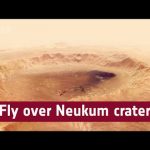
    This movie, based on images taken by ESA’s Mars Express, showcases the 102 km wide Neukum Crater in the southern hemisphere of Mars.

    The crater is named for the German physicist and planetary scientist, Gerhard Neukum, one of the founders of ESA’s Mars Express mission who inspired and led the development of the high-resolution stereo camera on Mars Express.

    This complex impact crater has a diverse geologic history, as indicated by various features on the crater rim and floor. Particularly striking are the dark dune fields, likely made up of volcanic material blown in and shaped by strong winds.

    The crater’s shallow interior has been infilled by sediments over its history. It is also marked with two irregular depressions that may be a sign of a weaker material that has since eroded away, leaving behind some islands of more resistant material.

    Over time the crater rim has undergone varying degrees of collapse, with landslides and slumped material visible in the crater walls. Many smaller craters have also overprinted the rim and pockmarked the interior since Neukum Crater was formed, highlighting its long history.

    Neukum Crater is situated in Noachis Terra, one of the oldest known regions on Mars, dating back to at least 3.9 billion years.

    Credits: Animation: ESA/DLR/FU Berlin, CC BY-SA 3.0 IGO; Music: Coldnoise, CC BY-SA 4.0 and Adrian Neesemann

    ★ Subscribe: http://bit.ly/ESAsubscribe

    Learn more: http://bit.ly/ESACraterNeukum

  • Successful first test of the Ariane 6 Vulcain 2.1 engine

    Successful first test of the Ariane 6 Vulcain 2.1 engine

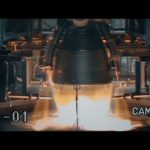
    The first hot firing of Ariane 6’s Vulcain 2.1 main engine was performed in January 2018 at the DLR German Aerospace Center test facility in Lampoldshausen, Germany.

    The engine, developed by ArianeGroup, has a simplified and more robust nozzle, a gas generator made through additive manufacturing, and an oxygen heater for oxygen tank pressurisation. These features lower the cost of the engine and simplify manufacturing.

    Credit: ArianeGroup

    Latest news from ArianeGroup on Facebook at:
    https://www.facebook.com/ArianeGroup/

  • Earth from Space: Special edition

    Earth from Space: Special edition

    Discover more about our planet with the Earth from Space video programme. This special edition is dedicated to the International Charter Space and Major Disasters. Charter Secretary Jens Danzeglocke, from the DLR German Aerospace Center, joins the show to tell us more.

  • Introduction to Astrobiology

    Introduction to Astrobiology

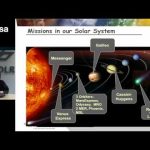
    In this introductory lecture, Dr. Gerda Horneck of the DLR Institute of Aerospace Medicine in Cologne describes Astrobiology as a newly emerging field of science.

    Astrobiology comprises the study of the overall pattern of chemical evolution of potential precursors of life, in the interstellar medium, and on the planets and small bodies of our solar system. Astrobiology also consists of studying the history of life on Earth back to its roots, deciphering the environments of planets in our solar system and of their satellites and searching for other planetary systems in our Galaxy.

    Hereby, Astrobiology provides clues to the understanding of the origin, evolution and distribution of life and its interaction with the environment, here on Earth and in the Universe.