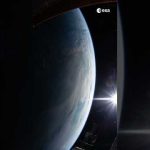
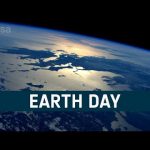
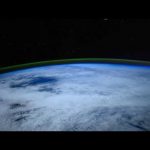
Each year on 22 April, people across the planet join forces to raise awareness about the unequivocal effects of climate change and the importance of protecting our planet for future generations. We celebrate Earth Day every day at ESA. 💙
📹 European Space Agency (ESA) 📸 ESA/NASA 🎙️ The audio features a clip from David Attenborough
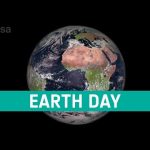
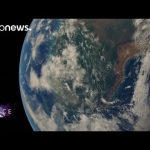
Each year on 22 April, people across the planet join forces to raise awareness about the depleting quality of the environment, the unequivocal effects of climate change and the importance of protecting our planet for future generations. We celebrate Earth Day every day at ESA. This week, this spectacular image of Earth is brought to you by the Meteosat Second Generation series of missions.
Music: First Survivors 4 by Los Angeles-based British composer, Luke Richards. Sourced from Audio Network Limited.
To celebrate Earth Day, this week’s edition of the Earth from Space programme features a spectacular image of Earth captured by Meteosat Second Generation.
We are Europe’s gateway to space. Our mission is to shape the development of Europe’s space capability and ensure that investment in space continues to deliver benefits to the citizens of Europe and the world. Check out https://www.esa.int/ to get up to speed on everything space related.
In summer 2018, ESA joined with the musician Vangelis and the family of scientist Prof. Stephen Hawking to beam a message marking his passing to the nearest black hole. On 22 April 2020, Earth Day, we’re transmitting this poignant message to all of planet Earth – as a message of hope, to say that, by working together, we can overcome this crisis and others facing humankind.
The message reads:
“I am very aware of the preciousness of time. Seize the moment. Act now.
“I have spent my life travelling across the Universe inside my mind. Through theoretical physics I have sought to answer some of the great questions but there are other challenges, other big questions which must be answered, and these will also need a new generation who are interested, engaged and with an understanding of science.
“How will we feed an ever-growing population, provide clean water, generate renewable energy, prevent and cure disease and slow down global climate change?
“I hope that science and technology will provide the answers to these questions, but it will take people, human beings with knowledge and understanding to implement the solution.
“One of the great revelations of the space age has been a perspective that has given humanity on ourselves. When we see the Earth from space we see ourselves as a whole; we see the unity and not the divisions. It is such a simple image, with a compelling message: one planet, one human race.
“We are here together, and we need to live together with tolerance and respect. We must become global citizens.
“I have been enormously privileged through my work to be able to contribute to our understanding of the Universe. But it would be an empty Universe indeed, if it were not for the people I love and who love me.
“We are all time travellers journeying together into the future. But let us work together to make that future a place we want to visit. Be brave, be determined, overcome the odds. It can be done.
We are Europe’s gateway to space. Our mission is to shape the development of Europe’s space capability and ensure that investment in space continues to deliver benefits to the citizens of Europe and the world. Check out http://www.esa.int/ESA to get up to speed on everything space related.
NASA’s unique vantage point of space allows us to better understand Earth’s interconnected systems and use that knowledge to live sustainably on our home planet, protect life around the world, and adapt to natural and human-caused changes. As NASA joins the world in observing the 50th anniversary of Earth Day, we reaffirm our commitment to understanding our planet’s interconnected systems to help protect them for future generations.
Of all the planets NASA has explored, none have matched the dynamic complexity of our own. Earth is a very special place. From the vantage point of space, the perspective of sky and sea, and all across the land, we study our planet not only to learn about it, but also to protect it.
Earth is the largest rocky planet in our Solar System, and the only body we know of capable of supporting life. With so much news about exoplanets dominating the headlines, in this episode of Space we take a step back to take a look at Earth as a planet.
Four and a half billion years old and 149.6 million kilometres from the Sun, it’s not like anything else in the Solar System: “Planet Earth is quite a particular planet,” says Josef Aschbacher, Director of Earth Observation at ESA. “We have 70% of water, we have land masses which are actually moving over time. We have an atmosphere which is rich in oxygen, nitrogen, in water vapour. All of these are necessities in order to have life on a planet like this.”
Rome is a perfect spot to look at the defining characteristics of planet Earth, in particular the presence of liquid water. Our home planet has the right temperature and correct atmospheric pressure for water to flow on its surface, making it so hospitable to life.
On April 22nd, Earth Day is an annual world wide celebration in support of environmental protection. NASA undertakes various efforts to protect and understand our home planet. NASA wants to capture what people all around the world are doing to protect, improve and celebrate Earth… So, where on EARTH will you be? http://www.nasa.gov/24Seven #24Seven
NASA uses the vantage point of space to increase our understanding of our home planet, improve lives and safeguard our future. The agency also develops new ways to observe and study Earth’s interconnected natural systems with long-term data records, shares this unique knowledge, and works with institutions around the world to gain new insights into how our planet is changing. Here’s a brief thirty second video showing some of the sights and sounds of our Earth and why it’s important to us all to appreciate our unique home in the solar system.