On April 8, 2024, North America’s last total solar eclipse until 2045 moved across the continent. It made landfall in Mexico, crossed the United States from Texas to Maine, and departed across Canada’s Atlantic coast.
This video offers viewers highlights of the eclipse from NASA’s live commentary. Different vantage points include the International Space Station, WB-57 aircraft, and 12 telescopes stationed across North America.
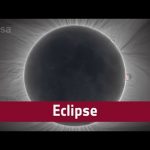
A total solar eclipse occurs when the Moon passes between the Sun and the Earth, completely blocking the face of the Sun. The sky darkens as if it were dawn or dusk.
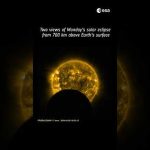
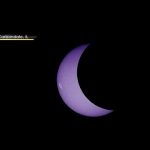
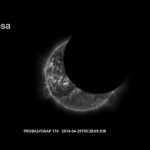
ESA’s Proba-2 captured two partial solar eclipses on 8 April 2024.
A solar eclipse occurs when the Moon passes between Earth and the Sun, totally or partially blocking the Sun from Earth’s point of view. On 8 April, lucky viewers across North America witnessed the Moon blocking out the Sun in its entirety for a few minutes, while those north and south of the ‘total eclipse path’ witnessed a partial eclipse.
Throughout the eclipse period, the Moon crossed Proba-2’s field of view twice, appearing as a partial solar eclipse. The satellite flies around 700 km above Earth’s surface in what is called a Sun-synchronous orbit, each orbit lasting around 100 minutes.
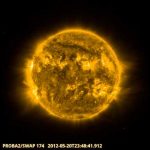
The video was produced from images taken by Proba-2’s SWAP telescope, which observes the Sun in extreme ultraviolet light. At these wavelengths, the turbulent nature of the Sun’s surface and corona – the Sun’s extended atmosphere – become visible. These measurements have to be made from space, because Earth’s atmosphere doesn’t allow such short wavelengths of light to pass through.
A total solar eclipse provides a unique opportunity to see the Sun’s corona from Earth’s surface, using visible light. As the Moon blocks most of the Sun’s bright light, the faint corona can be discerned. By comparing the SWAP ultraviolet images to what is seen by (visible light) telescopes on Earth, we can learn about the temperature and behaviour of different structures in the corona.
Other solar missions also made the most of the unique measurement opportunities provided by the eclipse. For example, ESA’s Solar Orbiter was positioned close to the Sun and at a 90-degree angle from Earth’s view throughout the eclipse. This allowed it to complement Earth-based observations by monitoring the Sun’s corona side-on, including any solar eruptions pointing in Earth’s direction.
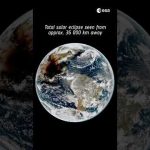
A total solar eclipse swept across North America yesterday, blocking out the Sun momentarily with parts of the continent plunged into darkness. Geostationary satellites orbiting 36 000 km away captured images of the rare celestial event.
These images, captured by the Geostationary Operational Environmental Satellite (GOES-16), captured the moon’s shadow moving across North America from approximately 16:00 to 23:00 CEST (15:00 to 22:00 BST.)
A total solar eclipse occurs when the Moon passes between the Sun and Earth and, for a short period, blocks the face of the Sun, save for a visible ring of light, known as the Sun’s corona.
The track of the moon’s shadow across Earth’s surface, called the path of totality, spanned across the North American continent – from Mexico to the very eastern tip of Canada.
The GOES series is a collaborative development and acquisition effort between National Oceanic and Atmospheric Administration (NOAA) and NASA. The GOES-16 (GOES-East) satellite, the first of the series, provides continuous imagery and atmospheric measurements of Earth’s western hemisphere and monitors space weather.
The Copernicus Sentinel-3 mission also captured images of the eclipse with its Sea and Land Surface Temperature Radiometer (SLSTR).
The eclipse also acts as a laboratory for researching what happens to weather when the Moon’s shadow passes over. The shadow makes air temperatures drop and can cause clouds to evolve in different ways. Data from GOES, Sentinel-3 and other satellites are now being used to explore these effects.
During a solar eclipse the Earth is plunged into darkness and the Sun’s ghostly atmosphere becomes visible. Scientists travel the globe to experience total solar eclipses, which occur for just a few minutes at a time every 18 months or so. But what exactly causes solar eclipses, and how do scientists try to make their own, including with ESA’s new Proba-3 mission?
Timestaps of the video: 00:00 – 00:32 – Intro 00:33 – 01:45 – How do solar eclipses happen? 01:46 – 02:45 – How do we know anything about the solar corona given that eclipses occur so rarely? 02:46 – 04:00 – How can we create a perfect artificial solar eclipse in space?
Credits: ESA – European Space Agency Videos: ESA, NASA, Solar Orbiter/EUI (ESA/NASA), SOHO/LASCO (ESA/NASA), ESA-Magic Fennec, Getty Images
★ Subscribe: http://bit.ly/ESAsubscribe and click twice on the bell button to receive our notifications.
We are Europe’s gateway to space. Our mission is to shape the development of Europe’s space capability and ensure that investment in space continues to deliver benefits to the citizens of Europe and the world. Check out https://www.esa.int/ to get up to speed on everything space related.
Join us for a news conference on Tuesday, March 26, as NASA and other agencies discuss the 2024 total solar eclipse. On Monday, April 8, millions of people across North America will experience the eclipse. During this event, representatives will engage the public, share safety information, and discuss other eclipse updates.
Briefing participants include: • NASA Administrator Bill Nelson • NASA Deputy Administrator Pam Melroy • NASA Associate Administrator Jim Free • Kelly Korreck, eclipse program manager, NASA Headquarters • Elsayed Talaat, director, National Oceanic and Atmospheric Administration’s Office of Space Weather Observations
ESA is Europe’s gateway to space. Our mission is to shape the development of Europe’s space capability and ensure that investment in space continues to deliver benefits to the citizens of Europe and the world. Check out http://www.esa.int/ESA to get up to speed on everything space related.
ESA is Europe’s gateway to space. Our mission is to shape the development of Europe’s space capability and ensure that investment in space continues to deliver benefits to the citizens of Europe and the world. Check out http://www.esa.int/ESA to get up to speed on everything space related.
Ontdek de maan samen met Paxi. In deze video, bedoeld voor kinderen tussen de zes en twaalf jaar, legt Paxi uit hoe de fasen en verduisteringen tot stand komen.
ESA is Europe’s gateway to space. Our mission is to shape the development of Europe’s space capability and ensure that investment in space continues to deliver benefits to the citizens of Europe and the world. Check out http://www.esa.int/ESA to get up to speed on everything space related.
ESA is Europe’s gateway to space. Our mission is to shape the development of Europe’s space capability and ensure that investment in space continues to deliver benefits to the citizens of Europe and the world. Check out http://www.esa.int/ESA to get up to speed on everything space related.
Unisciti a Paxi mentre esplora la Luna. In questo video, indirizzato ai bambini di etá compresa tra 6 e 12 anni, Paxi spiegherá le fasi e le eclissi lunari.
L’ESA è il portale dell’Europa verso lo spazio. La nostra missione modellare lo sviluppo delle capacità dell’Europa nello spazio ed assicura che gli investimenti nello spazio continuino a dare beneficiai cittadini dell’Europa e del mondo.
Controlla il sito http://www.esa.int/ESA per restare aggiornato riguardo agli argomenti relativi allo spazio.
Begleite Paxi wenn er den Mond erforscht. In diesem Video, das sich an Kinder zwischen 6 und 12 Jahre richtet, erklärt Paxi Mondphasen und –finsternisse.
ESA is Europe’s gateway to space. Our mission is to shape the development of Europe’s space capability and ensure that investment in space continues to deliver benefits to the citizens of Europe and the world. Check out http://www.esa.int/ESA to get up to speed on everything space related.
Rejoins Paxi dans son exploration de la Lune! Dans cette vidéo pour les enfants entre 6 et 12 ans, Paxi explique les phases et les éclipses de la Lune.
ESA is Europe’s gateway to space. Our mission is to shape the development of Europe’s space capability and ensure that investment in space continues to deliver benefits to the citizens of Europe and the world. Check out http://www.esa.int/ESA to get up to speed on everything space related.
ESA is Europe’s gateway to space. Our mission is to shape the development of Europe’s space capability and ensure that investment in space continues to deliver benefits to the citizens of Europe and the world. Check out http://www.esa.int/ESA to get up to speed on everything space related.
ESA is Europe’s gateway to space. Our mission is to shape the development of Europe’s space capability and ensure that investment in space continues to deliver benefits to the citizens of Europe and the world. Check out http://www.esa.int/ESA to get up to speed on everything space related.
ESA is Europe’s gateway to space. Our mission is to shape the development of Europe’s space capability and ensure that investment in space continues to deliver benefits to the citizens of Europe and the world. Check out http://www.esa.int/ESA to get up to speed on everything space related.
ESA is Europe’s gateway to space. Our mission is to shape the development of Europe’s space capability and ensure that investment in space continues to deliver benefits to the citizens of Europe and the world. Check out http://www.esa.int/ESA to get up to speed on everything space related.
ESA is Europe’s gateway to space. Our mission is to shape the development of Europe’s space capability and ensure that investment in space continues to deliver benefits to the citizens of Europe and the world. Check out http://www.esa.int/ESA to get up to speed on everything space related.
Följ med Paxi då han utforskar månen. I den här filmen förklarar Paxi månens faser och månförmörkelser. Filmen vänder sig till barn i åldern sex till tolv år.
ESA is Europe’s gateway to space. Our mission is to shape the development of Europe’s space capability and ensure that investment in space continues to deliver benefits to the citizens of Europe and the world. Check out http://www.esa.int/ESA to get up to speed on everything space related.
What is a lunar eclipse? What is a solar eclipse? This short video explains the difference between these regularly occurring events that can be observed from Earth.
The video uses a mix of ground- and space-based imagery of eclipses, including footage from the International Space Station, ESA’s Proba-2 satellite and the Japanese-led Hinode satellite.
Remember: never look directly at the Sun, even when partially eclipsed, without proper eye protection such as special solar eclipse glasses, or you risk permanent eye damage.
Credits: ESA, ESA/CESAR (graphics, ground-based observations), NASA’s Scientific Visualization Studio (partial lunar eclipse sequence) ESA/NASA (ISS footage), ESA/Royal Observatory of Belgium (Proba-2 footage), NASA/Hinode/XRT (Hinode image).
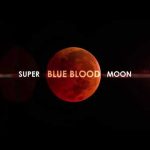
January 31 brings a lunar trifecta: the super blue blood Moon! Starting at 5:30 a.m. Eastern, NASA TV will offer a livestream of the Moon. This full moon is the third in a series of “supermoons,” when the Moon is closer to Earth in its orbit — known as perigee — and about 14 percent brighter than usual. It’s the second full moon of the month, commonly known as a “blue moon.” The super blue moon will pass through Earth’s shadow to give viewers in the right location a total lunar eclipse. While the Moon is in the Earth’s shadow it will take on a reddish tint, known as a “blood moon.” More: https://www.nasa.gov/feature/super-blue-blood-moon-coming-jan-31
The Aug. 21 eclipse across America generated interest and excitement far and wide. Our coverage of the historic eclipse – the first coast-to-coast total solar eclipse for the U.S. in 99 years – was widespread … Anchored from the College of Charleston, in South Carolina – we showed you views of the eclipse that only NASA could. Views from space, from Earth’s atmosphere and from the ground – with expert observation and analysis provided from many of the 14 states around the country, situated along the path of totality. That’s where thousands of people flocked – for the ultimate eclipse experience – total darkness in the middle of the day!
During the eclipse, 14 states across the U.S. were in the path of totality and experienced more than two minutes of darkness in the middle of the day – with a partial eclipse viewable all across North America. The broadcast – Eclipse Across America: Through the Eyes of NASA – covered locations along the path of totality, from Oregon to South Carolina including public reactions from all ages. The eclipse’s long path over land provided a unique opportunity to study the Sun, Earth, Moon and their interaction.
This video is available for download from NASA’s Image and Video Library:
As Europe enjoyed a partial solar eclipse on the morning of Friday 20 March 2015, ESA’s Sun-watching Proba-2 minisatellite had a ringside seat from orbit. Proba-2 used its SWAP imager to capture the Moon passing in front of the Sun. SWAP views the solar disc at extreme ultraviolet wavelengths to capture the turbulent surface of the Sun and its swirling corona.
ESA’s space weather microsatellite Proba-2 observed the solar eclipse on the evening of 20 May 2012. It passed through the Moon’s shadow a total of four times, imaging a sequence of partial solar eclipses in the process. The first contact was made on Sunday May 20 at 21:09 GMT. The last contact finished at 03:04 GMT.
For its Introduction video, ESA chose a piece of music called ‘The Reaktor Song’, by a German band called Eclipse Sol-Air. Complementing the images, the solo violin and piano evoke the pioneering history of European exploration, then the contemporary bass and drums capture the excitement of modern-day exploration and advanced technology.