Tag: ESA missions

  • Proba-3 launch highlights

    Proba-3 launch highlights

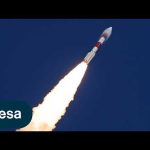
    Proba-3 lifted off on its PSLV-XL rocket from Satish Dhawan Space Centre in Sriharikota, India, on Thursday, 5 December, at 11:34 CET (10:34 GMT, 16:04 local time). The mission was launched using this Indian launcher because it needed to be placed in a highly elliptical orbit extending more than 60 500 km from the ground.

    After integration and testing was completed at Redwire Space in Belgium, Proba-3 was transported to India to be prepared for launch.
    The latest member of ESA’s family of in-orbit demonstration missions, Proba-3 is in fact two spacecraft being launched together, which will separate in orbit to begin performing precise formation flying, precise to a single millimetre, about the thickness of an average fingernail. To prove their performance, Proba-3 has been devoted to an ambitious scientific goal. The pair will line up precisely with the Sun 150 m apart so that one casts a precisely controlled shadow onto the other.

    By blocking out the fiery disc of the Sun, Proba-3’s ‘Occulter’ spacecraft will mimic a terrestrial total solar eclipse, to open up views of the Sun’s faint surrounding atmosphere, or ‘corona’, which is a million times fainter than its parent star. Proba-3’s second ‘Coronagraph’ spacecraft hosts the optical instrument that will observe the solar corona.
    If Proba-3’s initial commissioning phase goes to plan then the spacecraft pair will be separated early in the new year to begin their individual check-outs. The operational phase of the mission, including the first observations of the corona through active formation flying, should begin in about four months.

    Proba-3 was led for ESA by Sener in Spain, overseeing a consortium of 14 ESA Member States and Canada including Airbus Defence and Space in Spain manufacturing the spacecraft and Redwire Space in Belgium responsible for the spacecraft avionics, assembly and operations. CSL in Belgium produced Proba-3’s ASPIICS coronagraph Spacebel in Belgium developed the onboard and ground segment software with GMV responsible for the formation flying system and flight dynamics.

    Credits: ESA/ISRO – NSIL

    ★ Subscribe: http://bit.ly/ESAsubscribe and click twice on the bell button to receive our notifications.

    Check out our full video catalog: http://bit.ly/SpaceInVideos
    Follow us on Twitter: http://bit.ly/ESAonTwitter
    On Facebook: http://bit.ly/ESAonFacebook
    On Instagram: http://bit.ly/ESAonInstagram
    On LinkedIn: https://bit.ly/ESAonLinkedIn
    On Pinterest: https://bit.ly/ESAonPinterest
    On Flickr: http://bit.ly/ESAonFlickr

    We are Europe’s gateway to space. Our mission is to shape the development of Europe’s space capability and ensure that investment in space continues to deliver benefits to the citizens of Europe and the world. Check out https://www.esa.int/ to get up to speed on everything space related.

    Copyright information about our videos is available here: https://www.esa.int/ESA_Multimedia/Terms_and_Conditions

    #ESA #Proba-3 #Rocket
  • Liftoff! Proba-3’s journey begins ☀️🚀

    Liftoff! Proba-3’s journey begins ☀️🚀

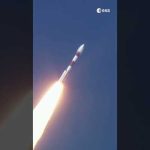
    ESA’s Proba-3 mission lifted off on its PSLV-XL rocket from Satish Dhawan Space Centre in Sriharikota, India, on Thursday, 5 December, at 11:34 CET (10:34 GMT, 16:04 local time).

    📸 ISRO – NSIL

    #ESA #Proba-3#Rocket

  • Proba-3 lift-off replay

    Proba-3 lift-off replay

    ESA’s Proba-3 mission lifted off on its PSLV-XL rocket from Satish Dhawan Space Centre in Sriharikota, India, on Thursday, 5 December, at 11:34 CET (10:34 GMT, 16:04 local time).

    Credits: ISRO – NSIL

    ★ Subscribe: http://bit.ly/ESAsubscribe and click twice on the bell button to receive our notifications.

    Check out our full video catalog: http://bit.ly/SpaceInVideos
    Follow us on Twitter: http://bit.ly/ESAonTwitter
    On Facebook: http://bit.ly/ESAonFacebook
    On Instagram: http://bit.ly/ESAonInstagram
    On LinkedIn: https://bit.ly/ESAonLinkedIn
    On Pinterest: https://bit.ly/ESAonPinterest
    On Flickr: http://bit.ly/ESAonFlickr

    We are Europe’s gateway to space. Our mission is to shape the development of Europe’s space capability and ensure that investment in space continues to deliver benefits to the citizens of Europe and the world. Check out https://www.esa.int/ to get up to speed on everything space related.

    Copyright information about our videos is available here: https://www.esa.int/ESA_Multimedia/Terms_and_Conditions

    #ESA #Proba-3 #RocketLaunch

  • How do radar satellites work?

    How do radar satellites work?

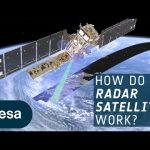
    Radar allows us to see through what would otherwise be invisible. By sending out radio waves that bounce off objects and return as echoes, radar creates a detailed picture of our surrounding world.

    This technology is everywhere: from guiding air traffic and enabling self-driving cars to tracking the movements of athletes. But its reach doesn’t stop there—radar is also transforming how we observe our Earth from space.

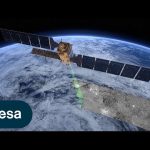
    Satellites like the Copernicus Sentinel-1 mission use radar to see through clouds, darkness and any weather conditions. This capability is invaluable for detecting subtle changes on Earth’s surface—changes that are often hidden from the human eye. Discover how radar technology is helping us unlock these hidden insights about our planet.

    Credit: ESA – European Space Agency

    ★ Subscribe: http://bit.ly/ESAsubscribe and click twice on the bell button to receive our notifications.

    Check out our full video catalog: http://bit.ly/SpaceInVideos
    Follow us on Twitter: http://bit.ly/ESAonTwitter
    On Facebook: http://bit.ly/ESAonFacebook
    On Instagram: http://bit.ly/ESAonInstagram
    On LinkedIn: https://bit.ly/ESAonLinkedIn
    On Pinterest: https://bit.ly/ESAonPinterest
    On Flickr: http://bit.ly/ESAonFlickr

    We are Europe’s gateway to space. Our mission is to shape the development of Europe’s space capability and ensure that investment in space continues to deliver benefits to the citizens of Europe and the world. Check out https://www.esa.int/ to get up to speed on everything space related.

    Copyright information about our videos is available here: https://www.esa.int/ESA_Multimedia/Terms_and_Conditions

    #ESA #Sentinel-1 #Satellite

  • Copernicus Sentinel-1: radar vision for Copernicus

    Copernicus Sentinel-1: radar vision for Copernicus

    Meet Copernicus Sentinel-1 – this ground-breaking mission delivers continuous, all-weather, day-and-night imaging for land, ice and maritime monitoring.

    Equipped with state-of-the-art C-band synthetic aperture radar (SAR), Sentinel-1 captures high-resolution data around the clock, in any weather, making it indispensable for detecting the subtle changes on Earth’s surface that remain hidden from the human eye.

    Sentinel-1 data serves a multitude of critical applications: from ensuring the safety and efficiency of maritime traffic, tracking sea ice and icebergs, to monitoring structural integrity and natural hazards, such as earthquakes, landslides and volcanic activity.

    Its enhanced radar technology provides precises precise information on ground movement, which is critical for urban planning, infrastructure resilience, subsidence risk assessment and geohazard monitoring.

    Through consistent, long-term data collection, Sentinel-1 serves as a global asset, essential for environmental and safety monitoring worldwide. The mission is a beacon of innovation, advancing our understanding of our planet’s dynamic landscape.

    This video features interviews with Mark Drinkwater, Head of Mission Sciences Division at ESA, Ramon Torres Cuesta, Sentinel-1 Project Manager at ESA and Julia Kubanek, Sentinel-1 Mission Scientist at ESA.

    Credit: ESA – European Space Agency

    ★ Subscribe: http://bit.ly/ESAsubscribe and click twice on the bell button to receive our notifications.

    Check out our full video catalog: http://bit.ly/SpaceInVideos
    Follow us on Twitter: http://bit.ly/ESAonTwitter
    On Facebook: http://bit.ly/ESAonFacebook
    On Instagram: http://bit.ly/ESAonInstagram
    On LinkedIn: https://bit.ly/ESAonLinkedIn
    On Pinterest: https://bit.ly/ESAonPinterest
    On Flickr: http://bit.ly/ESAonFlickr

    We are Europe’s gateway to space. Our mission is to shape the development of Europe’s space capability and ensure that investment in space continues to deliver benefits to the citizens of Europe and the world. Check out https://www.esa.int/ to get up to speed on everything space related.

    Copyright information about our videos is available here: https://www.esa.int/ESA_Multimedia/Terms_and_Conditions

    #ESA #Sentinel-1 #Satellite

  • How do you cross a module in space? 🙃 #shorts

    How do you cross a module in space? 🙃 #shorts

    European Space Agency astronaut Samantha Cristoforetti shared this video on social media with the caption: How do you cross a module in space? 🙃

    📹 ESA – S. Cristoforetti

    #ESA #Floating #MissionMinerva