The Copernicus Sentinel-2 mission takes us over Darmstadt, Germany, home to ESA’s European Space Operations Centre, in this week’s edition of the Earth from Space programme.
We are Europe’s gateway to space. Our mission is to shape the development of Europe’s space capability and ensure that investment in space continues to deliver benefits to the citizens of Europe and the world. Check out http://www.esa.int/ESA to get up to speed on everything space related.
ESA’s flight controllers use the best software and systems to fly our missions — but do they have the cool savvy needed to handle a wonky engine and a time-critical manoeuvre?
Set in the near future, ‘The Burn’ is a new short film that tells the story of what happens when an ESA mission control team encounters an unexpected anomaly in what should be a routine manoeuvre.
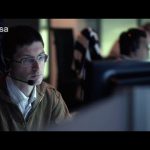
The Operations Manager, spacecraft engineers, flight dynamics experts and software and systems specialists all ‘work the problem’, fighting against time, the inexorable pull of gravity and a capricious Solar System to avoid loss of mission.
Fundamentally, without constantly evolving mission operations infrastructure – ground stations across the globe, flight dynamics systems, high-tech control rooms and cutting edge control systems – we could not fly the complex missions we have successfully flown now for decades.
Sometimes, you have to fail to succeed. Throughout the year, teams train for every possible eventuality, to ensure that their skills, expertise and teamwork – in combination with the best mission control systems available – bring Europe’s missions to life.
Many of the actors appearing in ‘The Burn’ are the actual engineers currently flying missions at ESA, giving an authentic glimpse into the real-time experiences of the teams who fly European exploration spacecraft today.
We are Europe’s gateway to space. Our mission is to shape the development of Europe’s space capability and ensure that investment in space continues to deliver benefits to the citizens of Europe and the world. Check out http://www.esa.int/ESA to get up to speed on everything space related.
What’s the difference between spotting asteroids in space, and debris objects in Earth orbit? At first, both look like tiny dots streaming across the sky, against a backdrop of twinkling stars. As part of its Space Safety & Security activities, ESA brings together experts in asteroid and debris detection, asking what these two vital fields have in common, and how they can protect us from hazards in space.
★ Subscribe: http://bit.ly/ESAsubscribe and click twice on the bell button to receive our notifications.
ESA is Europe’s gateway to space. Our mission is to shape the development of Europe’s space capability and ensure that investment in space continues to deliver benefits to the citizens of Europe and the world. Check out http://www.esa.int/ESA to get up to speed on everything space related.
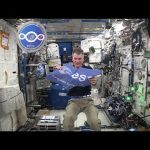
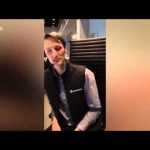
ESA astronaut Paolo Nespoli on the International Space Station sends a video greeting to everyone at the European Space Operations Centre, ESA’s mission control centre in Darmstadt, Germany, on the occasion of its 50th anniversary celebration. The 8th day of September is a special date in the centre’s history: it’s the day in 1967 when it was inaugurated to serve as ‘mission control’ for what later became the European Space Agency. Today, it hosted 5000 visitors in an open house that included tours of the mission control facilities, presentations by ESA experts on a wide range of topics and a stage programme produced in cooperation with Hessischer Rundfunk (HR) radio and the Darmstädter Echo newspaper. The sold-out event also included numerous educational, informational and fun activities for all ages presented by DLR SchoolLab, the Astronomy and Space Technology Club of Darmstadt (AAW), the German Research Centre for Artificial Intelligence (DFKI) and the Berlin-based ‘new-space’ company Part-Time Scientists. The video greeting from the Space Station was shown during the stage programme and displayed for the visitors on screens around the centre. Paolo Nespoli is on a five-month mission to the Station, dubbed the #VITAmission, between July and December this year. Vita’s extensive scientific programme includes experiments in biology, human physiology as well as space environment monitoring, materials science and technology demonstrations. Learn more and follow Paolo in social media via http://paolonespoli.esa.int/More information on ESOC and its 50th anniversary year via #ESOC50
The European Space Operations Centre, ESOC, in Darmstadt, Germany, has served as Europe’s gateway to space for half a century. In 2017, the centre is celebrating its 50th anniversary, highlighting a rich history of achievement in space.
This video offers a high-speed visual tour through five decades of mission control, which encompasses 77 spacecraft, ranging from telecom, weather, Earth observation and climate monitoring satellites to spacecraft studying the Sun and peering deep into our Universe.
Exploring our Solar System, teams at ESOC have flown missions to the Moon, Mars and Venus, as well as three epoch-making triumphs: Giotto’s flyby of Halley’s Comet in 1986, the Huygens landing on Saturn’s moon Titan in 2005 and Rosetta’s delivery of Philae to comet 67P/Churyumov–Gerasimenko in 2014 – humanity’s first landing on a comet.
As a centre of excellence for mission operations since 1967, ESA’s ‘mission control’ delivers expertise and experience in a unique mix that serves the scientific and engineering goals of ESA, and enables economically vital European programmes like Copernicus and Galileo.
ESOC is home to highly specialised teams who control and navigate spacecraft, manage ESA’s worldwide tracking station network, and build the ground systems that enable satellites to conduct their missions. Spacecraft flown from ESOC are studying our planet and helping us understand climate change through realtime Earth data, and are exploring our Sun and Solar System or peering deep into the mysteries of time and space.
The centre is unique and unparalleled in its ability to control sophisticated probes, and to design, develop and build everything needed on ground to successfully fly satellites in space.
Our world is about systems, communication and exploration; our passion is for humanity’s voyages into the Universe.
Scientists and engineers on the ExoMars project had their hearts in their mouths as the ExoMars mission reached the red planet, with the Schiaparelli probe going missing in action at the end of its descent just as the TGO mothership swept into a perfectly timed orbit.
The rollercoaster ride of arrival at Mars is the first installment in this ambitious Russian and European project that aims for the first time to directly search for signs of life on Mars.
The plight of Schiaparelli remains unclear. It is certainly on the Martian surface, but may well have hit the red dust much harder then engineers had planned, and nothing has been heard from it since.
Data relayed during the lander’s descent shows the initial high-speed entry to the Martian atmosphere went well, with the heatshield slowing the craft and the parachute deploying. However once the back heat shield and parachute were ejected the flow of events did not go to plan.
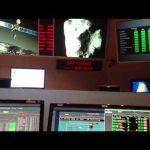
Inside the main control room at ESA’s operation centre as the Rosetta spacecraft sends its last signal from Comet 67P/Churyumov–Gerasimenko, confirming the end of the spacecraft’s 12.5 year journey in space.
On 24 April 2016, the mission control team was in the Main Control Room at ESOC, ESA’s mission control centre in Darmstadt, Germany, preparing for the liftoff of Soyuz flight VS14. Their job was to assume control of the rocket’s main passenger, the Sentinel-1B radar-sensing satellite.
In this Periscope, video host Thomas Ormston, a spacecraft operations engineer at ESOC, spoke with some of the team working ‘on console’ to find out details on how they get ready to send a satellite into space.
NOTE: About 75 minutes after recording this Periscope, the launch countdown was halted due to an an anomaly with the launcher. The countdown was restarted the next day, with liftoff set for 23:02 CEST, 25 April 2016.
ESA’s European Space Operations Centre links people with spacecraft travelling to the frontiers of human knowledge. Our world is about systems, communication and exploration; our passion is for humanity’s voyages into the Universe. And even the grandest journey begins with just a few steps.
The exploits of comet-hunting spacecraft Rosetta are generating intense interest as it speeds towards a dramatic climax this autumn.
The craft will catch up with comet 67p/Churyumov–Gerasimenko, fly alongside, and put a lander on its surface. Throughout this fantastic voyage, Euronews will have special access to the engineers and scientists who are making it happen.
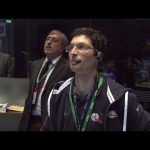
On 20th January Rosetta woke up from two and a half years of hibernation. It was a moment of extreme tension for everyone at ESA’s European Space Operations Centre in Darmstadt, Germany. Strained, nervous faces searched for a signal from a probe in deep space.
After some 45 minutes of anxiety the all-important first signal came through. The scientists burst into energetic applause.
Hace unos días, la sonda Rosetta se reactivó tras casi dos años y medio de hibernación. La comunidad científica del mundo entero estaba pendiente de la sala de control en el momento en el que Rosetta, tras reactivarse, enviaba su señal de confirmación.
A ocho cientos millones de kilómetros, en algún lugar del espacio, Rosetta se despertaba.
Este proceso tardó varias horas, a las 18:18 de la tarde, hora central europea, el equipo del Centro de Operaciones de la Agencia Espacial Europea, en Darmstadt, Alemania, estallaba de alegría.
Pár nappal ezelőtt az Európai Űrügynökség sikeresen felébresztette a hibernációból a Rosetta nevű műholdat, amely hamarosan egyedülálló küldetésre indul: leszállóegységet próbál ereszteni egy üstökös felszínére.
2014. január huszadikán a világ szeme az Európai Űrügynökség csapatára szegeződött, amint arra vártak, hogy az űreszköz válaszoljon.
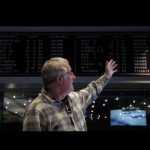
The clock inside ESOC’s Main Mission Control counts down to 10:00 GMT (11:00 CET) on 20 January 2014 – the moment when ESA’s Rosetta spacecraft was woken from a 31-month deep space hibernation.
ESA operates some of the world’s most sophisticated deep-space tracking stations, enabling spacecraft to maintain contact with Earth while voyaging deep into our Solar System. The essential task of all ESA stations is to communicate with our missions, sending telecommands and receiving vital scientific data and spacecraft status information.
The Agency’s three Deep Space Antenna (DSA) stations are located in Australia, Spain and Argentina, and are centrally controlled from the ESOC Operations Centre in Germany. They are equipped with large, 35 m-diameter parabolic dish reflectors, weighing in at 610 tonnes, that can be rotated and pointed with extreme accuracy.
Using signal data from the stations and an advanced navigational technique known as ‘delta-DOR’, engineers can pinpoint the orbit of a spacecraft exploring Mars or Venus – a distance of over 100 million kilometres from Earth – to an accuracy within 1 kilometre.