Tag: Europe (Continent)

  • Italy to Indian Ocean

    Italy to Indian Ocean

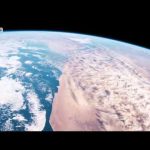
    Similar to ESA astronaut Samantha Cristoforetti’s night timelapse over Italy and Egypt (https://www.youtube.com/watch?v=Lgw36RCQPvM) but taken during the day, this video takes you on a 30-second journey over Italy, passing Greece while flying over the Mediterranean Sea to follow the Nile and finish at the Indian Ocean.

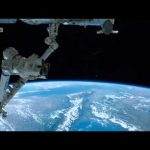
    Looking out from the International Space Station’s Cupola observatory while circling Earth at speeds of 28 800 km/h, the 5500 km flight took Samantha around 12 minutes. Images from a Space Station camera were joined together to create this video and make the flight seem even faster.

    The astronauts on the Space Station spend as much time as possible on science. During her 40-hour working week Samantha runs many experiments from Italy’s ASI space agency and ESA, and takes part in even more from scientists all over the world.

    Samantha is living and working on board the International Space Station as part of the six-strong Expedition 42 and 43 crew. Follow her Futura mission at http://samanthacristoforetti.esa.int.
  • ESA Euronews: Rockets, Mars and Europe’s future in space

    ESA Euronews: Rockets, Mars and Europe’s future in space

    In the afterglow of the Rosetta mission’s success in landing on a comet, the member states of ESA met in Luxembourg in early December to look forward to future challenges. Among the priorities is the development and construction of the new rocket, Ariane 6, which is seen as essential to maintaining Europe’s lead in the launcher market. Then there’s the ExoMars mission to further explore the ‘Red Planet’ and look for signs of life. But it’s not just about probes – ESA’s manned spaceflight programme also has momentum, with new astronauts currently in training and due to fly in 2015 and 2016. So, as the agency marks a half century of Europe’s space sector, it’s onwards and upwards for the next 50 years.

    This video is also available in the following languages:
    French: http://youtu.be/eq32fl5H0m8
    German: http://youtu.be/hBLpzhgAmtU
    Hungarian: http://youtu.be/4Snqq5VXGyg
    Italian: http://youtu.be/If6JOY9mBy4
    Greek: http://youtu.be/MyPvRhylA6M
    Portuguese: http://youtu.be/wUzDxKetGWk
    Spanish: http://youtu.be/15EAFYXl3N0

  • Timelapse over Europe

    Timelapse over Europe

    This timelapse video shows two passes over Europe taken by ESA astronaut Alexander Gerst as he flew overhead on the International Space Station at around 400 km altitude.

    The International Space Station travels at 28 800 km/h meaning that it only takes 90 minutes to circle Earth completely. Each orbit the Station moves around 2200 km to the West in relation to 90 minutes before.

    Astronauts often use normal consumer digital cameras to take pictures of Earth through Europe’s observatory module Cupola in their spare time. Setting the camera to take an image every few seconds and then playing the images back quickly create this timelapse effect.

    Alexander worked as a geophysicist and volcanologist before he was chosen as an ESA astronaut in 2009. His Blue Dot mission includes an extensive scientific programme of experiments in physical science, biology, and human physiology as well as radiation research and technology demonstrations. All experiments chosen make use of the out-of-this-world laboratory to improve life on Earth or prepare for further human exploration of our Solar System.

  • ESA Euronews: Europe’s 50 year space odyssey

    ESA Euronews: Europe’s 50 year space odyssey

    In this edition of Space we look back at the past 50 years of space in Europe; five decades of discovery, drama and innovation that have had a profound impact on how we see ourselves and our planet. Historian John Krige gives his insight on how Europe’s space sector has evolved, while veteran space scientists recount their experiences in major missions and launches.

  • ESA Euronews: Közös űrprogram – amikor Európa működik

    ESA Euronews: Közös űrprogram – amikor Európa működik

    Idén ötven éve indult el a közös európai űrprogram. A nehezen összekovácsolt tudományos együttműködés az egyik remek példa arra, amikor Európa működik.

    Ötven évvel ezelőtt a világ már az űrverseny lázában égett. A Szputnyik elküldte az első jeleket, Jurij Gagarin már járt az űrben, az Egyesült Államok és a Szovjetunió vetélkedése hajtotta a tudományt előre.

    *Azt hittük, vége a világnak*

    – A világ elképesztően törékeny, veszélyes hely volt – jellemezte az időszakot John Krige, a Georgia Institute of Technology történésze. – A szuperhatalmak vetélkedése talán akkor volt a csúcson, a kubai rakétaválság idején. Én fiatalember voltam, és egész biztosan azt gondoltam, hogy az lesz a világ vége. Szerintem nem voltam ezzel egyedül.

    Ebben a feszült helyzetben lépett fel két európai fizikus, az olasz Eduardo Arnaldi és a francia Pierre Auger, akik szentül hittek abban, hogy a rakétáknak és a műholdaknak a tudományt kell szolgálniuk, nem a kardcsörtetést.

    – Azok az országok, amelyek a közös európai űrprogramba belevágtak, húsz évvel korábban gyilkos háborút vívtak egymással – magyarázta Roger-Maurice Bonnet, az Európai Űrügynökség (ESA) volt tudományos igazgatója. – Ezek az országok összegyűltek, és úgy döntöttek, olyan közös nyelvet fognak használni, amelyen nem lehet őket egymásra uszítani – a tudomány nyelvét.