Tag: European Space Agency

  • Europe’s future space transport ecosystem

    Europe’s future space transport ecosystem

    ESA’s future launcher preparatory programme is crafting a space transportation ecosystem, guiding the companies and engineers of today to develop and test the technologies required to meet future needs.

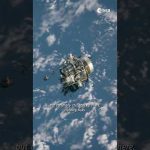
    Space transportation will be moving towards frequent reusable launchers supporting a complete industrial ecosystem around Earth. In the coming decades, the European Space Agency (ESA) foresees transportation hubs in orbit around our planet providing logistic services much like airports or train stations on Earth. These hubs will offer refilling and maintenance services for spacecraft and provide platforms for manufacturing and assembly and in space transportation to other destinations.

    To create this new transportation ecosystem, new technology developments are needed, such as automatic rendezvous and capturing of spacecraft, transfer of fuel and payloads between spacecraft, tugging spacecraft to other orbits around Earth or destinations in space.

    The end goal for companies working on a proof of concept is to fly a demonstrator mission in space. Together with ESA, industry will get to this point through a process that starts with discussing needs and proposing solutions, and is followed by proving their use-case and collaborating on standards and regulations.  Developing and demonstrating these new technologies is also expected to open commercial opportunities for European space transportation companies.

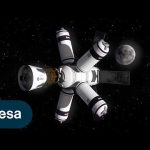
    Finally, the Odyssey project proposes to put all these key technologies together into one package by providing a dedicated service for transport vehicles and spacecraft in orbit: an uncrewed propellant depot offering refilling services. Called Odyssey (a loose abbreviation for Orbital Depot for Your Sustained Space Exploration & beYond) this depot would store propellant brought from visiting supply rockets and distribute it as needed to spacecraft on a stopover to destinations farther away such as the Moon or Mars, or to Earth-orbiting navigation satellites that have used all their propellant and need a refill to extend their working life.

    The Odyssey concept, if it can be demonstrated to be viable, would also be a contribution to a more sustainable use of space, by providing important elements of a future circular space economy.

    Credits: European Space Agency (ESA)

    Access the video on the ESA video library: https://www.esa.int/ESA_Multimedia/Videos/2025/09/Europe_s_future_space_transport_ecosystem

    ★ Subscribe: http://bit.ly/ESAsubscribe and click twice on the bell button to receive our notifications.

    Check out our full video catalog: http://bit.ly/SpaceInVideos
    Follow us on Twitter: http://bit.ly/ESAonTwitter
    On Facebook: http://bit.ly/ESAonFacebook
    On Instagram: http://bit.ly/ESAonInstagram
    On LinkedIn: https://bit.ly/ESAonLinkedIn
    On Pinterest: https://bit.ly/ESAonPinterest
    On Flickr: http://bit.ly/ESAonFlickr

    We are Europe’s gateway to space. Our mission is to shape the development of Europe’s space capability and ensure that investment in space continues to deliver benefits to the citizens of Europe and the world. Check out https://www.esa.int/ to get up to speed on everything space related.

    Copyright information about our videos is available here: https://www.esa.int/ESA_Multimedia/Terms_and_Conditions

  • The most accurate 3D map of stellar nurseries in the Milky Way

    The most accurate 3D map of stellar nurseries in the Milky Way

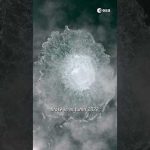
    Scientists created the most accurate three-dimensional map of star-formation regions in our Milky Way galaxy, based on data from the European Space Agency’s Gaia space telescope. This map will teach us more about these obscure cloudy areas, and the hot young stars that shape them.

    It is notoriously difficult to map and study regions in space where stars form because they are usually hidden from view by thick clouds of gas and dust, whose distances cannot be directly measured.

    Gaia can’t see these clouds directly, but it can measure stellar positions and the so-called ‘extinction’ of stars. This means it can see how much light from stars is blocked by dust. From this, scientists can create 3D maps showing where the dust is, and use those maps to figure out how much ionised hydrogen gas is present – a telltale sign of star formation.

    The new 3D map of star-forming regions in the Milky Way is based on Gaia observations of 44 million ‘ordinary’ stars and 87 O-type stars. The map extends to a distance of 4000 light-years from us, with the Sun at the centre.

    Read more: https://www.esa.int/Science_Exploration/Space_Science/Gaia/Fly_through_Gaia_s_3D_map_of_stellar_nurseries

    Credit: European Space Agency (ESA)
    Animation: ESA/Gaia/DPAC, S. Payne-Wardenaar, L. McCallum et al (2025), CC BY-SA 3.0 IGO
    Music:
    My Story – Echoes Of The Heart

    Access the video on the ESA video library: https://www.esa.int/ESA_Multimedia/Videos/2025/09/The_most_accurate_3D_map_of_stellar_nurseries_in_the_Milky_Way

    ★ Subscribe: http://bit.ly/ESAsubscribe and click twice on the bell button to receive our notifications.

    Check out our full video catalog: http://bit.ly/SpaceInVideos
    Follow us on Twitter: http://bit.ly/ESAonTwitter
    On Facebook: http://bit.ly/ESAonFacebook
    On Instagram: http://bit.ly/ESAonInstagram
    On LinkedIn: https://bit.ly/ESAonLinkedIn
    On Pinterest: https://bit.ly/ESAonPinterest
    On Flickr: http://bit.ly/ESAonFlickr

    We are Europe’s gateway to space. Our mission is to shape the development of Europe’s space capability and ensure that investment in space continues to deliver benefits to the citizens of Europe and the world. Check out https://www.esa.int/ to get up to speed on everything space related.

    Copyright information about our videos is available here: https://www.esa.int/ESA_Multimedia/Terms_and_Conditions
  • Ariane 6 launches MetOp-SG-A1 and Sentinel-5

    Ariane 6 launches MetOp-SG-A1 and Sentinel-5

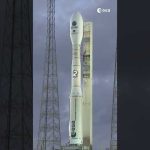
    Europe’s first MetOp Second Generation, MetOp-SG-A1, weather satellite – which hosts the Copernicus Sentinel-5 mission – has launched aboard an Ariane 6 rocket from Europe’s Spaceport in French Guiana. The rocket lifted off on 13 August at 02:37 CEST (12 August 21:37 Kourou time).

    MetOp-SG-A1 is the first in a series of three successive pairs of satellites. The mission as a whole not only ensures the continued delivery of global observations from polar orbit for weather forecasting and climate analysis for more than 20 years, but also offers enhanced accuracy and resolution compared to the original MetOp mission – along with new measurement capabilities to expand its scientific reach.

    This new weather satellite also carries the Copernicus Sentinel-5 mission to deliver daily global data on air pollutants and atmospheric trace gases as well as aerosols and ultraviolet radiation.

    Credit: ESA/CNES/Arianespace

    Access the video on the ESA video library: https://www.esa.int/ESA_Multimedia/Videos/2025/08/MetOp-SG-A1_and_Sentinel-5_launch_on_Ariane_6

    ★ Subscribe: http://bit.ly/ESAsubscribe and click twice on the bell button to receive our notifications.

    Check out our full video catalog: http://bit.ly/SpaceInVideos
    Follow us on Twitter: http://bit.ly/ESAonTwitter
    On Facebook: http://bit.ly/ESAonFacebook
    On Instagram: http://bit.ly/ESAonInstagram
    On LinkedIn: https://bit.ly/ESAonLinkedIn
    On Pinterest: https://bit.ly/ESAonPinterest
    On Flickr: http://bit.ly/ESAonFlickr

    We are Europe’s gateway to space. Our mission is to shape the development of Europe’s space capability and ensure that investment in space continues to deliver benefits to the citizens of Europe and the world. Check out https://www.esa.int/ to get up to speed on everything space related.

    Copyright information about our videos is available here: https://www.esa.int/ESA_Multimedia/Terms_and_Conditions
  • Zoom Into Sombrero Galaxy 🔍

    Zoom Into Sombrero Galaxy 🔍

    This video takes the viewer on a journey through space to the Sombrero Galaxy, also known as Messier 104 (M104).

    The NASA/ESA/CSA James Webb Space Telescope recently imaged the Sombrero galaxy with its MIRI (Mid-InfraRed Instrument), resolving the clumpy nature of the dust along the galaxy’s outer ring.

    The mid-infrared light highlights the gas and dust that are a feature of the star formation taking place among the Sombrero galaxy’s outer disc. The rings of the Sombrero galaxy produce less than one solar mass of stars per year, in comparison to the Milky Way’s roughly two solar masses a year. It’s not a particular hotbed of star formation.

    The Sombrero galaxy is around 30 million light-years from Earth in the constellation Virgo.

    📹 European Space Agency (ESA)
    📸 NASA, ESA, CSA, STScI, ESO/IDA/Danish 1.5 m, DSS 2, The Hubble Heritage Team (STScI/AURA), N. Bartmann (ESA/Webb), R. Gendler and J.-E. Ovaldsen, E. Slawik, N. Risinger & M. Zamani (ESA/Webb)

    #ESA #Webb #Space

  • Wondering why we reported higher temperatures than your weather app? 🥵

    Wondering why we reported higher temperatures than your weather app? 🥵

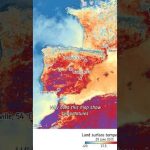
    It all comes down to what’s being measured.

    Satellites like Copernicus Sentinel-3 measure land surface temperature — that’s the heat coming directly from the ground, not the air above it. And yes, it’s often hotter in the summer than what your app tells you.

    📹 European Space Agency (ESA)
    📸 Contains modified Copernicus Sentinel data (2025), processed by ESA

    #ESA #Earth #Satellite

  • Earth views from Cupola during Ignis mission 🌍

    Earth views from Cupola during Ignis mission 🌍

    View of Earth as seen by ESA project astronaut Sławosz Uznański-Wiśniewski inside the seven-windowed cupola, the International Space Station’s “window to the world”.

    The European Space Agency-built Cupola is the favourite place of many astronauts on the International Space Station. It serves not only as a unique photo spot, but also for observing robotic activities of the Canadian Space Agency’s robotic arm Canadarm2, arriving spacecraft and spacewalks.

    Sławosz was launched to the International Space Station on the Dragon spacecraft as part of Axiom Mission 4 on 25 June 2025. The 20-day mission on board is known as Ignis.

    During the Ignis mission, Sławosz conducted 13 experiments proposed by Polish companies and institutions and developed in collaboration with ESA, along with three additional ESA-led experiments. These covered a broad range of areas including human research, materials science, biology, biotechnology and technology demonstrations. 

    The Ax-4 mission marks the second commercial human spaceflight for an ESA project astronaut. Ignis was sponsored by the Polish government and supported by ESA, the Polish Ministry of Economic Development and Technology (MRiT) and the Polish Space Agency (POLSA).

    📹 European Space Agency (ESA)
    📸 ESA – Sławosz Uznański-Wiśniewski

    #ESA #Earth #Astronaut

  • Is our galaxy really going to collide with Andromeda? 🤯

    Is our galaxy really going to collide with Andromeda? 🤯

    For years, astronomers believed the Milky Way and Andromeda were on a direct collision course in about 4.5 billion years. But new research using data from our Gaia mission and Hubble Space Telescope suggests the story isn’t so simple.

    After running 100 000 simulations with the most precise data available, scientists now say there’s only a 50% chance the two galaxies will collide in the next 10 billion years.

    The Large Magellanic Cloud, one of our satellite galaxies, could be tugging the Milky Way just enough to steer it away from Andromeda. Instead of crashing, the two galaxies might simply orbit each other in a slow cosmic dance.

    So the fate of the Milky Way remains uncertain. And with the Sun expected to make Earth uninhabitable in about a billion years, a galaxy collision is low on our list of concerns.

    📹 European Space Agency (ESA)
    📸 NASA, ESA, STScI, Till Sawala (University of Helsinki), DSS, J. DePasquale (STScI)

    #ESA #Space #Science

  • Sławosz comes home 🧑‍🚀🪂💦

    Sławosz comes home 🧑‍🚀🪂💦

    After 20 days in space, ESA project astronaut Sławosz Uznański-Wiśniewski and his Axiom Mission 4 crewmates returned safely to Earth on 15 July 2025.

    #Ignis mission highlights:

    🌍 230 orbits around Earth
    📏 + 13 million km travelled
    🧪+ 20 science experiments (13 led by Poland)
    💯 All mission objectives fulfilled
    ⏰ 105 hours of orbital work
    📈 + 25% extra activities completed

    📹 European Space Agency (ESA)
    📸 Axiom Space/SpaceX

    #ESA #Ax4 #Astronaut

  • Splashdown | Ax-4 mission with Sławosz Uznański-Wiśniewski

    Splashdown | Ax-4 mission with Sławosz Uznański-Wiśniewski

    Tune in on Tuesday, 15 July, from 09:30 BST (10:30 CEST), to watch ESA project astronaut Sławosz Uznański-Wiśniewski and crew splash down off the coast of California, USA at 10:31 BST (11:31 CEST).

    During the Ignis mission, Sławosz conducted 13 experiments proposed by Polish companies and institutions and developed in collaboration with ESA, along with three additional ESA-led experiments. These covered a broad range of areas including human research, materials science, biology, biotechnology and technology demonstrations. 

    Ax-4 marks the second commercial human spaceflight mission for an ESA project astronaut. Sponsored by the Polish government and supported by ESA, the Polish Ministry of Economic Development and Technology (MRiT) and the Polish Space Agency (POLSA), the mission featured an ambitious programme of technological and scientific research.

    Follow Sławosz’s journey to space on the Ignis mission website.
    Ignis website: https://www.esa.int/Science_Exploration/Human_and_Robotic_Exploration/ignis

    Credit: Axiom Space/SpaceX
    📸 SpaceX

    ★ Subscribe: http://bit.ly/ESAsubscribe and click twice on the bell button to receive our notifications.

    Check out our full video catalog: http://bit.ly/SpaceInVideos
    Follow us on Twitter: http://bit.ly/ESAonTwitter
    On Facebook: http://bit.ly/ESAonFacebook
    On Instagram: http://bit.ly/ESAonInstagram
    On LinkedIn: https://bit.ly/ESAonLinkedIn
    On Pinterest: https://bit.ly/ESAonPinterest
    On Flickr: http://bit.ly/ESAonFlickr

    We are Europe’s gateway to space. Our mission is to shape the development of Europe’s space capability and ensure that investment in space continues to deliver benefits to the citizens of Europe and the world. Check out https://www.esa.int/ to get up to speed on everything space related.

    Copyright information about our videos is available here: https://www.esa.int/ESA_Multimedia/Terms_and_Conditions

  • Undocking | Ax-4 mission with Sławosz Uznański-Wiśniewski

    Undocking | Ax-4 mission with Sławosz Uznański-Wiśniewski

    Tune in on Monday, 14 July, from 11:45 BST (12:45 CEST), to watch ESA project astronaut Sławosz Uznański-Wiśniewski depart from the International Space Station, bringing the Ignis mission to a close after nearly three weeks in orbit.

    During the Ignis mission, Sławosz conducted 13 experiments proposed by Polish companies and institutions and developed in collaboration with ESA, along with three additional ESA-led experiments. These covered a broad range of areas including human research, materials science, biology, biotechnology and technology demonstrations. 

    Ax-4 marks the second commercial human spaceflight mission for an ESA project astronaut. Sponsored by the Polish government and supported by ESA, the Polish Ministry of Economic Development and Technology (MRiT) and the Polish Space Agency (POLSA), the mission featured an ambitious programme of technological and scientific research.

    Follow Sławosz’s journey to space on the Ignis mission website.
    Ignis website: https://www.esa.int/Science_Exploration/Human_and_Robotic_Exploration/ignis

    Credit: Axiom Space/SpaceX/NASA
    📸 NASA

    ★ Subscribe: http://bit.ly/ESAsubscribe and click twice on the bell button to receive our notifications.

    Check out our full video catalog: http://bit.ly/SpaceInVideos
    Follow us on Twitter: http://bit.ly/ESAonTwitter
    On Facebook: http://bit.ly/ESAonFacebook
    On Instagram: http://bit.ly/ESAonInstagram
    On LinkedIn: https://bit.ly/ESAonLinkedIn
    On Pinterest: https://bit.ly/ESAonPinterest
    On Flickr: http://bit.ly/ESAonFlickr

    We are Europe’s gateway to space. Our mission is to shape the development of Europe’s space capability and ensure that investment in space continues to deliver benefits to the citizens of Europe and the world. Check out https://www.esa.int/ to get up to speed on everything space related.

    Copyright information about our videos is available here: https://www.esa.int/ESA_Multimedia/Terms_and_Conditions
  • Which planets have wind? 🌬️🪐

    Which planets have wind? 🌬️🪐

    Jupiter has super strong winds and massive storms, including the iconic Great Red Spot, a storm bigger than Earth! At the poles, winds can reach up to 1440 km/h.

    Saturn is even windier! It has some of the fastest, but not the fastest winds in our Solar System blow. Winds here can reach 1800 km/h.

    Venus has super-rotating winds that race around the planet up to 60x faster than Venus itself spins. That’s way faster than Earth’s winds, which top out at 10–20% of our planet’s rotation speed.

    Mars has a thin atmosphere, so winds are usually gentle. But during dust storms, they can kick up to around 100 km/h.

    Neptune holds the record for the fastest winds in the Solar System, blowing at over 2000 km/h!

    For context: the fastest wind ever recorded on Earth? 408 km/h—during a massive tornado in Australia.

    📹 European Space Agency (ESA)
    📸 ESA/Voyager 2, NASA, NSSDC Photo Gallery ID P-34709C

    #ESA #Space #SolarSystem

  • From the Paralympics to training for space 🏃‍♂️

    From the Paralympics to training for space 🏃‍♂️

    John McFall is part of our astronaut reserve. Following a motorcycle accident that resulted in the amputation of his right leg at the age of 19, John learnt to run again. He became a professional track and field athlete in 2005, going on to represent Great Britain and Northern Ireland as a @paralympics sprinter.

    In November 2022, John was selected as a member of the ESA astronaut reserve and to take part in ESA’s feasibility study “Fly!” to improve our understanding of, and overcome, the barriers space flight presents for astronauts with a physical disability.

    📹 European Space Agency (ESA)
    📸 Novespace/N. Courtioux

    #ESA #Space #Paralympic

  • Europe’s future in space transportation

    Europe’s future in space transportation

    Space is huge and essential to humankind, fuelling knowledge, supporting our economies and driving global prosperity. None of this would be possible without reliable access to space.

    Since 1979, Europe has relied on the Ariane rockets and Vega series to launch its missions. Today, with Ariane 6 and Vega-C, ESA ensures Europe’s autonomous and independent access to space. But we are also looking ahead. With the Ariane Smart Transfer and Release In-orbit Ship (ASTRIS), Phoebus, P160C boosters, the MR-10 engine and more, ESA is enhancing its rockets with new innovations that improve cost, performance, capability and sustainability.

    ESA is also leading the way in developing new propulsion systems to power the European launchers of the future. In collaboration with industry, ESA is supporting the development of new technologies to be used on rocket, boosters, upper stages, landers and spacecraft.

    Initiates like Boosters for European Space Transportation (BEST!), Technologies for High-thrust Re-Usable Space Transportation (THRUST!) and Future Innovation and Research in Space Transportation programme (FIRST!), are advancing key technologies for reusable boosters, engines and other innovations crucial for the future of space exploration. ESA’s Space Rider is a reusable spacecraft and robotic laboratory, designed to stay in low Earth-orbit for two months and return payloads to Earth. Themis is a prototype for testing reusable rocket technologies, including vertical takeoff, landing and reuse, powered by the Prometheus engine.

    The future of space transport extends beyond Earth launches, with in-orbit operations, transportation systems to support satellite servicing, orbital refuelling, and payload transfers between orbits.

    To support all of this, ESA is upgrading its ground support and Europe’s Spaceport in French Guiana, to accommodate more launches.

    Through programmes like ‘Boost!’ ESA is empowering the European Space Industry, supporting innovative companies which are creating new launch services. The European Launcher Challenge is shaping a competitive European launch sector for the future, strengthening Europe’s autonomous access to space.

    Credit: European Space Agency (ESA)

    Access the video on the ESA video library: https://www.esa.int/ESA_Multimedia/Videos/2025/06/The_future_of_ESA_Transportation

    ★ Subscribe: http://bit.ly/ESAsubscribe and click twice on the bell button to receive our notifications.

    Check out our full video catalog: http://bit.ly/SpaceInVideos
    Follow us on Twitter: http://bit.ly/ESAonTwitter
    On Facebook: http://bit.ly/ESAonFacebook
    On Instagram: http://bit.ly/ESAonInstagram
    On LinkedIn: https://bit.ly/ESAonLinkedIn
    On Pinterest: https://bit.ly/ESAonPinterest
    On Flickr: http://bit.ly/ESAonFlickr

    We are Europe’s gateway to space. Our mission is to shape the development of Europe’s space capability and ensure that investment in space continues to deliver benefits to the citizens of Europe and the world. Check out https://www.esa.int/ to get up to speed on everything space related.

    Copyright information about our videos is available here: https://www.esa.int/ESA_Multimedia/Terms_and_Conditions

  • Our new asteroid hunter opens its eye to the sky! ☄️

    Our new asteroid hunter opens its eye to the sky! ☄️

    Meet Flyeye — the telescope that sees space like a fly! 🪰

    With its very first glimpse of the sky, Flyeye is ready to begin scanning for asteroids that might one day come a little too close to Earth.

    Inspired by the compound eye of a fly, it can spot a huge chunk of sky in one go — more than 200 times the area of the full Moon. And it’s designed to do it all automatically, night after night.

    It hasn’t found any space rocks yet, but it’s only just opened its eye. This is the first step towards a future network of fly-eyed telescopes keeping watch over our planet.

    Not bad for a bug-inspired bit of space tech.

    📹 European Space Agency (ESA)
    📸 ESA/A. Baker

    #ESA #Space #Asteroid

  • “Is there wind on the Moon?” 💨

    “Is there wind on the Moon?” 💨

    Short answer: no. No wind, no rain, no snow.

    With only a very thin atmosphere, and no magnetic field, the Moon can’t protect itself from the elements that come from outer space, making the outlook look bleak for our grey companion.

    What the Moon does experience is solar wind, a stream of tiny particles coming from the Sun.

    During some parts of the month, Earth’s own magnetic field partially shields the Moon from the stream of solar wind particles that constantly bombard it.

    📹 European Space Agency (ESA)
    📸 ESA/NASA

    #ESA #Space #Moon

  • We asked a millennial from our team to record a video for us and this is what we got 😅

    We asked a millennial from our team to record a video for us and this is what we got 😅

    We asked one of the millennials on our team to film a little something at @SalonDuBourget and this is what she came back with.

    What do you think?
    – Team Gen Z
    – Millenials all the way

    📹 European Space Agency (ESA)
    📸 ESA

    #ESA #Space #AirShow

  • A dragon made of clouds is singing to Earth

    A dragon made of clouds is singing to Earth

    What if satellite cloud data could become music? Meet Hakuryu — a dragon born as the European Space Agency’s EarthCARE satellite, singing a song of peace for our planet.

    EarthCARE is the European Space Agency’s most advanced Earth Explorer launched to date, equipped with instruments that help us understand clouds and aerosols in new and unprecedented ways.

    It is a collaboration between ESA and the Japanese Aerospace Exploration Agency, JAXA, who designed and developed the satellite’s Cloud Profiling Radar (CPR) instrument. JAXA called EarthCARE Hakuryu, which is Japanese for White Dragon.

    Hakuryu now lends its name to the title of a groundbreaking immersive installation that creates an audiovisual story from EarthCARE cloud and aerosol data in a way that has never been seen or heard before.

    Through data sonification, Hakuryu transforms over thirty types of data into immersive soundscapes and music. Clouds become choirs as Hakuryu sings to Earth, with voices from notable public, scientific and ESA figures joined by those needing care most – people from the frontline of climate change, displacement and conflict.

    Adding to this, data from atmospheric elements such as rain, snow, dust and smoke are rendered as rich environmental sonic textures. Simultaneously the same data is transformed into clouds, creating a vibrant trail behind an animated white dragon. Viewers slowly fly with Hakuryu, in a beautiful representation of Earth as it moves from day into night on its journey around the sun.

    The film you see here comprises one entire EarthCARE orbit around our planet. It is running live all week at ESA’s Living Planet Symposium in Vienna, from 23 to 27 June 2025, as an immersive installation. Following its debut, Hakuryu will travel the world in a variety of ways soon to be revealed.

    More about EarthCARE: https://esa.int/earthcare

    More about the EarthCARE DISC: https://earth.esa.int/eogateway/activities/earthcare-disc

    Visit the artist’s website: https://www.jamieperera.com/

    Credits:
    Artist: Jamie Perera

    Visual programming: Tekja (Jacopo Hirschstein)

    Sonification programmer: N3xtcoder (Jonathan Moore) & Adrian Lewis

    ESA development & production: Bjoern Frommknecht, Peter Bickerton, Shannon Mason and the EarthCARE Data, Innovation and Science Cluster (DISC)

    Installation production: Lorenza Versace

    Additional audio development: Danny Bright

    ★ Subscribe: http://bit.ly/ESAsubscribe and click twice on the bell button to receive our notifications.

    Check out our full video catalog: http://bit.ly/SpaceInVideos
    Follow us on Twitter: http://bit.ly/ESAonTwitter
    On Facebook: http://bit.ly/ESAonFacebook
    On Instagram: http://bit.ly/ESAonInstagram
    On LinkedIn: https://bit.ly/ESAonLinkedIn
    On Pinterest: https://bit.ly/ESAonPinterest
    On Flickr: http://bit.ly/ESAonFlickr

    We are Europe’s gateway to space. Our mission is to shape the development of Europe’s space capability and ensure that investment in space continues to deliver benefits to the citizens of Europe and the world. Check out https://www.esa.int/ to get up to speed on everything space related.

    Copyright information about our videos is available here: https://www.esa.int/ESA_Multimedia/Terms_and_Conditions
  • Mini capsule’s supersonic test!💥

    Mini capsule’s supersonic test!💥

    A miniature capsule shoots off at 4000 km per hour, mimicking the aerodynamics of a Mars atmospheric entry before crashing at supersonic speeds into a wall.

    The tiny replica of the Entry, Descent and Landing Module (EDLM) blasts off from a smooth bore gun faster than a speeding bullet. This video has been slowed down 60 times – the actual flight lasted just half a second.

    This activity is part of a series of free-flight experiments with a scaled-down version of the ExoMars landing module – measuring just 8 cm in diameter compared to the actual 3.8-metre spacecraft that will carry the Rosalind Franklin rover.

    These tests provide critical data on how the spacecraft will behave during its entry into the martian atmosphere. Following a two-year journey to the Red Planet, the ExoMars descent module will approach Mars at a speed of 21 000 km per hour, relying on heat shields, parachutes and retro rockets to land safely.

    The first set of tests took place in March at the French-German Research Institute of Saint-Louis(ISL), a front-line research centre with facilities for investigating the aerodynamics of vehicles like reentry capsules.

    Engineers equipped the mini ExoMars landing capsule with internal electronics to monitor its 400-metre flight path. The test models were mounted in special sabots that detached from the capsules when fired from the smooth powder gun. Test speeds ranged from 1800 to 4300 kilometres per hour.

    The team used 20 models during the tests. Each model carried several sensors to collect flight data. Teams used shadowgraph imaging, magnetometers, accelerometers, and radar to analyse the capsule’s movement, trajectory and stability.

    📹 European Space Agency (ESA)
    📸 Thales Alenia Space Italia, Ariane Group, Fluid Gravity Engineering Ltd, French-German Research Institute of Saint-Louis

    #ESA #Space #Mars

  • ESA’s Ocean Training Course: the highlights

    ESA’s Ocean Training Course: the highlights

    After an extraordinary six-week voyage from northern Norway, the iconic Norwegian tall ship Statsraad Lehmkuhl has docked in Nice, France, concluding ESA’s 2025 Advanced Ocean Training Course. Braving everything from wild storms to calm seas, students aboard mastered techniques for collecting ocean measurements and harnessed satellite data to unlock insights into our blue planet. Led by experts, this real-world expedition offered more than education – it sparked curiosity and a deeper commitment to understanding and protecting our oceans.

    Read full story: https://www.esa.int/Applications/Observing_the_Earth/FutureEO/Tall_ship_brings_ESA_ocean_science_training_to_Nice

    Credits: ESA/Ocean Media Lab

    ★ Subscribe: http://bit.ly/ESAsubscribe and click twice on the bell button to receive our notifications.

    Check out our full video catalog: http://bit.ly/SpaceInVideos
    Follow us on Twitter: http://bit.ly/ESAonTwitter
    On Facebook: http://bit.ly/ESAonFacebook
    On Instagram: http://bit.ly/ESAonInstagram
    On LinkedIn: https://bit.ly/ESAonLinkedIn
    On Pinterest: https://bit.ly/ESAonPinterest
    On Flickr: http://bit.ly/ESAonFlickr

    We are Europe’s gateway to space. Our mission is to shape the development of Europe’s space capability and ensure that investment in space continues to deliver benefits to the citizens of Europe and the world. Check out https://www.esa.int/ to get up to speed on everything space related.

    Copyright information about our videos is available here: https://www.esa.int/ESA_Multimedia/Terms_and_Conditions

  • How towels get dried in space? 🧼🧖

    How towels get dried in space? 🧼🧖

    Our astronaut Samantha Cristoforetti showing us how towels get dried in space!

    📹 European Space Agency (ESA)
    📸 ESA/NASA

    #ESA #Astronauts #Space

  • ESA turns 50! 🎉 Meet some of the brilliant people behind half a century of missions and discoveries.

    ESA turns 50! 🎉 Meet some of the brilliant people behind half a century of missions and discoveries.

    Roy Gibson was ESA’s very first Director General. Born in 1924, he led the Agency from its foundation in 1975 until 1980.

    Ulf Merbold was the first ESA astronaut to fly in space, as part of the crew of the STS-9 Spacelab 1 mission on Space Shuttle Columbia in 1983.

    Claudie Heigneré made history in 2001 as the first female European astronaut on a ‘taxi flight’ to the International Space Station.

    Gerhard Schwehm was ESA’s first planetary scientist, working on the Giotto mission that provided the first close-up images of a comet nucleus. He then became Mission Manager for the Rosetta mission until his retirement.

    Paolo Ferri dedicated 20 years to Rosetta, first as Operations Manager, then as Flight Director, and eventually as Head of the Mission Operations Department.

    Elsa Montagnon is currently Head of the Mission Operations Division. Previously, she was Spacecraft Operations Manager for BepiColombo, Europe’s first mission to Mercury, launched in 2018.

    Josef Aschbacher became ESA Director General in 2021. From 2016–21, he was ESA Director for Earth Observation Programmes He has been a key leader of the European Copernicus programme, which is now considered to be one of the most successful Earth observation programmes in the world.

    📹 European Space Agency (ESA)
    📸 European Space Agency (ESA)

    #ESA #Space #Astronaut

  • Elevating Europe in space for fifty years

    Elevating Europe in space for fifty years

    For half a century, the European Space Agency (ESA) has been serving Europe as its space agency and inspiring its citizens. On 30 May 1975, the ESA Convention was signed by 10 founding Member States and has since now expanded to 23 Member States, three Associate Members, four Cooperating States and a Cooperation Agreement with Canada. This anniversary year provides the opportunity to reflect not only on ESA’s past achievements, but even more so on its future perspectives.

    Credits: European Space Agency (ESA)

    *Correction: 1990, Launch of NASA/ESA Hubble Space Telescope*

    Check out our full video catalog: http://bit.ly/SpaceInVideos
    Follow us on Twitter: http://bit.ly/ESAonTwitter
    On Facebook: http://bit.ly/ESAonFacebook
    On Instagram: http://bit.ly/ESAonInstagram
    On LinkedIn: https://bit.ly/ESAonLinkedIn
    On Pinterest: https://bit.ly/ESAonPinterest
    On Flickr: http://bit.ly/ESAonFlickr

    We are Europe’s gateway to space. Our mission is to shape the development of Europe’s space capability and ensure that investment in space continues to deliver benefits to the citizens of Europe and the world. Check out https://www.esa.int/ to get up to speed on everything space related.

    Copyright information about our videos is available here: https://www.esa.int/ESA_Multimedia/Terms_and_Conditions
  • Galileo Second Generation

    Galileo Second Generation

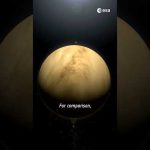
    Europe’s Galileo is the world’s most precise satellite navigation system, providing metre-level accuracy to billions of users. ESA and European industry are preparing a new generation of satellites for the European Union, the Galileo Second Generation or G2, that will revolutionise the fleet with enhanced capabilities.

    Galileo Second Generation satellites will integrate seamlessly with the current fleet to form the largest European satellite constellation and deliver essential services worldwide. With fully digital navigation payloads, electric propulsion, a better-performing navigation antenna, inter-satellite link capacity and an advanced atomic clock configuration, G2 satellites will provide more robust and reliable positioning, navigation and timing.

    Galileo is managed and funded by the European Commission, in partnership with ESA and EUSPA. Since its inception, ESA leads the design and development and is entrusted with R&D activities. EUSPA is the system prime for the operational system and oversees the exploitation of services.

    Credits: European Space Agency (ESA)

    Check out our full video catalog: http://bit.ly/SpaceInVideos
    Follow us on Twitter: http://bit.ly/ESAonTwitter
    On Facebook: http://bit.ly/ESAonFacebook
    On Instagram: http://bit.ly/ESAonInstagram
    On LinkedIn: https://bit.ly/ESAonLinkedIn
    On Pinterest: https://bit.ly/ESAonPinterest
    On Flickr: http://bit.ly/ESAonFlickr

    We are Europe’s gateway to space. Our mission is to shape the development of Europe’s space capability and ensure that investment in space continues to deliver benefits to the citizens of Europe and the world. Check out https://www.esa.int/ to get up to speed on everything space related.

    Copyright information about our videos is available here: https://www.esa.int/ESA_Multimedia/Terms_and_Conditions

  • What’s causing this black hole to suddenly burst with X-ray flashes? 🤔

    What’s causing this black hole to suddenly burst with X-ray flashes? 🤔

    Scientists speculate that the black hole is pulling in gas from nearby space and this has formed a disc of orbiting material around it. Something like a star or small black hole also orbiting around it, is flying through the disc over and over, causing shockwaves and powerful energy bursts.

    Watching these repeated eruptions in real time gives scientists a rare chance to study how black holes behave and learn more about these strange, powerful events. But for now, we still have more questions than answers.

    📹 European Space Agency (ESA)

    #ESA #Space #BlackHole

  • New study shows Nord Stream leak was much bigger than expected! 📈

    New study shows Nord Stream leak was much bigger than expected! 📈

    A new study shows that the Nord Stream methane leak that happened in 2022 was bigger than we thought. How much bigger? Watch our video until the end to find out.

    📹 European Space Agency (ESA)
    📸 Pexels, contains modified Copernicus Sentinel data (2022), processed by ESA, GHGSat, Pléiades Neo, Planet Labs PBC

    #ESA #EarthObservation #NordStream

  • Space is getting crowded – and not in a good way 💥

    Space is getting crowded – and not in a good way 💥

    Our 2025 Space Environment Report is out, and the message is clear: if we want to keep using space, we need to clean it up.

    From satellite breakups to daily re-entries, Earth’s orbit is buzzing with activity (and debris).

    Let’s keep space safe, together.

    📹 European Space Agency (ESA)

    #ESA #Space #SpaceDebris

  • And lift off for Biomass! 🚀

    And lift off for Biomass! 🚀

    Our Biomass satellite has successfully launched, marking a major leap forward in understanding Earth’s forests and their vital role in the carbon cycle.

    It lifted off on 29 April 2025 from Europe’s Spaceport in French Guiana aboard Vega-C, and is already sending back its first signals.
    Over the next few days, our mission controllers will carefully deploy Biomass’ enormous 12-metre-wide reflector – the key to its unique abilities.

    📹 European Space Agency (ESA)
    📸 ESA/CNES/Arianespace

    #ESA #Space #Satellite

  • The satellite that sees through forests | Biomass mission

    The satellite that sees through forests | Biomass mission

    ESA’s state-of-the-art Biomass mission is designed to provide new insights into the health and evolution of the world’s forests, helping us understand how they are changing over time and, importantly, their critical role in the global carbon cycle.
    Equipped with the first-ever fully polarimetric P-band synthetic aperture radar, this satellite can penetrate dense forest canopies. The long 70 cm wavelength of the radar enables it to measure ‘biomass’—the woody trunks, branches and stems—where trees store the majority of their carbon.

    Credits: European Space Agency (ESA)

    ★ Subscribe: http://bit.ly/ESAsubscribe and click twice on the bell button to receive our notifications.

    Check out our full video catalog: http://bit.ly/SpaceInVideos
    Follow us on Twitter: http://bit.ly/ESAonTwitter
    On Facebook: http://bit.ly/ESAonFacebook
    On Instagram: http://bit.ly/ESAonInstagram
    On LinkedIn: https://bit.ly/ESAonLinkedIn
    On Pinterest: https://bit.ly/ESAonPinterest
    On Flickr: http://bit.ly/ESAonFlickr

    We are Europe’s gateway to space. Our mission is to shape the development of Europe’s space capability and ensure that investment in space continues to deliver benefits to the citizens of Europe and the world. Check out https://www.esa.int/ to get up to speed on everything space related.

    Copyright information about our videos is available here: https://www.esa.int/ESA_Multimedia/Terms_and_Conditions

  • Our planet is so special! 🥹🌍 #EarthDay2025

    Our planet is so special! 🥹🌍 #EarthDay2025

    Each year on 22 April, people across the planet join forces to raise awareness about the unequivocal effects of climate change and the importance of protecting our planet for future generations.
    We celebrate Earth Day every day at ESA. 💙

    📹 European Space Agency (ESA)
    📸 ESA/NASA
    🎙️ The audio features a clip from David Attenborough

    #ESA #Earth #Space

  • 2024: Another record year for Europe’s climate. 📈

    2024: Another record year for Europe’s climate. 📈

    As recently reported by Copernicus ECMWF in its European State of the Climate Report, Europe experienced several climate extremes like glacier ice loss, severe floods, wildfires, and heatwaves. But the continent didn’t experience the same weather uniformly: data show a distinct east‑west contrast during 2024, with eastern areas generally sunny and warm while western areas were cloudier and wetter.

    📹 European Space Agency (ESA)
    📸 Contains modified CopernicusEU Sentinel data (2022 & 2024), processed by ESA CC BY-SA 3.0 IGO
    📊 C3S/Copernicus ECMWF/KNMI

    #ESA #Europe #ClimateChange

  • The people make the mission. 🥹

    The people make the mission. 🥹

    This footage is from 20 January 2014, when ESA’s Rosetta spacecraft awoke from deep space hibernation, more than 800 million kilometres from Earth. After spending 31 months in a power-saving sleep mode to conserve energy while travelling through the cold, outer regions of the Solar System, Rosetta successfully reactivated and sent a signal back to Earth — a simple “Hello, world!” that marked the beginning of one of the most ambitious space missions in history. Rosetta went on to become the first spacecraft to rendezvous with a comet (67P/Churyumov–Gerasimenko), orbit it, and deploy a lander, Philae, to its surface.

    📹 European Space Agency (ESA)

    #ESA #Space #Rosetta

  • Two spacecraft. One shadow. Zero ground control. 😎

    Two spacecraft. One shadow. Zero ground control. 😎

    Our Proba-3 mission recently pulled off its first-ever autonomous formation flight — aligning with the Sun and holding position for hours, all on its own.

    This is precision. This is the future. And it’s just the beginning.

    📹 European Space Agency (ESA)

    #ESA #Space #Proba3

  • Let’s fuel a satellite! ⛽️

    Let’s fuel a satellite! ⛽️

    This video shows the precise and delicate process of loading the Biomass satellite with 132 kg of highly volatile fuel. This fuel will power the satellite so that it can carry out the complex manoeuvres that are needed during its mission.

    📹 European Space Agency (ESA)
    📸 ESA/CNES/Arianespace/Optique vidéo du CSG–T. Leduc

    #ESA #Satellite #Space

  • Timelapse of Hera’s Mars flyby

    Timelapse of Hera’s Mars flyby

    On 12 March 2025, ESA’s Hera spacecraft soared just 5000 km above Mars and passed within 300 km of its distant moon, Deimos. Captured by Hera’s 1020×1020 pixel Asteroid Framing Camera, this video sequence offers a rare view of the red planet and its enigmatic moon. The original greyscale images have been colour-enhanced based on known surface features.

    Learn more: https://www.esa.int/Space_Safety/Hera/Hera_asteroid_mission_spies_Mars_s_Deimos_moon

    Credits: ESA – European Space Agency
    Music: In Search Of Solace – Symphony Of The Solitary Mind

    ★ Subscribe: http://bit.ly/ESAsubscribe and click twice on the bell button to receive our notifications.

    Check out our full video catalog: http://bit.ly/SpaceInVideos
    Follow us on Twitter: http://bit.ly/ESAonTwitter
    On Facebook: http://bit.ly/ESAonFacebook
    On Instagram: http://bit.ly/ESAonInstagram
    On LinkedIn: https://bit.ly/ESAonLinkedIn
    On Pinterest: https://bit.ly/ESAonPinterest
    On Flickr: http://bit.ly/ESAonFlickr

    We are Europe’s gateway to space. Our mission is to shape the development of Europe’s space capability and ensure that investment in space continues to deliver benefits to the citizens of Europe and the world. Check out https://www.esa.int/ to get up to speed on everything space related.

    Copyright information about our videos is available here: https://www.esa.int/ESA_Multimedia/Terms_and_Conditions
  • How do astronauts get haircuts in space? 💇

    How do astronauts get haircuts in space? 💇

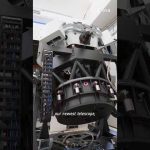
    ESA astronaut Samantha Cristoforetti gets a quick trim aboard the International Space Station, showing how haircuts work in microgravity.

    📹 ESA – European Space Agency
    📸 ESA/NASA

    #ESA #Astronauts #Space

  • Ever wondered what it takes to train for space? 🧑‍🚀

    Ever wondered what it takes to train for space? 🧑‍🚀

    Take a look at Sophie Adenot’s journey over the past year and a half as she prepares for her mission to the International Space Station, currently planned for spring 2026.

    📹 @europeanspaceagency
    📸 ESA – Sophie Adenot

    #ESA #Astronaut #Space

  • Gaia: Rewriting the story of the Milky Way

    Gaia: Rewriting the story of the Milky Way

    For over a decade, ESA’s Gaia mission has mapped our galaxy with stunning precision—rewriting the story of the Milky Way. As its mission enters a new phase, we look back at its most groundbreaking discoveries.

    Credit: ESA – European Space Agency

    Chapters:
    00:23 – Mapping the Milky Way and beyond
    00:58 – Structure of the Milky Way
    01:40 – Galactic family tree
    02:27 – Mapping star-forming regions
    03:00 – Ancient star streams
    03:19 – Cosmic encounters
    04:07 – Black holes and hidden giants

    ★ Subscribe: http://bit.ly/ESAsubscribe and click twice on the bell button to receive our notifications.

    Check out our full video catalog: http://bit.ly/SpaceInVideos
    Follow us on Twitter: http://bit.ly/ESAonTwitter
    On Facebook: http://bit.ly/ESAonFacebook
    On Instagram: http://bit.ly/ESAonInstagram
    On LinkedIn: https://bit.ly/ESAonLinkedIn
    On Pinterest: https://bit.ly/ESAonPinterest
    On Flickr: http://bit.ly/ESAonFlickr

    We are Europe’s gateway to space. Our mission is to shape the development of Europe’s space capability and ensure that investment in space continues to deliver benefits to the citizens of Europe and the world. Check out https://www.esa.int/ to get up to speed on everything space related.

    Copyright information about our videos is available here: https://www.esa.int/ESA_Multimedia/Terms_and_Conditions
  • This space telescope is mapping the Universe! 🌌 (Part 2)

    This space telescope is mapping the Universe! 🌌 (Part 2)

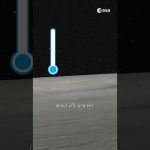
    On 19 March 2025, our Euclid mission released its first batch of survey data, including a preview of its deep fields. Here, hundreds of thousands of galaxies in different shapes and sizes take centre stage and show a glimpse of their large-scale organisation in the cosmic web.

    📹 ESA – European Space Agency
    📸 ESA /Euclid/Euclid Consortium/@NASA, image processing by J.-C. Cuillandre, E. Bertin, G. Anselmi
    Euclid Deep Field South, 70x zoom: ESA/Euclid/Euclid Consortium/NASA, image processing by J.-C. Cuillandre, E. Bertin, G. Anselmi

    #ESA #Euclid #Space

  • Gaia leaves for retirement orbit

    Gaia leaves for retirement orbit

    From 25 July 2014 to 15 January 2025, the Gaia space observatory performed high-precision measurements of nearly two billion stars from its Lissajous orbit around the L2 Lagrange point, 1.5 million km from Earth.

    After 10.5 years of groundbreaking observations, Gaia’s cold gas supply for attitude control has been depleted. On 27 March 2025, Gaia will leave its Lissajous orbit and transition into a stable heliocentric orbit. Soon after, the spacecraft will be passivated, with its instruments and transmitters switched off.

    While Gaia will no longer collect new data, its scientific mission is far from over! The team continues working on Gaia Data Release 4 (expected 2026) and the final legacy catalogue (to be published not before the end of 2030), ensuring that Gaia’s discoveries will shape astronomy for decades to come.

    This video visualises how Gaia leaves its Lissajous orbit and enters its final heliocentric orbit.

    This video was made with Gaia Sky (https://gaiasky.space) by Tiago Nogueira, Toni Sagristà, and Stefan Jordan.

    Text: Stefan Jordan, Tiago Nogueira, Tineke Roegiers

    The creators would like to thank Alessandro Masat and Ander Martinez from ESA for providing Gaia’s orbit and attitude data.

    Credit: ESA/Gaia/DPAC, CC BY-SA 3.0 IGO

    ★ Subscribe: http://bit.ly/ESAsubscribe and click twice on the bell button to receive our notifications.

    Check out our full video catalog: http://bit.ly/SpaceInVideos
    Follow us on Twitter: http://bit.ly/ESAonTwitter
    On Facebook: http://bit.ly/ESAonFacebook
    On Instagram: http://bit.ly/ESAonInstagram
    On LinkedIn: https://bit.ly/ESAonLinkedIn
    On Pinterest: https://bit.ly/ESAonPinterest
    On Flickr: http://bit.ly/ESAonFlickr

    We are Europe’s gateway to space. Our mission is to shape the development of Europe’s space capability and ensure that investment in space continues to deliver benefits to the citizens of Europe and the world. Check out https://www.esa.int/ to get up to speed on everything space related.

    Copyright information about our videos is available here: https://www.esa.int/ESA_Multimedia/Terms_and_Conditions

  • This space telescope is mapping the Universe! 🌌

    This space telescope is mapping the Universe! 🌌

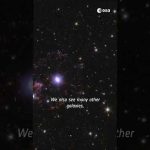
    On 19 March 2025, our Euclid mission released its first batch of survey data, revealing an astonishing view of the cosmic web.

    With just one scan of its deep fields, Euclid has already detected 26 million galaxies, some as far as 10.5 billion light-years away! This is just a preview of what’s to come, as Euclid will continue mapping the Universe in unprecedented detail.

    What’s in this first release?
    – Three vast mosaics covering 63 square degrees of the sky
    – A catalogue of 380 000 galaxies, classified with AI + citizen scientists
    – 500 new gravitational lens candidates, almost all never seen before
    – The first hints of Euclid’s full cosmic atlas, which will eventually cover one-third of the sky

    This data is a huge leap forward in understanding how galaxies are distributed across the Universe and how dark matter and dark energy shape the cosmos.

    Over the next six years, Euclid will revisit these deep fields 30 to 52 times, uncovering billions of galaxies and pushing the astrophysics’ boundaries.
    📹 @europeanspaceagency
    📸 ESA /Euclid/Euclid Consortium/@NASA, image processing by J.-C. Cuillandre, E. Bertin, G. Anselmi
    Euclid Deep Field South, 70x zoom: ESA/Euclid/Euclid Consortium/NASA, image processing by J.-C. Cuillandre, E. Bertin, G. Anselmi

    #ESA #Euclid #Space