Timelapse of the International Space Station flying into a stunning aurora borealis. Shared by ESA astronaut Samantha Cristoforetti on her TikTok on 18 September 2022.
📹 ESA-Samantha Cristoforetti
#ESA #Earth #Aurora

Timelapse of the International Space Station flying into a stunning aurora borealis. Shared by ESA astronaut Samantha Cristoforetti on her TikTok on 18 September 2022.
📹 ESA-Samantha Cristoforetti
#ESA #Earth #Aurora
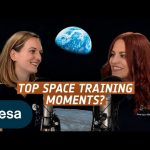
Meet Sara García Alonso — biotechnologist, cancer researcher, passionate science communicator and member of ESA’s Astronaut Reserve.
She’s our first guest in this miniseries, where we dive into the journey of the ESA Astronaut Reserve and explore the first part of their Astronaut Reserve Training (ART) at the European Astronaut Centre (EAC). Here, our “ARTists” are learning all about ESA and the International Space Station programme, the European space industry and institutions, and gaining hands-on experience in technical skills like spacecraft systems and robotics, as well as human behaviour, scientific lessons, scuba diving, and survival skills.
Find out more about Sara: https://www.esa.int/Science_Exploration/Human_and_Robotic_Exploration/Astronauts/Sara_Garcia_Alonso
Check out the ESA Astronaut Reserve Training programme: https://www.esa.int/Science_Exploration/Human_and_Robotic_Exploration/The_ART_of_training
Explore more from ESA Explores: https://www.esa.int/About_Us/EAC/ESA_Explores_podcast
Credits: ESA – European Space Agency
★ Subscribe: http://bit.ly/ESAsubscribe and click twice on the bell button to receive our notifications.
Check out our full video catalog: http://bit.ly/SpaceInVideos
Follow us on Twitter: http://bit.ly/ESAonTwitter
On Facebook: http://bit.ly/ESAonFacebook
On Instagram: http://bit.ly/ESAonInstagram
On LinkedIn: https://bit.ly/ESAonLinkedIn
On Pinterest: https://bit.ly/ESAonPinterest
On Flickr: http://bit.ly/ESAonFlickr
We are Europe’s gateway to space. Our mission is to shape the development of Europe’s space capability and ensure that investment in space continues to deliver benefits to the citizens of Europe and the world. Check out https://www.esa.int/ to get up to speed on everything space related.
Copyright information about our videos is available here: https://www.esa.int/ESA_Multimedia/Terms_and_Conditions
#ESA #Astronaut #Podcast

Join us live for a star-studded event this Thursday, as scientists working on ESA’s Hera mission for planetary defence release the mission’s first scientific observations beyond the Earth-Moon system, following its imminent flyby of Mars.
On 12 March 2025 ESA’s Hera mission comes to within 5000 km of the surface of the red planet and 300 km of Mars’s more distant and enigmatic moon Deimos. During this flyby Hera is performing observations of both Mars and the city-sized Deimos.
Hera then needs to swing its High Gain Antenna back to Earth to transmit its data home. The next day, on Thursday 13 March, these images will be premiered by Hera’s science team from ESA’s ESOC mission control centre in Darmstadt, Germany, explaining what they reveal, during our public webcast starting at 11:50 CET.
The team are being joined by ESA astronaut Alexander Gerst and renowned science fiction writer Andy Weir, author of The Martian and Project Hail Mary, as well as a surprise special guest!
Chapters:
00:00 Introduction
07:00 Image 1: AFC’s view of Mars and Deimos
18:20 Image 2: HyperScout’s view of colourful Mars
25:40 Audience questions
32:25 The Author and the Astronaut
50:55 Image 3: TIRI’s view of hot Mars, cold Mars
55:10 Ramses, Planetary Defence and asteroid deflection
1:00:25 The Hera AI companion – more than sci-fi!
1:05:30 What’s next for Hera?
★ Subscribe: http://bit.ly/ESAsubscribe and click twice on the bell button to receive our notifications.
Check out our full video catalog: http://bit.ly/SpaceInVideos
Follow us on Twitter: http://bit.ly/ESAonTwitter
On Facebook: http://bit.ly/ESAonFacebook
On Instagram: http://bit.ly/ESAonInstagram
On LinkedIn: https://bit.ly/ESAonLinkedIn
On Pinterest: https://bit.ly/ESAonPinterest
On Flickr: http://bit.ly/ESAonFlickr
We are Europe’s gateway to space. Our mission is to shape the development of Europe’s space capability and ensure that investment in space continues to deliver benefits to the citizens of Europe and the world. Check out https://www.esa.int/ to get up to speed on everything space related.
Copyright information about our videos is available here: https://www.esa.int/ESA_Multimedia/Terms_and_Conditions
#ESA #Mars #Space
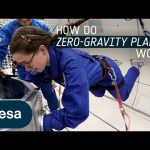
Ever wondered how astronauts prepare for the weightlessness of space? In Bordeaux, France, our astronauts train for microgravity using parabolic flights! These special flights create brief periods of zero gravity, mimicking the conditions of space.
By performing a series of steep climbs and descents, the plane allows astronauts to experience intense 2G forces before entering a 22-second weightless phase! This crucial training helps future astronauts adapt to moving, working, and even jumping in zero gravity.
Join us as we follow Rosemary Coogan, Sławosz Uznański-Wiśniewski, and John McFall on their parabolic flight training.
Credits: ESA – European Space Agency
Footage: ESA/Novaspace
★ Subscribe: http://bit.ly/ESAsubscribe and click twice on the bell button to receive our notifications.
Check out our full video catalog: http://bit.ly/SpaceInVideos
Follow us on Twitter: http://bit.ly/ESAonTwitter
On Facebook: http://bit.ly/ESAonFacebook
On Instagram: http://bit.ly/ESAonInstagram
On LinkedIn: https://bit.ly/ESAonLinkedIn
On Pinterest: https://bit.ly/ESAonPinterest
On Flickr: http://bit.ly/ESAonFlickr
We are Europe’s gateway to space. Our mission is to shape the development of Europe’s space capability and ensure that investment in space continues to deliver benefits to the citizens of Europe and the world. Check out https://www.esa.int/ to get up to speed on everything space related.
Copyright information about our videos is available here: https://www.esa.int/ESA_Multimedia/Terms_and_Conditions
#ESA #Space #ZeroGravity
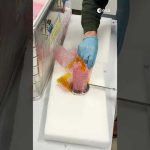
Inside is the very first metal 3D-printed object made aboard the International Space Station!
Scientists will now compare the object with reference prints made on Earth to study how microgravity affects 3D metal printing.
One of our goals for future space development is to create a circular space economy, recycling materials in orbit for better resource use. In the future, we could repurpose old satellite parts into new tools and structures, reducing the need to launch everything from Earth.
A 3D printer in space would let astronauts print what they need, when they need it.
Our metal 3D printer was developed by @airbus_space and its partners.
📹 @europeanspaceagency
📸 ESA/Airbus Space and Defence SAS
#ESA #Space #Unboxing
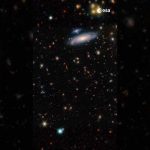
This video takes you on a breathtaking zoom-in journey to the spiral galaxy LEDA 2046648, located over a billion light-years away in the constellation Hercules. Captured by the NASA/ESA/CSA James Webb Space Telescope’s NIRCam instrument, this image reveals a stunning array of distant galaxies and bright stars, crowned with Webb’s signature six-pointed diffraction spikes.
Webb’s mission is to explore the universe’s earliest galaxies, unveiling their formation, evolution, and chemical composition through its powerful infrared vision. This observation was part of the telescope’s calibration process, ensuring its instruments were fine-tuned for groundbreaking discoveries. As the camera zooms in, witness the incredible detail Webb can capture, showcasing the vast and intricate tapestry of the cosmos.
Credit:
ESA/Webb, NASA & CSA, A. Martel, Dark Energy Survey/DOE/FNAL/NOIRLab/NSF/AURA, DSS, E. Slawik, N. Risinger, D. de Martin, N. Bartmann, M. Zamani
#ESA #Space #Webb
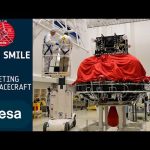
Smile is a brand-new space mission currently in the making. It will study space weather and the interaction between the solar wind and Earth’s magnetic environment.
At the European Space Agency’s technical heart in the Netherlands, engineers have spent the last five months unboxing and testing different elements of the spacecraft, and joining the two main parts together. Due to launch by the end of 2025, Smile is now well on its way to being ready for space.
This video provides a glimpse into what we’ve been up to recently. It is the second episode in a series of short videos, and includes interviews with Adriana González Castro (ESA Smile Project Controller), Walfried Raab (ESA Smile Lead Payload Engineer), Sylvain Vey (ESA Smile Instrument and Operations Interface Engineer), Li Jing (CAS Smile Project Manager), Benjamin Vanoutryve (Smile AIT/AIV and Launcher Interface Principal Engineer), and José Ignacio Maestra Onteniente (Airbus Smile AIT Manager).
Credit: ESA/Lightcurve Films
Acknowledgment: Direction, main camera, sound, editing, post-production by Lightcurve Films. Original music by William Zeitler. Drone footage is by The Postboat Dronedepartment.
★ Subscribe: http://bit.ly/ESAsubscribe and click twice on the bell button to receive our notifications.
Check out our full video catalog: http://bit.ly/SpaceInVideos
Follow us on Twitter: http://bit.ly/ESAonTwitter
On Facebook: http://bit.ly/ESAonFacebook
On Instagram: http://bit.ly/ESAonInstagram
On LinkedIn: https://bit.ly/ESAonLinkedIn
On Pinterest: https://bit.ly/ESAonPinterest
On Flickr: http://bit.ly/ESAonFlickr
We are Europe’s gateway to space. Our mission is to shape the development of Europe’s space capability and ensure that investment in space continues to deliver benefits to the citizens of Europe and the world. Check out https://www.esa.int/ to get up to speed on everything space related.
Copyright information about our videos is available here: https://www.esa.int/ESA_Multimedia/Terms_and_Conditions
#ESA #Smile #Documentary
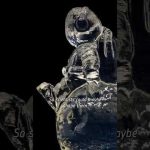
It turns out water is great at blocking radiation. But using water as a protection system has its challenges.
A team from the Polymer Chemistry and Biomaterials Group (PBM) at Ghent University in Belgium is looking into a new option: superabsorbent polymers (SAPs).
These materials might be safer and more effective than water alone.
SAPs can soak up hundreds of times their weight in liquid, similar to those “grow monster” toys that expand in water. When swollen with liquid, they’re called “hydrogels.”
📹 ESA – European Space Agency
📸 Lenny Van Daele/Johan Dubruel
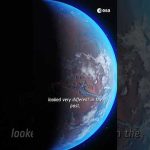
For years, scientists believed Mars got its red color from hematite, a type of rust that forms in dry conditions. But a new study suggests something surprising—ferrihydrite, a different kind of rust that forms in cool liquid water!
This discovery could mean Mars was once much wetter than we thought—maybe even habitable. And the best part? Our Rosalind Franklin rover will soon analyse Martian soil up close to uncover even more secrets.
🎥 ESA – European Space Agency
#ESA #Mars #Space

How did asteroid 2024 YR4 go from being the riskiest asteroid ever detected to posing no real threat? 🌍 ☄️
First spotted in December 2024, its impact risk initially soared to 2.8%, surpassing previous record-holder Apophis. But thanks to refined observations from our Near-Earth Object Coordination Centre and other institutions, its risk quickly dropped to just 0.001% within days.
This dramatic shift follows a well-known pattern—asteroid impact probabilities often rise before plummeting as more data becomes available. Now, nearly all possible impact scenarios have been ruled out, and 2024 YR4 has been safely removed from our risk list.
🎥 ESA – European Space Agency
#ESA #Asteroid2024YR4 #Space
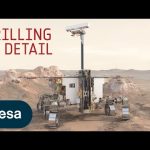
The ExoMars Rosalind Franklin rover will drill deeper than any other mission has ever attempted on the Red Planet.
The third episode in the series shows how the rover will extract, collect and analyse martian samples in a high-fidelity simulation.
Rosalind Franklin will be the first rover to reach a depth of up to two metres deep below the surface, acquiring samples that have been protected from harsh surface radiation and extreme temperatures.
The drill system combines multiple precission mechanisms in an intricate automated sequence. It uses three extension rods that connect tor form a two-metre “drill string”.
As the rover drills, it will simultaneously investigate the borehole using infrared spectroscopy to study mineral composition.
The ExoMars Rosalind Franklin mission is part of Europe’s ambitious exploration journey to search for past and present signs of life on Mars.
Credits: ESA – European Space Agency
Production: Mlabspace for ESA
3D animation: ESA/Mlabspace
Music composed by Valentin Joudrier
★ Subscribe: http://bit.ly/ESAsubscribe and click twice on the bell button to receive our notifications.
Check out our full video catalog: http://bit.ly/SpaceInVideos
Follow us on Twitter: http://bit.ly/ESAonTwitter
On Facebook: http://bit.ly/ESAonFacebook
On Instagram: http://bit.ly/ESAonInstagram
On LinkedIn: https://bit.ly/ESAonLinkedIn
On Pinterest: https://bit.ly/ESAonPinterest
On Flickr: http://bit.ly/ESAonFlickr
We are Europe’s gateway to space. Our mission is to shape the development of Europe’s space capability and ensure that investment in space continues to deliver benefits to the citizens of Europe and the world. Check out https://www.esa.int/ to get up to speed on everything space related.
Copyright information about our videos is available here: https://www.esa.int/ESA_Multimedia/Terms_and_Conditions
#ESA #ExoMars #Mars
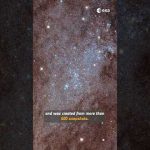
Witness the breathtaking beauty of our cosmic neighbor—the Andromeda galaxy—located 2.5 million light-years away. This spiral disk galaxy appears elliptical from Earth due to its tilted orientation. In this panoramic view, young blue stars shimmer along the galaxy’s outer rim, while older yellowish stars cluster toward the bright central hub, resembling the yolk of a cosmic fried egg. 🍳💫
This vibrant portrait is the result of over 10 years of observations and more than 600 snapshots captured by the Hubble Space Telescope. Altogether, it reveals the mesmerizing glow of 200 million stars scattered across the galaxy’s immense 200,000-light-year-wide disk. As the camera zooms into the central region, a dense sea of ancient stars comes into view. Panning across the galaxy’s expanse, we see intricate patterns of dark dust clouds weaving through space, while vibrant blue star clusters stand out along the edges, signaling regions of ongoing star formation. 🌌✨
Prepare to be amazed as we explore one of the largest and most detailed galactic images ever captured—offering a glimpse into the heart of a distant galaxy, yet eerily similar to our own Milky Way.
📸 NASA, ESA, B. Williams (University of Washington), G. Bacon (STScI)
🎶 Rain Clouds – Beautiful Visions
#ESA #AndromedaGalaxy #Hubble
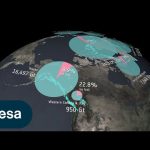
As part of a community effort, the Glacier Mass Balance Intercomparison Exercise, Glambie, has compiled all major studies using observations from a wealth of different techniques to provide an estimate of the world’s glacier mass change over the last two decades. The results, published in the journal Nature, show that ice melting from glaciers around the world is depleting regional freshwater resources and driving global sea levels to rise at ever-faster rates. The animation here illustrates the different observation methods used in the research, and Vatnajökull in Iceland as an example.
Read full story: https://www.esa.int/Applications/Observing_the_Earth/FutureEO/CryoSat/Glacier_melt_intensifying_freshwater_loss_and_accelerating_sea-level_rise
Credits: ESA/University of Zurich/Planetary Visions
★ Subscribe: http://bit.ly/ESAsubscribe and click twice on the bell button to receive our notifications.
Check out our full video catalog: http://bit.ly/SpaceInVideos
Follow us on Twitter: http://bit.ly/ESAonTwitter
On Facebook: http://bit.ly/ESAonFacebook
On Instagram: http://bit.ly/ESAonInstagram
On LinkedIn: https://bit.ly/ESAonLinkedIn
On Pinterest: https://bit.ly/ESAonPinterest
On Flickr: http://bit.ly/ESAonFlickr
We are Europe’s gateway to space. Our mission is to shape the development of Europe’s space capability and ensure that investment in space continues to deliver benefits to the citizens of Europe and the world. Check out https://www.esa.int/ to get up to speed on everything space related.
Copyright information about our videos is available here: https://www.esa.int/ESA_Multimedia/Terms_and_Conditions
#ESA #EarthObservation #Glacier
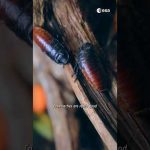
Waste management is a critical challenge for spaceflight. But what if the waste produced by astronauts could be sustainably transformed into something valuable in space? A Polish company thought about that and has come up an innovative solution: an insect bioreactor powered by Madagascar cockroaches.
Astronika, with support from ESA, has developed an innovative insect bioreactor that could revolutionize waste management on long-duration space missions. Currently, astronauts on the ISS rely on high-temperature reactors to process small amounts of waste, but much of it is still sent back to Earth. This method is unsustainable for deep-space missions. The insect bioreactor offers a closed-loop solution by converting organic waste into valuable resources, helping to create a more self-sufficient space ecosystem.
The system relies on Madagascar cockroaches, chosen for their resilience and efficiency in breaking down waste. The bioreactor can process up to 3.6 kg of waste per week, producing over 100 grams of protein-rich biomass—equivalent to more than 20 eggs. It also aids in water recovery and reduces waste volume, making it a highly sustainable option for future missions. By optimizing the bioreactor’s environment—controlling temperature, humidity, and waste conditions—the insects’ metabolism and reproduction can be accelerated, improving efficiency.
While still in early development, the next step is to send a prototype to space to observe how cockroaches behave and reproduce in microgravity. Understanding their adaptation to space conditions will provide valuable insights for further development. In the future, this technology could be a key component of long-term missions to the Moon or Mars, not only for waste recycling but also for plant cultivation and food production, helping astronauts sustain themselves far from Earth.
📹 ESA – European Space Agency
📸 ESA/Astronika
#ESA #SpaceResearch #Cockroaches
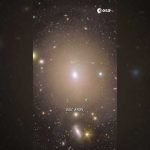
Euclid, the European Space Agency’s dark Universe detective, has made an astonishing discovery – right in our cosmic backyard.
An Einstein Ring, an extremely rare phenomenon, has been found hiding in plain sight in a galaxy not so far away. 🤩
During early testing in September 2023, the team spotted something special in one of Euclid’s first images—an Einstein Ring! This rare phenomenon, caused by gravitational lensing, was found around the well-known galaxy NGC 6505, just 590 million light-years away. The light from a much more distant galaxy (4.42 billion light-years away) is bending around it, creating a stunning cosmic ring.
This discovery shows just how powerful Euclid is. With its mission now in full swing, we can expect many more hidden cosmic wonders to be revealed!
📹 ESA – European Space Agency
📸 ESA/Euclid/Euclid Consortium/NASA, image processing by J.-C. Cuillandre, G. Anselmi, T. Li
#ESA #Euclid #EinsteinRing
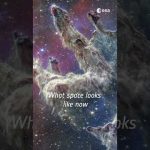
📹 ESA – European Space Agency
📸 ESA/Webb, NASA & CSA, J. Lee and the PHANGS-JWST and PHANGS-HST Teams, A. Scholz, K. Muzic, A. Langeveld, R. Jayawardhana, A. Adamo (Stockholm University) and the FEAST JWST team, STScI, A. Riess (JHU/STScI), Euclid/Euclid Consortium
#ESA #Space #Webb
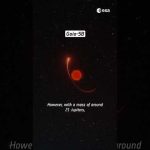
Using data from the European Space Agency’s Gaia mission, scientists have found a huge exoplanet and a brown dwarf. This is the first time a planet has been uniquely discovered by Gaia’s ability to sense the gravitational tug or ‘wobble’ the planet induces on a star. Both the planet and brown dwarf are orbiting low-mass stars, a scenario thought to be extremely rare.
📹 ESA – European Space Agency
📸 ESA/Gaia/DPAC/M. Marcussen
#ESA #Gaia #SpaceDiscovery
A group of volunteers is spending two months lying in bed—with their feet up and one shoulder always touching the mattress—even while eating, showering, and using the toilet. But why? This extreme bedrest study is helping scientists understand how space travel affects the human body and how to keep astronauts healthy on long missions.
Microgravity causes muscle and bone loss, fluid shifts, and other physiological changes similar to those experienced by bedridden patients on Earth. By studying volunteers here on Earth, researchers can develop better countermeasures for astronauts and even improve treatments for medical conditions like osteoporosis.
In this study, participants are divided into three groups: one stays in bed with no exercise, another cycles in bed to mimic astronaut workouts, and a third cycles while being spun in a centrifuge to simulate artificial gravity. Scientists hope artificial gravity could become a key tool in protecting astronauts during deep-space missions.
Could you handle 60 days in bed for the sake of space exploration? Let us know in the comments!
Credits: ESA – European Space Agency
★ Subscribe: http://bit.ly/ESAsubscribe and click twice on the bell button to receive our notifications.
Check out our full video catalog: http://bit.ly/SpaceInVideos
Follow us on Twitter: http://bit.ly/ESAonTwitter
On Facebook: http://bit.ly/ESAonFacebook
On Instagram: http://bit.ly/ESAonInstagram
On LinkedIn: https://bit.ly/ESAonLinkedIn
On Pinterest: https://bit.ly/ESAonPinterest
On Flickr: http://bit.ly/ESAonFlickr
We are Europe’s gateway to space. Our mission is to shape the development of Europe’s space capability and ensure that investment in space continues to deliver benefits to the citizens of Europe and the world. Check out https://www.esa.int/ to get up to speed on everything space related.
Copyright information about our videos is available here: https://www.esa.int/ESA_Multimedia/Terms_and_Conditions
#ESA #SpaceResearch #Astronaut
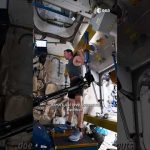
The AI-powered innovation transforming space medicine. Astronauts can now perform expert-level ultrasounds without Earth-based guidance—keeping them healthy on deep-space missions while paving the way for smarter, more accessible healthcare on Earth.
The future of exploration starts here!
📸 ESA/NASA – Alexander Gerst
📹 ESA – European Space Agency
#ESA #Astronaut #AI
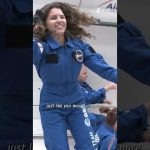
Air Zero G’s parabolic flights create a weightless environment by flying along a curved path called a parabola. This short period of weightlessness lasts about 22 seconds, during which people and experiments on board the parabolic flight can experience the same weightlessness as astronauts in orbit on the International Space Station.
The price to pay for this free-floating freedom is two short periods of hypergravity, during which everything weighs almost double for 20 seconds: first when the aircraft pulls up sharply and then again when it pulls out sharply afterwards to return to a normal flight path.
Each parabola takes about one minute to complete and is repeated 31 times in one flight, providing a total of about ten minutes of zero-gravity.
The flights provide European scientists with access to a repeatable, low-gravity research environment. Hundreds of experiments have flown over thousands of parabolas, enabling extensive scientific endeavours across many disciplines and resulting in a huge legacy of publications.
📹 ESA – European Space Agency
📸 ESA/Novespace
#ESA #ZeroG #ParabolicFlight
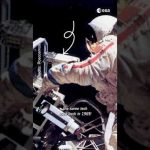
Our engineers have analysed the first-ever autonomous weld performed in orbit—a game-changer for sustainable space exploration. Discover how this breakthrough is paving the way for in-space manufacturing and construction, bringing us closer to building habitats and infrastructure beyond Earth.
Credit: ESA – European Space Agency
#ESA #InSpaceManufacturing #SpaceInnovation

Listen to the ESA/JAXA BepiColombo spacecraft as it flew past Mercury on 8 January 2025. This sixth and final flyby used the little planet’s gravity to steer the spacecraft on course for entering orbit around Mercury in 2026.
What you can hear in the sonification soundtrack of this video are real spacecraft vibrations measured by the Italian Spring Accelerometer (ISA) instrument. The accelerometer data have been shifted in frequency to make them audible to human ears – one hour of measurements have been sped up to one minute of sound.
BepiColombo is always shaking ever so slightly: fuel is slightly sloshing, the solar panels are vibrating at their natural frequency, heat pipes are pushing vapour through small tubes, and so forth. This creates the eerie underlying hum throughout the video.
But as BepiColombo gets closer to Mercury, ISA detects other forces acting on the spacecraft. Most scientifically interesting are the audible shocks that sound like short, soft bongs. These are caused by the spacecraft responding to entering and exiting Mercury’s shadow, where the Sun’s intense radiation is suddenly blocked. One of ISA’s scientific goals is to monitor the changes in the ‘solar radiation pressure’ – a force caused by sunlight striking BepiColombo as it orbits the Sun and, eventually, Mercury.
The loudest noises – an ominous ‘rumbling’ – are caused by the spacecraft’s large solar panels rotating. The first rotation occurs in shadow at 00:17 in the video, while the second adjustment at 00:51 was also captured by one of the spacecraft’s monitoring cameras.
Faint sounds like wind being picked up in a phone call, which grow more audible around 30 seconds into the video, are caused by Mercury’s gravitational field pulling the nearest and furthest parts of the spacecraft by different amounts. As the planet’s gravity stretches the spacecraft ever so slightly, the spacecraft responds structurally. At the same time, the onboard reaction wheels change their speed to maintain the spacecraft’s orientation, which you can hear as a frequency shift in the background.
This is the last time that many of these effects can be measured with BepiColombo’s largest solar panels, which make the spacecraft more susceptible to vibrations. The spacecraft module carrying these panels will not enter orbit around Mercury with the mission’s two orbiter spacecraft.
The video shows an accurate simulation of the spacecraft and its route past Mercury during the flyby, made with the SPICE-enhanced Cosmographia spacecraft visualisation tool. The inset that appears 38 seconds into the video shows real photographs taken by one of BepiColombo’s monitoring cameras.
Credits: ESA/BepiColombo/ISA & MTM
Acknowledgements: Sonification and SPICE-enhanced Cosmographia spacecraft visualisation by Carmelo Magnafico (IAPS/INAF)
★ Subscribe: http://bit.ly/ESAsubscribe and click twice on the bell button to receive our notifications.
Check out our full video catalog: http://bit.ly/SpaceInVideos
Follow us on Twitter: http://bit.ly/ESAonTwitter
On Facebook: http://bit.ly/ESAonFacebook
On Instagram: http://bit.ly/ESAonInstagram
On LinkedIn: https://bit.ly/ESAonLinkedIn
On Pinterest: https://bit.ly/ESAonPinterest
On Flickr: http://bit.ly/ESAonFlickr
We are Europe’s gateway to space. Our mission is to shape the development of Europe’s space capability and ensure that investment in space continues to deliver benefits to the citizens of Europe and the world. Check out https://www.esa.int/ to get up to speed on everything space related.
Copyright information about our videos is available here: https://www.esa.int/ESA_Multimedia/Terms_and_Conditions
#ESA #BepiColombo #Mercury
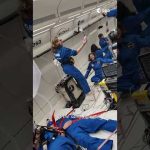
We know how microgravity impacts the brain thanks to astronauts on the ISS, but what about life on the Moon or Mars? Future explorers will also face hypoxia—low oxygen levels—which could affect their brain function and decision-making.
A team of students is tackling this challenge by conducting zero-gravity flight experiments to study how the brain responds to both microgravity and hypoxia. Their research could help improve astronaut safety for future lunar and Martian missions, ensuring they can explore safely beyond their spacecraft.
Could this be a key step in preparing humans for deep space exploration? Let us know your thoughts in the comments!
📹 ESA – European Space Agency
📸 ESA – European Space Agency
#ESA #SpaceExploration #BrainInSpace
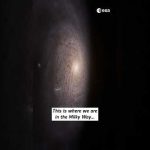
This stunning artist’s animation of the Milky Way is based on data from ESA’s Gaia space telescope. Gaia has completely reshaped our understanding of our home galaxy—revealing unexpected details about its spiral arms, central bar, and overall structure.
We can’t take a selfie of the Milky Way, but thanks to Gaia, we’re seeing it clearer than ever! And with more data releases on the way, our view will only get sharper.
Credit: ESA/Gaia/DPAC, Stefan Payne-Wardenaar
#ESA #MilkyWay #Gaia

This is a new artist’s animation of our galaxy, the Milky Way, based on data from ESA’s Gaia space telescope.
Gaia has changed our impression of the Milky Way. Even seemingly simple ideas about the nature of our galaxy’s central bar and the spiral arms have been overturned. Gaia has shown us that it has more than two spiral arms and that they are less prominent than we previously thought. In addition, Gaia has shown that its central bar is more inclined with respect to the Sun.
No spacecraft can travel beyond our galaxy, so we can’t take a selfie, but Gaia is giving us the best insight yet of what our home galaxy looks like. Once all of Gaia’s observations collected over the past decade are made available in two upcoming data releases, we can expect an even sharper view of the Milky Way.
Click here to download the still image of the Milky Way: https://www.esa.int/Science_Exploration/Space_Science/Gaia/New_Gaia_release_reveals_rare_lenses_cluster_cores_and_unforeseen_science
Credit: ESA/Gaia/DPAC, Stefan Payne-Wardenaar
★ Subscribe: http://bit.ly/ESAsubscribe and click twice on the bell button to receive our notifications.
Check out our full video catalog: http://bit.ly/SpaceInVideos
Follow us on Twitter: http://bit.ly/ESAonTwitter
On Facebook: http://bit.ly/ESAonFacebook
On Instagram: http://bit.ly/ESAonInstagram
On LinkedIn: https://bit.ly/ESAonLinkedIn
On Pinterest: https://bit.ly/ESAonPinterest
On Flickr: http://bit.ly/ESAonFlickr
We are Europe’s gateway to space. Our mission is to shape the development of Europe’s space capability and ensure that investment in space continues to deliver benefits to the citizens of Europe and the world. Check out https://www.esa.int/ to get up to speed on everything space related.
Copyright information about our videos is available here: https://www.esa.int/ESA_Multimedia/Terms_and_Conditions
#ESA #Gaia #MilkyWay

Fly over Mercury with BepiColombo for the final time during the mission’s epic expedition around the Sun. The ESA/JAXA spacecraft captured these images of the Solar System’s smallest planet on 7 and 8 January 2025, before and during its sixth encounter with Mercury. This was its final planetary flyby until it enters orbit around the planet in late 2026.
The video begins with BepiColombo’s approach to Mercury, showing images taken by onboard monitoring cameras 1 and 2 (M-CAM 1 and M-CAM 2) between 16:59 CET on 7 January and 01:45 CET on 8 January. During this time, the spacecraft moved from 106 019 to 42 513 km from Mercury’s surface. The view from M-CAM 1 is along a 15-metre-long solar array, whereas M-CAM 2 images show an antenna and boom in the foreground.
After emerging into view from behind the solar array, Mercury appears to jump to the right. Both the spacecraft and its solar arrays rotated in preparation for passing through Mercury’s cold, dark shadow.
For several hours after these first images were taken, the part of Mercury’s surface illuminated by the Sun was no longer visible from the M-CAMs. BepiColombo’s closest approach to Mercury took place in darkness at 06:58:52 CET on 8 January, when it got as close as 295 km.
Shortly after re-emerging into the intense sunlight, the spacecraft peered down onto the planet’s north pole, imaging several craters whose floors are in permanent shadow. The long shadows in this region are particularly striking on the floor of Prokofiev crater (the largest crater to the right of centre) – the central peak of that crater casts spiky shadows that exaggerate the shape of this mountain.
Next, we have a beautiful view of Mercury crossing the field of view from left to right, seen first by M-CAM 1 then by M-CAM 2 between 07:06 and 07:49 CET. These images showcase the planet’s northern plains, which were smoothed over billions of years ago when massive amounts of runny lava flowed across Mercury’s cratered surface.
The background music is The Hebrides overture, composed by Felix Mendelssohn in 1830 after being inspired by a visit to Fingal’s Cave, a sea cave created by ancient lava flows on the island of Staffa, Scotland. Similarly shaped by lava is Mercury’s Mendelssohn crater, one of the large craters visible passing from left to right above the solar array in M-CAM 1’s views, and at the very bottom of M-CAM 2’s views. The Mendelssohn crater was flooded with lava after an impact originally created it.
The end of the video lingers on the final three close-up images that the M-CAMs will ever obtain of Mercury. The cameras will continue to operate until September 2026, fulfilling their role of monitoring various parts of the spacecraft. After that point, the spacecraft module carrying the M-CAMs will separate from BepiColombo’s other two parts, ESA’s Mercury Planetary Orbiter (MPO) and JAXA’s Mercury Magnetospheric Orbiter (Mio). MPO’s much more powerful science cameras will take over from the M-CAMs, mapping Mercury over a range of colours in visible and infrared light.
Credits: ESA/BepiColombo/MTM
Acknowledgements: Thank you to external collaborators Emanuele Simioni (INAF), Valentina Galluzzi (INAF), Jack Wright (Open University), and David Rothery (Open University) for their involvement in image sequence planning.
★ Subscribe: http://bit.ly/ESAsubscribe and click twice on the bell button to receive our notifications.
Check out our full video catalog: http://bit.ly/SpaceInVideos
Follow us on Twitter: http://bit.ly/ESAonTwitter
On Facebook: http://bit.ly/ESAonFacebook
On Instagram: http://bit.ly/ESAonInstagram
On LinkedIn: https://bit.ly/ESAonLinkedIn
On Pinterest: https://bit.ly/ESAonPinterest
On Flickr: http://bit.ly/ESAonFlickr
We are Europe’s gateway to space. Our mission is to shape the development of Europe’s space capability and ensure that investment in space continues to deliver benefits to the citizens of Europe and the world. Check out https://www.esa.int/ to get up to speed on everything space related.
Copyright information about our videos is available here: https://www.esa.int/ESA_Multimedia/Terms_and_Conditions
#ESA #BepiColombo #Mercury
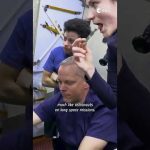
From the deep sea to outer space! Submarines are helping scientists’ study how humans adapt to extreme environments — just like astronauts on long space missions.
What we learn underwater today could shape the future of space exploration tomorrow.
📹 ESA – European Space Agency
📸 ESA/Portuguese Space Agency/Portuguese Navy
#ESA #Submarine #SpaceExploration

Did you know the Large Magellanic Cloud, one of our galaxy’s closest neighbors, survived a dramatic collision with the Milky Way’s gaseous halo? Despite losing most of its gas, the Large Magellanic Cloud is still forming new stars—a testament to its resilience! Thanks to Hubble Space Telescope, astronomers measured the Large Magellanic Cloud’s halo for the first time, revealing incredible insights about galaxy interactions.
📹 ESA – European Space Agency
📸 NASA, ESA, R. Crawford
#ESA #Hubble #LargeMagellanicCloud
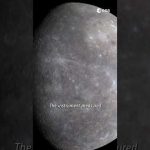
BepiColombo flew past Mercury for the fifth time on 1 December 2024.
During this flyby, BepiColombo gathered more data on the mysterious planet and its surroundings. Aside from taking some ‘regular’ photos of the planet and measuring particles and electromagnetic fields in the space around it, this flyby was the first time that any spacecraft imaged Mercury in mid-infrared wavelengths of light.
BepiColombo will pass much closer to Mercury’s north pole during its final flyby of Mercury on 8 January 2025, its last visit before arriving to enter orbit about the planet in November 2026.
📹 ESA – European Space Agency
📸 MERTIS/DLR/University of Münster & NASA/Johns Hopkins University Applied Physics Laboratory/Carnegie Institution of Washington
#ESA #Mercury #BepiColombo
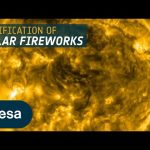
At the start of this new year, close-up pictures and solar flare data that the ESA-led Solar Orbiter mission has been recording for more than three years. See and hear for yourself how the number of flares and their intensity increase, a clear sign of the Sun approaching the peak of the 11-year solar cycle.
This video combines ultraviolet images of the Sun’s outer atmosphere (the corona, yellow) taken by Solar Orbiter’s Extreme Ultraviolet Imager (EUI) instrument, with the size and locations of solar flares (blue circles) as recorded by the Spectrometer/Telescope for Imaging X-rays (STIX) instrument. The accompanying audio is a sonification based on the detected flares and the spacecraft’s distance to the Sun.
Solar Orbiter moves on an elliptical path around the Sun, making a close approach to our star every six months. We can see this in the video from the spacecraft’s perspective, with the Sun moving closer and farther over the course of each year. In the sonification, this is represented by the low background humming that loudens as the Sun gets closer and becomes quieter as it moves further away. (There are some abrupt shifts in distance visible in the video, as it skips over dates where one or both instruments were inactive or collecting a different type of data.)
The blue circles represent solar flares: bursts of high-energy radiation of which STIX detects the X-rays. Flares are sent out by the Sun when energy stored in ‘twisted’ magnetic fields (usually above sunspots) is suddenly released. The size of each circle indicates how strong the flare is, with stronger flares sending out more X-rays. We can hear the flares in the metallic clinks in the sonification, where the sharpness of the sound corresponds to how energetic the solar flare is.
Many thanks to Klaus Nielsen (DTU Space / Maple Pools) for making the sonification in this video. If you would like to hear more sonifications and music by this artist, please visit: https://linktr.ee/maplepools
Solar Orbiter is a space mission of international collaboration between ESA and NASA, operated by ESA.
—————————————————
Credits
Credit: ESA & NASA/Solar Orbiter/EUI & STIX, Klaus Nielsen (DTU Space/Maple Pools)
Acknowledgements: Data processing for video by Laura Hayes
License: CC BY-SA 3.0 or ESA Standard License
Video credit slate
Solar Orbiter animation: ESA
Sun images: ESA & NASA/Solar Orbiter/EUI
Solar flare data: ESA & NASA/Solar Orbiter/STIX
Data processing for video: Laura Hayes
Data sonification & music: Klaus Nielsen (DTU Space/Maple Pools)
—————————————————
★ Subscribe: http://bit.ly/ESAsubscribe and click twice on the bell button to receive our notifications.
Check out our full video catalog: http://bit.ly/SpaceInVideos
Follow us on Twitter: http://bit.ly/ESAonTwitter
On Facebook: http://bit.ly/ESAonFacebook
On Instagram: http://bit.ly/ESAonInstagram
On LinkedIn: https://bit.ly/ESAonLinkedIn
On Pinterest: https://bit.ly/ESAonPinterest
On Flickr: http://bit.ly/ESAonFlickr
We are Europe’s gateway to space. Our mission is to shape the development of Europe’s space capability and ensure that investment in space continues to deliver benefits to the citizens of Europe and the world. Check out https://www.esa.int/ to get up to speed on everything space related.
Copyright information about our videos is available here: https://www.esa.int/ESA_Multimedia/Terms_and_Conditions
#ESA #SolarOrbiter #Sun
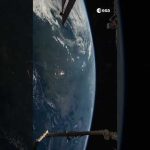
With this Timelapse captured from the ISS by our astronaut Samantha Cristoforetti, the entire ESA family wants to wish you a peaceful, safe and exciting year 2025!
May the new year be full of grand adventures and opportunities!
We’ll keep bringing the wonders of the universe and Earth to the palm of your hands.
📹 ESA/NASA
#ESA #2025 #Earth

In 1975, 10 European countries came together with a vision to collaborate on key space activities: science and astronomy, launch capabilities and space applications: the European Space Agency, ESA, was born.
In 2025, we mark half a century of joint European achievement – filled with firsts and breakthroughs in science, exploration and technology, and the space infrastructure and economy that power Europe today.
During the past five decades ESA has grown, developing ever bolder and bigger projects and adding more Member States, with Slovenia joining as the latest full Member State in January.
We’ll also celebrate the 50th anniversary of ESA’s Estrack network, 30 years of satellite navigation in Europe and 20 years since ESA launched the first demonstration satellite Giove-A which laid the foundation for the EU’s own satnav constellation Galileo. Other notable celebrations are the 20th anniversary of ESA’s Business Incubation Centres, or BICs, and the 30th year in space for SOHO, the joint ESA and NASA Solar and Heliospheric Observatory.
Sadly though, 2025 will mean end of science operations for Integral and Gaia. Integral, ESA’s gamma-ray observatory has exotic objects in space since 2002 and Gaia concludes a decade of mapping the stars. But as some space telescopes retire, another one provides its first full data release. Launched in 2023, we expect Euclid’s data release early in the new year.
Launch-wise, we’re looking forward to Copernicus Sentinel-4 and -5 (Sentinel-4 will fly on an MTG-sounder satellite and Sentinel-5 on the MetOp-SG-A1 satellite), Copernicus Sentinel-1D, Sentinel-6B and Biomass. We’ll also launch the SMILE mission, or Solar wind Magnetosphere Ionosphere Link Explorer, a joint mission with the Chinese academy of science.
The most powerful version of Europe’s new heavy-lift rocket, Ariane 6, is set to fly operationally for the first time in 2025. With several European commercial launcher companies planning to conduct their first orbital launches in 2025 too, ESA is kicking off the European Launcher Challenge to support the further development of European space transportation industry.
In human spaceflight, Polish ESA project astronaut Sławosz Uznański will fly to the ISS on the commercial Axiom-4 mission. Artemis II will be launched with the second European Service Module, on the first crewed mission around the Moon since 1972.
The year that ESA looks back on a half century of European achievement will also be one of key decisions on our future. At the Ministerial Council towards the end of 2025, our Member States will convene to ensure that Europe’s crucial needs, ambitions and the dreams that unite us in space become reality.
So, in 2025, we’ll celebrate the legacy of those who came before but also help establish a foundation for the next 50 years. Join us as we look forward to a year that honours ESA’s legacy and promises new milestones in space.
Credits: ESA – European Space Agency
★ Subscribe: http://bit.ly/ESAsubscribe and click twice on the bell button to receive our notifications.
Check out our full video catalog: http://bit.ly/SpaceInVideos
Follow us on Twitter: http://bit.ly/ESAonTwitter
On Facebook: http://bit.ly/ESAonFacebook
On Instagram: http://bit.ly/ESAonInstagram
On LinkedIn: https://bit.ly/ESAonLinkedIn
On Pinterest: https://bit.ly/ESAonPinterest
On Flickr: http://bit.ly/ESAonFlickr
We are Europe’s gateway to space. Our mission is to shape the development of Europe’s space capability and ensure that investment in space continues to deliver benefits to the citizens of Europe and the world. Check out https://www.esa.int/ to get up to speed on everything space related.
Copyright information about our videos is available here: https://www.esa.int/ESA_Multimedia/Terms_and_Conditions
#ESA #2025 #Space

An ethereal dance of misty clouds of interstellar dust with a myriad of distant stars and galaxies speckled like paint drops over a black canvas. This is a sonification of a breathtaking image taken by ESA’s Euclid space telescope of the young star-forming region Messier 78.
The sonification offers a different representation of the data collected by Euclid, and lets us explore the stellar nurseries in M78 through sound. Close your eyes and listen to let the cosmic image be drawn by your mind’s eye, or watch as the traceback line in this video follows the sounds to colour the image from left to right.
The twinkling sounds of various pitches and volumes represent the galaxies and stars in the frame. The pitch of the sound points towards where we see the dot of light in the image. Higher pitches tell us that a star or galaxy appears further at the top in the image along the traceback line.
The brightness of these objects in and around M78 are represented by the volume of the twinkles. Whenever we hear a particularly loud clink, the star or galaxy that Euclid observed appears particularly bright in the image.
Underlying these jingling sounds, we can hear a steady undertone, made up of two chords which represent different regions in Messier 78. This sound intensifies as the traceback line approaches first the brightest, and later the densest regions in the nebula.
The first two deeper crescendos in this undertone indicate two patches in the image where the most intense colour is blue/purple. These appear as two ‘cavities’ in M78, where newly forming stars carve out and illuminate the dust and gas in which they were born.
The chords intensify a third time at a slightly higher pitch corresponding to the red-orange colours in the image, as the sound draws over the densest star-forming region of the frame. This stellar nursery is hidden by a layer of dust and gas that is so thick that it obscures almost all the light of the young stars within it.
As the sound traces over the entire Euclid image, these different tones together form a cosmic symphony that represents the image of Messier 78, and the stars and galaxies that lie behind and within it. You can read more about this image that was first revealed to the eyes of the world earlier this year here: https://www.esa.int/Science_Exploration/Space_Science/Euclid/ESA_s_Euclid_celebrates_first_science_with_sparkling_cosmic_views
Many thanks to Klaus Nielsen (DTU Space / Maple Pools) for making the sonification in this video. If you would like to hear more sonifications and music by this artist, please visit: https://linktr.ee/maplepools
—————————————————
Credits
Credit: ESA/Euclid/Euclid Consortium/NASA, image processing by J.-C. Cuillandre (CEA Paris-Saclay) and G. Anselmi, sonification by K. Nielsen (DTU Space/Maple Pools)
License: CC BY-SA 3.0 or ESA Standard License
Video credit slate
ESA/Euclid/Euclid Consortium/NASA
Image processing: J.-C. Cuillandre (CEA Paris-Saclay), G. Anselmi
Data sonification & music: Klaus Nielsen (DTU Space/Maple Pools)
—————————————————
★ Subscribe: http://bit.ly/ESAsubscribe and click twice on the bell button to receive our notifications.
Check out our full video catalog: http://bit.ly/SpaceInVideos
Follow us on Twitter: http://bit.ly/ESAonTwitter
On Facebook: http://bit.ly/ESAonFacebook
On Instagram: http://bit.ly/ESAonInstagram
On LinkedIn: https://bit.ly/ESAonLinkedIn
On Pinterest: https://bit.ly/ESAonPinterest
On Flickr: http://bit.ly/ESAonFlickr
We are Europe’s gateway to space. Our mission is to shape the development of Europe’s space capability and ensure that investment in space continues to deliver benefits to the citizens of Europe and the world. Check out https://www.esa.int/ to get up to speed on everything space related.
Copyright information about our videos is available here: https://www.esa.int/ESA_Multimedia/Terms_and_Conditions
#ESA #Euclid #Messier78

In 2024, ESA continued to drive Europe’s innovation and excellence in space, equipping the continent with advanced tools and knowledge to address global and local challenges. The year saw pioneering missions, cutting-edge satellites and the pivotal restoration of Europe’s independent access to space.
The first Ariane 6 launch was perhaps ‘the’ highlight of the year but it was only one of many achievements. We saw the last Vega launch and then the return to flight of Vega-C, the more powerful, upgraded version carrying Sentinel-1C.
Far away in our Solar System, the ESA/JAXA BepiColombo spacecraft performed two Mercury flybys in 2024, needed so that it can enter orbit around Mercury in 2026. Juice also performed a crucial gravity assist, this time becoming the first spacecraft to conduct a Moon-Earth double flyby on its way to Jupiter.
Twenty years after ESA’s Rosetta was launched and 10 years since its historic arrival at the comet 67P/Churyumov-Gerasimenko, we launched another spacecraft to a small body, the Hera planetary defence mission to investigate asteroid Dimorphos.
2024 was an important year for Europe’s Galileo constellation which continued to expand with the launch of four new satellites and an updated Galileo ground system. The year also saw the launch of ESA’s Proba-3 mission: two precision formation-flying satellites forming a solar coronagraph to study the Sun’s faint corona.
In human spaceflight, Europe continues to contribute to science from the ISS as Andreas Mogensen’s Huginn mission continued into 2024. Andreas even met up in space with ESA project astronaut Marcus Wandt who was launched on his Muninn mission, making it the first time two Scandinavians were in space together.
Meanwhile the latest class of ESA astronauts completed basic training and graduated in April. Two of them, Sophie and Raphaël, were then assigned to long-duration missions to the ISS in 2026.
We made crucial steps for Europe in gaining access to the Moon: the inauguration of our LUNA facility with DLR, and the delivery of a third European Service Module for NASA’s Orion spacecraft as part of the Artemis programme.
Europe is also contributing to the international Lunar Gateway and developing and ESA lunar lander called Argonaut. These landers will rely on ESA Moonlight, the programme to establish Europe’s first dedicated satellite constellation for lunar communication and navigation.
As 2024 draws to a close, ESA’s achievements this year have reinforced Europe’s role in space. ESA’s journey continues to explore new frontiers, shaping the space landscape for generations to come.
Credits: ESA – European Space Agency
★ Subscribe: http://bit.ly/ESAsubscribe and click twice on the bell button to receive our notifications.
Check out our full video catalog: http://bit.ly/SpaceInVideos
Follow us on Twitter: http://bit.ly/ESAonTwitter
On Facebook: http://bit.ly/ESAonFacebook
On Instagram: http://bit.ly/ESAonInstagram
On LinkedIn: https://bit.ly/ESAonLinkedIn
On Pinterest: https://bit.ly/ESAonPinterest
On Flickr: http://bit.ly/ESAonFlickr
We are Europe’s gateway to space. Our mission is to shape the development of Europe’s space capability and ensure that investment in space continues to deliver benefits to the citizens of Europe and the world. Check out https://www.esa.int/ to get up to speed on everything space related.
Copyright information about our videos is available here: https://www.esa.int/ESA_Multimedia/Terms_and_Conditions
#ESA #2024Highlights #Space
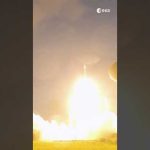
The third Copernicus Sentinel-1 satellite, Sentinel-1C, has launched aboard a Vega-C rocket, flight VV25, from Europe’s Spaceport in French Guiana. The rocket lifted off on 5 December 2024 at 22:20 CET (18:20 local time).
Sentinel-1C extends the legacy of its predecessors, delivering high-resolution radar imagery to monitor Earth’s changing environment, supporting a diverse range of applications and advance scientific research. Additionally, Sentinel-1C introduces new capabilities for detecting and monitoring maritime traffic.
The launch also marks Vega-C’s ‘return to flight’, a key step in restoring Europe’s independent access to space. Vega-C is the evolution of the Vega family of rockets and delivers increased performance, greater payload volume and improved competitiveness.
📹 ESA – European Space Agency
📸 ESA/CNES/Arianespace/Arianegroup
#ESA #Europe #Rocket
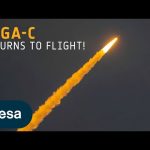
The third Copernicus Sentinel-1 satellite, Sentinel-1C, has launched aboard a Vega-C rocket, flight VV25, from Europe’s Spaceport in French Guiana. The rocket lifted off on 5 December 2024 at 22:20 CET (18:20 local time).
Sentinel-1C extends the legacy of its predecessors, delivering high-resolution radar imagery to monitor Earth’s changing environment, supporting a diverse range of applications and advance scientific research. Additionally, Sentinel-1C introduces new capabilities for detecting and monitoring maritime traffic.
The launch also marks Vega-C’s ‘return to flight’, a key step in restoring Europe’s independent access to space. Vega-C is the evolution of the Vega family of rockets and delivers increased performance, greater payload volume and improved competitiveness.
Credits: ESA/CNES/Arianespace
★ Subscribe: http://bit.ly/ESAsubscribe and click twice on the bell button to receive our notifications.
Check out our full video catalog: http://bit.ly/SpaceInVideos
Follow us on Twitter: http://bit.ly/ESAonTwitter
On Facebook: http://bit.ly/ESAonFacebook
On Instagram: http://bit.ly/ESAonInstagram
On LinkedIn: https://bit.ly/ESAonLinkedIn
On Pinterest: https://bit.ly/ESAonPinterest
On Flickr: http://bit.ly/ESAonFlickr
We are Europe’s gateway to space. Our mission is to shape the development of Europe’s space capability and ensure that investment in space continues to deliver benefits to the citizens of Europe and the world. Check out https://www.esa.int/ to get up to speed on everything space related.
Copyright information about our videos is available here: https://www.esa.int/ESA_Multimedia/Terms_and_Conditions
#ESA #Sentinel-1 C #Rocket
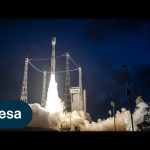
The third Copernicus Sentinel-1 satellite, Sentinel-1C, has launched aboard a Vega-C rocket, flight VV25, from Europe’s Spaceport in French Guiana. The rocket lifted off on 5 December 2024 at 22:20 CET (18:20 local time).
Sentinel-1C extends the legacy of its predecessors, delivering high-resolution radar imagery to monitor Earth’s changing environment, supporting a diverse range of applications and advance scientific research. Additionally, Sentinel-1C introduces new capabilities for detecting and monitoring maritime traffic.
The launch also marks Vega-C’s ‘return to flight’, a key step in restoring Europe’s independent access to space. Vega-C is the evolution of the Vega family of rockets and delivers increased performance, greater payload volume and improved competitiveness.
Credits: Arianespace
★ Subscribe: http://bit.ly/ESAsubscribe and click twice on the bell button to receive our notifications.
Check out our full video catalog: http://bit.ly/SpaceInVideos
Follow us on Twitter: http://bit.ly/ESAonTwitter
On Facebook: http://bit.ly/ESAonFacebook
On Instagram: http://bit.ly/ESAonInstagram
On LinkedIn: https://bit.ly/ESAonLinkedIn
On Pinterest: https://bit.ly/ESAonPinterest
On Flickr: http://bit.ly/ESAonFlickr
We are Europe’s gateway to space. Our mission is to shape the development of Europe’s space capability and ensure that investment in space continues to deliver benefits to the citizens of Europe and the world. Check out https://www.esa.int/ to get up to speed on everything space related.
Copyright information about our videos is available here: https://www.esa.int/ESA_Multimedia/Terms_and_Conditions
#ESA #Sentinel-1 C #Rocket

Proba-3 lifted off on its PSLV-XL rocket from Satish Dhawan Space Centre in Sriharikota, India, on Thursday, 5 December, at 11:34 CET (10:34 GMT, 16:04 local time). The mission was launched using this Indian launcher because it needed to be placed in a highly elliptical orbit extending more than 60 500 km from the ground.
After integration and testing was completed at Redwire Space in Belgium, Proba-3 was transported to India to be prepared for launch.
The latest member of ESA’s family of in-orbit demonstration missions, Proba-3 is in fact two spacecraft being launched together, which will separate in orbit to begin performing precise formation flying, precise to a single millimetre, about the thickness of an average fingernail. To prove their performance, Proba-3 has been devoted to an ambitious scientific goal. The pair will line up precisely with the Sun 150 m apart so that one casts a precisely controlled shadow onto the other.
By blocking out the fiery disc of the Sun, Proba-3’s ‘Occulter’ spacecraft will mimic a terrestrial total solar eclipse, to open up views of the Sun’s faint surrounding atmosphere, or ‘corona’, which is a million times fainter than its parent star. Proba-3’s second ‘Coronagraph’ spacecraft hosts the optical instrument that will observe the solar corona.
If Proba-3’s initial commissioning phase goes to plan then the spacecraft pair will be separated early in the new year to begin their individual check-outs. The operational phase of the mission, including the first observations of the corona through active formation flying, should begin in about four months.
Proba-3 was led for ESA by Sener in Spain, overseeing a consortium of 14 ESA Member States and Canada including Airbus Defence and Space in Spain manufacturing the spacecraft and Redwire Space in Belgium responsible for the spacecraft avionics, assembly and operations. CSL in Belgium produced Proba-3’s ASPIICS coronagraph Spacebel in Belgium developed the onboard and ground segment software with GMV responsible for the formation flying system and flight dynamics.
Credits: ESA/ISRO – NSIL
★ Subscribe: http://bit.ly/ESAsubscribe and click twice on the bell button to receive our notifications.
Check out our full video catalog: http://bit.ly/SpaceInVideos
Follow us on Twitter: http://bit.ly/ESAonTwitter
On Facebook: http://bit.ly/ESAonFacebook
On Instagram: http://bit.ly/ESAonInstagram
On LinkedIn: https://bit.ly/ESAonLinkedIn
On Pinterest: https://bit.ly/ESAonPinterest
On Flickr: http://bit.ly/ESAonFlickr
We are Europe’s gateway to space. Our mission is to shape the development of Europe’s space capability and ensure that investment in space continues to deliver benefits to the citizens of Europe and the world. Check out https://www.esa.int/ to get up to speed on everything space related.
Copyright information about our videos is available here: https://www.esa.int/ESA_Multimedia/Terms_and_Conditions
#ESA #Proba-3 #Rocket
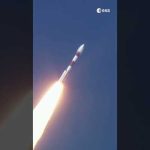
ESA’s Proba-3 mission lifted off on its PSLV-XL rocket from Satish Dhawan Space Centre in Sriharikota, India, on Thursday, 5 December, at 11:34 CET (10:34 GMT, 16:04 local time).
📸 ISRO – NSIL
#ESA #Proba-3#Rocket
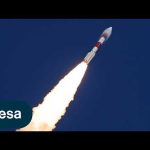
ESA’s Proba-3 mission lifted off on its PSLV-XL rocket from Satish Dhawan Space Centre in Sriharikota, India, on Thursday, 5 December, at 11:34 CET (10:34 GMT, 16:04 local time).
Credits: ISRO – NSIL
★ Subscribe: http://bit.ly/ESAsubscribe and click twice on the bell button to receive our notifications.
Check out our full video catalog: http://bit.ly/SpaceInVideos
Follow us on Twitter: http://bit.ly/ESAonTwitter
On Facebook: http://bit.ly/ESAonFacebook
On Instagram: http://bit.ly/ESAonInstagram
On LinkedIn: https://bit.ly/ESAonLinkedIn
On Pinterest: https://bit.ly/ESAonPinterest
On Flickr: http://bit.ly/ESAonFlickr
We are Europe’s gateway to space. Our mission is to shape the development of Europe’s space capability and ensure that investment in space continues to deliver benefits to the citizens of Europe and the world. Check out https://www.esa.int/ to get up to speed on everything space related.
Copyright information about our videos is available here: https://www.esa.int/ESA_Multimedia/Terms_and_Conditions
#ESA #Proba-3 #RocketLaunch