Oxia Planum contains one of the largest exposures of rocks on Mars that are around 3.9 billion years old and clay-rich, indicating that water once played a role here. The site sits in a wide catchment area of valley systems with the exposed rocks exhibiting different compositions, indicating a variety of deposition and wetting environments.
A European rover, Rosalind Franklin, is part of the ExoMars programme that will explore the surface of Mars. The rover will be the first mission to combine the capability to move across the surface and to study Mars at depth.
The year 2020 will see new and exciting European space missions, from journeys to the Sun and back to Mars, and from innovative telecommunications satellites to the continuing operation of Copernicus Earth observation satellites. The second ExoMars mission will see a European rover on the ‘Red Planet’ and the ESA/NASA Solar Orbiter mission will be launched around the Sun. This year marks probably the last time an ESA astronaut flies on a Russian Soyuz spacecraft – future European astronaut flights are likely to be on the new US spacecraft, in particular the NASA Orion vehicles, which feature European-built Service Modules, now being prepared for flights to the Moon and beyond. The year also sees the first flight of ESA’s new Vega-C launcher from Europe’s Spaceport in French Guiana, where Ariane 6 operations are also taking shape for its first flight.
★ Subscribe: http://bit.ly/ESAsubscribe and click twice on the bell button to receive our notifications.
We are Europe’s gateway to space. Our mission is to shape the development of Europe’s space capability and ensure that investment in space continues to deliver benefits to the citizens of Europe and the world. Check out http://www.esa.int/ESA to get up to speed on everything space related.
The ExoMars mission foresees Rosalind Franklin the rover and its surface platform Kazachok landing on the Red Planet in 2021. The rover will move across many types of terrain, collect samples with a 2 m-long drill and analyse them with instruments in its onboard laboratory.
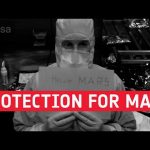
This episode about ExoMars shows the integration of the locomotion system and the science payload to the rover in a specially designed, fit-for-purpose cleanroom at Airbus Defence and Space in Stevenage, United Kingdom.
Mars is a primary target in the search for evidence of extraterrestrial life, past or present. There are stringent planetary protection requirements in place to make sure that ExoMars does not introduce terrestrial biological contamination to the Red Planet. ESA ensures planetary protection according to the legal obligations of the United Nations Outer Space Treaty.
Microbiological contamination is strictly controlled during the assembly of the rover. The cleanroom is amongst the cleanest places on Earth, cleaner than a standard hospital operating theatre thanks to filtered air, application of rigorous cleanliness procedures and workers who remain fully shrouded within ‘bunny suits’.
The rover spent 18 months at Stevenage before departing for Airbus Toulouse, France at the end of August, for four months of environmental testing to confirm it is ready for the conditions on Mars.
More information on ExoMars: http://www.esa.int/exomars
Credits: ESA, Airbus Defence and Space UK, ESA/DLR/FU Berlin (CC BY-SA 3.0 IGO)
★ Subscribe: http://bit.ly/ESAsubscribe and click twice on the bell button to receive our notifications.
We are Europe’s gateway to space. Our mission is to shape the development of Europe’s space capability and ensure that investment in space continues to deliver benefits to the citizens of Europe and the world. Check out http://www.esa.int/ESA to get up to speed on everything space related.
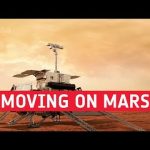
The ExoMars mission will see Rosalind Franklin the rover and its surface platform Kazachok land on the Red Planet in 2021. From fine-grained soil to large boulders and slopes, the rover has to be able to move across many types of terrain, collect samples with a 2 m-long drill and analyse them with instruments in its onboard laboratory.
This second episode about ExoMars features the challenges of leaving the surface platform, overcoming obstacles and walking on dunes.
ESA, Roscosmos, Thales, Airbus and RUAG engineers put a full-sized model through a series of tests to fine-tune how the rover will move from its landing platform onto the martian terrain.
Rovers on Mars have previously been caught in sand, and turning the wheels dug them deeper – just like a car stuck in mud or snow. To avoid this, Rosalind the rover has a unique locomotion mode called ‘wheel walking’.
We are Europe’s gateway to space. Our mission is to shape the development of Europe’s space capability and ensure that investment in space continues to deliver benefits to the citizens of Europe and the world. Check out http://www.esa.int/ESA to get up to speed on everything space related.
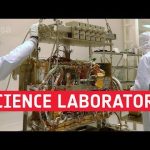
The ExoMars rover’s Analytical Laboratory Drawer (ALD) was integrated into the rover at Airbus, Stevenage, UK in May 2019. The video is shown at 18 times real speed; in reality the sequence of events took around 11.5 minutes.
The ExoMars rover, named Rosalind Franklin, will be the first of its kind to both roam the Mars surface and to study it at depth. Rosalind Franklin will drill down to two metres into the surface to sample the soil, analyse its composition and search for evidence of past – and perhaps even present – life hidden underground. A miniature laboratory inside the rover – the ALD – will analyse the samples with three different instruments, with some baked in the onboard oven to release gases for analysis, a technique used to search for traces of organic compounds.
The rover will relay its data back to Earth via the ExoMars Trace Gas Orbiter, which is already conducting its science mission from Mars orbit.
The ExoMars programme is a joint endeavour between ESA and Roscosmos.
We are Europe’s gateway to space. Our mission is to shape the development of Europe’s space capability and ensure that investment in space continues to deliver benefits to the citizens of Europe and the world. Check out http://www.esa.int/ESA to get up to speed on everything space related.
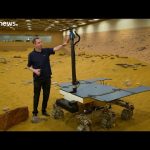
ExoMars is the first mission to head to the Red Planet to seek signs of life, now or in the past. It’s a massive scientific and technical challenge, and Euronews meets some of the team involved in this joint ESA-Roscosmos project in this month’s edition of Space.
ESA is Europe’s gateway to space. Our mission is to shape the development of Europe’s space capability and ensure that investment in space continues to deliver benefits to the citizens of Europe and the world. Check out http://www.esa.int/ESA to get up to speed on everything space related.