Tag: explorer’

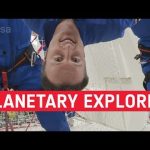
  • Becoming a planetary explorer with Matthias Maurer | Space Bites

    Becoming a planetary explorer with Matthias Maurer | Space Bites

    We are training astronauts to explore the lunar surface, collect samples, perform experiments and create an outpost in order to live and work on the Moon. But how will future lunar exploration differ from how Apollo astronauts explored and worked on the Moon?

    Our astronaut Matthias Maurer talks of the challenging training he went through during the new episode of Space Bites.

    Space Bites hosts the best talks on space exploration from the most inspiring and knowledgeable speakers from the field. Held at the technical heart of the European Space Agency in The Netherlands, the lectures illustrate the challenges of space.

    To learn more about the exploration of the Moon visit http://lunarexploration.esa.int

    More information on our telerobotics and haptics laboratory:
    http://bit.ly/TeleroboticsAndHapticsLaboratory including how the Centaur rover is used with sub-millimetre precision while operated from the International Space Station: https://youtu.be/6kMqt4sMFdM

    ★ Subscribe: http://bit.ly/ESAsubscribe and click twice on the bell button to receive our notifications.

    Check out our full video catalog: http://bit.ly/SpaceInVideos
    Follow us on Twitter: http://bit.ly/ESAonTwitter
    On Facebook: http://bit.ly/ESAonFacebook
    On Instagram: http://bit.ly/ESAonInstagram
    On Flickr: http://bit.ly/ESAonFlickr

    We are Europe’s gateway to space. Our mission is to shape the development of Europe’s space capability and ensure that investment in space continues to deliver benefits to the citizens of Europe and the world. Check out http://www.esa.int/ESA to get up to speed on everything space related.

    Copyright information about our videos is available here: http://www.esa.int/spaceinvideos/Terms_and_Conditions

    #ESA
    #SpaceBites
    #MatthiasMaurer
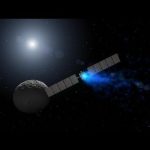
  • NASA’s Dawn Mission Nears the End

    NASA’s Dawn Mission Nears the End

    After 11 years of 🌌breathtaking imagery, ⚙️unprecedented feats of engineering & 🛰️spacecraft records broken — it’s nearly time to bid farewell to NASA’s Dawn spacecraft as it comes to the expected end of the mission. Learn about its final orbits at Ceres: https://go.nasa.gov/dawnfinale

  • Aeolus to understand winds

    Aeolus to understand winds

    At the Airbus Defence and Space facility in Toulouse, France, ESA’s Aeolus wind satellite has been prepared for its launch on top of a Vega rocket from Kourou in French Guiana. Liftoff is currently scheduled for August. The development of this latest Earth Explorer started 16 years ago and has now finished.

    From orbit Aeolus will measure wind profiles on a global scale using a pioneering laser technology. These measurements will greatly benefit existing meteorological models and fill a gap in the observations of wind.

    ★ Subscribe: http://bit.ly/ESAsubscribe

    Learn more about Aeolus: http://bit.ly/AeolusESA

  • Explorer 1: How America’s First Satellite Helped Create NASA

    Explorer 1: How America’s First Satellite Helped Create NASA

    On Jan. 31, 1958, at 10:48 p.m. EST, Explorer 1 launched into space, hurtling into Earth’s orbit in seven and a half minutes. Read more: https://go.nasa.gov/2nwic63
    The next day’s front-page news declared that the United States was now officially in the Space Age.
    Music: Look Forward by Laurent Dury, The Space Between by Max Concors, Picking Locks by James Alexander Dorman and Foraging At Dusk by Benjamin James Parsons. Complete transcript available.

    This video is public domain and along with other supporting visualizations can be downloaded from the Scientific Visualization Studio at: http://svs.gsfc.nasa.gov/12837

    Credit: NASA’s Goddard Space Flight Center/LK Ward

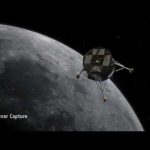
  • Lunar Lander mission

    Lunar Lander mission

    Lunar Lander mission, from launch to landing and exploring the Moon.
    Lunar Lander is a robotic explorer that will demonstrate key European technologies and conduct science experiments.
    The mission is a forerunner to future human and robotic exploration of the Moon and Mars. It will establish European expertise to allow strong international partnerships in exploration.