Tag: eye

  • Keeping an eye on ocean plastic pollution…from space!

    Keeping an eye on ocean plastic pollution…from space!

    Meet bag, bottle and straw, three bits of plastic left on the beach.
    They are only small, but they are heading into the ocean, where they could cause big damage. ESA is exploring how satellites can help detect and reduce plastic pollution in the ocean. From spotting build-ups of marine litter to tracking ocean currents, satellites could be game-changing in tackling this enormous environmental problem.

    Though engaging for children and adults alike, this video is designed with primary
    school students in mind. In particular, teachers can use it to introduce the topic of marine litter in subjects such as geography and science.

    Dutch version available here: https://youtu.be/ScSCXaSnjhE

    Credits: ESA – Science Office
    Project coordination: Nicole Shearer (EJR-Quartz for ESA) and Mariana Barrosa (Science Office) Scientific advice: Peter de Maagt and Paolo Corradi (both ESA), Joana
    Mira Veiga (Deltares)
    Educational advice: Petra de Clippelaar (BSO ‘t Vogelnest) and Connor Mackelvey (Iroquois Elementary School)
    Design and animation: David Santos and Rui Braz (both Science Office)

    ★ Subscribe: http://bit.ly/ESAsubscribe and click twice on the bell button to receive our notifications.

    Check out our full video catalog: http://bit.ly/SpaceInVideos
    Follow us on Twitter: http://bit.ly/ESAonTwitter
    On Facebook: http://bit.ly/ESAonFacebook
    On Instagram: http://bit.ly/ESAonInstagram
    On Pinterest: https://bit.ly/ESAonPinterest
    On Flickr: http://bit.ly/ESAonFlickr

    We are Europe’s gateway to space. Our mission is to shape the development of Europe’s space capability and ensure that investment in space continues to deliver benefits to the citizens of Europe and the world. Check out https://www.esa.int/ to get up to speed on everything space related.

    Copyright information about our videos is available here: https://www.esa.int/ESA_Multimedia/Terms_and_Conditions

    #ESAKids
    #PlasticPollution
    #EarthObservation

  • Keeping an eye on Hurricane Dorian from Space on This Week @NASA – September 6, 2019

    Keeping an eye on Hurricane Dorian from Space on This Week @NASA – September 6, 2019

    Keeping an eye on Hurricane Dorian, the next crew headed to the International Space Station, and a better understanding of Sun-driven space weather … a few of the stories to tell you about – This Week at NASA!

    This video is available for download from NASA’s Image and Video Library: https://images.nasa.gov/details-NHQ_2019_0906_Keeping%20an%20eye%20on%20Hurricane%20Dorian%20from%20Space%20on%20This%20Week%20@NASA%20%E2%80%93%20September%206,%202019.html

  • ESRIN: ESA’s Eye on Earth

    ESRIN: ESA’s Eye on Earth

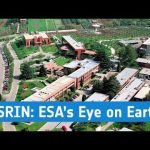
    Located in Frascati, Italy, ESRIN – known as the ESA Centre for Earth Observation – is one of the five ESA specialised centres situated in Europe. The mission and payload operations of ESA’s Earth observation satellites are managed here and ESRIN is the primary source for the acquisition, distribution and exploitation of data from these and other non-ESA satellites.Within ESRIN, a key role in Europe’s space effort has been undertaken with the development of the new small launcher, Vega, which took its maiden voyage in February 2012.
    ESRIN designs and develops all ESA-wide software for corporate applications and is responsible for developing security measures for classified space programmes. The European Centre for Space Records (ECSR) is also based at ESRIN. The ECSR appraises and preserves the valuable technical records of completed ESA projects together with their management archives to safeguard this valuable knowledge for generations to come.Finally, ESRIN is home to ESA’s Near-Earth Object Coordination Centre. The centre serves as the central access point to a network of European near-Earth object data sources and information providers being established under ESA’s Space Situational Awareness (SSA) Programme.For more information, visit the ESRIN site.

  • Q&A with Greg – Black Holes, Consciousness, My Research, and More!

    Q&A with Greg – Black Holes, Consciousness, My Research, and More!

    We did something a little different in this episode and answered questions from you, our viewers. If you have a questions about the universe, past videos, or life as a scientist, leave a comment below!

    Subscribe: https://www.youtube.com/WhatThePhysics?sub_confirmation=1

    Three of the answers are related to previous videos:
    – How to See Quantum with the Naked Eye: https://www.youtube.com/watch?v=YiZP6YpnMds
    – Can We Measure Consciousness? https://www.youtube.com/watch?v=laOZjSFdj24
    – 3 Things Faster than Light: https://www.youtube.com/watch?v=kNqf-FsUMww

    Images courtesy of CERN and ATLAS.

  • How to See Quantum with the Naked Eye

    How to See Quantum with the Naked Eye

    How can you train yourself to be a quantum detector? Quantum interactions happen at impossibly small scales. But the life-size effects are all around you. You can detect quantum mechanics all over — if you know how to look for it.

    Subscribe: https://www.youtube.com/WhatThePhysics?sub_confirmation=1

    Have questions, ask me:
    twitter @gkestin

    Check out https://www.youtube.com/user/EugeneKhutoryansky, who was kind enough to share his water wave animation with us.

    ADVANCED SCIENTIFIC NOTE: Quantum mechanics would be much more obvious if we had very sensitive eyes. If your eyes identified each photon individually, you would see them land as described in the video, and only build up to this wave pattern. The pattern that we see can be explained classically by waves, it is *ultimately* a quantum phenomenon. The only reason it’s hard to tell is because our light detectors (eyes) aren’t quite sensitive enough.

    CREDITS:

    Host, Producer: Greg Kestin

    Researcher: Samia Bouzid

    Writers: Samia Bouzid, Greg Kestin

    Scientific Consultant: Louis Deslauriers

    Editorial Input from: Julia Cort, Ari Daniel

    Animation and Editing: Greg Kestin

    Special thanks: Entire NOVA team

    From the producers of PBS NOVA © WGBH Educational Foundation

    Funding provided by FQXi

    Music provided by APM

    Footage of bridge and man holding child: Videoblocks

    Sound effects: Freesound.org

  • Humanity’s Eye into the Universe on This Week @NASA – November 4, 2016

    Humanity’s Eye into the Universe on This Week @NASA – November 4, 2016

    During a Nov. 2 media event at NASA’s Goddard Space Flight Center, Administrator Charlie Bolden was joined by Goddard Center Director Chris Scolese and Senior Project Scientist, Dr. John Mather for an update on the James Webb Space Telescope, including a rare glimpse at the telescope’s primary mirror. Engineers and technicians recently completed a “Center of Curvature” test on the mirror, which measures the shape of the mirror. This is the first important optical measurement before the mirror goes into the testing chambers. Meanwhile, the telescope’s sunshield layers also have been finished. This will protect Webb’s sensitive instruments from the sun when the telescope is in space. The Webb Telescope, which is targeted for launch in 2018, will study every phase in the history of our universe, including the cosmos’ first luminous glows, the formation of planetary systems capable of supporting life, and the evolution of our own solar system. Also, Expedition 49 Returns Safely from the International Space Station, Next Space Station Crew Travels to Launch Site, Agency Innovation Mission Day, SDO Captures Lunar Transit, and World Altitude Record for MMS!

  • NASA Prepares to Eye Comet’s Flyby of Mars

    NASA Prepares to Eye Comet’s Flyby of Mars

    During an October 9 press briefing at NASA headquarters, panelists discussed the Earth and space-based assets that will be in position to observe the October 19 flyby of Mars by comet C/2013 A1, also known as comet Siding Spring. These assets include NASA’s iconic Hubble Space Telescope and spacecraft orbiting and roving Mars.

    During the once-in-a-lifetime flyby, Siding Spring will pass within about 88,000 miles (139,500 kilometers) of the Red Planet — less than half the distance between Earth and our moon and less than one-tenth the distance of any known comet flyby of Earth. This proximity will provide an unprecedented opportunity for researchers to gather data on both the comet and its effect on the Martian atmosphere.

  • ESRIN: ESA’s Eye on Earth

    ESRIN: ESA’s Eye on Earth

    Located in Frascati, Italy, ESRIN — known as the ESA Centre for Earth Observation — is one of the five ESA specialised centres situated in Europe.

    The mission and payload operations of ESA’s Earth observation satellites are managed here and ESRIN is the primary source for the acquisition, distribution and exploitation of data from these and other non-ESA satellites.

    Within ESRIN, a key role in Europe’s space effort has been undertaken with the development of the new small launcher, Vega, which took its maiden voyage in February 2012.

    ESRIN designs and develops all ESA-wide software for corporate applications and is responsible for developing security measures for classified space programmes.

    The European Centre for Space Records (ECSR) is also based at ESRIN. The ECSR appraises and preserves the valuable technical records of completed ESA projects together with their management archives to safeguard this valuable knowledge for generations to come.

    Finally, ESRIN is home to ESA’s Near-Earth Object Coordination Centre. The centre serves as the central access point to a network of European near-Earth object data sources and information providers being established under ESA’s Space Situational Awareness (SSA) Programme.

    For more information, visit http://www.esa.int/About_Us/ESRIN