“Earth science is a subject far too big for one country, one agency, to tackle all by itself.” So #NASAExplorers team up with researchers from around the country and the planet to answer some big questions about fires, clouds and climate from the Western Pacific, where we still have a lot to learn about the interaction between fires and cloud formation. #S3E4
Tag: fires
-
NASA Explorers S3 E3: The Carbon Problem
In the Arctic, fires are a natural part of the ecosystem. But as the climate changes, fires are burning longer and hotter, releasing long-buried carbon from the soil. #NASAExplorers are looking from high in the sky to deep below the ground to better understand how a warming climate affects fires in the Arctic…and how fires in the region will contribute to climate change in the future. #S3E3
-

NASA Explorers S3 E1: Seeing Through Smoke
To understand fires on Earth, you need a broad view — spanning from the poles to the equator and looking from high above the planet to down deep under the soil. That’s where #NASAExplorers come in! With satellites, with airplanes, with their own hands and with a data record spanning decades, Explorers are studying how our planet burns… and how that burning changes with the climate. This season, we’re headed to the western Pacific Ocean to the Northwest Territories and beyond to look fires on Earth.
#S3E1
-

NASA Explorers: Fires
Fire. It’s one of the things that makes Earth so unusual. This season has been one of extremes, with large fires burning from the tropical rainforest to north of the Arctic circle. NASA Explorers have been there every step of the way, investigating the fires as they burn and tracking their effects down the line. From satellites, airplanes, on the ground and in the lab, NASA Explorers are working to understand our home planet and how it burns.
Join us this October as we take a closer look at fire and the people who study it. #S3E0
-
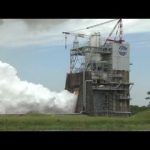
NASA’s RS-25 Rocket Engine Fires Up Again
Engineers conduct the third in a series of RS-25 flight controller tests on July 25, 2017, for NASA’s Space Launch System (SLS) rocket. The more than 8 1/2 minute test on the A-1 Test Stand at NASA’s Stennis Space Center in Mississippi signaled another step toward launch of NASA’s new Space Launch System (SLS). The SLS rocket, powered by four RS-25 engines, along with the Orion spacecraft will take astronauts on a new era of exploration beyond Earth’s orbit into deep space.