Researchers have published the first findings of the Alpha Magnetic Spectrometer (AMS), a particle physics detector on the International Space Station that searches for various types of unusual cosmic matter. Scientists hope that by measuring cosmic rays, AMS will provide new data about the formation of the Universe, antimatter, and evidence of the mysterious dark matter believed to make up most of the Universe. Also, MATERIALS IN SPACE, OBSERVING EARTH, FARTHEST SUPERNOVA YET, BLOWING IN THE WIND, EARTH MONTH 2013 and more!
Tag: first
-
NASA Centers rumble in FIRST Robotics Regional action
The annual FIRST Robotics competition is in full swing with some 60-thousand high school students competing in regional challenges using robots they built in six weeks from a common kit of parts. NASA is the largest sponsor of the national FIRST program, supporting five regional competitions and more than 280 teams. Since January, high school FIRST Robotics teams across the country have worked tirelessly to build, program and test robots in preparation for this year’s challenge called Rebound Rumble.
-
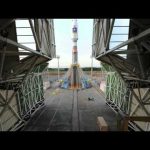
First Soyuz transfer and liftoff from French Guiana
The Russian Soyuz vehicle lifted off for the first time from its new launch complex at Europe’s Spaceport in French Guiana on 21 October 2011. Flight VS01 carried the first two operational satellites of Europe’s Galileo navigation system into orbit.
This time-lapse movie shows the three-stage Soyuz transfer from the assembly and testing building to the launch pad where it is then raised to the vertical. Once in the Mobile gantry, the Upper Composite containing the satellites and Fregat-MT upper stage is hoisted into position on top of the vehicle. The gantry is then rolled back, clearing the way for Soyuz to lift off. -

STS-134 Gets New Launch Date on This Week @NASA
The launch of space shuttle Endeavour on STS-134 has been rescheduled for May 16th. Launch is scheduled for 8:56 a.m. Eastern. Also, NASA’s Gravity Probe B mission confirms two aspects of Albert Einstein’s theory of general relativity. Plus, two Mercury explorers honored; Young innovators recognized; ISS honored; NextGen Day; rotocraft research; FIRST finals; and HQ Cyber Café.
-

ESA Euronews: First Man in Space
50 years ago, for the first time in history, a human travelled into space.
Who was Yuri Gagarin ? How did this flight change his life and the future of humankind? -
NASA’s MESSENGER to Become First Spacecraft to Orbit Mercury
After more than a dozen laps through the inner solar system, NASA’s MESSENGER spacecraft will move into orbit around Mercury on March 17, 2011. The durable spacecraft — carrying seven science instruments and fortified against the blistering environs near the sun — will be the first to orbit the innermost planet. At 8:45 p.m. EDT, MESSENGER — having pointed its largest thruster very close to the direction of travel — will fire that thruster for nearly 14 minutes, with other thrusters firing for an additional minute, slowing the spacecraft by 862 meters per second (1,929 mph). The orbit insertion will place the spacecraft into a 12 hour orbit about Mercury with a 200 kilometer (124 mile) minimum altitude. At the time of orbit insertion, MESSENGER will be 46.14 million kilometers (28.67 million miles) from the sun and 155.06 million kilometers (96.35 million miles) from Earth. MESSENGER has been on a 6.6 year mission to become the first spacecraft to orbit Mercury. The spacecraft followed a path through the inner solar system, including one flyby of Earth, two flybys of Venus, and three flybys of Mercury. This impressive journey is returning the first new spacecraft data from Mercury since the Mariner 10 mission over 30 years ago.
-
First “Goldilocks” Exoplanet Discovered by NASA-funded Researchers
A team of planet hunters led by astronomers at the University of California (UC), Santa Cruz and the Carnegie Institution of Washington has announced the discovery of a planet orbiting a nearby star, Gliese 581, at a distance that places it squarely in the middle of the star’s “habitable zone.” This would be the most Earth-like exoplanet and the first truly habitable one yet discovered. The research was supported by grants from NASA and the National Science Foundation. “Goldilocks” refers to an exoplanet whose temperatures are “not too cold, not too hot, but just right” to maintain water and support Earth-like life.
-
Rover’s First “Steps” Make “Parents” Proud on This Week @ NASA
The Mars Science Laboratory, also known as Curiosity, rolled across a clean room floor at NASA’s Jet Propulsion Laboratory, essentially taking its first “steps” before proud mission team members. The largest rover ever made for Mars is scheduled to launch to the Red Planet in the fall of 2011. Also, two Russian cosmonauts made a successful spacewalk outside the International Space Station; wind tunnel testing is making human spaceflight safer; the first map to cover the entire surface of Mars makes its debut online, and more.
-
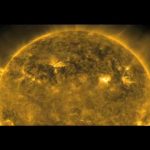
First Images: The Solar Dynamics Observatory, SDO
The first images of NASAs Solar Dynamics Observatory (SDO) released on April 21, 2010. Launched Feb. 11, 2010, SDO is the most advanced spacecraft ever designed to study the sun and its dynamic behavior. The spacecraft can produce images with clarity ten times better than high definition television and provide more comprehensive science data faster than any solar observing spacecraft in history. SDO will help scientists study solar activity to improve forecasts of how the suns weather affects Earth. www.nasa.gov/sdo http://www.nasa.gov/sdo