Tag: fit

  • Fit for space – survival training

    Fit for space – survival training

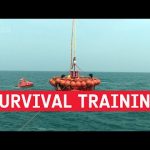
    In the third episode of our ‘Fit for space’ training series, ESA astronaut Matthias Maurer explains how astronauts learn to survive on their own if ever a spacecraft lands away from its intended landing site.

    Generally a spacecraft lands within a few kilometers of its landing site, but sometimes they return in a so-called ‘ballistic mode’ in a steeper entrance trajectory putting the astronauts under increased gravity loads, and landing with less precision – sometimes 400 km away from the intended landing area.

    From winter survival to water survival, astronauts are prepared for anything, from building fires and shelters, to surviving cold waters and righting capsized life rafts.

    The video includes footage from the Soyuz winter survival training, water survival training fire emergency training as well as Chinese sea survival training.

    ★ Subscribe: http://bit.ly/ESAsubscribe and click twice on the bell button to receive our notifications.

    Check out our full video catalog: http://bit.ly/SpaceInVideos
    Follow us on Twitter: http://bit.ly/ESAonTwitter
    On Facebook: http://bit.ly/ESAonFacebook
    On Instagram: http://bit.ly/ESAonInstagram
    On Flickr: http://bit.ly/ESAonFlickr

    We are Europe’s gateway to space. Our mission is to shape the development of Europe’s space capability and ensure that investment in space continues to deliver benefits to the citizens of Europe and the world. Check out http://www.esa.int/ESA to get up to speed on everything space related.

    Copyright information about our videos is available here: http://www.esa.int/spaceinvideos/Terms_and_Conditions

    #ESA
    #SpaceExploration
    #SurvivalTraining
  • Fit for space – Soyuz training

    Fit for space – Soyuz training

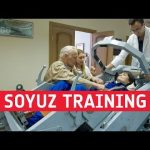
    In the first episode of our ‘Fit for space’ training series, ESA astronauts Samantha Cristoforetti and Luca Parmitano share how crewmembers prepare for their journey to the International Space Station in the Russian Soyuz spacecraft.

    Training for the critical moments of Soyuz spaceflight – launch, ascent, docking and landing – take place at Roscosmos’ Gagarin Cosmonaut Training Centre (GCTC) in Star City, Russia. Here, astronauts use sophisticated Soyuz simulators to practice procedures and respond to emergency situations.

    The Soyuz simulators at GCTC are designed to act and be operated in exactly the same way as the spacecraft itself. Astronauts must demonstrate their proficiency in manually controlling the Soyuz to prepare for the unlikely event that automated and ground-based operations fail.

    They also prepare for emergency events that could occur onboard the International Space Station itself.

    ★ Subscribe: http://bit.ly/ESAsubscribe and click twice on the bell button to receive our notifications.

    Check out our full video catalog: http://bit.ly/SpaceInVideos
    Follow us on Twitter: http://bit.ly/ESAonTwitter
    On Facebook: http://bit.ly/ESAonFacebook
    On Instagram: http://bit.ly/ESAonInstagram
    On Flickr: http://bit.ly/ESAonFlickr

    We are Europe’s gateway to space. Our mission is to shape the development of Europe’s space capability and ensure that investment in space continues to deliver benefits to the citizens of Europe and the world. Check out http://www.esa.int/ESA to get up to speed on everything space related.

    Copyright information about our videos is available here: http://www.esa.int/spaceinvideos/Terms_and_Conditions

    #ESA
    #LucaParmitano
    #SamanthaCristoforetti

  • Space medicine: staying fit in space

    Space medicine: staying fit in space

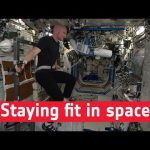
    Astronauts work out for around 90 minutes a day onboard the International Space Station to combat the muscle and bone weakening effects of microgravity. But exercise is just as important for mental and physical health on Earth.

    Our exercise team lead Nora Petersen explains how exercise specialists work with our astronauts to prepare them for a mission, some of the most important exercises on board and what happens upon an astronaut’s return to get them back in pre-flight shape.

    The United Nations World Health Organization marks World Health Day on 7 April every year. The third Sustainable Development Goal underlines the right to health:Ensure healthy lives and promote well-being for all at all ages. On-orbit research, space technology and space applications can help improve health on Earth by monitoring our environment, helping track disease, improving diagnostics, and working on new medicines among other things. The UN is also focusing particularly this year on universal health coverage.

    ★ Subscribe: http://bit.ly/ESAsubscribe and click twice on the bell button to receive our notifications.

    Check out our full video catalog: http://bit.ly/SpaceInVideos
    Follow us on Twitter: http://bit.ly/ESAonTwitter
    On Facebook: http://bit.ly/ESAonFacebook
    On Instagram: http://bit.ly/ESAonInstagram
    On Flickr: http://bit.ly/ESAonFlickr

    We are Europe’s gateway to space. Our mission is to shape the development of Europe’s space capability and ensure that investment in space continues to deliver benefits to the citizens of Europe and the world. Check out http://www.esa.int/ESA to get up to speed on everything space related.

    Copyright information about our videos is available here: http://www.esa.int/spaceinvideos/Terms_and_Conditions

    #ESA
    #HealthForAll
    #space19plus