Tag: German Aerospace Center

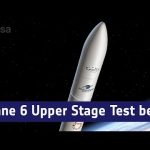
  • Ariane 6 Upper Stage Test bench

    Ariane 6 Upper Stage Test bench

    Rocket engines for Ariane 6 are being tested and qualified at the German Aerospace Center in Lampoldshausen, Germany.

    Several of the facilities on site have been modified for Ariane 6 and a new facility will soon test the launcher’s complete upper stage, simulating as far as possible the conditions it will experience in flight. With testing and development at full pace, Ariane 6 is taking shape for its maiden voyage.

    Learn more about Ariane 6: http://bit.ly/Ariane6ESA

    ★ Subscribe: http://bit.ly/ESAsubscribe and click twice on the bell button to receive our notifications.

    Check out our full video catalog: http://bit.ly/SpaceInVideos
    Follow ESA on Twitter: http://bit.ly/ESAonTwitter
    On Facebook: http://bit.ly/ESAonFacebook
    On Instagram: http://bit.ly/ESAonInstagram
    On Flickr: http://bit.ly/ESAonFlickr

    ESA is Europe’s gateway to space. Our mission is to shape the development of Europe’s space capability and ensure that investment in space continues to deliver benefits to the citizens of Europe and the world. Check out http://www.esa.int/ESA to get up to speed on everything space related.

    Copyright information about our videos is available here: http://www.esa.int/spaceinvideos/Terms_and_Conditions

    #Ariane6
    #ESA
    #Rocket

  • Earth from Space: Special edition

    Earth from Space: Special edition

    Discover more about our planet with the Earth from Space video programme. This special edition is dedicated to the International Charter Space and Major Disasters. Charter Secretary Jens Danzeglocke, from the DLR German Aerospace Center, joins the show to tell us more.

  • Introduction to Astrobiology

    Introduction to Astrobiology

    In this introductory lecture, Dr. Gerda Horneck of the DLR Institute of Aerospace Medicine in Cologne describes Astrobiology as a newly emerging field of science.

    Astrobiology comprises the study of the overall pattern of chemical evolution of potential precursors of life, in the interstellar medium, and on the planets and small bodies of our solar system. Astrobiology also consists of studying the history of life on Earth back to its roots, deciphering the environments of planets in our solar system and of their satellites and searching for other planetary systems in our Galaxy.

    Hereby, Astrobiology provides clues to the understanding of the origin, evolution and distribution of life and its interaction with the environment, here on Earth and in the Universe.