On 17 November 2023, our Juice spacecraft carried out one of the largest and most important manoeuvres in its eight-year journey to Jupiter.
Why does it take so long? Well, the short answer is that its less to do with the distance between Earth and Jupiter and more to do with fighting the Sun’s massive gravitational pull as you venture to the outer Solar System.
If spacecraft like Juice had to carry all the fuel needed to battle the Sun’s gravity alone, they’d be nothing more than colossal tanks. Instead, they use ‘gravity-assist’ tricks – they swing by planets to receive a boost on the way.
Using its main engine, Juice changed its orbit around the Sun to put itself on the correct trajectory for next summer’s Earth-Moon double gravity assist – the first of its kind.
The manoeuvre lasted 43 minutes and burned almost 10% of the spacecraft’s entire fuel reserve. It’s the first part of a two-part manoeuvre that could mark the final time that Juice’s main engine is used until its arrival in the Jupiter system in 2031.
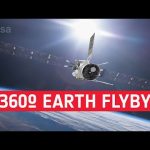
With a simple Google Cardboard-style virtual reality (VR) viewer, you can experience how it feels to be a spacecraft hurtling past Earth. This 360-degree VR simulation of a flyby manoeuvre performed by ESA’s Mercury-bound BepiColombo spacecraft takes you on a trip past Earth at the distance of only 12 700 km, closer than the orbit of Europe’s navigational satellites Galileo.
The simulation displays the field of view of two of BepiColombo’s science instruments (MERTIS and PHEBUS) and two of its three MCAM selfie cameras during the gravity-assist flyby at Earth on 10 April 2020.
The simulation was created using the SPICE software developed by NASA’s Jet Propulsion Laboratory and data generated by the European Space and Astronomy Centre (ESAC)in Spain.
BepiColombo, a joint mission of ESA and the Japan Aerospace Exploration Agency (JAXA), is on a seven-year cruise to Mercury, the smallest and innermost planet of the Solar System. Launched in October 2018, BepiColombo follows an intricate trajectory that involves nine gravity-assist flyby manoeuvres. In addition to the flyby at Earth, BepiColombo will perform two flybys at Venus and six at Mercury, its target planet. The manoeuvres slow down the spacecraft as it needs to constantly brake against the gravitational pull of the Sun in order to be able to enter the correct orbit around Mercury in 2025, ahead of commencing science operations in early 2026.
Credit: ESA SPICE Service/RHEA Group.
★ Subscribe: http://bit.ly/ESAsubscribe and click twice on the bell button to receive our notifications.
We are Europe’s gateway to space. Our mission is to shape the development of Europe’s space capability and ensure that investment in space continues to deliver benefits to the citizens of Europe and the world. Check out http://www.esa.int/ESA to get up to speed on everything space related.
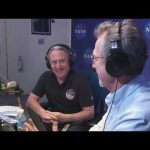
Join us November 15 for the debut of the new NASA podcast, “Gravity Assist,” hosted by Dr. Jim Green, NASA’s director of planetary science. Gravity Assist is a virtual tour of the solar system and beyond with the top scientists in the world as your guides. The weekly podcast kicks off with a special 10-part series on the solar system that begins with the Sun, and takes you outward to Pluto and beyond.
This video is available for download from NASA’s Image and Video Library: https://images.nasa.gov/#/details-NHQ_2017_1027_NASA%E2%80%99s%20New%20%E2%80%9CGravity%20Assist%E2%80%9D%20Podcast%20Debuts%20Nov.15.html