Tag: guide

  • Could we use AI to guide spacecraft in space? 🛰️ #shorts

    Could we use AI to guide spacecraft in space? 🛰️ #shorts

    Drones are being raced at Delft University of Technology’s ‘Cyber Zoo’ to test the performance of neural-network-based AI control systems planned for next-generation space missions.

    The drones have to complete a course as fast as possible, showing how quickly and efficiently they can react, just like a spacecraft would need to in space.

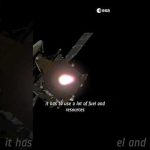
    Normally, spacecraft manoeuvres are planned on the ground and then uploaded to the spacecraft to be carried out. But space is full of unpredictable events! Whenever the spacecraft deviates from its planned path for whatever reason, it has to use a lot of fuel and resources to get back on track.

    Instead, with this alternative AI control system that’s being tested here, the spacecraft would continuously recalculate and adjusts its path in real-time from wherever it is.
    This approach would be much more efficient because the spacecraft could handle unexpected changes better and use fewer resources to stay on course.

    📹 ESA – European Space Agency
    📸 ESA/TU Delft

    #ESA #AI #Satellite

  • The animated guide to artificial intelligence (Explanimators: Episode 1)

    The animated guide to artificial intelligence (Explanimators: Episode 1)

    An easy guide to everything AI. More from Microsoft Story Labs: microsoft.com/storylabs.

    Subscribe to Microsoft on YouTube here: https://aka.ms/SubscribeToYouTube

    Follow us on social:
    LinkedIn: https://www.linkedin.com/company/microsoft/
    Twitter: https://twitter.com/Microsoft
    Facebook: https://www.facebook.com/Microsoft/
    Instagram: https://www.instagram.com/microsoft/

    For more about Microsoft, our technology, and our mission, visit https://aka.ms/microsoftstories

    #Microsoft #AI #Explanimators

  • Guide to our Galaxy

    Guide to our Galaxy

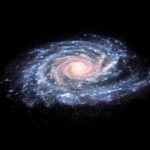
    This virtual journey shows the different components that make up our home galaxy, the Milky Way, which contains about a hundred billion stars.

    It starts at the black hole at the centre of the Milky Way and with the stars that orbit around it, before zooming out through the central Galactic Bulge, which hosts about ten billion stars.

    The journey continues through a younger population of stars in the stellar disc, home to most of the Milky Way’s stars, and which is embedded in a slightly larger gaseous disc. Stars in the disc are arranged in a spiral arm pattern and orbit the centre of the Galaxy.

    The discs and bulge are embedded in the stellar halo, a spherical structure that consists of a large number of globular clusters — the oldest population of stars in the Galaxy — as well as many isolated stars. An even larger halo of invisible dark matter is inferred by its gravitational effect on the motions of stars in the Galaxy.

    Looking at a face-on view of the Galaxy we see the position of our Sun, located at a distance of about 26 000 light-years from the Galactic Centre.

    Finally, the extent of the stellar survey conducted by ESA’s Hipparcos mission is shown, which surveyed more than 100 000 stars up to 300 light-years away from the Sun. In comparison, ESA’s Gaia survey will study one billion stars out to 30 000 light-years away.

  • Guide to a Successful Science Fair

    Guide to a Successful Science Fair

    Steve Spangler and his team of award-winning teachers will help you make your next science fair project a guaranteed success with our amazing science fair ideas at http://www.sciencefair101.com

    With science fair season upon us Steve Spangler explains the difference between a science trick and a science experiment to help you have a successful science fair.