Tag: help

  • Can cockroaches help astronauts in their long space missions? 🪳

    Can cockroaches help astronauts in their long space missions? 🪳

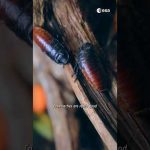
    Waste management is a critical challenge for spaceflight. But what if the waste produced by astronauts could be sustainably transformed into something valuable in space? A Polish company thought about that and has come up an innovative solution: an insect bioreactor powered by Madagascar cockroaches.

    Astronika, with support from ESA, has developed an innovative insect bioreactor that could revolutionize waste management on long-duration space missions. Currently, astronauts on the ISS rely on high-temperature reactors to process small amounts of waste, but much of it is still sent back to Earth. This method is unsustainable for deep-space missions. The insect bioreactor offers a closed-loop solution by converting organic waste into valuable resources, helping to create a more self-sufficient space ecosystem.

    The system relies on Madagascar cockroaches, chosen for their resilience and efficiency in breaking down waste. The bioreactor can process up to 3.6 kg of waste per week, producing over 100 grams of protein-rich biomass—equivalent to more than 20 eggs. It also aids in water recovery and reduces waste volume, making it a highly sustainable option for future missions. By optimizing the bioreactor’s environment—controlling temperature, humidity, and waste conditions—the insects’ metabolism and reproduction can be accelerated, improving efficiency.

    While still in early development, the next step is to send a prototype to space to observe how cockroaches behave and reproduce in microgravity. Understanding their adaptation to space conditions will provide valuable insights for further development. In the future, this technology could be a key component of long-term missions to the Moon or Mars, not only for waste recycling but also for plant cultivation and food production, helping astronauts sustain themselves far from Earth.

    📹 ESA – European Space Agency
    📸 ESA/Astronika

    #ESA #SpaceResearch #Cockroaches
  • Do Robots Help Humans in Space? We Asked a NASA Technologist

    Do Robots Help Humans in Space? We Asked a NASA Technologist

    When it comes to space, humans and robots go way back. We rely heavily on our mechanical friends to perform tasks that are too dangerous, difficult, or out of reach for us humans. We’re even working on a new generation of robots that will help us explore in advanced and novel ways.

    Learn more about the CADRE—Cooperative Autonomous Distributed Robotic Exploration—project and how this new network of mini rovers could enable future self-guided robotic exploration of the Moon, Mars, and beyond. https://go.nasa.gov/3k5EuZx

    Producers: Scott Bednar, Jessica Wilde
    Editor: James Lucas

    Link to download this video: https://images.nasa.gov/details/Do%20Robots%20Help%20Humans%20in%20Space_%20-%20Horizontal%20Video

    Credit: NASA

  • What is Physics?

    What is Physics?

    Learn about what physics actually is, why it’s awesome, and why you should come with me on a ride through understanding the wacky universe in which we live.

  • NASA’s Fleet of Satellites Help Understand Climate Change on This Week @NASA

    NASA’s Fleet of Satellites Help Understand Climate Change on This Week @NASA

    The third U.S. National Climate Assessment was released which took observations from NASA’s fleet of satellites to help understand climate change in the United States. Also, NASA’s Orbiting Carbon Observatory-2 spacecraft arrived at California’s Vandenberg Air Force Base to begin final preparations for a scheduled July 1 launch. In Florida, the remaining flight hardware for the Delta IV rocket that will launch NASA’s Orion spacecraft on Exploration Flight Test-1 in December arrived at Port Canaveral. At the Stennis Space Center, a cold-shock test for the RS-25 engine that will help power NASA’s new Space Launch System rocket was completed. The Chandra X-ray Observatory found new stars, simulated space dust was created on earth, a new ISS crew trains in Russia, Shannon Lucid and Jerry Ross are inducted into the Astronaut Hall of Fame and NASA recognizes the small business community for helping the agency work toward achieving its goals!