Tag: Hera mission

  • Liftoff! Europe’s first planetary defence mission 🚀 #shorts

    Liftoff! Europe’s first planetary defence mission 🚀 #shorts

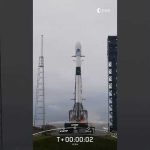
    ESA’s Hera mission lifted off on a SpaceX Falcon 9 from Cape Canaveral Space Force Station in Florida, USA, on 7 October at 10:52 local time (16:52 CEST, 14:52 UTC).

    Hera is ESA’s first planetary defence mission. It will fly to a unique target among the 1.3 million asteroids in our Solar System – the only body to have had its orbit shifted by human action – to solve lingering unknowns associated with its deflection.

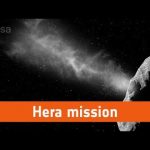
    Hera will carry out the first detailed survey of a ‘binary’ – or double-body – asteroid, 65803 Didymos, which is orbited by a smaller body, Dimorphos. Hera’s main focus will be Dimorphos, whose orbit around the main body was previously altered by NASA’s kinetic-impacting DART spacecraft.

    By sharpening scientific understanding of this ‘kinetic impact’ technique of asteroid deflection, Hera should turn the experiment into a well-understood and repeatable technique for protecting Earth from an asteroid on a collision course.

    —————————————————
    Copyright: SpaceX
    —————————————————

    ★ Subscribe: http://bit.ly/ESAsubscribe and click twice on the bell button to receive our notifications.

    Check out our full video catalog: http://bit.ly/SpaceInVideos
    Follow us on Twitter: http://bit.ly/ESAonTwitter
    On Facebook: http://bit.ly/ESAonFacebook
    On Instagram: http://bit.ly/ESAonInstagram
    On LinkedIn: https://bit.ly/ESAonLinkedIn
    On Pinterest: https://bit.ly/ESAonPinterest
    On Flickr: http://bit.ly/ESAonFlickr

    We are Europe’s gateway to space. Our mission is to shape the development of Europe’s space capability and ensure that investment in space continues to deliver benefits to the citizens of Europe and the world. Check out https://www.esa.int/ to get up to speed on everything space related.

    Copyright information about our videos is available here: https://www.esa.int/ESA_Multimedia/Terms_and_Conditions

    #ESA #HeraMission #Launch
  • ESA’s Hera mission launch highlight

    ESA’s Hera mission launch highlight

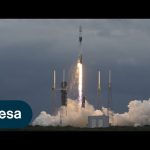
    ESA’s Hera mission lifted off on a SpaceX Falcon 9 from Cape Canaveral Space Force Station in Florida, USA, on 7 October at 10:52 local time (16:52 CEST, 14:52 UTC).

    Hera is ESA’s first planetary defence mission. It will fly to a unique target among the 1.3 million asteroids in our Solar System – the only body to have had its orbit shifted by human action – to solve lingering unknowns associated with its deflection.

    Hera will carry out the first detailed survey of a ‘binary’ – or double-body – asteroid, 65803 Didymos, which is orbited by a smaller body, Dimorphos. Hera’s main focus will be Dimorphos, whose orbit around the main body was previously altered by NASA’s kinetic-impacting DART spacecraft.

    By sharpening scientific understanding of this ‘kinetic impact’ technique of asteroid deflection, Hera should turn the experiment into a well-understood and repeatable technique for protecting Earth from an asteroid on a collision course.

    —————————————————
    📸 ESA – S. Corvaja
    Copyright: ESA/SpaceX
    —————————————————

    ★ Subscribe: http://bit.ly/ESAsubscribe and click twice on the bell button to receive our notifications.

    Check out our full video catalog: http://bit.ly/SpaceInVideos
    Follow us on Twitter: http://bit.ly/ESAonTwitter
    On Facebook: http://bit.ly/ESAonFacebook
    On Instagram: http://bit.ly/ESAonInstagram
    On LinkedIn: https://bit.ly/ESAonLinkedIn
    On Pinterest: https://bit.ly/ESAonPinterest
    On Flickr: http://bit.ly/ESAonFlickr

    We are Europe’s gateway to space. Our mission is to shape the development of Europe’s space capability and ensure that investment in space continues to deliver benefits to the citizens of Europe and the world. Check out https://www.esa.int/ to get up to speed on everything space related.

    Copyright information about our videos is available here: https://www.esa.int/ESA_Multimedia/Terms_and_Conditions

    #ESA #HeraMission #Launch
  • ESA’s Hera mission launch (Official broadcast)

    ESA’s Hera mission launch (Official broadcast)

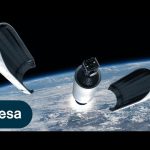
    Hera, ESA’s first planetary defence mission, is headed to space.

    Hera will fly to a unique target among the 1.3 million known asteroids of our Solar System – the first body to have had its orbit shifted by human action – to probe lingering unknowns related to its deflection.

    —————————————————
    Credits: ESA/SpaceX
    —————————————————
    Chapters:
    00:00 Start of ESA WebTV programme – live from ESA’s European Space Operations Centre in Darmstadt, Germany
    18:30 SpaceX live broadcast begins
    36:15 Hera lift-off
    1:53:00 – Hera separates from Falcon 9 launcher: End of SpaceX live broadcast, ESA WebTV programme continues
    1:57:20 Acquisition of the first signals from the Hera spacecraft
    2:13:26 End of ESA WebTV programme

    ★ Subscribe: http://bit.ly/ESAsubscribe and click twice on the bell button to receive our notifications.

    Check out our full video catalog: http://bit.ly/SpaceInVideos
    Follow us on Twitter: http://bit.ly/ESAonTwitter
    On Facebook: http://bit.ly/ESAonFacebook
    On Instagram: http://bit.ly/ESAonInstagram
    On LinkedIn: https://bit.ly/ESAonLinkedIn
    On Pinterest: https://bit.ly/ESAonPinterest
    On Flickr: http://bit.ly/ESAonFlickr

    We are Europe’s gateway to space. Our mission is to shape the development of Europe’s space capability and ensure that investment in space continues to deliver benefits to the citizens of Europe and the world. Check out https://www.esa.int/ to get up to speed on everything space related.

    Copyright information about our videos is available here: https://www.esa.int/ESA_Multimedia/Terms_and_Conditions

    #ESA #HeraMission #Asteroid

  • Why are we going back to this asteroid?

    Why are we going back to this asteroid?

    Hera, ESA’s first planetary defence mission, is headed to space.

    Hera will fly to a unique target among the 1.3 million known asteroids of our Solar System – the first body to have had its orbit shifted by human action – to probe lingering unknowns related to its deflection.

    Hera is scheduled for launch on a SpaceX Falcon 9 rocket from Cape Canaveral Space Force Station in Florida, USA, today, Monday 7 October, at 16:52 CEST / 15:52 BST.

    —————————————————

    Credits: ESA – European Space Agency

    —————————————————

    Chapters:
    00:00 What is Hera?
    01:07 Why do we need to protect our planet?
    02:22 How did we pick this asteroid to explore?
    03:36 What are we expecting to see on Dimorphos?
    05:56 How do we get there?
    07:48 What type of technology do we need to inspect an asteroid?
    10:49 Conclusion

    ★ Subscribe: http://bit.ly/ESAsubscribe and click twice on the bell button to receive our notifications.

    Check out our full video catalog: http://bit.ly/SpaceInVideos
    Follow us on Twitter: http://bit.ly/ESAonTwitter
    On Facebook: http://bit.ly/ESAonFacebook
    On Instagram: http://bit.ly/ESAonInstagram
    On LinkedIn: https://bit.ly/ESAonLinkedIn
    On Pinterest: https://bit.ly/ESAonPinterest
    On Flickr: http://bit.ly/ESAonFlickr

    We are Europe’s gateway to space. Our mission is to shape the development of Europe’s space capability and ensure that investment in space continues to deliver benefits to the citizens of Europe and the world. Check out https://www.esa.int/ to get up to speed on everything space related.

    Copyright information about our videos is available here: https://www.esa.int/ESA_Multimedia/Terms_and_Conditions

    #ESA #HeraMission #Asteroid

  • Meet Milani, the shoebox-sized CubeSat that’s joining our Hera mission! 🛰️ #shorts

    Meet Milani, the shoebox-sized CubeSat that’s joining our Hera mission! 🛰️ #shorts

    This tiny satellite will study the surface of the asteroid Dimorphos up close, helping us learn more about asteroid deflection and space safety. With groundbreaking sensors and instruments, Milani is ready to explore this binary asteroid system alongside Hera and Juventas

    Stay tuned for more on Hera’s thrilling mission!

    📹 ESA – European Space Agency
    📸 ESA/Science Office

    #ESA #HeraMission #Asteroid

  • What’s it like to work as a mission manager at the European Space Agency? 🛰️ #shorts

    What’s it like to work as a mission manager at the European Space Agency? 🛰️ #shorts

    Meet Ian Carnelli, project manager for Hera, our planetary defense mission that will very soon be launched into space.

    Hera will be, along with NASA’s DART spacecraft, humankind’s first probe to rendezvous with a binary asteroid system, a little understood class making up around 15% of all known asteroids.

    📹 ESA – European Space Agency
    📸 NASA/ESA

    #ESA #HeraMission #ProjectManager

  • This tiny spacecraft is about to change our understanding of asteroids! 🛰️ #shorts

    This tiny spacecraft is about to change our understanding of asteroids! 🛰️ #shorts

    Introducing Juventas… 🛰️

    A shoebox-sized spacecraft from our Hera mission that’s about to explore the binary asteroid system of Didymos and its moon, Dimorphos – a space rock the size of the Great Pyramid!

    Using its cutting-edge radar system, Juventas will reveal whether Dimorphos is a solid monolith or simply a loose pile of rubble. Plus, it’s going to gently land and measure the asteroid’s gravity—something never done before!

    This tiny spacecraft is set to rewrite what we know about asteroids and could one day help protect our planet.

    Stay tuned for more on Hera’s thrilling mission!

    📸 ESA – European Space Agency
    📹 ESA/Science Office

    #ESA #HeraMission #Asteroid

  • Studying the first crater ever made by humans ☄️ #shorts

    Studying the first crater ever made by humans ☄️ #shorts

    Our Hera spacecraft will soon start its journey to the distant asteroid moon Dimorphos orbiting around its parent body Didymos.

    One of the first features Hera will look for is the crater left on Dimorphos by its predecessor mission DART, which impacted the asteroid to deflect its orbit.

    Yet, more recent impact simulations suggest no crater will be found. The DART impact is likely to have remodelled the entire body instead – a significant finding for both asteroid science and planetary defence.

    📸 ESA – European Space Agency
    📹 ESA/NASA

    #ESA #HeraMission #Asteroid

  • Why have we chosen this random asteroid to explore? ☄️ #shorts

    Why have we chosen this random asteroid to explore? ☄️ #shorts

    The Hera mission is following up on NASA’s DART mission, which altered the orbit of Dimorphos, after a successful impact in 2022.

    Hera will soon study the aftermath of the impact.

    Launching this October, Hera will turn this grand-scale experiment into a well-understood and hopefully repeatable planetary defence technique.

    📸 ESA – European Space Agency
    📹 ESA/NASA

    #ESA #HeraMission #Asteroid

  • Why we are sending a spacecraft to Dimorphos  ☄️ #shorts

    Why we are sending a spacecraft to Dimorphos ☄️ #shorts

    On 26 September 2022, NASA’s approximately half-tonne Double Asteroid Redirect Test (DART) spacecraft impacted the Dimorphos asteroid at an approximate speed of 6.1 km/s, shortening its orbit around Didymos by more than half an hour.

    Our Hera spacecraft will be launched this October to reach Dimorphos and perform a close-up ‘crash scene investigation’, gathering data on the asteroid’s mass, structure and make-up to turn this kinetic impact method of planetary defence into a well understood and repeatable technique.

    📸 ESA – European Space Agency
    📹 ESA/NASA

    #ESA #NASA #Hera

  • The Missing Puzzle Piece | The Incredible Adventures of the Hera mission

    The Missing Puzzle Piece | The Incredible Adventures of the Hera mission

    Meet Hera, our very own asteroid detective. Together with two CubeSats – Milani the rock decoder and Juventas the radar visionary – Hera is off on an adventure to explore Didymos, a double asteroid system that is typical of the thousands that pose an impact risk to planet Earth.

    In September 2022 NASA’s DART spacecraft tested if it was possible to divert an asteroid by giving it a shove – and found out that it was! Important knowledge, should we wish to avoid going the same way as the dinosaurs. Astronomers can observe from afar how the smaller asteroid’s orbit has shifted since DART’s impact, but there is still a missing piece of the puzzle if we want to fully understand how ‘kinetic impacting’ works in practice. Suitable for kids and adults alike, this episode of ‘The Incredible Adventures of Hera’ explains why ESA’s asteroid detective and its CubeSat assistants need to get up close and personal to shine light on this cosmic mystery.

    Watch the other episodes of The Incredible Adventures of the Hera Mission:

    English: https://www.youtube.com/playlist?list=PLbyvawxScNbtO4aVLVx1SrsRT6yw8gahK />
    French:
    https://www.youtube.com/playlist?list=PLbyvawxScNbveV6nHUZQMlM76h5_XLtG8 />
    Spanish:
    https://www.youtube.com/playlist?list=PLbyvawxScNbtoQmV_KXc0uE9hww2zwSMX />
    Italian:
    https://www.youtube.com/playlist?list=PLbyvawxScNbtoQmV_KXc0uE9hww2zwSMX />
    German:
    https://www.youtube.com/playlist?list=PLbyvawxScNbusb32V5-i0HdymYKanXH3C />
    Credit: ESA-Science Office

    ★ Subscribe: http://bit.ly/ESAsubscribe and click twice on the bell button to receive our notifications.

    Check out our full video catalog: http://bit.ly/SpaceInVideos
    Follow us on Twitter: http://bit.ly/ESAonTwitter
    On Facebook: http://bit.ly/ESAonFacebook
    On Instagram: http://bit.ly/ESAonInstagram
    On LinkedIn: https://bit.ly/ESAonLinkedIn
    On Pinterest: https://bit.ly/ESAonPinterest
    On Flickr: http://bit.ly/ESAonFlickr

    We are Europe’s gateway to space. Our mission is to shape the development of Europe’s space capability and ensure that investment in space continues to deliver benefits to the citizens of Europe and the world. Check out https://www.esa.int/ to get up to speed on everything space related.

    Copyright information about our videos is available here: https://www.esa.int/ESA_Multimedia/Terms_and_Conditions

    #ESA #HeraMission #Animation

  • Asteroid mission is getting ready ☄️ #shorts

    Asteroid mission is getting ready ☄️ #shorts

    In its latest test of readiness for space, ESA’s Hera spacecraft for planetary defence is being operated for around three weeks in hard vacuum, while being subjected to the same temperature profiles it will experience during its journey to the Didymos binary asteroid system.

    The 1.6 × 1.6 × 1.7 m spacecraft was slid inside the 4.5-m diameter, 11.8-m long Phenix thermal vacuum chamber at ESA’s ESTEC Test Centre in the Netherlands.

    “You’re always a bit nervous when your baby gets moved about,” remarks Ian Carnelli, overseeing Hera for ESA. “Right now it’s being shut into a dark airless box for weeks on end, but we have confidence it will perform well.”

    Hera can be seen receded into the rectangular ‘thermal tent’ within Phenix. The six copper walls of this internal box can be heated up to 100°C or cooled via piped liquid nitrogen down to –190°C, all independently from each other.

    Then, after the main door of the stainless steel Phenix chamber was slid shut, the air within the chamber was pumped out during a lengthy 20 hours process down to approximately one billionth of outside atmospheric pressure. This will allow the Hera team from ESA, European Test Services operating the Test Centre and Hera manufacturer OHB to test the spacecraft’s thermal behaviour as the temperature changes around it.

    Space is a place where it is possible to be hot and cold at the same time if one part of your spacecraft is in sunlight and another is in shade. And because there is no air, there is no conduction or convection to lose heat from your spacecraft. Instead thermal experts employ insulation and radiators to keep the body of a spacecraft within carefully chosen temperature limits. In general spacecraft electronics – just like their human makers – work best at room temperature.

    “We already have detailed models of the spacecraft’s thermal behaviour, and this spacecraft-level thermal vacuum test lets us correlate these models with reality,” explains Hera’s Product Assurance and Safety manager, Heli Greus.

    “More than 400 thermal sensors have been placed in and around Hera to give us precise knowledge of what is going on, and the test is being supervised on a 24/7 basis in case anything anomalous occurs. The spacecraft is now being put through a series of ‘cold plateaus’ and ‘hot plateaus’ representative of its mission, which will allow us to test the thermal limits of each specific unit aboard.”

    Hera is Europe’s contribution to an international planetary defence experiment. Following the DART mission’s impact with the Dimorphos asteroid in 2022 – modifying its orbit and sending a plume of debris thousands of kilometres out into space – Hera will return to Dimorphos to perform a close-up survey of the crater left by DART. The mission will also measure Dimorphos’ mass and make-up, along with that of the larger Didymos asteroid that Dimorphos orbits around. Hera is due for launch in October 2024.

    The ESTEC Test Centre in the Netherlands is the largest facility of its kind in Europe, providing a complete suite of equipment for all aspects of satellite testing under a single roof.

    Credits: ESA – European Space Agency

    #ESA #Hera #Asteroid

  • Hera asteroid mission goes on trial

    Hera asteroid mission goes on trial

    At some point, statistically speaking, a large asteroid will impact Earth. Whether that’s tomorrow, in ten years, or a problem for our descendants, ESA is getting prepared.

    As part of the world’s first test of asteroid deflection, ESA’s Hera mission will perform a detailed post-impact survey of Dimorphos – the 160-metre asteroid struck, and successfully deflected, by NASA’s DART spacecraft.

    Hera will soon study the aftermath. Launching in October 2024, Hera will turn this grand-scale experiment into a well-understood and hopefully repeatable planetary defence technique.

    But before Hera and its two CubeSats fly, they’re rigorously tested at ESA’s ESTEC test centre in Noordwijk, the Netherlands. From the force and noise of the rocket take-off to the sustained vacuum and temperature extremes of deep space, all aspects of Hera’s functioning are checked before they begin their journey, alone in space.

    Credits: ESA – European Space Agency

    ★ Subscribe: http://bit.ly/ESAsubscribe and click twice on the bell button to receive our notifications.

    Check out our full video catalog: http://bit.ly/SpaceInVideos
    Follow us on Twitter: http://bit.ly/ESAonTwitter
    On Facebook: http://bit.ly/ESAonFacebook
    On Instagram: http://bit.ly/ESAonInstagram
    On LinkedIn: https://bit.ly/ESAonLinkedIn
    On Pinterest: https://bit.ly/ESAonPinterest
    On Flickr: http://bit.ly/ESAonFlickr

    We are Europe’s gateway to space. Our mission is to shape the development of Europe’s space capability and ensure that investment in space continues to deliver benefits to the citizens of Europe and the world. Check out https://www.esa.int/ to get up to speed on everything space related.

    Copyright information about our videos is available here: https://www.esa.int/ESA_Multimedia/Terms_and_Conditions

    #ESA
    #Asteroid
    #HeraMission

  • Mating Hera: two become one

    Mating Hera: two become one

    Hera is complete. ESA’s asteroid mission for planetary defence was built and prepared in two halves, but now, through a painstaking operation, they have been mated together to make a single spacecraft, ready for full-scale testing of its readiness for space.

    The mating took place at OHB Bremen in Germany, with Hera’s Core Module raised more than 3 m above its Propulsion Module then gradually and carefully slotted into place, over a three-hour period. The modules had been placed in cages to ensure their correct alignment relative to each other down to a few tenths of a millimetre.

    Hera’s Propulsion Module incorporates its propellant tanks – housed within a central titanium cylinder, the ‘backbone’ of the spacecraft – along with piping and thrusters, which will have the job of hauling the mission across deep space for more than two years, then to manoeuvre around the Dimorphos and Didymos asteroids.

    Meanwhile Hera’s Core Module can be thought of as the brains of the mission, hosting its onboard computer, mission systems and instruments.

    Once the tip of the Propulsion Module cylinder met the top deck of the Core Module the mating was complete. Then an initial test bolt was inserted to check the alignment was entirely correct in advance of the two modules being fully bolted together.

    The combined Hera spacecraft is scheduled to go through a test campaign to assess its readiness for spaceflight, along with the two CubeSats it will carry aboard, in preparation for its October 2024 lift-off.

    Credits: ESA – European Space Agency
    Footage: ESA / OHB

    ★ Subscribe: http://bit.ly/ESAsubscribe and click twice on the bell button to receive our notifications.

    Check out our full video catalog: http://bit.ly/SpaceInVideos
    Follow us on Twitter: http://bit.ly/ESAonTwitter
    On Facebook: http://bit.ly/ESAonFacebook
    On Instagram: http://bit.ly/ESAonInstagram
    On LinkedIn: https://bit.ly/ESAonLinkedIn
    On Pinterest: https://bit.ly/ESAonPinterest
    On Flickr: http://bit.ly/ESAonFlickr

    We are Europe’s gateway to space. Our mission is to shape the development of Europe’s space capability and ensure that investment in space continues to deliver benefits to the citizens of Europe and the world. Check out https://www.esa.int/ to get up to speed on everything space related.

    Copyright information about our videos is available here: https://www.esa.int/ESA_Multimedia/Terms_and_Conditions

    #ESA
    #Hera
    #PlanetaryDefence

  • ESA Preview 2023

    ESA Preview 2023

    At the start of 2023 the European Space Agency ESA is happily looking forward to another year filled with a host of thrilling new missions, cutting edge science and the continued effort to guarantee independent access to space for Europe. We will see the first images of the first Meteosat Third Generation satellite, the launch of the Jupiter Icy Moons Explorer, and of Euclid and another Sentinel-1 satellite launch. It will also be the year of Ariane 6 which will make its inaugural flight and the first Dane in space, Andreas Mogensen will return to the ISS as the new astronaut-candidates commence their training. Near the end of the year the second Space Summit will further cement ESA’s ambitions for Space in Europe.

    ★ Subscribe: http://bit.ly/ESAsubscribe and click twice on the bell button to receive our notifications.

    Check out our full video catalog: http://bit.ly/SpaceInVideos
    Follow us on Twitter: http://bit.ly/ESAonTwitter
    On Facebook: http://bit.ly/ESAonFacebook
    On Instagram: http://bit.ly/ESAonInstagram
    On LinkedIn: https://bit.ly/ESAonLinkedIn
    On Pinterest: https://bit.ly/ESAonPinterest
    On Flickr: http://bit.ly/ESAonFlickr

    We are Europe’s gateway to space. Our mission is to shape the development of Europe’s space capability and ensure that investment in space continues to deliver benefits to the citizens of Europe and the world. Check out https://www.esa.int/ to get up to speed on everything space related.

    Copyright information about our videos is available here: https://www.esa.int/ESA_Multimedia/Terms_and_Conditions

    #ESA
    #2023
    #Space

  • Tales of Terrific Technology | The Incredible Adventures of the Hera mission

    Tales of Terrific Technology | The Incredible Adventures of the Hera mission

    Meet Hera, our very own asteroid detective. Together with two CubeSats – Milani the rock decoder and Juventas the radar visionary – Hera is off on an adventure to explore Didymos, a double asteroid system that is typical of the thousands that pose an impact risk to planet Earth.

    Suitable for kids and adults alike, this episode of ‘The Incredible Adventures of Hera’ details the miniaturised James-Bond-style technology that Hera and its CubeSats will carry aboard with them to explore their asteroid target.

    Episode 1: Presenting Hera
    https://youtu.be/MErloMuo55o

    Episode 2: The curious case of the missing planet
    https://youtu.be/goE_6z356Wg

    Episode 3: Creating a crater
    https://youtu.be/rzba_yS2f7k

    Credit: ESA/Science Office

    ★ Subscribe: http://bit.ly/ESAsubscribe and click twice on the bell button to receive our notifications.

    Check out our full video catalog: http://bit.ly/SpaceInVideos
    Follow us on Twitter: http://bit.ly/ESAonTwitter
    On Facebook: http://bit.ly/ESAonFacebook
    On Instagram: http://bit.ly/ESAonInstagram
    On LinkedIn: https://bit.ly/ESAonLinkedIn
    On Pinterest: https://bit.ly/ESAonPinterest
    On Flickr: http://bit.ly/ESAonFlickr

    We are Europe’s gateway to space. Our mission is to shape the development of Europe’s space capability and ensure that investment in space continues to deliver benefits to the citizens of Europe and the world. Check out https://www.esa.int/ to get up to speed on everything space related.

    Copyright information about our videos is available here: https://www.esa.int/ESA_Multimedia/Terms_and_Conditions

    #ESA
    #Animation
    #HeraMission

  • After DART comes Hera

    After DART comes Hera

    The night of 26 September 2022 will make space history – as the moment when @NASA’s DART spacecraft impacts the Dimorphos asteroid in an attempt to divert its course – humankind’s first planetary defence test. Next, in 2024, ESA launches its Hera spacecraft to investigate the post-impact asteroid. In fact, Hera is not one spacecraft but three: it carries with it ESA’s first deep-space CubeSats to make extra observations of its target.

    With the Hera mission, ESA is assuming even greater responsibility for protecting our planet and ensuring that Europe plays a leading role in the common effort to tackle asteroid risks.

    In this video, Ian Carnelli, Hera mission manager, and members of the Hera team, reflect on the DART impact and introduce Hera and its Milani and Juventas CubeSats.

    ★ Subscribe: http://bit.ly/ESAsubscribe and click twice on the bell button to receive our notifications.

    Check out our full video catalog: http://bit.ly/SpaceInVideos
    Follow us on Twitter: http://bit.ly/ESAonTwitter
    On Facebook: http://bit.ly/ESAonFacebook
    On Instagram: http://bit.ly/ESAonInstagram
    On LinkedIn: https://bit.ly/ESAonLinkedIn
    On Pinterest: https://bit.ly/ESAonPinterest
    On Flickr: http://bit.ly/ESAonFlickr

    We are Europe’s gateway to space. Our mission is to shape the development of Europe’s space capability and ensure that investment in space continues to deliver benefits to the citizens of Europe and the world. Check out https://www.esa.int/ to get up to speed on everything space related.

    Copyright information about our videos is available here: https://www.esa.int/ESA_Multimedia/Terms_and_Conditions

    #ESA #Hera #DartMisson

  • Tracking NASA’s DART asteroid impact #shorts

    Tracking NASA’s DART asteroid impact #shorts

    All eyes are looking up as @NASA intentionally crashes the 550 kg DART spacecraft into an orbiting asteroid at high speed. Our Estrack network of ground stations, Europe’s ‘eyes on the sky’, will be particularly focused on the humanmade impactor, keeping track as it closes in on the 160-metre-wide moving target in the world’s first test of asteroid deflection.

    Learn more: https://www.esa.int/Space_Safety/Planetary_Defence/ESA_deep_space_network_tracks_DART_asteroid_impact

    ★ Subscribe: http://bit.ly/ESAsubscribe and click twice on the bell button to receive our notifications.

    Check out our full video catalog: http://bit.ly/SpaceInVideos
    Follow us on Twitter: http://bit.ly/ESAonTwitter
    On Facebook: http://bit.ly/ESAonFacebook
    On Instagram: http://bit.ly/ESAonInstagram
    On LinkedIn: https://bit.ly/ESAonLinkedIn
    On Pinterest: https://bit.ly/ESAonPinterest
    On Flickr: http://bit.ly/ESAonFlickr

    We are Europe’s gateway to space. Our mission is to shape the development of Europe’s space capability and ensure that investment in space continues to deliver benefits to the citizens of Europe and the world. Check out https://www.esa.int/ to get up to speed on everything space related.

    Copyright information about our videos is available here: https://www.esa.int/ESA_Multimedia/Terms_and_Conditions

    #ESA
    #DART
    #AsteroidDeflection

  • The incredible adventures of the Hera mission | Creating a crater

    The incredible adventures of the Hera mission | Creating a crater

    Meet Hera, our very own asteroid detective. Together with two small CubeSats – Milani the rock decoder and Juventas the radar visionary – Hera is off on an adventure to explore Didymos, a double asteroid system that is typical of the thousands that pose an impact risk to planet Earth.

    Suitable for space enthusiasts young and old, this episode of ‘The incredible adventures of the Hera mission’ is all about craters. What are they? Why are they important? Why is NASA’s DART spacecraft about to collide with an asteroid to create the Solar System’s newest – and perhaps most important – crater? And why do we need Hera to unveil the secrets of this crater?

    Episode 1: Presenting Hera https://www.esa.int/ESA_Multimedia/Videos/2021/06/The_Incredible_Adventures_of_the_Hera_mission_presenting_Hera

    Episode 2: The curious case of the missing planet https://www.esa.int/ESA_Multimedia/Videos/2021/11/The_Incredible_Adventures_of_the_Hera_mission_Episode_2#.YyCqp2kX89E.link

    Credit: ESA/Science Office

    ★ Subscribe: http://bit.ly/ESAsubscribe and click twice on the bell button to receive our notifications.

    Check out our full video catalog: http://bit.ly/SpaceInVideos
    Follow us on Twitter: http://bit.ly/ESAonTwitter
    On Facebook: http://bit.ly/ESAonFacebook
    On Instagram: http://bit.ly/ESAonInstagram
    On LinkedIn: https://bit.ly/ESAonLinkedIn
    On Pinterest: https://bit.ly/ESAonPinterest
    On Flickr: http://bit.ly/ESAonFlickr

    We are Europe’s gateway to space. Our mission is to shape the development of Europe’s space capability and ensure that investment in space continues to deliver benefits to the citizens of Europe and the world. Check out https://www.esa.int/ to get up to speed on everything space related.

    Copyright information about our videos is available here: https://www.esa.int/ESA_Multimedia/Terms_and_Conditions

    #ESA
    #HeraMission
    #Crater

  • The incredible adventures of the Hera mission | The curious case of the missing planet

    The incredible adventures of the Hera mission | The curious case of the missing planet

    Meet Hera, our very own asteroid detective. Together with two CubeSats – Milani the rock decoder and Juventas the radar visionary – Hera is off on an adventure to explore Didymos, a double asteroid system that is typical of the thousands that pose an impact risk to planet Earth.

    Suitable for kids and adults alike, this episode tells the story of the discovery of asteroids, in ‘The Curious Case of the Missing Planet’. Astronomers in the 18th century were sure there was a planet in the wide gap between Mars and Jupiter – and even formed a group called the Celestial Police to find it. But eventually it became clear there was no single world out there, just lots and lots of little ones. Fast forward to today and more than a million asteroids have been discovered, and Hera will perform close-up detection on two of them.

    Learn more about Hera: https://www.esa.int/hera

    Credit: ESA/Science Office

    ★ Subscribe: http://bit.ly/ESAsubscribe and click twice on the bell button to receive our notifications.

    Check out our full video catalog: http://bit.ly/SpaceInVideos
    Follow us on Twitter: http://bit.ly/ESAonTwitter
    On Facebook: http://bit.ly/ESAonFacebook
    On Instagram: http://bit.ly/ESAonInstagram
    On LinkedIn: https://bit.ly/ESAonLinkedIn
    On Pinterest: https://bit.ly/ESAonPinterest
    On Flickr: http://bit.ly/ESAonFlickr

    We are Europe’s gateway to space. Our mission is to shape the development of Europe’s space capability and ensure that investment in space continues to deliver benefits to the citizens of Europe and the world. Check out https://www.esa.int/ to get up to speed on everything space related.

    Copyright information about our videos is available here: https://www.esa.int/ESA_Multimedia/Terms_and_Conditions

    #ESA
    #Hera
    #SpaceSafety

  • Presenting Hera | The Incredible Adventures of the Hera mission

    Presenting Hera | The Incredible Adventures of the Hera mission

    Meet Hera, our very own asteroid detective. Together with two CubeSats – Milani the rock decoder and Juventas the radar visionary – Hera is off on an adventure to explore Didymos, a double asteroid system that is typical of the thousands that pose an impact risk to planet Earth.

    Suitable for kids and adults alike, this episode of ‘The Incredible Adventures of Hera’ takes you on a fun and informative journey to visit Didymos together with Hera. Along the way, you will discover who the main characters are, why this mission is so important, what ESA hopes to achieve with Hera and much more.

    Learn more about Hera: https://www.esa.int/hera

    Credit: ESA/Science Office

    ★ Subscribe: http://bit.ly/ESAsubscribe and click twice on the bell button to receive our notifications.

    Check out our full video catalog: http://bit.ly/SpaceInVideos
    Follow us on Twitter: http://bit.ly/ESAonTwitter
    On Facebook: http://bit.ly/ESAonFacebook
    On Instagram: http://bit.ly/ESAonInstagram
    On Flickr: http://bit.ly/ESAonFlickr

    We are Europe’s gateway to space. Our mission is to shape the development of Europe’s space capability and ensure that investment in space continues to deliver benefits to the citizens of Europe and the world. Check out https://www.esa.int/ to get up to speed on everything space related.

    Copyright information about our videos is available here: https://www.esa.int/ESA_Multimedia/Terms_and_Conditions

    #ESA
    #Hera
    #SpaceSafety

  • Hera: Our planetary defence mission

    Hera: Our planetary defence mission

    Hera will show us things we’ve never seen before. Astrophysicist and Queen guitarist Brian May tells the story of our mission that would be humanity’s first-ever spacecraft to visit a double asteroid.

    The asteroid system – named Didymos – is typical of the thousands that pose an impact risk to our planet, and even the smaller of the two would be big enough to destroy an entire city if it were to collide with Earth.

    Hera will help us to find out if it would be possible to deflect such an asteroid on a collision course with Earth. The mission will revolutionise our understanding of asteroids and how to protect ourselves from them, and therefore could be crucial for saving our planet.

    First, NASA will crash its DART spacecraft into the smaller asteroid – known as Didymoon – before Hera comes in to map the resulting impact crater and measure the asteroid’s mass. Hera will carry two CubeSats on board, which will be able to fly much closer to the asteroid’s surface, carrying out crucial scientific studies, before touching down. Hera’s up-close observations will turn asteroid deflection into a well-understood planetary defence technique.

    The Hera mission will be presented to our Space19+ meeting this November, where Europe’s space ministers will take a final decision on flying the mission, as part of the Agency’s broader planetary defence initiatives that aim to protect European and world citizens.

    Learn more about Hera: http://bit.ly/ESAHera

    Copyright: ESA – Science Office

    ★ Subscribe: http://bit.ly/ESAsubscribe and click twice on the bell button to receive our notifications.

    Check out our full video catalog: http://bit.ly/SpaceInVideos
    Follow us on Twitter: http://bit.ly/ESAonTwitter
    On Facebook: http://bit.ly/ESAonFacebook
    On Instagram: http://bit.ly/ESAonInstagram
    On Flickr: http://bit.ly/ESAonFlickr

    We are Europe’s gateway to space. Our mission is to shape the development of Europe’s space capability and ensure that investment in space continues to deliver benefits to the citizens of Europe and the world. Check out http://www.esa.int/ESA to get up to speed on everything space related.

    Copyright information about our videos is available here: http://www.esa.int/spaceinvideos/Terms_and_Conditions

    #ESA
    #PlanetaryDefense
    #HERAmission

  • Hera mission

    Hera mission

    Hera is the European contribution to an ESA-NASA double-spacecraft mission intended to test whether a kinetic deflection technique can be used to shift the orbit of an asteroid. The target of the mission is a double asteroid system, called Didymos, which will come a comparatively close 11 million km to Earth in 2022. The 800-m diameter main body is orbited by a 170-m moon, informally called ‘Didymoon’.

    In 2022 NASA’s DART spacecraft will first perform a kinetic impact on the smaller of the two bodies, then Hera will follow-up with a detailed post-impact survey that will turn this grand-scale experiment into a well-understood and repeatable planetary defence technique.

    Hera will also gather crucial scientific data on asteroids as a whole by carefully studying the exterior and interior properties of both bodies in the system. The spacecraft will also host two 6-unit cubesats that will be deployed near Didymos to perform, for the first time ever, multi-point measurements in a “mother-daughter” configuration. A novel intersatellite link will be used to establish a flexible communications network supporting the close-proximity operations in very low-gravity conditions, a crucial step for future exploration activities around small bodies.

    Hera, a further optimisation of ESA’s earlier proposed Asteroid Impact Mission, is currently in Phase B1 of mission development in preparation of the Agency’s Council of Ministers at European Level in late 2019.

    ★ Subscribe: http://bit.ly/ESAsubscribe

    Learn more: bit.ly/ESAHera