NASA celebrates the fifth anniversary of renaming the street in front of its headquarters in Washington, D.C. Hidden Figures Way.
The renaming honors the remarkable legacies of Katherine Johnson, Dorothy Vaughan, and Mary W. Jackson, who were featured in Shetterly’s book – and the subsequent movie – Hidden Figures, as well as all women who honorably serve their country, advancing equality, and contributing to the United States space program.
Dorothy J. Vaughan was a pioneer human computer and visionary who was integral in the expansion of a diverse workforce across NASA.
She began her career with the National Advisory Committee for Aeronautics in 1943 as part of the segregated West Area Computing Unit, an all-black group of female mathematicians. Their ground-breaking work and remarkable contributions left an indelible mark on the NASA community.
Promoted to lead the West Area Computers in 1949, Vaughan was NACA’s first black supervisor and one of its few female supervisors. She was a steadfast advocate for the women who worked as human computers, and for all the individuals under her leadership.
Dorothy Vaughan helmed West Computing for nearly a decade. In 1958, when the NACA made the transition to NASA, segregated facilities, including the West Computing office, were abolished. Dorothy Vaughan and many of the former West Computers joined the new Analysis and Computation Division (ACD), a racially and gender-integrated group on the frontier of electronic computing. Dorothy Vaughan became an expert FORTRAN programmer, and she also contributed to the Scout Launch Vehicle Program.
Through her exceptional leadership and dedication to the betterment of all individuals – particularly women of color, her legacy informed the agency’s current diverse workforce.
Innovators like Vaughan laid the foundation for NASA to revisit the Moon for the first time since the Apollo era, this time with the first woman and first person of color under the Artemis program.
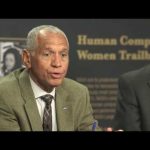
NASA Administrator Jim Bridenstine announced on Wednesday, June 24, 2020, the agency’s headquarters building in Washington, D.C., will be named after Mary W. Jackson, the first African American female engineer at NASA.
Jackson started her NASA career in the segregated West Area Computing Unit of the agency’s Langley Research Center in Hampton, Virginia. Jackson, a mathematician and aerospace engineer, went on to lead programs influencing the hiring and promotion of women in NASA’s science, technology, engineering, and mathematics careers. In 2019, she was posthumously awarded the Congressional Gold Medal.
“Mary W. Jackson was part of a group of very important women who helped NASA succeed in getting American astronauts into space. Mary never accepted the status quo, she helped break barriers and open opportunities for African Americans and women in the field of engineering and technology,” said Bridenstine. “Today, we proudly announce the Mary W. Jackson NASA Headquarters building. It appropriately sits on ‘Hidden Figures Way,’ a reminder that Mary is one of many incredible and talented professionals in NASA’s history who contributed to this agency’s success. Hidden no more, we will continue to recognize the contributions of women, African Americans, and people of all backgrounds who have made NASA’s successful history of exploration possible.”
The work of the West Area Computing Unit caught widespread national attention in the 2016 Margot Lee Shetterly book “Hidden Figures: The American Dream and the Untold Story of the Black Women Mathematicians Who Helped Win the Space Race.” The book was made into a popular movie that same year and Jackson’s character was played by award-winning actress Janelle Monáe.
“We are honored that NASA continues to celebrate the legacy of our mother and grandmother Mary W. Jackson,” said, Carolyn Lewis, Mary’s daughter. “She was a scientist, humanitarian, wife, mother, and trailblazer who paved the way for thousands of others to succeed, not only at NASA, but throughout this nation.”
Jackson was born and raised in Hampton, Virginia. After graduating high school, she graduated from Hampton Institute in 1942 with a dual degree in math and physical sciences, and initially accepted a job as a math teacher in Calvert County, Maryland. She would work as a bookkeeper, marry Levi Jackson and start a family, and work a job as a U.S. Army secretary before her aerospace career would take off.
In 1951, Jackson was recruited by the National Advisory Committee for Aeronautics, which in 1958 was succeeded by NASA. She started as a research mathematician who became known as one of the human computers at Langley. She worked under fellow “Hidden Figure” Dorothy Vaughan in the segregated West Area Computing Unit.
After two years in the computing pool, Jackson received an offer to work in the 4-foot by 4-foot Supersonic Pressure Tunnel, a 60,000 horsepower wind tunnel capable of blasting models with winds approaching twice the speed of sound. There, she received hands-on experience conducting experiments. Her supervisor eventually suggested she enter a training program that would allow Jackson to earn a promotion from mathematician to engineer. Because the classes were held at then-segregated Hampton High School, Jackson needed special permission to join her white peers in the classroom.
Jackson completed the courses, earned the promotion, and in 1958 became NASA’s first Black female engineer. For nearly two decades during her engineering career, she authored or co-authored research numerous reports, most focused on the behavior of the boundary layer of air around airplanes. In 1979, she joined Langley’s Federal Women’s Program, where she worked hard to address the hiring and promotion of the next generation of female mathematicians, engineers and scientists. Mary retired from Langley in 1985.
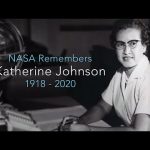
Pioneering NASA mathematician Katherine Johnson has died at the age of 101. Johnson was part of a group of African-American women who worked on critical mathematical calculations in the early days of human spaceflight, as chronicled in the best-selling book and hit movie “Hidden Figures.”
“She was an American hero and her pioneering legacy will never be forgotten,” said NASA Administrator Jim Bridenstine.
Thanks to new signage, visitors to NASA Headquarters in Washington, D.C. will be reminded of the contributions of the “hidden figures” essential to the success of early spaceflight. The renaming honors Katherine Johnson, Dorothy Vaughan, and Mary Jackson, who were featured in Margot Lee Shetterly’s book – and the movie – Hidden Figures, as well as all women who honorably serve their country, advancing equality, and contributing to the United States space program. News release: https://go.nasa.gov/HiddenFiguresWay
On June 12, Administrator Jim Bridenstine joined U.S. Senator Ted Cruz of Texas, D.C. Council Chairman Phil Mendelson and author Margot Lee Shetterly for the renaming of the street in front of NASA Headquarters in Washington – E Street SW – to “Hidden Figures Way.”
NASA celebrates the lives and careers of the Langley West Computing Unit who helped America win the space race of the 1950s and 60s. The lives of these unsung heroines is captured in the book and film “Hidden Figures”.