An historic delivery to the Moon’s South Pole, a record-breaking scientific balloon flight, and an asteroid mission’s close pass of the Sun … a few of the stories to tell you about – This Week at NASA!
Tracking a mission’s historic return to Earth, a year of science onboard the space station, and the safe arrival of the station’s newest resident astronaut … a few of the stories to tell you about – This Week at NASA!
Link to download this video: https://images.nasa.gov/details/Tracking%20a%20Mission%E2%80%99s%20Historic%20Return%20to%20Earth%20on%20This%20Week%20@NASA%20%E2%80%93%20September%2022,%202023
Video Producer: Andre Valentine Video Editor: Andre Valentine Narrator: Andre Valentine Music: Universal Production Music Credit: NASA
In 2022, we launched our mega Moon rocket for the first time – sending the uncrewed Orion spacecraft around the Moon, we kicked off a new era in astronomy with record-breaking new imagery from the Webb Space Telescope, we moved an asteroid in humanity’s first ever planetary defense demonstration and much more. Here’s a look back at those and other things we did, this year @NASA!
Commemorating an historic event for human spaceflight, an update on plans for Artemis I, and what our Perseverance rover is up to on Mars … a few of the stories to tell you about – This Week at NASA!
Producer: Andre Valentine Editor: Shane Apple Music: Universal Production Music Credit: NASA
A commercial crew spacecraft’s historic test mission, recognizing the leadership of our James Webb Space Telescope team, and a small spacecraft prepares for a unique mission around the Moon … a few of the stories to tell you about – This Week at NASA!
Producer: Andre Valentine Editor: Sonnet Apple Music: Universal Production Music
0:00 Introduction 0:15 Boeing’s CST-100 Starliner’s Historic Test Mission 1:28 NASA’s Webb Program Director Named to TIME100 List 2:01 CAPSTONE CubeSat Prepares for Lunar Flight 2:41 NASA-Supported Solar Sail Could Take Science to New Heights 3:09 Ingenuity Mars Helicopter Captures Video of Record Flight
An historic milestone for Perseverance, a busy week of activity at the space station, and a target launch date for the Webb Space Telescope … a few of the stories to tell you about – This Week at NASA!
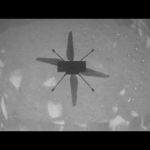
Today, the Ingenuity #MarsHelicopter became the first aircraft in history to make a powered, controlled flight on another planet.
Join us for a news briefing at 2 p.m. ET (1800 UTC) for an analysis of Ingenuity’s first flight and what this means for NASA.
The participants are: * Thomas Zurbuchen, associate administrator of NASA’s Science Mission Directorate * Michael Watkins, JPL director * MiMi Aung, Ingenuity Mars Helicopter project manager at JPL * Bob Balaram, Ingenuity Mars Helicopter chief engineer at JPL * Håvard Grip, Ingenuity Mars Helicopter chief pilot at JPL * Justin Maki, Perseverance Mars rover imaging scientist and deputy principal investigator of Mastcam-Z instrument at JPL
Few conflicts have rivaled the scale and destruction of the Punic wars fought between Rome and Carthage. In this first episode I set the stage for a conflict that will reshape history!
Sources:
“The Fall of Carthage” by Adrian Goldsworthy
“In the Name of Rome” by Adrian Goldsworthy
“The Rise of Rome” by Anthony Everitt
The gameplay comes from Total War: Rome 2
“Please note this is an unofficial video and is not endorsed by SEGA or the Creative Assembly in any way. For more information on Total War, please visit www.totalwar.com.”
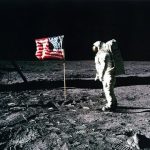
The primary objective of Apollo 11 was to complete a national goal set by President John F. Kennedy on May 25, 1961: perform a crewed lunar landing and return to Earth. The success of the mission was celebrated globally and united all humankind. This video shows the parades that celebrated the successful return of Neil Armstrong, Michael Collins and Buzz Aldrin.
“As a result of what you have done, the world’s never been closer together …. We can reach for the stars just as you have reached so far for the stars,” said President Richard Nixon to the #Apollo50th crew who had a successful voyage to land and walk on the Moon. Tune in on Wednesday, July 24 starting at 12:45 p.m. EDT as we broadcast historic footage of this moment
Starting at 10:38 p.m. EDT on July 20, 2019, NASA TV replayed the historic footage of the #Apollo11 Moonwalk in real time as it happened 50 years ago. Relive our #Apollo50th broadcast:
Join us for a trip down memory lane! Starting at 4:02 p.m. EDT on July 20, 2019, NASA TV replayed the original footage of the 1969 Moon landing. Relive the moment:
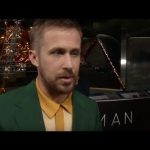
The cast and crew of Universal’s feature film First Man reflect on the story of Neil Armstrong and the Apollo 11 moon landing, one of NASA’s most notable figures and one of the agency’s crowning achievements. They also note their visits to NASA and working with the agency’s staff in the production of the film. NASA provided our historical expertise, footage and imagery, plus allowed for filming access at our facilities.
Film footage provided courtesy of Universal Pictures.
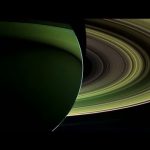
Cassini-Huygens was launched on 15 October 1997 from Cape Canaveral, Florida.After nearly 13 years in orbit around Saturn, the international Cassini-Huygens mission is going through its final chapter: NASA’s Cassini spacecraft is performing a series of daring dives between the planet and its rings, leading to a dramatic final plunge into Saturn’s atmosphere on 15 September.
On 14 January 2005, ESA’s Huygens probe, which hitched a ride to the Saturn system attached to Cassini during the seven-year voyage, entered the history books by descending to the surface of Titan, Saturn’s largest moon. This was humanity’s first successful attempt to land a probe on another world in the outer Solar System.
Huygens made a 21-day solo cruise toward the haze-shrouded moon. Plunging into Titan’s atmosphere, the probe touched down safely on Titan’s frozen surface.
Huygens provided a stream of data representing a unique treasure trove of in situ measurements from the planet-sized satellite which scientists are still mining today.
This video recalls the ‘one of a kind’ journey of Huygens.
During a ceremony at Kennedy Space Center on Monday, July 21, NASA renamed the center’s Operations and Checkout Building in honor of late astronaut Neil Armstrong, who passed away in 2012. The ceremony included NASA Administrator Charles Bolden, Kennedy Center Director Robert Cabana, Apollo 11’s Michael Collins and Buzz Aldrin and astronaut Jim Lovell, who was the mission’s back-up commander. International Space Station NASA astronauts Steve Swanson, who is the current station commander, and Reid Wiseman, also took part in the ceremony via satellite downlink from their orbiting laboratory 260 miles above Earth.
Kennedy’s Operations and Checkout Building has played a vital role in NASA’s spaceflight history. It was used during the Apollo program to process and test the command, service and lunar modules. Today, the facility is being used to process and assemble NASA’s Orion spacecraft, which the agency will use to send astronauts to an asteroid in the 2020s and Mars in the 2030s.