Our journey back to the Moon and onto Mars starts at home, and NASA’s Veterans are a big part of accomplishing that mission. Veterans currently make up 12% of the NASA workforce. Many of the most iconic figures at the agency—our astronauts—have a strong veteran tie. In fact, all NASA astronauts were military pilots until 1965. Of the 385 total NASA Astronauts, 223 are Veterans! Veterans continue to have a sweeping impact on NASA, in every corner of our workforce. Thanks to all the men and women who have served in our armed forces. Have a safe and happy Veterans Day.
NASA honors the 100th anniversary of the birth of space pioneer John Glenn. Glenn was one of NASA’s original seven Mercury astronauts, served four terms as a U.S. senator from Ohio, and flew on the space shuttle Discovery at the age of 77.
His flight on Friendship 7 on Feb. 20, 1962, showed the world that America was a serious contender in the space race with the Soviet Union. It also made Glenn an instant hero as the first American to orbit Earth.
After retiring from NASA in 1965, Glenn took an active part in Ohio politics and environmental protection efforts. He won his Senate seat in 1974, carrying all 88 counties of Ohio. He was re-elected in 1980 with the largest margin in Ohio history.
Ohio returned him to the Senate for a third term in 1986, again with a substantial majority. In 1992 he was elected again, becoming the first popularly elected senator from his state to win four consecutive terms.
In 1998, Glenn flew on the STS-95 Discovery shuttle flight, a 9-day mission during which the crew supported a variety of research payloads including deployment of the Spartan solar-observing spacecraft, the Hubble Space Telescope Orbital Systems Test Platform, and Glenn’s investigations on space flight and the aging process.
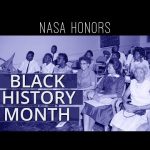
NASA celebrates Black History Month by honoring the accomplishments and contributions of African Americans across the agency. This year, NASA pays tribute to The Black Family: Representation, Identity, and Diversity, the theme for 2021. Each year during February, NASA highlights the African American community’s significant achievements, whose creativity and innovations have done much to advance science & technology and made our lives more enriched.
Video Credits: Producer/Editor: Jori Kates Writer: Jori Kates and Andre Valentine
Aug. 26, 2019 marks the 101st birthday of no longer hidden figure Katherine Johnson. With slide rules and pencils, Katherine, a legendary NASA mathematician – and the other human computers who worked at the agency – helped our nation’s space program get off the ground, but it was their confidence, bravery and commitment to excellence that broke down racial and social barriers that continue to inspire to this day. To learn more about Katherine and other trailblazing ‘human computers,’ visit: https://www.nasa.gov/modernfigures
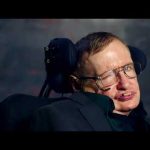
NASA is honoring visionary physicist Stephen Hawking, who died at his home in Cambridge, England, early Wednesday morning.
Acting NASA Administrator Robert Lightfoot noted Hawking’s role as a “passionate communicator who wanted to share the excitement of discovery with all,” adding that his “impact cannot be overstated.”
“Stephen’s breakthroughs in the fields of physics and astronomy not only changed how we view the cosmos, but also has played, and will continue to play, a pivotal role in shaping NASA’s efforts to explore our solar system and beyond,” said Lightfoot.