
© 2020 Steve Spangler Inc. All Rights Reserved | SteveSpangler.com
Tag: hot
-

Can you spot the solar hedgehog? 🦔 #shorts
Solar Orbiter is a space mission of international collaboration between ESA and @NASA.
Solar Orbiter’s closest approach to the Sun, known as perihelion, took place on 26 March. The spacecraft was inside the orbit of Mercury, at about one-third the distance from the Sun to the Earth, and its heatshield was reaching around 500°C. But it dissipated that heat with its innovative technology to keep the spacecraft safe and functioning.
Learn more: http://bit.ly/SolarOrbiterESA
#SolarOrbiter
#TheSunUpClose -

Updates on NASA’s Successful Hot Fire Test for the Artemis Moon Rocket
Now that the Green Run hot fire test is complete, Acting Administrator Steve Jurczyk, Deputy Associate Administrator for Human Exploration Tom Whitmeyer, Space Launch System (SLS) Manager John Honeycutt, and SLS Stages Manager Julie Bassler will discuss how the SLS core stage performed and what’s next for the Artemis I mission to the Moon. Today’s hot fire test took place at Stennis Space Center near Bay St. Louis, Mississippi, on the historic B-2 Test Stand and ignited the core stage for a full eight minutes, providing invaluable data for our engineers.
-

NASA’s Second Hot Fire Test for the Artemis Moon Rocket
We are targeting 3:45 p.m. EDT on Thursday, March 18 for the second hot fire test of the core stage for the Space Launch System rocket at NASA’s Stennis Space Center near Bay St. Louis, Mississippi.
Engineers will power up all the core stage systems, load more than 700,000 gallons of supercold propellant into the tanks, and fire the rocket’s four RS-25 engines at the same time to simulate the stage’s operation during the launch of our first Artemis mission to the Moon.
-

Hot Fire Engine Test for the Artemis Moon Rocket
One step closer to Artemis missions to the Moon 🚀 We are targeting a two-hour test window that opens at 4 p.m. EST on Sat., Jan. 16 for the hot fire test of the Space Launch System (SLS) rocket core stage at our Stennis Space Center. The hot fire is the eighth and final test of the Green Run series, to ensure the core stage of the SLS is ready to launch #Artemis missions to the Moon. This will be the first time that all four RS-25 engines will be fired at once in order to simulate a launch, generating 1.6 million pounds of thrust.
Live coverage begins at 3:20 p.m. EST. Use the hashtag #AskNASA and your questions might be answered on air 🚀
-

Jan. 16: Artemis I Hot Fire Test
NASA is targeting the final test in the Green Run series, the hot fire, for Sat., Jan.16. The hot fire is the culmination of the Green Run test series, an eight-part test campaign that gradually brings the core stage of the Space Launch System (SLS) — the deep space rocket that will power the Artemis program’s human missions to the Moon — to life for the first time. All four of the stage’s RS-25 engines will be fired simultaneously for up to eight minutes to simulate the core stage’s performance during launch.
The next time this core stage will be fired is during the launch of Artemis I, the first integrated flight of SLS and Orion, and the first mission of the agency’s Artemis program.
For more information about the Artemis program, please visit https://www.nasa.gov/artemis/
Producer/Editor: Lacey Young
Music: Universal Production Music -

Closing in On a Hot Fire Test for Artemis I on This Week @NASA – August 14, 2020
Closing in on a hot fire test for Artemis I, a tiny hitchhiker headed for a near-Earth destination, and a final rehearsal for OSIRIS-REx … a few of the stories to tell you about – This Week at NASA!
-
Solar Orbiter first images revealed
ESA’s Solar Orbiter spacecraft has sent back its first images of the Sun. At 77 million kilometres from the surface, this is the closest a camera has ever flown to our nearest star. The pictures reveal features on the Sun’s exterior that have never been seen in detail before.
Launched on 10 February 2020, the spacecraft completed its commissioning phase and first close-approach to the Sun in mid-June. Since then, science teams have been processing and examining this early data.
The spacecraft is currently in its cruise phase, on its way to Venus, but will eventually get even closer to the Sun.
Learn more: https://bit.ly/SolarOrbitersFirstImages
★ Subscribe: http://bit.ly/ESAsubscribe and click twice on the bell button to receive our notifications.
Check out our full video catalog: http://bit.ly/SpaceInVideos
Follow us on Twitter: http://bit.ly/ESAonTwitter
On Facebook: http://bit.ly/ESAonFacebook
On Instagram: http://bit.ly/ESAonInstagram
On Flickr: http://bit.ly/ESAonFlickrWe are Europe’s gateway to space. Our mission is to shape the development of Europe’s space capability and ensure that investment in space continues to deliver benefits to the citizens of Europe and the world. Check out http://www.esa.int/ESA to get up to speed on everything space related.
Copyright information about our videos is available here: http://www.esa.int/spaceinvideos/Terms_and_Conditions
#ESA
#SolarOrbiter
#TheSunUpClose -

Solar Orbiter sees ‘campfires’ on the Sun
The first images from ESA’s Solar Orbiter, captured around the spacecraft’s first close pass of the Sun, some 77 million kilometres from its surface, are already exceeding expectations revealing interesting new phenomena on our parent star.
This animation shows a series of close-up views captured by the Extreme Ultraviolet Imager (EUI) at wavelengths of 17 nanometers, showing the upper atmosphere of the Sun, or corona, with a temperature of around 1 million degrees.
These images reveal a multitude of small flaring loops, erupting bright spots and dark, moving fibrils. A ubiquitous feature of the solar surface, uncovered for the first time by these images, have been called ‘campfires’. They are omnipresent minuature eruptions that could be contributing to the high temperatures of the solar corona and the origin of the solar wind.
Captured on 30 May 2020, when Solar Orbiter was roughly halfway between the Earth and the Sun, these are the closest views of the Sun ever taken, allowing EUI to see features in the solar corona of only 400 km across. As the mission continues, Solar Orbiter will go closer to the Sun and this will increase the instrument’s resolving power by a factor of two at closest approach.
The colour on this image has been artificially added because the original wavelength detected by the instrument is invisible to the human eye.
The circle in the lower left corner indicates the size of Earth for scale.
The extended grey shape visible at times moving across the field (00:00-00:25; 01:00-01:28; 01:50-02:00; 02:52-03:27) is not a solar feature but is caused by a sensor artefact.
Solar Orbiter is a space mission of international collaboration between ESA and NASA.
Learn more: https://bit.ly/SolarOrbitersFirstImages
Credit: Solar Orbiter/EUI Team (ESA & NASA); CSL, IAS, MPS, PMOD/WRC, ROB, UCL/MSSL
★ Subscribe: http://bit.ly/ESAsubscribe and click twice on the bell button to receive our notifications.
Check out our full video catalog: http://bit.ly/SpaceInVideos
Follow us on Twitter: http://bit.ly/ESAonTwitter
On Facebook: http://bit.ly/ESAonFacebook
On Instagram: http://bit.ly/ESAonInstagram
On Flickr: http://bit.ly/ESAonFlickrWe are Europe’s gateway to space. Our mission is to shape the development of Europe’s space capability and ensure that investment in space continues to deliver benefits to the citizens of Europe and the world. Check out http://www.esa.int/ESA to get up to speed on everything space related.
Copyright information about our videos is available here: http://www.esa.int/spaceinvideos/Terms_and_Conditions
#ESA
#SolarOrbiter
#TheSunUpClose -
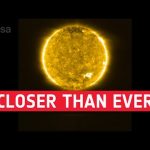
Closer than ever: Solar Orbiter’s first views of the Sun
The first images from ESA’s Solar Orbiter are already exceeding expectations and revealing interesting new phenomena on the Sun.
This animation combines a series of views captured with several remote-sensing instruments on Solar Orbiter between 30 May and 21 June 2020, when the spacecraft was roughly halfway between the Earth and the Sun ¬– closer to the Sun than any other solar telescope has ever been before.
The red and yellow images were taken with the Extreme Ultraviolet Imager (EUI) in the extreme ultraviolet region of the electromagnetic spectrum, at wavelengths of 30 and 17 nanometers, respectively.
The close-up views by EUI show the upper atmosphere of the Sun, or corona, with a temperature of around 1 million degrees. With the power to see features in the solar corona of only 400 km across, these images reveal a multitude of small flaring loops, erupting bright spots and dark, moving fibrils. A ubiquitous feature of the solar surface, uncovered for the first time by these images, have been called ‘campfires’. They are omnipresent minuature eruptions that could be contributing to the high temperatures of the solar corona and the origin of the solar wind.
The EUI images are followed by three views based on data from the Polarimetric and Helioseismic Imager (PHI) instrument. The blue and red view is a ‘tachogram’ of the Sun, showing the line of sight velocity of the Sun, with the blue side turning to us and the red side turning away. The following view is a magnetogram, or a map of magnetic propertied for the whole Sun, featuring a large magnetically active region in the lower right-hand quadrant of the Sun. The yellow-orange view is a visible light image and represents what we would see with the naked eye: there are no sunspots visible because the Sun is displaying only low levels of magnetic activity at the moment.
On larger scales, the Metis coronograph blocks out the dazzling light from the solar surface, bringing the fainter corona into view. Metis observes the corona simultaneously in visible light (shown in green) and ultraviolet light (shown in red) for the first time with unprecedented temporal coverage and spatial resolution. These images reveal the two bright equatorial streamers and fainter polar regions that are characteristic of the solar corona during times of minimal magnetic activity.
On even grander scales, the Heliospheric Imager (SoloHI) telescope takes images of the solar wind – the stream of charged particles constantly released by the Sun into outer space – by capturing the light scattered by electrons in the wind. The first-light image from SoloHI is shown at the end, as a mosaic of four separate images from the instrument’s four separate detectors. In this view, the Sun is located to the right of the frame, and its light is blocked by a series of baffles; the last baffle is in the field of view on the right-hand side and is illuminated by reflections from the solar array. The partial ellipse visible on the right is the zodiacal light, created by sunlight reflecting off the dust particles that are orbiting the Sun. The signal from the solar wind outflow is faint compared to the much brighter zodiacal light signal, but the SoloHI team has developed techniques to reveal it. Planet Mercury is also visible as a small bright dot near the lower edge of the upper left tile.
Solar Orbiter is a space mission of international collaboration between ESA and NASA.
Learn more: https://bit.ly/SolarOrbitersFirstImages
Credit: Solar Orbiter/EUI Team; PHI Team; Metis Team; SoloHI Team /ESA & NASA
★ Subscribe: http://bit.ly/ESAsubscribe and click twice on the bell button to receive our notifications.
Check out our full video catalog: http://bit.ly/SpaceInVideos
Follow us on Twitter: http://bit.ly/ESAonTwitter
On Facebook: http://bit.ly/ESAonFacebook
On Instagram: http://bit.ly/ESAonInstagram
On Flickr: http://bit.ly/ESAonFlickrWe are Europe’s gateway to space. Our mission is to shape the development of Europe’s space capability and ensure that investment in space continues to deliver benefits to the citizens of Europe and the world. Check out http://www.esa.int/ESA to get up to speed on everything space related.
Copyright information about our videos is available here: http://www.esa.int/spaceinvideos/Terms_and_Conditions
#ESA
#SolarOrbiter
#TheSunUpClose -

Solar Orbiter launch highlights
Highlights from the preparation and liftoff of ESA’s Sun-exploring mission Solar Orbiter.
Solar Orbiter lofted to space aboard the US Atlas V 411 rocket from NASA’s spaceport in Cape Canaveral, Florida at 04:03 GMT (05:03 CET) on 10 February 2020.
An ESA-led mission with strong NASA participation, Solar Orbiter carries a set of ten instruments for imaging the surface of the Sun and studying the environment in its vicinity. The spacecraft will travel around the Sun on an elliptical orbit that will take it as close as 42 million km away from the Sun’s surface, about a quarter of the distance between the Sun and Earth. The orbit will allow Solar Orbiter to see some of the never-before-imaged regions of the Sun, including the poles, and shed new light on what gives rise to solar wind, which can affect infrastructure on Earth.
More about Solar Orbiter: https://www.esa.int/solarorbiter
★ Subscribe: http://bit.ly/ESAsubscribe and click twice on the bell button to receive our notifications.
Check out our full video catalog: http://bit.ly/SpaceInVideos
Follow us on Twitter: http://bit.ly/ESAonTwitter
On Facebook: http://bit.ly/ESAonFacebook
On Instagram: http://bit.ly/ESAonInstagram
On Flickr: http://bit.ly/ESAonFlickrWe are Europe’s gateway to space. Our mission is to shape the development of Europe’s space capability and ensure that investment in space continues to deliver benefits to the citizens of Europe and the world. Check out http://www.esa.int/ESA to get up to speed on everything space related.
Copyright information about our videos is available here: http://www.esa.int/spaceinvideos/Terms_and_Conditions
#ESA
#SolarOrbiter
#WeAreAllSolarOrbiters -

Solar Orbiter liftoff
ESA’s new Sun-exploring mission Solar Orbiter lofted to space aboard the US Atlas V 411 rocket from NASA’s spaceport in Cape Canaveral, Florida at 04:03 GMT (05:03 CET) on 10 February 2020.
Solar Orbiter, an ESA-led mission with strong NASA participation, carries a set of ten instruments for imaging the surface of the Sun and studying the environment in its vicinity. The spacecraft will travel around the Sun on an elliptical orbit that will take it as close as 42 million km away from the Sun’s surface, about a quarter of the distance between the Sun and Earth. The orbit will allow Solar Orbiter to see some of the never-before-imaged regions of the Sun, including the poles, and shed new light on what gives rise to solar wind, which can affect infrastructure on Earth.
More about Solar Orbiter: https://www.esa.int/solarorbiter
★ Subscribe: http://bit.ly/ESAsubscribe and click twice on the bell button to receive our notifications.
Check out our full video catalog: http://bit.ly/SpaceInVideos
Follow us on Twitter: http://bit.ly/ESAonTwitter
On Facebook: http://bit.ly/ESAonFacebook
On Instagram: http://bit.ly/ESAonInstagram
On Flickr: http://bit.ly/ESAonFlickrWe are Europe’s gateway to space. Our mission is to shape the development of Europe’s space capability and ensure that investment in space continues to deliver benefits to the citizens of Europe and the world. Check out http://www.esa.int/ESA to get up to speed on everything space related.
Copyright information about our videos is available here: http://www.esa.int/spaceinvideos/Terms_and_Conditions
#ESA
#SolarOrbiter
#WeAreAllSolarOrbiters -

Solar Orbiter launch preparations
ESA’s Solar Orbiter satellite in a cleanroom at the Astrotech payload processing facility near Kennedy Space Centre, Florida. The spacecraft is seen being mounted onto the payload adaptor ring and encapsulated into a fairing, which will protect the satellite and the rocket upper stage during the turbulent ascent through Earth’s atmosphere.
Learn more about Solar Orbiter: http://bit.ly/ESASolarOrbiter
The video was created with support from Airbus/Astrotech/ULA/NASA
★ Subscribe: http://bit.ly/ESAsubscribe and click twice on the bell button to receive our notifications.
Check out our full video catalog: http://bit.ly/SpaceInVideos
Follow us on Twitter: http://bit.ly/ESAonTwitter
On Facebook: http://bit.ly/ESAonFacebook
On Instagram: http://bit.ly/ESAonInstagram
On Flickr: http://bit.ly/ESAonFlickrWe are Europe’s gateway to space. Our mission is to shape the development of Europe’s space capability and ensure that investment in space continues to deliver benefits to the citizens of Europe and the world. Check out http://www.esa.int/ESA to get up to speed on everything space related.
Copyright information about our videos is available here: http://www.esa.int/spaceinvideos/Terms_and_Conditions
#ESA
#SolarOrbiter
#WeAreAllSolarOrbiters -

Solar Orbiter operations simulations
ESA’s Solar Orbiter is getting ready for its launch on an Atlas V rocket provided by NASA and operated by United Launch Alliance from Cape Canaveral, Florida.
Once in space, and over the course of several years, the spacecraft will repeatedly use the gravity of Venus and Earth to raise its orbit above the poles of the Sun, providing new perspectives on our star, including the first images of the Sun’s polar regions.
All these operations will be controlled from the European Space Operations Centre (ESOC), Germany, where a dedicated team is currently working on simulations of the first moments in orbit, after separation from the launcher, but also all the delicate manoeuvres of the journey that will make Solar Orbiter mission possible.
Learn more Solar Orbiter: http://bit.ly/ESASolarOrbiter
★ Subscribe: http://bit.ly/ESAsubscribe and click twice on the bell button to receive our notifications.
Check out our full video catalog: http://bit.ly/SpaceInVideos
Follow us on Twitter: http://bit.ly/ESAonTwitter
On Facebook: http://bit.ly/ESAonFacebook
On Instagram: http://bit.ly/ESAonInstagram
On Flickr: http://bit.ly/ESAonFlickrWe are Europe’s gateway to space. Our mission is to shape the development of Europe’s space capability and ensure that investment in space continues to deliver benefits to the citizens of Europe and the world. Check out http://www.esa.int/ESA to get up to speed on everything space related.
Copyright information about our videos is available here: http://www.esa.int/spaceinvideos/Terms_and_Conditions
#ESA
#SolarOrbiter
#WeAreAllSolarOrbiters -
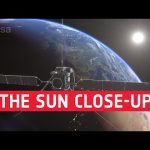
Solar Orbiter – the Sun close-up
ESA’s mission to the Sun, Solar Orbiter, is due for launch on an Atlas V 411 from Cape Canaveral, Florida on 9 February 23:03 EST / 04:03 GMT / 05:03 CET on 10 Feb.
Equipped with a suite of ten scientific instruments, Solar Orbiter will capture the first images of the Sun’s poles and make detailed observations of solar activity. Its specially designed heatshield is capable of enduring temperatures of more than 500ºC.Solar Orbiter is a space mission of international collaboration between ESA and NASA. The spacecraft has been developed by Airbus.
Learn more Solar Orbiter: http://bit.ly/ESASolarOrbiter
★ Subscribe: http://bit.ly/ESAsubscribe and click twice on the bell button to receive our notifications.
Check out our full video catalog: http://bit.ly/SpaceInVideos
Follow us on Twitter: http://bit.ly/ESAonTwitter
On Facebook: http://bit.ly/ESAonFacebook
On Instagram: http://bit.ly/ESAonInstagram
On Flickr: http://bit.ly/ESAonFlickrWe are Europe’s gateway to space. Our mission is to shape the development of Europe’s space capability and ensure that investment in space continues to deliver benefits to the citizens of Europe and the world. Check out http://www.esa.int/ESA to get up to speed on everything space related.
Copyright information about our videos is available here: http://www.esa.int/spaceinvideos/Terms_and_Conditions
#ESA
#SolarOrbiter
#WeAreAllSolarOrbiters -
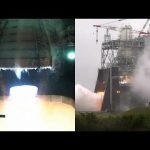
Milestone Hot Fire Engine Test for NASA’s Space Launch System Rocket
NASA is a step closer to returning astronauts to the Moon in the next five years following this successful “hot fire” test of flight engine No. 2062 on the A-1 Test Stand at Stennis Space Center in Mississippi. This April 4, 2019 test caps more than four years of testing for the RS-25 engines that will help power the first four missions of the Space Launch System rockets. It also concludes a 51-month test series that demonstrated RS-25 engines can perform at the higher power level needed to launch the super heavy-lift SLS rocket.
Download this video: https://go.nasa.gov/2TTrTty
-

Hot Wheels® Ai Mario Kart Mario Accessory | Hot Wheels
Hot Wheels® Ai brings your favorite racing video game to life with authentic sounds, voices and hazards from Nintendo’s Mario Kart™ game! Experience the most immersive Hot Wheels® system ever and customize your Smart Car with premium Mario and Yoshi car body shells and wheel covers. Take it to the next level by inserting the customized cartridge into your Gaming Controller (sold separately) to unlock authentic Mario Kart™ sounds and reactions! Ai uses computer enhanced Artificial Intelligence to put you in total control of the racing action! Use the premium Mario and Yoshi car body shells and wheel covers to transform your vehicle and enter a whole new racing world! Includes one Smart Car body and 4 wheel covers.
-

Earth from Space: Hottest place on Earth
Earth from Space is presented by Kelsea Brennan-Wessels from the ESA Web-TV virtual studios. The eighty-fourth edition features an Envisat image of the Dasht-e Lut salt desert in southeast Iran.
See also http://spaceinimages.esa.int/Images/2013/11/Dasht-e_Lut_salt_desert_Iran to download the image.
-

Hand Boilers – Hot or Not
Order now at http://www.stevespanglerscience.com/product/1177 Find out if you’re “hot” when you experiment with the relationship between temperature and pressure. Just wrap your hand around the bottom bulb and the liquid will go up to the top – not because the kids squeezed the boiler, but because the heat from their hands warms the gas, which pushes the liquid into the top chamber. After a little while, challenge your students to get the liquid back to the bottom of the boiler without turning it over. Works on the same principle as the old Love Meter, common in drugstores and five-and-dimes all over America.