Tag: How to
-

How to watch a meteor shower ☄️ #shorts
Enjoy a meteor shower with our tips:
1. Allow your eyes to adjust to the dark.
2. Use a red flashlight to preserve night vision.
3. Wear warm clothes.
4. Lie on a deck chair or mattress.
5. Enjoy the cosmic show!★ Subscribe: http://bit.ly/ESAsubscribe and click twice on the bell button to receive our notifications.
Check out our full video catalog: http://bit.ly/SpaceInVideos
Follow us on Twitter: http://bit.ly/ESAonTwitter
On Facebook: http://bit.ly/ESAonFacebook
On Instagram: http://bit.ly/ESAonInstagram
On LinkedIn: https://bit.ly/ESAonLinkedIn
On Pinterest: https://bit.ly/ESAonPinterest
On Flickr: http://bit.ly/ESAonFlickrWe are Europe’s gateway to space. Our mission is to shape the development of Europe’s space capability and ensure that investment in space continues to deliver benefits to the citizens of Europe and the world. Check out https://www.esa.int/ to get up to speed on everything space related.
Copyright information about our videos is available here: https://www.esa.int/ESA_Multimedia/Terms_and_Conditions
#ESA
#HowTo
#MeteorShower -
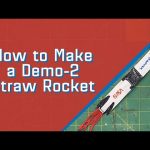
How to Make a Demo-2 Straw Rocket
In 2020, NASA and SpaceX will launch American astronauts to the International Space Station from U.S. soil for the first time since 2011.
Would you like to learn how to make your own Demo-2 to launch in your home? Watch this tutorial to learn how.
All you will need is paper, markers, scissors, tape, yarn or ribbon (optional) and a straw.
How are you preparing to #LaunchAmerica? From building your own rocket to binge-watching launch videos, share a video, a photo or simply your thoughts using #LaunchAmerica for a chance to be featured on our social media platforms.
This video is available for download from NASA’s Image and Video Library: https://images.nasa.gov/details-NHQ_2020_0427_How%20to%20Make%20Demo-2%20Straw%20Rockets
-

Mars confinement tips
In these times of confinement, ESA astronaut support engineer Romain Charles shares nine tips on how to live in isolation – he spent 520 days locked in a mockup spacecraft and is a true expert on the subject.
Mars500 locked six ‘marsonauts’ in a simulated spaceship near Moscow, Russia for 520 days, the time it would take to fly to Mars and back plus 30 days spent exploring its surface. It was the first full-length, high-fidelity simulation of a human mission to our neighbouring planet. The crew went into lockdown on 3 June 2010, and they did not open the hatch until 17 months later on 4 November 2011.
Mars 500 was a success in that it proved that humans can survive the inevitable isolation that is needed for a mission to Mars and back. Psychologically, we can do it!
The crew had their ups and downs, but these were to be expected. In fact, scientists anticipated many more problems, but the crew did very well coping with the monotonous mission, with little variation in food and even a communication delay over 12 minutes one-way.
During their simulated mission, the crew lived in isolation without fresh food, sunlight or fresh air. The participants from Italy, Russia, China and France had no external cues such as the Sun going down at night to remind them when to sleep.
Their bodies are among the most researched in the world. Years of constant monitoring, prodding and taking blood allowed scientists examined how they reacted to the time in confinement with experiments focussing on their bodies, mental states and performance.
More on Mars 500: www.esa.int/Mars500
★ Subscribe: http://bit.ly/ESAsubscribe and click twice on the bell button to receive our notifications.
Check out our full video catalog: http://bit.ly/SpaceInVideos
Follow us on Twitter: http://bit.ly/ESAonTwitter
On Facebook: http://bit.ly/ESAonFacebook
On Instagram: http://bit.ly/ESAonInstagram
On Flickr: http://bit.ly/ESAonFlickrWe are Europe’s gateway to space. Our mission is to shape the development of Europe’s space capability and ensure that investment in space continues to deliver benefits to the citizens of Europe and the world. Check out http://www.esa.int/ESA to get up to speed on everything space related.
Copyright information about our videos is available here: http://www.esa.int/spaceinvideos/Terms_and_Conditions
#ESA
#Confinement
#Mars500 -
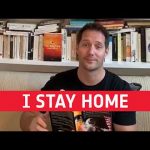
How to cope during social distancing with Thomas Pesquet
ESA astronaut Thomas Pesquet gives us some advice on what to do during a period of social distancing like the one many of us have to endure during the COVID-19 outbreak.
* Turn CC on for English or French captions *
Credits: ESA/T. Pesquet
★ Subscribe: http://bit.ly/ESAsubscribe and click twice on the bell button to receive our notifications.
Check out our full video catalog: http://bit.ly/SpaceInVideos
Follow us on Twitter: http://bit.ly/ESAonTwitter
On Facebook: http://bit.ly/ESAonFacebook
On Instagram: http://bit.ly/ESAonInstagram
On Flickr: http://bit.ly/ESAonFlickrWe are Europe’s gateway to space. Our mission is to shape the development of Europe’s space capability and ensure that investment in space continues to deliver benefits to the citizens of Europe and the world. Check out http://www.esa.int/ESA to get up to speed on everything space related.
Copyright information about our videos is available here: http://www.esa.int/spaceinvideos/Terms_and_Conditions
#ThomasPesquet
#Astronaut
#Covid19 -
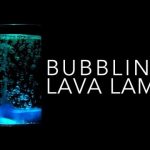
Bubbling Lava Lamp – Sick Science! #081
Read the full experiment at http://www.stevespanglerscience.com/experiment/bubbling-lava-lamp Lava lamps hold a special place in pop culture history, but there is a lot of science that we can learn from them, too. With the Bubbling Lava Lamp, you’ll learn how to make a homemade, kid-safe lava lamp using materials right in your home. With a soda bottle, oil and water, and a secret ingredient that makes the whole thing fizz, bubble, and erupt, you’ll have a colorful concoction you will love.
Want more experiments like this? Check out http://www.stevespanglerscience.com/product/fire-bubbles-exploding-toothpaste-book
Sick Science™ is a trademark of Steve Spangler, inc.
© 2012 Steve Spangler Science all rights reserved