How do we know what Earth’s climate was like long ago? If you look closely, there are clues just about everywhere across our globe. Some are easy to see and others are more subtle. NASA climate scientist Dr. Gavin Schmidt explains.
🚩 Go to http://bit.ly/thld_cs_historymarche and use code HISTORYMARCHE to save 25% off today. Thanks to Curiosity Stream for sponsoring today’s video.
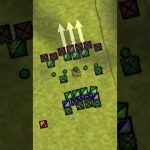
🚩 The Franks, led by Charles Martel, met the Muslim army commanded by Abd al-Rahman, the Umayyad governor of Spain, in early October 732 AD. Some have argued that this brief conflict influenced the fate of Christian civilization in Europe, while others see it as a simple border skirmish. The truth, it seems, lies somewhere in-between.
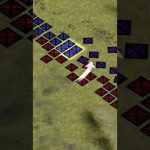
🚩 The pivotal Battle of Talas pitted the rapidly expanding Muslim armies against the forces of the Chinese Tang Dynasty. The outcome of the battle changed Central Asia for millennia to come.
📝 Sources: Bartold, Vasily (1928). Turkestan Down to the Mongol Invasion (Trans. T. Minorsky & C.E. Bosworth) Chen, Sanping (2012). Multicultural China in the Early Middle Ages Golden, Peter B. (1990). “The Kharakhanids and early Islam” in The Cambridge History of Early Inner Asia, vol. 1 (ed. Denis Sinor) Hoberman, Barry (Sept/Oct. 1982). “The Battle of Talas” in Aramco World, vol. 33 no. 5 Ibn al-Athir, Ali (ca. 1231) The Complete History Sima, Guang (1084). Zizhi Tongjian. Soucek, Svak (2000). A History of Inner Asia Starr, S. Frederick (2004). Xinjiang: China’s Muslim Borderland
The European Space Agency (ESA) is currently training five astronaut candidates for future missions to the International Space Station and beyond. Their training programme consists of three phases: The first phase is basic training, which covers medical exams, fitness assessments, and space programmes and systems. The second phase, the pre-assignment training, is advanced training in specific areas such as systems training, vehicle training, robotics and EVA-training. The third phase is mission-specific training, which is tailored to the tasks and experiments that astronauts will perform during their mission. ESA’s astronaut training programme also includes training for exploration of the lunar surface, as astronauts will need to apply their skills and knowledge to new challenges in future space missions beyond Earth orbit.
★ Subscribe: http://bit.ly/ESAsubscribe and click twice on the bell button to receive our notifications.
We are Europe’s gateway to space. Our mission is to shape the development of Europe’s space capability and ensure that investment in space continues to deliver benefits to the citizens of Europe and the world. Check out https://www.esa.int/ to get up to speed on everything space related.
The first 1,000 people to use the link will get a 1 month free trial of Skillshare https://skl.sh/historymarche04231 For a limited time (now through April 30, 2023), Skillshare is offering 40% off your first year of membership – one of their best offers out there! https://skl.sh/historymarche40
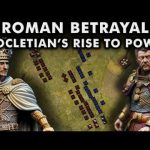
🚩 Big thanks to Srpske for their collaboration on this video: https://www.youtube.com/@SrpskeBitke 🚩 Big thanks to Dr. Byron Waldron for his research and writing for this video. If you want to learn more about Diocletian, check out his excellent book: https://amz.run/6cSm
📢 Narrated by David McCallion
📝 Written by Dr.Byron Waldron
🎼 Music: EpidemicSound.com Filmstro
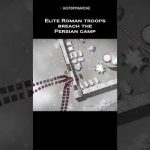
📚 Sources: Ancient works consulted: Aurelius Victor’s Liber de Caesaribus, Epitome de Caesaribus, Eusebius’ Chronicon, Eutropius, Festus’ Breviarium, Historia Augusta, Malalas, Orosius, Peter the Patrician, Zonaras, Zosimus.
Ando, C. 2012: Imperial Rome AD 193 to 284: The Critical Century, Edinburgh.
Altmayer, K. 2014: Die Herrschaft des Carus, Carinus und Numerianus als Vorläufer der Tetrarchie. Historia Einzelschriften 230, Stuttgart.
De Blois, L. 2019: Image and Reality of Roman Imperial Power in the Third Century AD: The Impact of War, London.
Dodgeon, M. H. & S. N. C. Lieu. 1991: The Roman Eastern Frontier and the Persian Wars AD 226-363: A Documentary History, London & New York.
Edwell, P. 2021: Rome and Persia at War: Imperial Competition and Contact, 193-363 CE, Oxford & New York.
Kovács, P. 2011: The Battle of Margum or Where Emperor Carinus Died?, Acta Musei Napocensis 45-46/I, 2008-2009, 241-252.
Potter, D. S. 2014: The Roman Empire at Bay AD 180-395, 2nd ed., Oxford & New York.
Rose, C. B. 2021: Reconsidering the Frieze on the Arch of Constantine, JRA 1-36.
Determining whether the Jovian moons provide the right conditions for habitability is one of the Jupiter Icy Moons Explorer, Juice, core objectives. Could life have appeared somewhere there? Do any of the Galilean moons have the building blocks needed for life?
By studying the Galilean moons’ hidden oceans, magnetism, heating processes, tidal effects, orbits, surface activity, cores and compositions, atmospheres and space environments, Juice will investigate whether the conditions necessary for life could ever have emerged on Ganymede, Europa or Callisto. Juice will help us to understand these worlds not only as planetary bodies but also as possible habitats for life. Juice’s high-resolution mapping will hunt for biologically essential and important elements (such as carbon, oxygen, nitrogen, magnesium and iron).
These moons are especially exciting prospects for life given their hidden subsurface oceans. Characterising their habitability will have far-reaching scientific implications well beyond the Jupiter system itself, and will help us understand the general habitability of icy worlds across the Universe. Importantly, Juice’s second target of the wider Jupiter system will reveal more about the general prospects for habitability in similar planetary systems around other stars.
★ Subscribe: http://bit.ly/ESAsubscribe and click twice on the bell button to receive our notifications.
We are Europe’s gateway to space. Our mission is to shape the development of Europe’s space capability and ensure that investment in space continues to deliver benefits to the citizens of Europe and the world. Check out https://www.esa.int/ to get up to speed on everything space related.
In the 1980s, scientists discovered a gaping hole in Earth’s ozone layer, caused by humanmade chemicals. But how do we keep track of the status of the ozone hole?
This video briefly explores how satellites orbiting Earth are monitoring the ozone hole.
We are Europe’s gateway to space. Our mission is to shape the development of Europe’s space capability and ensure that investment in space continues to deliver benefits to the citizens of Europe and the world. Check out https://www.esa.int/ to get up to speed on everything space related.
Steve Spangler is a bestselling author, STEM educator and Emmy award-winning television personality with more than 1,800 television appearances to his credit.
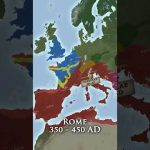
🚩In 450 AD, Attila the Hun invaded the West. By this time, the collapse of the Roman Empire was already 100 years in the making. But the famous general Aetius brought Rome back from the brink in the battle of the Catalaunian Plains, in 451 AD.
How do we communicate with spacecraft? For decades, satellites have beamed data back to Earth by way of radio waves, with a network of ground-based antennas collecting the incoming information. Now, we’re exploring laser communications, technology that will allow us to receive more data from farther than ever before — faster, too. NASA space communications expert Risha George tells us more: https://www.nasa.gov/lasercomms
Producers: Scott Bednar, Jessica Wilde Editor: James Lucas
🚩 Help support HistoryMarche on Patreon and for as little as $1 per video get ad-free early access to our videos: https://www.patreon.com/historymarche
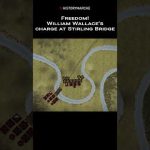
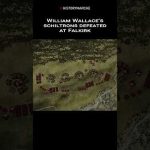
🚩 The first Scottish War of Independence was a long series of bloody conflicts between Scotland and England. In this series you will see the initial invasion of Edward I in 1296, the galvanizing resistance of William Wallace and the campaigns of the Scottish Guardians from 1297 until 1304, as well as Robert the Bruce’s campaigns from 1306 until his infamous victory at Bannockburn in 1314, and, finally, the Scottish diplomatic missions coupled with military victories culminating in the Treaty of Edinburgh-Northampton in 1328.
Sources: • Bannockburn 1314: Robert Bruce’s great victory (Peter Armstrong) ISBN: 978-1855326095 • Stirling Bridge & Falkirk 1297-98 (Pete Armstrong). ISBN: 978-1-84176-510-5 • Robert the Bruce, King of Scots (Ronald McNair Scott). ISBN: 978-1-78211-177-1 • A Great and Terrible King: Edward I and the Forging of Britain (Marc Morris). ISBN: 978-0-091-79684-6 • The Hammer of the Scots: Edward I and the Scottish Wars of Independence (David Santiuste). ISBN: 978-1-78159-012-6 • Edward I (Michael Prestwich). ISBN: 978-0-300-07157-3 • William Wallace: Brave Heart (James MacKay). ISBN: 9781780574288 • Peter Reese – Bannockburn, Scotlands greatest victory
🚩 I merged all parts of the William the Conqueror series into one video for easier viewing.
🚩 William’s story is truly a remarkable one. He endured a childhood in which others battled to seize his title and lands and had fought wars against his neighbours in France. But William the Conqueror is best known for his invasion of England in 1066. In the years that followed he conquered England, made agreements in Wales and turned the Scottish King into a vassal.
Just think about the amount of food and water that a crew of astronauts would need to go all the way to Mars, as well as all the mental, physiological, and, most importantly, radiation risk challenges. How about we avoid all of those issues by putting the astronauts to sleep?
The main problem is that humans don’t hibernate. Astronauts would have to take a drug to induce hibernation and enter sleeping pods, quiet environments with low lights, high humidity, kept at temperatures below 10°C.
Hibernation not only promises to benefit astronauts in space, but it may also offer new potential applications for patient care on Earth.
★ Subscribe: http://bit.ly/ESAsubscribe and click twice on the bell button to receive our notifications.
We are Europe’s gateway to space. Our mission is to shape the development of Europe’s space capability and ensure that investment in space continues to deliver benefits to the citizens of Europe and the world. Check out https://www.esa.int/ to get up to speed on everything space related.
🎄🎅🎄🎅🎄🎅 Many of you requested all parts of the Battle of Dara mini series be merged into one video. I thought it fitting to release it on New Year’s weekend. I’d like to thank all of you for your support! I feel blessed to have such a wonderful community here that has enabled me to do this full time. Huge thanks and much love to you all! I wish you a very Happy 2023! 🎄🎅🎄🎅🎄🎅
🚩 In the late 5th and early 6th centuries, there began a general ambition by the Byzantine hierarchy to restore the Empire’s territory back to the height of the Roman Empire from where it had evolved. Consequently a series of campaigns began across Italy, North Africa, the Balkans, and the Middle East, to rebuild the former glory. It should be noted that at this point in history, the enemies faced by the Byzantines were far more numerous and better organised than those that Rome had first faced centuries earlier. These were now the evolved enemies that had defeated Rome just 100-150 years earlier. Nevertheless, a Byzantine general by the name Belisarius would rise to the challenge…
It’s New Year’s Eve day and our Earth from Space hosts, Chiara and Jorge, share some traditions of their home countries.
In Italy, people eat lentils on the last dinner of the year to bring good fortune and in Spain people eat one grape with each chime of the clock at midnight making a wish.
We are Europe’s gateway to space. Our mission is to shape the development of Europe’s space capability and ensure that investment in space continues to deliver benefits to the citizens of Europe and the world. Check out https://www.esa.int/ to get up to speed on everything space related.
💥Use my link to install BLOODLINE for Free: ✅ https://app.adjust.com/6ibf2j0_6whkqm6 & Get a special starter pack [Available for the next 30 days] 👇 Push down for more cool stuff 👇
🚩 On June 24th, 1812, the French Emperor Napoleon led 450 thousand men across the Niemen River into Russia, beginning one of the most notorious military disasters in history. Throughout this 6-month campaign, both French and Russian commanders would struggle with forces far greater than any army: politics, logistics and of course, nature.
🚩 Support HistoryMarche on Patreon and for as little as $1 per video you get ad-free early access to our videos: https://www.patreon.com/historymarche
📢 Narrated by David McCallion
🎼 Music: EpidemicSound.com Filmstro
📚 Sources: Chandler D. The Campaigns of Napoleon. Weidenfeld & Nicolson Ltd 1966. Griess T ed. Atlas for the Wars of Napoleon. Avery Publishing Group Inc 1986. Hartley J, Keenan P, Lieven D eds. Russia and the Napoleonic Wars. Palgrave MacMillan 2015. Lieven D. Russia Against Napoleon. Viking 2010. Nafziger G. Napoleon’s Invasion of Russia. Presidio 1988. Black J. The French Revolution and Napoleonic Wars. Rowman & Littlefield 2022. Nester W. Napoleon and the Art of Diplomacy. Savas Beatie 2012. Voelcker T. Admiral Saumarez versus Napoleon. The Boydell Press 2008. Lunde H. A Warrior Dynasty. Casemate 2014. [Charles XII] Marvin Girelli
How do spacecraft slow down? Rigid heat shields and retropropulsion have been the favorites of engineers for years. Now NASA is testing a new inflatable heat shield technology that could allow us to carry even larger payloads to worlds with atmospheres: https://www.nasa.gov/loftid
Launching on Nov. 1 aboard a United Launch Alliance Atlas V rocket along with NOAA’s JPSS-2 mission, the Low-Earth Orbit Flight Test of an Inflatable Decelerator, or LOFTID, will demonstrate the heat shield’s ability to slow down and survive atmospheric entry: https://go.nasa.gov/3N7yzBG
Producers: Scott Bednar, Jessica Wilde Editor: Daniel Salazar
Enjoy a meteor shower with our tips: 1. Allow your eyes to adjust to the dark. 2. Use a red flashlight to preserve night vision. 3. Wear warm clothes. 4. Lie on a deck chair or mattress. 5. Enjoy the cosmic show!
★ Subscribe: http://bit.ly/ESAsubscribe and click twice on the bell button to receive our notifications.
We are Europe’s gateway to space. Our mission is to shape the development of Europe’s space capability and ensure that investment in space continues to deliver benefits to the citizens of Europe and the world. Check out https://www.esa.int/ to get up to speed on everything space related.