Steve Spangler is a bestselling author, STEM educator and Emmy award-winning television personality with more than 2,100 television appearances to his credit. Steve appeared as a regular guest on the Ellen DeGeneres Show from 2007-2022 (27 appearances).
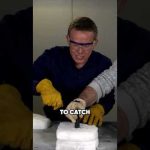
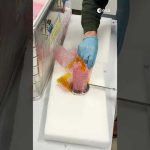
Inside is the very first metal 3D-printed object made aboard the International Space Station!
Scientists will now compare the object with reference prints made on Earth to study how microgravity affects 3D metal printing.
One of our goals for future space development is to create a circular space economy, recycling materials in orbit for better resource use. In the future, we could repurpose old satellite parts into new tools and structures, reducing the need to launch everything from Earth.
A 3D printer in space would let astronauts print what they need, when they need it.
Our metal 3D printer was developed by @airbus_space and its partners.
📹 @europeanspaceagency 📸 ESA/Airbus Space and Defence SAS
Steve Spangler is a bestselling author, STEM educator and Emmy award-winning television personality with more than 2,100 television appearances to his credit. Steve appeared as a regular guest on the Ellen DeGeneres Show from 2007-2022. Learn more about Steve at https://stevespangler.com/about-steve-spangler/
Join ESA astronaut Matthias Maurer on a tour of Columbus, Europe’s science laboratory on the International Space Station.
Cosmic Kiss is Matthias’s first mission to the Space Station and the Columbus module is one of his main workplaces. It is also where he sleeps in his crew quarters known as CASA.
Columbus is Europe’s largest contribution to the orbital outpost and the first European laboratory for permanent, multidisciplinary research in space. It houses 16 standardised payload cabinets, known as racks, which host laboratory equipment and technical systems. This allows the facility to support research across a wide range of different scientific disciplines.
Work focuses on materials science, fluid physics, chemistry, remote sensing, biology, biotechnology, medicine and human physiology, as well as technology demonstrations to aid innovation on Earth. Once installed by an astronaut, many of the experiments that happen in Columbus can be remotely controlled and monitored by User Support Operations Centres on the ground.
Matthias will live and work in orbit for approximately six months for his Cosmic Kiss mission. During this time, he will conduct and support more than 35 European and numerous other international experiments in microgravity.
We are Europe’s gateway to space. Our mission is to shape the development of Europe’s space capability and ensure that investment in space continues to deliver benefits to the citizens of Europe and the world. Check out https://www.esa.int/ to get up to speed on everything space related.
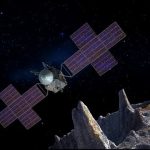
Join NASA Psyche Mission Co-Investigator Dr. Tim McCoy as he takes us on a journey from his first geology class to his current role as Curator-in-Charge of the US National Meteorite Collection at the Smithsonian National Museum of Natural History and his role on the Psyche Mission Science Team. Along the way, McCoy highlights the significance of studying a metallic asteroid and what it may be able to tell us about the formation of the solar system and our own planet. It’s the journey of a lifetime, and he didn’t want to miss it.
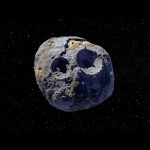
Psyche is both the name of an asteroid orbiting the Sun between Mars and Jupiter — and the name of a NASA space mission to visit that asteroid, led by Arizona State University.
One of the first steps in understanding the geology of Psyche is for the Psyche science team to find out more about collisions and crater formation on metallic asteroids. Join Psyche Mission Science Team Co-Investigator Simone Marchi of the Southwest Research Institute as he explains how impact experiments are conducted at NASA’s Ames Vertical Gun Range and what we can learn about the cratering process to further understand and interpret the geology of Psyche.
Take a tour of the interior of SpaceX’s Crew Dragon, targeted to launch on its first (uncrewed) demonstration flight on March 2, 2019. Crew Dragon is designed to transport up to four astronauts for NASA missions, along with critical cargo and supplies, to the International Space Station as part of NASA’s Commercial Crew Program.
The Crew Dragon features solar arrays affixed to the side of the spacecraft’s trunk, a launch escape system that will allow crew members to escape an anomaly at any point during flight, a large hatch and windows and a redesigned outer mold line to enhance crew comfort. The first uncrewed flight is an important step in returning human launches on American rockets and spacecraft to the space station from U.S. soil since 2011.
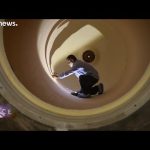
Euronews had a unique chance to visit the Avio rocket factory, situated in Colleferro, just south of Rome, Italy, where engineers are lovingly crafting the next generation of carbon fibre European launchers.
The site is one of the very few space rocket factories in Europe. It’s the place where the lightweight Vega launcher was born, and where the launchers of the future are being created.
ESA’s LISA Pathfinder mission is a technology demonstrator that will pave the way for future spaceborne gravitational-wave observatories. It will operate about 1.5 million km from Earth towards the Sun, orbiting the first Sun–Earth ‘Lagrangian point’, L1.
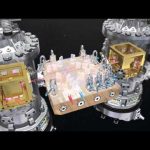
The animation of the spacecraft build-up begins with two freely falling test masses. Between them lies the central component of LISA Pathfinder’s payload: the 20 x 20 cm optical bench interferometer. A set of 22 mirrors and beam-splitters directs laser beams across the bench. There are two beams: one reflects off the two free-falling test masses while the other is confined to the bench. By comparing the length of the different paths covered by the beams, it is possible to monitor changes accurately in distance and orientation between the two test masses.
A box surrounds the two masses without touching them, shielding them from outside influence and constantly applying tiny adjustments to its position. This internal payload is housed in a central cylinder, isolating the test masses from the other components of the science payload and spacecraft.
The solar array provides power to the instrumentation and acts as a thermal shield. Microthrusters control the spacecraft to keep the master test mass centred in its housing, opposing the force of the solar radiation pressure – the main source of ‘noise’ – impinging on the solar array.
Although LISA Pathfinder is not aimed at the detection of gravitational waves themselves, it will prove the innovative technologies needed to do so. It will demonstrate that the two independent masses can be monitored as they free-fall through space, reducing external and internal disturbances to the point where the relative test mass positions would be more stable than the expected change caused by a passing gravitational wave, equal to much less than the size of an atom.
The video begins 10 minutes before Orion’s 11:29 a.m. EST splashdown in the Pacific Ocean, just as the spacecraft was beginning to experience Earth’s atmosphere. Peak heating from the friction caused by the atmosphere rubbing against Orion’s heat shield comes less than two minutes later, and the footage shows the plasma created by the interaction change from white to yellow to lavender to magenta as the temperature increases. The video goes on to show the deployment of Orion’s parachutes and the final splash as it touches down.
Grab a bag of Imperial Sugar or Dixie Crystals and let’s blow some bubbles. Wait… let’s blow bubbles INSIDE of other bubbles! When you mix-up a batch of super strong bubble solution and know a bit about volume and elasticity, you can blow bubble inside of bubble, inside of bubble. How many Bubble Inside a Bubble challenges can you do?
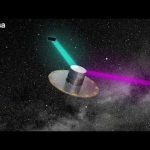
ESA’s Gaia mission will produce an unprecedented 3D map of our Galaxy by mapping, with exquisite precision, the position and motion of a billion stars. The key to this is the billion-pixel camera at the heart of its dual telescope. This animation illustrates how the camera works.
Check out this and other cool science experiments at http://www.stevespanglerscience.com/experiments/ The recent oil spill in the Gulf of Mexico has prompted a lot of questions from kids who wonder about the affect the spilled oil is having on wildlife. Steve Spangler is joined by a 4th grader from Walnut Hills Elementary who turned her questions about the oil spill into her science fair project.
About Steve Spangler Science…
Steve Spangler is a celebrity teacher, science toy designer, speaker, author and an Emmy award-winning television personality. Spangler is probably best known for his Mentos and Diet Coke geyser experiment that went viral in 2005 and prompted more than 1,000 related YouTube videos. Spangler is the founder of www.SteveSpanglerScience.com, a Denver-based company specializing in the creation of science toys, classroom science demonstrations, teacher resources and home for Spangler’s popular science experiment archive and video collection. Spangler is a frequent guest on the Ellen DeGeneres Show where he takes classroom science experiments to the extreme. Check out his pool filled with 2,500 boxes of cornstarch!
On the education side, Spangler started his career as a science teacher in the Cherry Creek School district for 12 years. Today, Steve travels extensively training teachers in ways to make learning more engaging and fun. His hands-on science boot camps and summer institutes for teachers inspire and teach teachers how to prepare a new generation for an ever-changing work force. Over the last 15 years, he has also made more than 500 television appearances as an authority on hands-on science and inquiry-based learning.
On the business side, Spangler is the founder and CEO of Steve Spangler Science, a Denver-based company specializing in the creation of educational toys and kits and hands-on science training services for teachers. The companys unique business strategies and viral creations have been featured in the Wall Street Journal, Inc. Magazine, Wired and TIME Magazine where online readers voted Steve Spangler #18 in the Top 100 Most Influential People of the Year for 2006 (what were they thinking?). You’ll find more than 140 Spangler created products available online at SteveSpanglerScience.com and distributed to toy stores and mass-market retailers worldwide.
Spangler joined NBC affiliate 9News in 2001 as the science education specialist. His weekly experiments and science segments are designed to teach viewers creative ways to make learning fun. His now famous Mentos Geyser experiment, turning 2-liter bottles of soda into erupting fountains, became an Internet sensation in September 2005 when thousands of people started posting their own Mentos explosions on YouTube.com.
As founder of SteveSpanglerScience.com, Spangler and his design team have developed more than 140 educational toys and science-related products featured by mass-market retailers like Target, Wal-Mart, Toys R’ Us, Discovery Channel Stores and over 1,400 independent specialty toy stores. His educational science catalog and on-line business offers more than a thousand science toys and unique learning resources. Recently, Spangler has been featured in the Wall Street Journal, Inc. Magazine, WIRED, the History Channel, Food Network and TIME Magazine where on-line readers voted Steve Spangler #18 in the Top 100 Most Influential People of the Year for 2006.
His recent appearances on the Ellen DeGeneres Show have taught viewers how to blow up their food, shock their friends, create mountains of foam, play on a bed of nails, vanish in a cloud of smoke and how to turn 2,500 boxes of cornstarch and a garden hose into a swimming pool of fun.