Tag: iss

  • Nachricht an meine Enkelkinder  [with Closed Captions]

    Nachricht an meine Enkelkinder [with Closed Captions]

    CLOSED CAPTIONS IN ENGLISH AVAILABLE

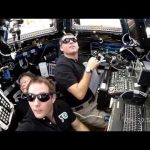
    ESA astronaut Alexander Gerst recorded a message in German to his future grandchildren from the International Space Station’s Cupola observatory during his Horizons mission in 2018. Although this message is addressed to his descendants, it applies to all of us. Everyone should contribute to the protection and improvement of this planet we call home.

    Alexander’s message is as follows:

    Dear grandchildren,

    You have not been born yet, and I do not know if I will ever meet you, so I’ve decided to record this message for you.

    I’m on the International Space Station in the Cupola Observation Module gazing down at your beautiful planet. And although I’ve now almost spent a year of my life in space and looked at Earth every single day, I just can’t get enough of this view.

    I know it probably sounds strange to you, but at the time the Space Station was built and was up here in orbit, not everyone was able to travel into space and see the Earth from a distance. Before me, only around 500 people had the chance. At this very moment, there are 7 billion people living down there on Earth and only three of them live in space. And when I look down at the planet, I think I need to apologise to you.

    Right now, it looks like we – my generation – are not going to leave this planet in its best condition for you. Of course, in retrospect many people will say they weren’t aware of what we were doing. But in reality, we humans know that right now we’re polluting the planet with carbon dioxide, we’re making the climate reach tipping point, we’re clearing forests, we’re polluting the oceans with garbage, we’re consuming the limited resources far too quickly, and we’re waging mostly pointless wars.

    And every one of us has to take a good look at themselves and think about where this is leading. I very much hope for our own sake that we can still get our act together and improve a few things. And I hope that we won’t be remembered by you as the generation who selfishly and ruthlessly destroyed your livelihood.

    I’m sure you understand these things much better than my generation. And who knows, maybe we’ll learn something new, such as: taking a step always helps; this fragile spaceship called Earth is much smaller than most people can imagine; how fragile the Earth’s biosphere is and how limited its resources are; that it’s worth getting along with your neighbours; that dreams are more valuable than money and you have to give them a chance; that boys and girls can do things equally well, but that every one of you has one thing that he or she can do much better than all the others; that the simple explanations are often wrong and that one’s own point of view is always incomplete; that the future is more important than the past; that one should never fully grow up; and that opportunities only come along once. You have to take a risk for things that are worth it, and any day during which you discovered something new – one where you gazed beyond your horizon – is a good day.

    I wish I could look into the future through your eyes, into your world and how you see it. Unfortunately, that is not possible and therefore the only thing that remains for me is to try to make your future the best one I can possibly imagine.

    International Space Station – Commander of Expedition 57 – Alexander Gerst – 25 November 2018 – 400 km above the Earth’s surface
    ——————————
    Follow Alexander and review his #Horizons mission on social media via http://bit.ly/AlexanderGerstESA and on http://bit.ly/HorizonsBlogESA
    ——————————
    ★ Subscribe: http://bit.ly/ESAsubscribe and click twice on the bell button to receive our notifications.

    Check out our full video catalog: http://bit.ly/SpaceInVideos
    Follow ESA on Twitter: http://bit.ly/ESAonTwitter
    On Facebook: http://bit.ly/ESAonFacebook
    On Instagram: http://bit.ly/ESAonInstagram
    On Flickr: http://bit.ly/ESAonFlickr

    ESA is Europe’s gateway to space. Our mission is to shape the development of Europe’s space capability and ensure that investment in space continues to deliver benefits to the citizens of Europe and the world. Check out http://www.esa.int/ESA to get up to speed on everything space related.

    Copyright information about our videos is available here: http://www.esa.int/spaceinvideos/Terms_and_Conditions

  • How do astronauts return to Earth? [with Closed Captions]

    How do astronauts return to Earth? [with Closed Captions]

    [TURN CC ON!]

    The ride home from the International Space Station sees the astronauts brake from 28 800 km/h to a standstill at touchdown in barely three hours. How does the Soyuz spacecraft reenter the atmosphere? And how does the capsule land?

    Watch in just two minutes the sequence of events from farewell to landing. This video is based on a training lesson for ESA astronauts, and it features dramatic footage of actual landings.

    To find out more, watch the extended version: https://www.youtube.com/watch?v=-l7MM9yoxII />
    Credits:
    ESA; NASA; Roscosmos; S.P. Korolev Rocket; Space Corporation Energia; Aerospace Search and Rescue Service of the Russian Federation.

    ★ Subscribe: http://bit.ly/ESAsubscribe and click twice on the bell button to receive our notifications.

    Check out our full video catalog: http://bit.ly/SpaceInVideos
    Follow ESA on Twitter: http://bit.ly/ESAonTwitter
    On Facebook: http://bit.ly/ESAonFacebook
    On Instagram: http://bit.ly/ESAonInstagram
    On Flickr: http://bit.ly/ESAonFlickr

    ESA is Europe’s gateway to space. Our mission is to shape the development of Europe’s space capability and ensure that investment in space continues to deliver benefits to the citizens of Europe and the world. Check out http://www.esa.int/ESA to get up to speed on everything space related.

    Copyright information about our videos is available here: http://www.esa.int/spaceinvideos/Terms_and_Conditions

  • Horizons mission time-lapse – highlights

    Horizons mission time-lapse – highlights

    Experience magical moments from ESA astronaut Alexander Gerst’s Horizons mission in this time-lapse of highlights from space.

    Combining thousands of images taken by Alexander over more than six months, this Ultra High Definition video provides a glimpse into spacecraft operations and the beauty of Earth as seen from the International Space Station.

    Marvel at orbital sunrises, dancing auroras, city lights, oceans, clouds, the Milky Way, the release of cargo vehicles, a Soyuz launch and more against the thin band of atmosphere that surrounds our planet.

    Watch in 4K resolution for the best effect and find even more of Alexander’s images on Flickr at https://www.flickr.com/photos/astro_alex/

    Music is Quantum and Time by Igor Dvorkin, Duncan Pittock and Ellie Kidd sourced from the Audio Network library.

    Follow Alexander and the #Horizons mission on social media via http://bit.ly/AlexanderGerstESA and on http://bit.ly/HorizonsBlogESA

    ★ Subscribe: http://bit.ly/ESAsubscribe and click twice on the bell button to receive our notifications.

    Check out our full video catalog: http://bit.ly/SpaceInVideos
    Follow ESA on Twitter: http://bit.ly/ESAonTwitter
    On Facebook: http://bit.ly/ESAonFacebook
    On Instagram: http://bit.ly/ESAonInstagram
    On Flickr: http://bit.ly/ESAonFlickr

    ESA is Europe’s gateway to space. Our mission is to shape the development of Europe’s space capability and ensure that investment in space continues to deliver benefits to the citizens of Europe and the world. Check out http://www.esa.int/ESA to get up to speed on everything space related.

    Copyright information about our videos is available here: http://www.esa.int/spaceinvideos/Terms_and_Conditions

  • Soyuz spacecraft launch timelapse seen from space

    Soyuz spacecraft launch timelapse seen from space

    This is what three astronauts being launched into space looks like – seen from space. ESA astronaut Alexander Gerst took this time-lapse sequence from the International Space Station’s Cupola observatory on 3 December 2018.

    Inside the Soyuz MS-11 spacecraft were NASA astronaut Anne McClain, Canadian Space Agency astronaut David Saint-Jacques and Roscosmos astronaut and Soyuz commander Oleg Konenenko. The trio blasted into orbit at 11:31 GMT from the Baikonur cosmodrome in Kazakhstan and docked with the International Space Station just six hours later.

    Spacecraft are launched after the Space Station flies overhead. This allowed Alexander to set up a camera to take regular pictures at intervals that are played back to create this video.

    The rocket leaves behind a trail of exhaust as it gains altitude and passes through the layers of Earth’s atmosphere.

    Download the video from ESA’s space in videos: http://www.esa.int/spaceinvideos/Videos/2018/12/Soyuz_spacecraft_launch_timelapse_seen_from_space

    Follow Alexander and the #Horizons mission on social media via http://bit.ly/AlexanderGerstESA and on http://bit.ly/HorizonsBlogESA.

    Credits: ESA/NASA.

    ★ Subscribe: http://bit.ly/ESAsubscribe and click twice on the bell button to receive our notifications.

    Check out our full video catalog: http://bit.ly/SpaceInVideos
    Follow ESA on Twitter: http://bit.ly/ESAonTwitter
    On Facebook: http://bit.ly/ESAonFacebook
    On Instagram: http://bit.ly/ESAonInstagram
    On Flickr: http://bit.ly/ESAonFlickr

    ESA is Europe’s gateway to space. Our mission is to shape the development of Europe’s space capability and ensure that investment in space continues to deliver benefits to the citizens of Europe and the world. Check out http://www.esa.int/ESA to get up to speed on everything space related.

    Copyright information about our videos is available here: http://www.esa.int/spaceinvideos/Terms_and_Conditions

  • Horizons science – Cimon

    Horizons science – Cimon

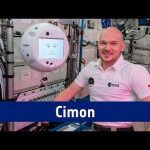
    ESA astronaut Alexander Gerst welcomed a new face to the Columbus laboratory, thanks to the successful commissioning of technology demonstration Cimon. Short for Crew Interactive Mobile CompanioN, Cimon is a 3D-printed plastic sphere designed to test human-machine interaction in space.

    Developed and built by Airbus in Friedrichshafen and Bremen, Germany, on behalf of German Space Agency DLR, Cimon uses artificial intelligence software by IBM Watson. Its scientific aspects are overseen by researchers at Ludwig Maximilians University Clinic in Munich.

    This video shows Alexander’s first interactions with Cimon on board the International Space Station. After introducing himself, where he comes from and what he can do, Cimon tests his free-flying abilities, helps Alexander with a procedure and even plays Alexander’s favourite song ‘Man Machine’ by Kraftwerk. In fact, Cimon likes the music so much, he does not want to stop.

    Happy with his initial outing, both Cimon’s developers and Alexander hope to see Cimon back in action again soon. While no further sessions are planned during the Horizons mission at this stage, it could mark the beginning of exciting collaboration between astronauts, robotic assistants and possible future artificial intelligence in space.

    Follow Alexander and the #Horizons mission on social media via http://bit.ly/AlexanderGerstESA and on http://bit.ly/HorizonsBlogESA.

    ★ Subscribe: http://bit.ly/ESAsubscribe

    Check out our full video catalog: http://bit.ly/SpaceInVideos
    Follow ESA on Twitter: http://bit.ly/ESAonTwitter
    On Facebook: http://bit.ly/ESAonFacebook
    On Instagram: http://bit.ly/ESAonInstagram
    On Flickr: http://bit.ly/ESAonFlickr

    ESA is Europe’s gateway to space. Our mission is to shape the development of Europe’s space capability and ensure that investment in space continues to deliver benefits to the citizens of Europe and the world. Check out http://www.esa.int/ESA to get up to speed on everything space related.

    Copyright information about our videos is available here: http://www.esa.int/spaceinvideos/Terms_and_Conditions

  • Progress launch timelapse seen from space

    Progress launch timelapse seen from space

    Timelapse of the Russian Progress MS-10 cargo spacecraft launched on 16 November 2018 at 18:14 GMT from Baikonur cosmodrome, Kazakhstan, taken by ESA astronaut Alexander Gerst from the International Space Station.

    The spacecraft was launched atop a Soyuz rocket with 2564 kg of cargo and supplies. Flying at 28 800 km/h, 400 km high, the International Space Station requires regular supplies from Earth such as this Progress launch. Spacecraft are launched after the Space Station flies overhead so they catch up with the orbital outpost to dock, in this case two days later on 18 November 2018.

    The images were taken from the European-built Cupola module with a camera set to take pictures at regular intervals. The pictures are then played quickly after each other at 8 to 16 times normal speed. The video shows around 15 minutes of the launch at normal speed.

    The Progress spacecraft delivered food, fuel and supplies, including about 750 kg of propellant, 75 kg of oxygen and air and 440 l of water.

    Some notable moments in this video are:
    00:07 Soyuz-FG rocket booster separation.
    00:19 Core stage separation.
    00:34:05 Core stage starts burning in the atmosphere as it returns to Earth after having spent all its fuel.
    00:34:19 Progress spacecraft separates from rocket and enters orbit to catch up with the International Space Station.

    Download the video: http://bit.ly/ProgressLaunchTimelapseSeenFromSpace

    Score – ‘Empire’s Dawn 2’ by Terry Devine – King: https://www.audionetwork.com/browse/m/track/empires-dawn-2_14574

    Follow Alexander and the #Horizons mission on social media via http://bit.ly/AlexanderGerstESA and on http://bit.ly/HorizonsBlogESA.

    Credits: ESA/NASA.

    ★ Subscribe: http://bit.ly/ESAsubscribe

    Check out our full video catalog: http://bit.ly/SpaceInVideos
    Follow ESA on Twitter: http://bit.ly/ESAonTwitter
    On Facebook: http://bit.ly/ESAonFacebook
    On Instagram: http://bit.ly/ESAonInstagram
    On Flickr: http://bit.ly/ESAonFlickr

    ESA is Europe’s gateway to space. Our mission is to shape the development of Europe’s space capability and ensure that investment in space continues to deliver benefits to the citizens of Europe and the world. Check out http://www.esa.int/ESA to get up to speed on everything space related.

    Copyright information about our videos is available here: http://www.esa.int/spaceinvideos/Terms_and_Conditions

  • Space Station 20th: longest continuous timelapse from space

    Space Station 20th: longest continuous timelapse from space

    Since the very first module Zarya launched from Baikonur Cosmodrome on 20 November 1998, the International Space Station has delivered a whole new perspective on this planet we call home. Join us as we celebrate 20 years of international collaboration and research for the benefit of Earth with ESA astronaut Alexander Gerst’s longest timelapse yet.

    In just under 15 minutes, this clip takes you from Tunisia across Beijing and through Australia in two trips around the world. You can follow the Station’s location using the map at the top right-hand-side of the screen alongside annotations on the photos themselves.

    This timelapse comprises approximately 21 375 images of Earth all captured by Alexander from the International Space Station and shown 12.5 times faster than actual speed.

    Music is Orbital Horizons, an original composition by Los Angeles-based musician Matt Piper.

    Participate in further Space Station celebrations via social media using hashtag #SpaceStation20th.

    Download this video: http://bit.ly/LongestTLFromISS

    Follow Alexander and the Horizons mission on social media via http://bit.ly/AlexanderGerstESA and on http://bit.ly/HorizonsBlogESA.

    ★ Subscribe: http://bit.ly/ESAsubscribe

    Check out our full video catalog: http://bit.ly/SpaceInVideos
    Follow ESA on Twitter: http://bit.ly/ESAonTwitter
    On Facebook: http://bit.ly/ESAonFacebook
    On Instagram: http://bit.ly/ESAonInstagram
    On Flickr: http://bit.ly/ESAonFlickr

    ESA is Europe’s gateway to space. Our mission is to shape the development of Europe’s space capability and ensure that investment in space continues to deliver benefits to the citizens of Europe and the world. Check out http://www.esa.int/ESA to get up to speed on everything space related.

    Copyright information about our videos is available here: http://www.esa.int/spaceinvideos/Terms_and_Conditions

  • First 8K Video from Space – Ultra HD

    First 8K Video from Space – Ultra HD

    Science gets scaled up with the first 8K ultra high definition (UHD) video from the International Space Station. Get closer to the in-space experience and see how the international partnership-powered human spaceflight is improving lives on Earth, while enabling humanity to explore the universe. More: https://go.nasa.gov/2zgPY5o Special thanks to the European Space Agency, the ISS National Lab, and astronauts Alexander Gerst, Serena Auñón-Chancellor, Ricky Arnold and Drew Feustel.

    Download this video: https://images.nasa.gov/details-First-8K-Video-from-Space.html

    Featured investigations and facilities:
    0:01, 2:36 BEST seeks to advance use of sequencing DNA and RNA in space. https://go.nasa.gov/2tNntKu

    0:13 The Minus Eighty-Degree Laboratory Freezer for ISS (MELFI) is a cold storage unit that maintains experiment samples at ultra-cold temperatures throughout a mission. https://go.nasa.gov/2RkJAl5

    0:21 The Advanced Plant Habitat (APH), a recent addition to the space station, is the largest growth chamber aboard the orbiting laboratory. https://go.nasa.gov/2JCi8vV

    0:33 Canadarm2 is part of Canada’s contribution to the space station. This 17-metre-long robotic arm was extensively involved in the assembly of the orbiting laboratory. https://go.nasa.gov/2ReaU42

    0:41 Crew Earth Observations record how the planet is changing over time, from human-caused changes like urban growth and reservoir construction, to natural dynamic events such as hurricanes, floods and volcanic eruptions. https://go.nasa.gov/2KLFAaq

    0:49 The Light Microscopy Module (LMM) is a modified commercial, highly flexible, state-of-the-art light imaging microscope facility that provides researchers with powerful diagnostic hardware and software onboard the space station. https://go.nasa.gov/2RfdYwS

    0:53 ACE-T-2 looks at the assembly of complex structures from micron-scale colloidal particles interacting via tunable attractive interactions. https://go.nasa.gov/2Re2ppS

    0:57 Plant Habitat-1 comprehensively compares differences in genetics, metabolism, photosynthesis, and gravity sensing between plants grown in space and on Earth. https://go.nasa.gov/2MdDBfc

    1:05 The Cupola provides an observation and work area for the International Space Station crew that gives visibility to support the control of the station’s robotic arms, and a beautiful view of the Earth, celestial objects and visiting vehicles. https://go.nasa.gov/2CRsxCT

    1:14 Atomization observes the disintegration processes of low-speed water jets under various conditions to improve spray combustion processes inside rocket and jet engines. https://go.nasa.gov/2RkKrlN

    1:30 BCAT-CS focuses on the study of forces between particles that cluster together by studying sediments of quartz and clay particles. https://go.nasa.gov/2p6WBSV

    1:38 Functional Immune analyzes blood and saliva samples to determine the changes taking place in crew members’ immune systems during flight. https://go.nasa.gov/2RfUMz1

    2:03 Life Support Rack (LSR) is a technology demonstrator for closed loop air revitalization. https://go.nasa.gov/2Rdfi3C

    2:15 The Japanese Experiment Module Airlock is used to deliver science experiments to external platforms, and prepare small satellites for deployment from station. https://go.nasa.gov/2RdcBik

    2:23 SPHERES Tether Slosh combines fluid dynamics equipment with robotic capabilities aboard the space station to investigate automated strategies for steering passive cargo that contain fluids. https://go.nasa.gov/2RfQPdQ

    Follow updates on the science conducted aboard the space station on Twitter:
    https://twitter.com/iss_research

    For more information on how you can conduct your research in microgravity, visit https://go.nasa.gov/2q84LJj

  • European Astro Pi Challenge 2018/19 | ESA astronaut Alexander Gerst announcement

    European Astro Pi Challenge 2018/19 | ESA astronaut Alexander Gerst announcement

    ESA astronaut Alexander Gerst launches the 2018/19 European Astro Pi Challenge; an ESA Education project run in collaboration with the Raspberry Pi Foundation. He invites students and young people to conduct their own scientific investigations in space, by writing computer programs that run on Raspberry Pi computers on board the International Space Station.

    ★ Subscribe: http://bit.ly/ESAsubscribe

    Check out our full video catalog: http://bit.ly/SpaceInVideos
    Follow ESA on Twitter: http://bit.ly/ESAonTwitter
    On Facebook: http://bit.ly/ESAonFacebook
    On Instagram: http://bit.ly/ESAonInstagram
    On Flickr: http://bit.ly/ESAonFlickr

    ESA is Europe’s gateway to space. Our mission is to shape the development of Europe’s space capability and ensure that investment in space continues to deliver benefits to the citizens of Europe and the world. Check out http://www.esa.int/ESA to get up to speed on everything space related.

    Copyright information about our videos is available here: http://www.esa.int/spaceinvideos/Terms_and_Conditions

  • Releasing the Dragon

    Releasing the Dragon

    This timelapse video shows still pictures taken from the International Space Station of the departing #Dragon supply spacecraft. Played in quick succession the video displays faster than real life but in 4K resolution.

    The Dragon spacecraft was released from the Station’s robotic arm at 18:38 GMT on 3 August 2018. Thrusters fired to increase its distance from the Space Station and the spacecraft started its deorbit and return to Earth, splashing down in the Pacific Ocean less than seven hours after release.

    The International Space Station flies at 28 800 km/h above our planet doing a complete orbit in around 90 minutes – during release operations the sun set and rose above the horizon many times.

    As Dragon faded into the distance it flew over a stormy part of Earth – lightning flashes can be seen many kilometres below.

    Dragon is the only spacecraft that can return to Earth with scientific cargo aside from the Soyuz spacecraft that ferries astronauts to space and back – this flight carried over 1700 kg of cargo.

    Watch the release of Cygnus here: https://youtu.be/bttU_rKoti0

    ★ Subscribe: http://bit.ly/ESAsubscribe

    Follow Alexander and the Horizons mission on social media via http://bit.ly/AlexanderGerstESA and on http://bit.ly/HorizonsBlogESA.

    Check out our full video catalog: http://bit.ly/SpaceInVideos
    Follow ESA on Twitter: http://bit.ly/ESAonTwitter
    On Facebook: http://bit.ly/ESAonFacebook
    On Instagram: http://bit.ly/ESAonInstagram
    On Flickr: http://bit.ly/ESAonFlickr

    ESA is Europe’s gateway to space. Our mission is to shape the development of Europe’s space capability and ensure that investment in space continues to deliver benefits to the citizens of Europe and the world. Check out http://www.esa.int/ESA to get up to speed on everything space related.

    Copyright information about our videos is available here: http://www.esa.int/spaceinvideos/Terms_and_Conditions

  • Horizons mission time-lapse – from Alaska to the Andes

    Horizons mission time-lapse – from Alaska to the Andes

    Ever wondered what it feels like to fly from Alaska to the Andes in 260 seconds? ESA astronaut Alexander Gerst captured this timelapse footage of Alaska, the USA and South America while orbiting Earth on board the International Space Station.

    This timelapse is made up of 6,375 images shown 12.5 times faster than actual speed. Music is Our Oasis by Miriam Speyer, sourced from Audio Network Limited.

    ★ Subscribe: http://bit.ly/ESAsubscribe

    Follow Alexander and the Horizons mission on social media via http://bit.ly/AlexanderGerstESA and on http://bit.ly/HorizonsBlogESA.

  • Horizons mission time-lapse – Australia and New Zealand

    Horizons mission time-lapse – Australia and New Zealand

    Māori, as native New Zealanders, refer to their islands as “Aotearoa” or “the land of the long white cloud”. This timelapse from ESA astronaut Alexander Gerst shows Australia and New Zealand shrouded in cloud from the unique viewpoint of the International Space Station.

    Comprised of 5,175 photos, this timelapse is 12.5 times faster than actual speed and is set to the soundtrack “Try or Die” sourced from Audio Network Limited.

    ★ Subscribe: http://bit.ly/ESAsubscribe

    Follow Alexander and the Horizons mission on social media via http://bit.ly/AlexanderGerstESA and on http://bit.ly/HorizonsBlogESA.

  • Horizons mission time-lapse – an orbital sunrise

    Horizons mission time-lapse – an orbital sunrise

    Orbiting Earth once every 90 minutes, the International Space Station soars into 16 sunrises and sunsets every single day. Many of these sunrises occur while the crew is working or sleeping, but ESA astronaut Alexander Gerst captured this stunning timelapse of a sunrise to share with us here on Earth.

    These photos were taken by Alexander at an interval of two per second and the video has been edited at 25 frames per second.

    Music: First Survivors 4 by Los Angeles-based British composer, Luke Richards. Sourced from Audio Network Limited.

    ★ Subscribe: http://bit.ly/ESAsubscribe

    Follow Alexander and the Horizons mission on social media via http://bit.ly/AlexanderGerstESA and on http://bit.ly/HorizonsBlogESA.

  • Good evening, Kraftwerk / Guten Abend Kraftwerk, guten Abend Stuttgart!

    Good evening, Kraftwerk / Guten Abend Kraftwerk, guten Abend Stuttgart!

    On 20 July 2018 around 21:50 local time, ESA astronaut Alexander Gerst welcomed the legendary electronic band Kraftwerk and 7500 visitors to the Jazz Open Festival on Stuttgart’s Schlossplatz – live from the International Space Station, where he will live and work until mid-December 2018. During the call with space, Kraftwerk founding member Ralf Hütter and Alexander played a special duet version of the track Spacelab, for which Alexander had a tablet computer configured with virtual synthesizers on board. With thanks to Kraftwerk for sharing this video footage.

    Copyright: Kraftwerk/ESA/JazzOpen – Sitara Schmitz

    ★ Subscribe: http://bit.ly/ESAsubscribe

    Follow Alexander and the Horizons mission on social media via http://bit.ly/AlexanderGerstESA and on http://bit.ly/HorizonsBlogESA.

    ————————————————————————————————————–
    So begrüßte ESA-Astronaut Alexander Gerst am 20. Juli 2018 um 21:50 Uhr Ortszeit die legendären Elektro-Pioniere Kraftwerk sowie 7500 Besucherinnen und Besucher des Jazz Open-Festivals auf dem Stuttgarter Schlossplatz – und zwar live von der Internationalen Raumstation ISS, auf der er noch bis Mitte Dezember 2018 lebt und arbeitet.

    Kraftwerk-Gründungsmitglied Ralf Hütter und Alexander Gerst spielten eine spezielle Version des Tracks Spacelab im Duett an, für das Gerst eigens einen mit virtuellen Synthesizern konfigurierten Tablet-Computer an Bord hatte.

  • Artificial Intelligence robot CIMON is in space helping astronauts

    Artificial Intelligence robot CIMON is in space helping astronauts

    SpaceX Dragon carried an Artificial Intelligence (AI) robot named CIMON to the ISS. CIMON stands for ‘Crew Interactive Mobile Companion’ and is the first-ever AI space robot. Watch BusinessToday.In’s video to know more about CIMON, built by Airbus and how he assists astronauts in relieving their stress.
    ———————-
    About the Channel: Watch Business Today videos to get the latest news on Business, stock market, sensex – BSE India, NSE India, personal finance, gold prices, petrol prices and more. Also, get an insight into the dealings of the top companies in India from Business Today’s award-winning journalists. Get up to date with all investment options (Mutual Funds, SIPs, Debt, Equity, Insurance, Home Loans, Pension Schemes, Retirement Plans) from our Money Today team. Also, watch interviews of top CEOs.
    Regular shows to watch out:

    The Good The Bad and The Ugly with BusinessToday.in Editor Rajeev Dubey to know the top stories of the day specially curated from the world of business and economy.

    Watch Inside India’s Factories to find out how different products get manufactured and processed for final consumption.

    You can follow us at:

    Website: https://www.businesstoday.in
    Facebook: https://www.facebook.com/BusinessToday
    Twitter: https://twitter.com/BT_India
    Google Plus: https://plus.google.com/+businesstoday

  • Paxi on the ISS: Exercising in Space

    Paxi on the ISS: Exercising in Space

    Our alien friend Paxi, ESA Education’s mascot, went to visit American astronaut Mark Vande Hei on board the International Space Station. Vande Hei tells Paxi about how astronauts exercise in weightlessness, an important aspect of living on the ISS.

    Credit: ESA/NASA

    ★ Subscribe: http://bit.ly/ESAsubscribe

    #ESA
    #Paxi
    #InternationalSpaceStation

  • Horizons mission – Soyuz: launch to orbit

    Horizons mission – Soyuz: launch to orbit

    This unique video shows a full launch of the Soyuz MS-09: from liftoff to orbit.

    Watch the launch from inside the crew capsule with first-ever shots from outside the spacecraft recorded by cameras fixed to the exterior of the Soyuz.

    The intense launch lasts less than ten minutes whereby the Soyuz spacecraft is propelled 1640 km and gains 210 km altitude. Every second for nine minutes, the spacecraft accelerates 50 km/h on average as the rocket’s boosters burn their fuel and are discarded.
    See the astronaut’s reactions and what the spacecraft looks like as the main steps are carried out to get into orbit:

    -00:12 Launch command issued
    -00:10 Engine turbopumps at flight speed
    -00:05 Engines at maximum thrust
    00:00 Launch
    +1:54 Separation of emergency rescue system
    +1:57 First stage separation
    +2:38 Fairing separation
    +4:48 Second stage separation
    +4:58 Tail adapter separation
    +8:45 Third stage engine cut off having arrived in orbit
    +8:49 Soyuz separation, deploy solar arrays and antennae

    The astronauts, from left to right, are NASA astronaut Serena Auñón-Chancellor, Roscosmos commander Sergei Prokopyev and ESA astronaut and flight engineer Alexander Gerst launched in the Soyuz MS-09 spacecraft from the Baikonur cosmodrome in Kazakhstan to the International Space Station on 6 June 2018. ESA astronaut Matthias Maurer and ESA television host Richard Hollingham provide commentary taken from the live event.

    Hunched in their Sokol flight suits that offer protection in case of fire or depressurisation, the trio stay in the crew capsule of the Soyuz – the only module that is also designed to survive a return to Earth. The bags above their heads contain supplies for the International Space Station as every bit of space is used.

    During a Soyuz launch astronauts typically experience forces of up to 4g – having to work while being pressed into their seats with a force that is four times more than the gravity felt on Earth. The Soyuz commander uses a stick to press buttons as they are too far away from the control panel.

    The fluffy toys above the astronauts’ heads are mascots and good luck charms but also serve as a simple but effective test to see when the spacecraft is in orbit: when they start to float the spacecraft is weightless and orbiting Earth. Above Sergei is the mascot for the 2018 FIFA soccer World Cup held in Russia. Alexander took German children television icon “Die Maus” with him.

    The launch went as planned as the 50-m tall Soyuz rocket propelled the astronauts to their cruising speed of around 28 800 km/h.
    For this launch the astronauts took 34 orbits of Earth over two days to arrive at their destination spending their time in the cramped orbital module of the Soyuz that is no larger than a car. With limited communications and living space the astronauts had time to adapt to weightlessness and reflect on their mission ahead. They aligned their spacecraft with the International Space Station and approached the orbital outpost for docking on 8 June 2018. The files for this video were downloaded by the astronauts after arriving at the Space Station.

    Alexander is a returning visitor to the International Space Station, the first of ESA’s 2009 class of astronauts to be sent into space for a second time. During the second part of his mission Alexander will take over as commander of the International Space Station, only the second time an ESA astronaut will take on this role so far.

    Credits: ESA / NASA / Roscosmos

    ★ Subscribe: http://bit.ly/ESAsubscribe

    Follow Alexander and the Horizons mission on social media via http://bit.ly/AlexanderGerstESA and on http://bit.ly/HorizonsBlogESA.

  • Horizons mission – docking and hatch opening highlights

    Horizons mission – docking and hatch opening highlights

    After orbiting Earth 34 times to catch up to the International Space Station, the car-sized spacecraft carrying ESA astronaut Alexander Gerst, NASA astronaut Serena Auñón-Chancellor and Roscosmos commander Sergei Prokopyev, arrived at the Station two days after launch.

    The German astronaut is a returning visitor to the International Space Station, the first of ESA’s 2009 class of astronauts to be sent into space for a second time. During the second part of his mission Alexander will take over as commander of the International Space Station, only the second time an ESA astronaut will take on this role so far.

    The mission is called Horizons as a symbol for the unknown and what lies beyond – reflecting on ESA’s strategy to extend human and robotic exploration beyond Earth orbit. While in space, Alexander will work on over 50 European experiments, including testing ways of operating and working with robots to develop techniques required for further human and robotic exploration of our Solar System.

    ★ Subscribe: http://bit.ly/ESAsubscribe

    Follow Alexander and the Horizons mission on social media via bit.ly/AlexanderGerstESA and on http://bit.ly/HorizonsBlogESA.

  • Paxi on the ISS: A view of Earth

    Paxi on the ISS: A view of Earth

    Our alien friend Paxi, ESA Education’s mascot, went to visit American astronaut Mark Vande Hei on board the International Space Station. Vande Hei shows Paxi the views outside of the Cupola, the biggest window on Earth in the International Space Station.

    Credit: ESA/NASA

    ★ Subscribe: http://bit.ly/ESAsubscribe

    Visit ESAKids: http://bit.ly/ESAKids

    #ESA
    #Paxi
    #InternationalSpaceStation

  • Paxi on the ISS: Sleeping in space

    Paxi on the ISS: Sleeping in space

    Our alien friend Paxi, ESA Education’s mascot, went to visit American astronaut Scott Tingle on board the International Space Station. Tingle tells Paxi about how astronauts sleep in weightlessness, an important aspect of living on the ISS.

    Credit: ESA/NASA

    #ESA
    #Paxi
    #InternationalSpaceStation

  • ESA Euronews: Az űrhajósoknak is fáj a háta

    ESA Euronews: Az űrhajósoknak is fáj a háta

    Az űrorvostudomány eredményei segíthetnek a földi betegségekben szenvedőknek is. Ami jó a Nemzetközi Űrállomáson, az segíthet a Newcastle-i nyugdíjasokon is.

    Az űrhajósoknak földöntúli munkájuk van. A hajnalt és a naplementét naponta 16-szor látják, és az űrben töltött hetek és hónapok alatt a testük kívül-belül átalakul. Izmaik és csontjaik tömegükből veszítenek, és egészségi állapotuk is megváltozik. Így az asztronauták testüket is a tudomány szolgálatába állítják.

    A nemzetközi űrállomáson zajló kutatások nem csak abban segítenek, hogy jobban megismerjük az emberi testet, hanem abban is, hogy olyan hétköznapi problémákra találjunk új megoldást, mint például a hátfájás. A Space márciusi adásában az űrmedicináról lesz szó.

  • ESA Euronews: Οι αστροναύτες λύνουν καθημερινά προβλήματα υγείας

    ESA Euronews: Οι αστροναύτες λύνουν καθημερινά προβλήματα υγείας

    Πειράματα σε αστροναύτες προσφέρουν χρήσιμα συμπεράσματα σε επιστήμονες για απλά ιατρικά θέματα που αντιμετωπίζουμε όλοι μας στη Γη

    Οι αστροναύτες έχουν μια απαιτητική δουλειά. Βλέπουν την ανατολή και τη δύση του ήλιου 16 φορές την ημέρα. Επειδή αυτό συμβαίνει για εβδομάδες, το σώμα τους αλλάζει εσωτερικά, αλλά και εξωτερικά. Χάνουν μυική και οστική μάζα και η υγεία τους επηρεάζεται πολλαπλά.

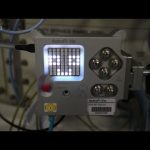
  • Astro Pi Mission Zero code running on the International Space Station!

    Astro Pi Mission Zero code running on the International Space Station!

    See Astro Pi Ed running one of the Mission Zero winners’ code on-board the ISS.

    Go to our website and to read more about Astro Pi Mission Zero: http://www.esa.int/Education/AstroPI/Astro_Pi_s_Mission_Zero_has_been_completed

  • ESA astronaut Luca Parmitano talks science in space

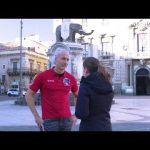
    ESA astronaut Luca Parmitano talks science in space

    From ESA astronaut Luca Parmitano’s hometown in Catania, Italy, Luca talks about the science he ran on the International Space Station.

    The European laboratory Columbus was launched in 2008 and offers scientists a permanent place in space to conduct research that is out of this world.

    Luca’s first spaceflight was in 2013 with Russian cosmonaut Fyodor Yurchikhin and NASA astronaut Karen Nyberg. He conducted over 20 experiments during the Volare mission as flight engineer for Expeditions 36 and 37 and he was the first of ESA’s new generation of astronauts to fly into space.

    Luca talks about space research, being a human guinea pig, dieting to avoid bone disease osteoporosis, human physiology, using ultrasound remotely to diagnose back problems, measuring eye pressure and how his body and mind reacted to living in weightlessness.

    Luca is set for a second mission to the International Space Station in 2019.

    Follow Luca and his adventures in space and on Earth via http://lucaparmitano.esa.int

    More about Columbus here: http://www.esa.int/Columbus

  • ESA Kids: Cutting hair and nails in space

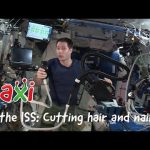
    ESA Kids: Cutting hair and nails in space

    ESA astronaut Thomas Pesquet shows us how he cuts his hair and nails on the International Space Station.

    #ESA
    #Paxi
    #InternationalSpaceStation

  • VITA mission ‘Timelapse a Day’ edition – Moonrise

    VITA mission ‘Timelapse a Day’ edition – Moonrise

    A series of nighttime photos were taken by ESA astronaut Paolo Nespoli to create this time-lapse of the Earth as seen from the Space Station and the Moon rising above the horizon.

    ESA astronaut Paolo Nespoli in currently working and living on board the International Space Station as part of the Italian Space Agency’s long-duration VITA mission.

    Follow the VITA mission: http://blogs.esa.int/VITAmission/
    Connect with Paolo via http://paolonespoli.esa.int

  • NASA Earth and Space Air Prize

    NASA Earth and Space Air Prize

    Breathable air is necessary to sustain humans both on Earth as well as in space.
    NASA is working with the Robert Wood Johnson Foundation (RWJF) to sponsor the Earth and Space Air Prize competition for a solution that could improve air quality and health in space and on Earth. This project is a technology innovation challenge to promote development of robust, durable, inexpensive, efficient, lightweight, and easy-to-use aerosol sensors for space and Earth environments. The competition asks teams or individuals to design and develop specialized sensor technology that has the potential to be useful in spaceflight as well as on Earth anywhere outdoors in a community where people may be exposed to airborne particles.

    To learn more about the rules and to register for the competition please visit www.earthspaceairprize.org

    This video can also be located at:
    https://images.nasa.gov/details-NHQ_2017_1026_Air%20Prize_FINAL.html

  • VITA mission: the first month

    VITA mission: the first month

    ESA astronaut Paolo Nespoli is currently living and working on the International Space Station as part of his VITA mission. This video shows highlights from his first month.

    The mission is part of ESA’s vision to use Earth-orbiting spacecraft as a place to live and work for the benefit of European society while using the experience to prepare for future voyages of exploration further into the Solar System.

    Follow the VITA mission: http://blogs.esa.int/VITAmission/
    Connect with Paolo during his six-month Vita mission via http://paolonespoli.esa.int

  • ISS Expedition 52/53 Aurora Australis

    ISS Expedition 52/53 Aurora Australis

    On 20 August 2017, 919 photos were taken by ESA astronaut Paolo Nespoli to create this timelapse of the Aurora Australis at 25 frames per second.

    Follow the VITA mission: http://blogs.esa.int/VITAmission/
    Connect with Paolo via http://paolonespoli.esa.int

    Camera info:
    Follow the VITA mission: http://blogs.esa.int/VITAmission/ Connect with Paolo during his six-month Vita mission via http://paolonespoli.esa.int

    More info:
    Aperture Value: 2,971
    Color Space: sRGB
    Contrast: Normal
    Custom Rendered: Normal process
    Date Time Digitized: 20 Aug 2017 19:55:00
    Digital Zoom Ratio: 1
    Exif Version: 2.2.1
    Exposure Bias Value: 0
    Exposure Mode: Manual exposure
    Exposure Program: Manual
    Exposure Time: 1/0
    File Source: DSC
    Flash: No Flash
    FNumber: 2,8
    Focal Length: 16
    Focal Length In 35mm Film: 16
    Focal Plane Resolution Unit: centimeters
    Focal Plane X Resolution: 1.368,889
    Focal Plane Y Resolution: 1.368,889
    Gain Control: High gain up
    ISO Speed Ratings: 5.000
    Lens Model: 16.0 mm f/2.8
    Lens Specification: 16, 16, 2,8, 2,8
    Light Source: unknown
    Max Aperture Value: 3
    Metering Mode: Pattern
    Pixel X Dimension: 4.928
    Pixel Y Dimension: 3.280
    Saturation: Normal
    Scene Capture Type: Standard
    Scene Type: A directly photographed image
    Sensing Method: One-chip color area sensor
    SensitivityType: Recommended exposure index (REI)
    Sharpness: Normal
    Shutter Speed Value: 1/0
    Subject Distance Range: unknown
    Sub-second Time: 00
    Sub-second Time Digitized: 00
    Sub-second Time Original: 00
    User Comment: NASA 2071135 77.8F
    White Balance: Auto white balance
    Image Number: 96.021
    Lens ID: 52
    Lens Info: 16, 16, 2,8, 2,8
    Lens Model: 16.0 mm f/2.8

  • Ciao Darmstadt, Ciao ESOC!

    Ciao Darmstadt, Ciao ESOC!

    ESA astronaut Paolo Nespoli on the International Space Station sends a video greeting to everyone at the European Space Operations Centre, ESA’s mission control centre in Darmstadt, Germany, on the occasion of its 50th anniversary celebration.
    The 8th day of September is a special date in the centre’s history: it’s the day in 1967 when it was inaugurated to serve as ‘mission control’ for what later became the European Space Agency.
    Today, it hosted 5000 visitors in an open house that included tours of the mission control facilities, presentations by ESA experts on a wide range of topics and a stage programme produced in cooperation with Hessischer Rundfunk (HR) radio and the Darmstädter Echo newspaper.
    The sold-out event also included numerous educational, informational and fun activities for all ages presented by DLR SchoolLab, the Astronomy and Space Technology Club of Darmstadt (AAW), the German Research Centre for Artificial Intelligence (DFKI) and the Berlin-based ‘new-space’ company Part-Time Scientists.
    The video greeting from the Space Station was shown during the stage programme and displayed for the visitors on screens around the centre.
    Paolo Nespoli is on a five-month mission to the Station, dubbed the #VITAmission, between July and December this year.
    Vita’s extensive scientific programme includes experiments in biology, human physiology as well as space environment monitoring, materials science and technology demonstrations. Learn more and follow Paolo in social media via http://paolonespoli.esa.int/More information on ESOC and its 50th anniversary year via #ESOC50

  • Alexander Gerst training for his second ISS mission

    Alexander Gerst training for his second ISS mission

    In 2018, ESA astronaut Alexander Gerst from Germany will be travelling to the International Space Station for the second time. During this long-duration spaceflight  – which is called the Horizons mission –  he will have the role of Space Station commander. Alexander is currently in training at NASA’s Johnson Space Centre in Houston, Texas.

    Connect with Alexander: http://alexandergerst.esa.int

  • Thomas Pesquet: Undocking and landing

    Thomas Pesquet: Undocking and landing

    Highlights from ESA astronaut Thomas Pesquet’s return to Earth at the end of his six-month Proxima mission to the International Space Station on 2 June 2017.

    After farewells and hatch closure, Thomas and his Expedition 50/51 crewmate and Soyuz commander Oleg Novitsky undocked from the International Space Station at 12:47 CEST (10:47 GMT). Just a few hours later their spacecraft reentered Earth’s atmosphere, landing in the Kazakh Steppe at 16:10 CEST (14:10 GMT). Thomas and Oleg were helped out of the Soyuz by a recovery crew and, after medical checks, they were flown to Karaganda airport where they received the traditional welcoming ceremony. Thomas then flew directly from Karaganda to Cologne, in Germany, home to the European Astronaut Centre, to start post-flight testing.

    Thomas and Oleg spent 196 days in space. Thomas took part in more than 60 experiments during his Proxima mission. His experiments are helping to understand the human brain, ocean currents and radiation in space, how atoms behave and tested new spacecraft materials. Other highlights included his two spacewalks to improve and maintain the Space Station.

    More about the Proxima mission: http://www.esa.int/proxima
    Connect with Thomas: http://thomaspesquet.esa.int

  • Thomas Pesquet mission highlights

    Thomas Pesquet mission highlights

    Thomas Pesquet will shortly be returning to Earth after a six-month stay onboard the International Space Station. Named Proxima, this mission is the ninth long-duration flight for an ESA astronaut.

    Thomas’s in-orbit schedule includes around 50 experiments for ESA and the French Space Agency CNES, and he’s so far carried out two maintenance spacewalks alongside station commander Shane Kimbrough.

    Connect with Thomas via http://thomaspesquet.esa.int
    More about the Proxima mission http://blogs.esa.int/thomas-pesquet/

  • Tour the Space Station with Thomas Pesquet (French)

    Tour the Space Station with Thomas Pesquet (French)

    ESA astronaut Thomas Pesquet takes us on a six-minute tour of the International Space Station, recorded 23 March 2017 during his Proxima mission.

    During his Proxima mission, Thomas will perform around 50 scientific experiments for ESA and France’s space agency CNES as well as take part in many research activities for the other Station partners.

    The mission is part of ESA’s vision to use Earth-orbiting spacecraft as a place to live and work for the benefit of European society while using the experience to prepare for future voyages of exploration further into the Solar System.

    More about the Proxima mission: http://www.esa.int/proxima
    Connect with Thomas Pesquet: http://thomaspesquet.esa.int

  • Concours d’écriture : les coups de cœur de Thomas Pesquet

    Concours d’écriture : les coups de cœur de Thomas Pesquet

    Trois mois après le coup d’envoi depuis la Station spatiale internationale du concours d’écriture “Faites voyager vos histoires dans l’Espace”, 8400 participants issus des quatre coins du monde ont imaginé une suite aux voyages du Petit Prince de Saint-Exupéry. Thomas Pesquet a choisi ses deux coups de cœur parmi les textes lauréats.

    Plus d’informations sur le concours : http://www.missionproxima.com/concours-ecriture

  • Capturing a dragon

    Capturing a dragon

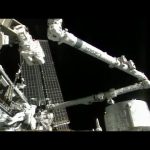
    ESA astronaut Thomas Pesquet with NASA astronauts Shane Kimbrough and Peggy Whitson in the Cupola observatory using the International Space Station’s 16-m robotic arm to grapple the SpaceX Dragon cargo spaceship.

    The video is sped up 20 times with this recording lasting 45 minutes 30 seconds at normal speed. It shows Shane and Thomas monitoring the spacecraft’s approach scanning the monitors, ready to step in if necessary. Thomas took manual control of the robotic arm and extended it to grapple the vehicle when 11 m from the Station. The Dragon CRS-10 flight was launched on 19 February 2017 and berthed with the Space Station four days later.

    The spacecraft carried over 1500 kg of supplies including NASA’s Stratospheric Aerosol and Gas Experiment, or SAGE III, to monitor aerosols, ozone and other gases in Earth’s high atmosphere by looking at the sunlight and moonlight as they pass through. SAGE III is mounted on ESA’s Hexapod – a six-legged tracker that points the facility in the right direction.

    Inside the spacecraft was also France’s CNES space agency Fluidics experiment to probe how fluids behave in weightlessness.
    Thomas is spending six months on the International Space Station as part of his Proxima mission. During Proxima, Thomas will perform around 50 scientific experiments for ESA and France’s space agency CNES as well as take part in many research activities for the other Station partners.

    The mission is part of ESA’s vision to use Earth-orbiting spacecraft as a place to live and work for the benefit of European society while using the experience to prepare for future voyages of exploration further into the Solar System.

    Connect with Thomas Pesquet: http://thomaspesquet.esa.int

  • Launching satellites from Space Station – step one

    Launching satellites from Space Station – step one

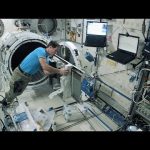
    ESA astronaut Thomas Pesquet working in the Kibo laboratory to prepare a CubeSat launch – at 30 times increased speed.

    The cylinder in the back is the mini-airlock that allows objects to be sent outside the Space Station. First Thomas and NASA astronaut Shane Kimbrough retrieved the Robotics External Leak Locator and wrapped it up for storage.

    Afterwards Thomas installs the platform that the robotic arm grabs. The pointy bit is the connector for the robotic arm.
    This video was recorded in December 2016 and was the first step for launching the CubeSats on 16 January 2017. Later Thomas put the satellite launcher on the platform and a third step is to connect the satellites themselves.

    Thomas is spending six months on the International Space Station as part of his Proxima mission. During Proxima, Thomas will perform around 50 scientific experiments for ESA and France’s space agency CNES as well as take part in many research activities for the other Station partners. The mission is part of ESA’s vision to use Earth-orbiting spacecraft as a place to live and work for the benefit of European society while using the experience to prepare for future voyages of exploration further into the Solar System.

    Connect with Thomas Pesquet: http://thomaspesquet.esa.int

    Music: Dynamic Systems – Gledden / Pedder

  • Thomas Pesquet – EVA preparations

    Thomas Pesquet – EVA preparations

    Thomas Pesquet from France has been onboard the International space Station since 19 November 2016. He is about to take part in his first Extra-Vehicular Activity (EVA, or spacewalk), performing maintenance outside the Space Station to upgrade its batteries to newer lithium-ion versions. Intensive preparations for this procedure took place in the months leading up to launch, with classroom sessions at NASA’s Johnson Space Centre in conjunction with underwater training in NASA’s Neutral Buoyancy Lab.

  • (French) Thomas Pesquet’s space Christmas message

    (French) Thomas Pesquet’s space Christmas message

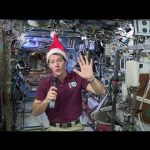
    ESA astronaut Thomas Pesquet shares his Christmas plans and wishes on the International Space Station.

    Flying 400 km above Earth, astronauts on the International Space Station have a unique experience and vision of our planet that they share in this video. Thomas recounts his memories growing up in Normany, France, and explains what Christmas means to him.

    His end-of-year meal was prepared by French chefs – canned of course, there is no way to cook food on the Space Station and includes ox-tongue from his home-region prepared by Thierry Marx, chicken-supreme and for desert, apple gingerbread.

    Connect with Thomas Pesquet on social media:
    http://thomaspesquet.esa.int

    This message is also available in English:
    https://www.youtube.com/watch?v=jncXk___ryE