In less than three years, Luca has travelled between all five international partners’ training sites, gaining the knowledge and skills required for his mission. His tailored training has taken him to Houston, USA, Star City near Moscow, Russia, Tsukuba near Tokyo, Japan, Montreal, Canada, and the European Astronaut Centre in Cologne, Germany.
Critical tasks are trained over and over. As Soyuz flight engineer, Luca requires a great amount of ‘flying hours’ in the Russian spacecraft simulator, so he trained until he felt at home in the cockpit and can operate Soyuz flawlessly in any situation. During simulations, Luca had his hands at the controls of the spacecraft and wore the Russian Sokol flight suit.
Luca has been taught Space Station systems in full-size mockups, where he familiarised himself with the Station and learnt how everything works. He is trained in all systems and experiment operations scheduled for his mission. He has spent hours getting to know every corner of Europe’s Columbus laboratory, where most of the experiments in which he participates in take place.
Dressed in a spacesuit, Luca also trained to perform spacewalks in one of the largest swimming pools in the world on realistic mockups of the Space Station.
Tag: Italian astronaut
-
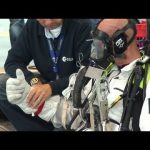
Luca Parmitano Training
-
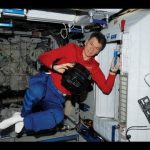
Visit the ISS in 3D with Paolo Nespoli
Paolo Nespoli spent 6 months on-board the International Space Station from Dec 2010 through to May 2011.
In this video he shot using ESA’s Erasmus Recording Binocular (ERB-2) stereoscopic camera during various phases of his MagISStra mission, he caught some moments that depict the work astronauts carry out on the ISS: from educational activities, to scientific experiments and physical training, also demonstrating the way astronauts move in weightlessness through the various modules. ERB-2 is the first camera to transmit 3D images live from space.ESA would like to thank all the astronauts featured in the film: NASA astronauts Catherine (Cady) Coleman, Ron Garan, Scott Kelly and the united ISS Expedition 26-27 and STS-134 crew including ESA astronaut R. Vittori.
-

Welcome home, Paolo!
ESA astronaut Paolo Nespoli landed back on Earth this morning to conclude his 159-day mission to the International Space Station.
Paolo had been serving as the flight engineer for Expeditions 26 and 27 since December. Paolo’s MagISStra mission, the third long mission by a European astronaut on the Station, came to end at 04:27 CEST (02:27 GMT) on the steppes of Kazakhstan as the Soyuz TMA-20 spacecraft fired its retrorockets for a soft landing.
ESA astronaut Paolo Nespoli landed back on Earth this morning to conclude his 159-day mission to the International Space Station.
Paolo had been serving as the flight engineer for Expeditions 26 and 27 since December. Paolo’s MagISStra mission, the third long mission by a European astronaut on the Station, came to end at 04:27 CEST (02:27 GMT) on the steppes of Kazakhstan as the Soyuz TMA-20 spacecraft fired its retrorockets for a soft landing.
Paolo and crewmates Soyuz Commander Dmitri Kondratyev and NASA’s Cady Coleman boarded the Soyuz on Monday night and undocked from the Station’s nadir
Rassvet port at 23:35 CEST (21:35 GMT). -
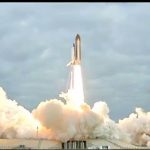
“Endeavour” roars up to sky with Roberto Vittori and AMS-02
Space Shuttle “Endeavour” was launched to space at 14:56 CEST (12:56 GMT) on 16 May from Kennedy Space Center in Florida.
The 16-day-long STS-134 mission will deliver AMS-02, a big cosmological instrument to the Space Station and its crew includes ESA’s Italian astronaut Roberto Vittori. This is the last flight of “Endeavour”. -
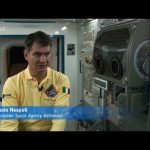
Counting down for ESA’s MagISStra mission
ESA’s Director of Human Spaceflight Simonetta Di Pippo together with ESA’s astronaut Paolo Nespoli introduce the MagISStra mission which is going to be launched in December 2010 from Baikonur Cosmodrome, Kazakhstan. This is the third six-month duration mission a European astronaut takes part to.