Tag: James Webb Telescope

  • Date noi de la James Webb 🔭 sugerează că Universul nostru 🌌este într-o gaură neagră!!

    Date noi de la James Webb 🔭 sugerează că Universul nostru 🌌este într-o gaură neagră!!

    00:02:36 – Universul nostru ar fi într-o gaură neagră?
    00:06:52 – Formarea sistemului solar
    00:09:33 – Teoria lui Einstein-Cartan
    00:14:13 – Ce se întâmplă într-o singularitate a unei găuri negre.
    00:20:14 – Teoria inflației
    Join this channel to get access to perks:
    https://www.youtube.com/channel/UCYaeaGwjN_VHGrudqi-lKDw/join

    Ai întrebări de știință și vrei răspunsuri personale? Intră acum pe Patreon și eu își voi răspunde direct pe whatsapp ►https://patreon.com/cristianpresura

    🔸 SUSȚINE ȘI TU DIRECT ACTIVITATEA MEA ►https://patreon.com/cristianpresura
    🔸 DEVINO YOUTUBE MEMBRU ►https://bit.ly/35Q8vXC
    🔸 PAYPAL ► paypal.me/cristianpresura
    🔸 DONORBOX ► https://donorbox.org/cristianpresura

    ❗TikTok ► https://www.tiktok.com/@cristian.presura
    ❗Facebook ► https://www.facebook.com/presura
    ❗Facebook page ► https://www.facebook.com/stiintaclub
    ❗Instagram ► https://www.instagram.com/cristianpresura/
    ❗Twitch ► https://www.twitch.tv/cristian_presura
    ❗Discord ► https://www.discord.gg/presura
    ❗Reddit ► https://www.reddit.com/r/presura/

    📙 Carte ► “Fizica Povestita”: https://bit.ly/2YsKaAc
    📙 Carte ► “O calatorie prin Univers”: https://bit.ly/3pdOfGp
    📙 Carte ► “Care e diferența dintre un copil și un laptop?” https://bit.ly/3h4auLZ

    🔊 Spotify Podcast ► https://spoti.fi/3dbvYo6
    🔊 MixCloud Podcas ► https://www.mixcloud.com/StiintaClub/
    ❗Asociația “Știinta pentru toți” ► https://www.presura.ro/

    Seria Fizica Cool #seriacool https://tinyurl.com/2s437srj
    Seria shorts: https://tinyurl.com/yw8b4sab
    Seria carte “Fizica Povestită” #fizicapovestita https://tinyurl.com/966kzam9
    Seria „Dicţionarul de idei şi ideologii (#2i)”: https://tinyurl.com/muryddb5
    Seria “Deschis la cercetare”: https://tinyurl.com/2p9dtb6k
    Fizica pentru începători: https://tinyurl.com/4xbc67c2
    Fizica cuantică: https://tinyurl.com/mr2d7acu
    Fizica nucleara: https://tinyurl.com/3yv3kr5r
    Fizica spațiului: https://tinyurl.com/3kc5jz95
    Călătorie prin Univers: https://tinyurl.com/mv6sxxrb
    Teoria relativității: https://tinyurl.com/2m8umyew
    Fizica simplă: https://tinyurl.com/24j6ekje
    Fizica avansată: https://tinyurl.com/39chd56e
    Fizica mediului inconjurator: https://tinyurl.com/5n86xdzc
    Cum sa ne protejam? https://tinyurl.com/mmyvr3n7
    Fizica 5G: https://tinyurl.com/2p9b3j6r
    Podcast “Întâlnirea cu fizica”: https://tinyurl.com/5n8hsswe
    algoritm:”Universul nostru ar putea face parte dintr-o gaură neagră, conform unei descoperiri recente. Telescopul James Webb a observat că mai mult de 50% dintre galaxiile eliptice se rotesc într-o direcție opusă celei a Căii Lactee. Aceasta sugerează existența unei direcții preferențiale de rotație a galaxiilor, ceea ce ridică întrebarea: De ce galaxiile nu se mișcă izotrop, adică în toate direcțiile la fel?

    Unii cercetători propun că această direcție preferențială ar putea fi legată de condițiile din momentul Big Bang-ului, când materia ar fi avut deja o direcție de rotație imprimată, similar cu formarea unui sistem solar sau a unui vârtej. Poplawski, un fizician polonez, susține o teorie bazată pe extinderea teoriei relativității generale a lui Einstein, numită teoria Einstein-Cartan. Aceasta introduce conceptul de torsiune a spațiului, care ar explica formarea unui univers nou din interiorul unei găuri negre.

    Potrivit acestei teorii, în loc să se formeze o singularitate în centrul găurii negre, ar apărea un portal asemănător unei găuri albe, ceea ce ar da naștere unui nou univers. Poplawski sugerează că universul nostru ar fi fost creat astfel, iar materia din acest nou univers ar proveni dintr-o gaură neagră existentă într-un alt univers. De asemenea, teoria lui sugerează că universul ar trebui să fie euclidian, iar raza universului observabil ar fi similară cu cea a unei găuri negre, având în vedere masa întregului univers.

    Aceste idei sunt susținute de calcule care prezic o direcție preferențială de rotație a galaxiilor, iar măsurătorile recente din cadrul telescopului James Webb oferă dovezi care par să sprijine aceste teorii. Această descoperire deschide noi perspective asupra originii și structurii universului nostru.”

    #stiinta #fizica #science #tehnologie #technology #cristianpresura #uvt

  • Happy Halloween! 🎃🕷️ #TarantulaNebula

    Happy Halloween! 🎃🕷️ #TarantulaNebula

    In this mosaic image stretching 340 light-years across, Webb’s Near-Infrared Camera (NIRCam) displays the Tarantula Nebula star-forming region in a new light, including tens of thousands of never-before-seen young stars that were previously shrouded in cosmic dust. The most active region appears to sparkle with massive young stars, appearing pale blue. Scattered among them are still-embedded stars, appearing red, yet to emerge from the dusty cocoon of the nebula. NIRCam is able to detect these dust-enshrouded stars thanks to its unprecedented resolution at near-infrared wavelengths.

    📹 ESA – European Space Agency
    📸 NASA, ESA, CSA, and STScI, N. Bartmann
    🎶 Haunted House – Goosebumps

    #ESA #Halloween #Webb

  • Ever heard of centaurs? ☄️ #shorts

    Ever heard of centaurs? ☄️ #shorts

    In mythology, centaurs are half-human, half-horse creatures, but in space, they’re celestial objects orbiting the Sun between Jupiter and Neptune.

    Centaurs are “hybrid” objects in the sense that they share characteristics with trans-Neptunian objects from the Kuiper Belt reservoir and short-period comets.
    A team of scientists used the James Web Telescope to study Centaur 29P.

    While data from previous observations of Centaur 29P showed a carbon monoxide (CO) gas jet pointed toward Earth, Webb parsed the jet’s composition in greater detail, and also detected multiple never-before-seen features of the centaur: two jets of carbon dioxide (CO2) emanating in the north and south directions, and another jet of CO pointing toward the north.

    Centaur 29P’s different CO and CO2 abundances suggest that the body may be composed of different pieces that coalesced together during its formation. However, other scenarios to explain Centaur 29P’s outgassing activity are still being considered.

    📹 ESA – European Space Agency
    📸 ESA/NASA

    #ESA #Webb #Centaurs

  • Zoom into interacting galaxies Arp 142 🔎 #shorts

    Zoom into interacting galaxies Arp 142 🔎 #shorts

    This video takes the viewer on a journey through space to the interacting galaxies known as Arp 142.

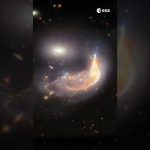
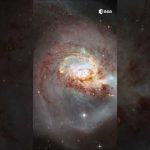
    The distorted spiral galaxy at the centre, the Penguin, and the compact elliptical galaxy at the left, the Egg, are locked in an active embrace. A new near- and mid-infrared image from the James Webb Space Telescope, taken to mark its second year of science, shows that their interaction is marked by a faint upside-down U-shaped blue glow.

    The pair, known jointly as Arp 142, made their first pass between 25 and 75 million years ago — causing ‘fireworks’, or new star formation, in the Penguin. In the most extreme cases, mergers can cause galaxies to form thousands of new stars per year for a few million years. For the Penguin, research has shown that about 100 to 200 stars have formed per year. By comparison, our Milky Way galaxy (which is not interacting with a galaxy of the same size) forms roughly six to seven new stars per year.

    Arp 142 lies 326 million light-years from Earth in the constellation Hydra.

    Credit: NASA, ESA, CSA, STScI, N. Bartmann (ESA/Webb)

    #ESA #Webb #Universe

  • Zoom into the Horsehead Nebula 🔎 #shorts

    Zoom into the Horsehead Nebula 🔎 #shorts

    This video takes the viewer on a journey through space to reveal a new image from the NASA/ESA/CSA James Webb Space Telescope, the Horsehead Nebula.

    This zoom video features three unique views of the Horsehead Nebula, including images from as ESA’s Euclid telescope, the NASA/ESA Hubble Space Telescope’s infrared view of the object, and finally revealing the new image from Webb’s NIRCam (Near-InfraRed Camera) instrument. It is the sharpest infrared image of the object to date, showing a part of the iconic nebula in a whole new light, and capturing its complexity with unprecedented spatial resolution. You can learn more about this new image here.

    Credit: ESA/Webb, NASA, CSA, K. Misselt (University of Arizona) and A. Abergel (IAS/University Paris-Saclay, CNRS)
    Music: Stellardrone – The Night Sky in Motion

    #ESA #Webb #HorseheadNebula

  • Zoom Into the Southern Ring Nebula ✨ #shorts

    Zoom Into the Southern Ring Nebula ✨ #shorts

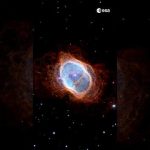
    This video zooms through space to reveal Webb’s Near-Infrared Camera (NIRCam) image of the Southern Ring Nebula.

    The bright star at the centre of NGC 3132, while prominent when viewed by the NASA/ESA/CSA James Webb Telescope in near-infrared light, plays a supporting role in sculpting the surrounding nebula. A second star, barely visible at lower left along one of the bright star’s diffraction spikes, is the nebula’s source. It has ejected at least eight layers of gas and dust over thousands of years.

    Data from Webb’s Near-Infrared Camera (NIRCam) were used to make this extremely detailed image. It is teeming with scientific information — and research will begin following its release.

    Credit: NASA, ESA, CSA, STScI, and the Webb ERO Production Team
    Music: Tonelabs – Happy Hubble

    #ESA #Webb #Space

  • Zoom Into Pandora’s Cluster ✨ #shorts

    Zoom Into Pandora’s Cluster ✨ #shorts

    Astronomers estimate 50 000 sources of near-infrared light are represented in this image from the NASA/ESA/CSA James Webb Space Telescope. Their light has travelled through various distances to reach the telescope’s detectors, representing the vastness of space in a single image. A foreground star in our own galaxy, to the right of the image centre, displays Webb’s distinctive diffraction spikes. Bright white sources surrounded by a hazy glow are the galaxies of Pandora’s Cluster, a conglomeration of already-massive clusters of galaxies coming together to form a mega cluster. The concentration of mass is so great that the fabric of spacetime is warped by gravity, creating a natural, super-magnifying glass called a ‘gravitational lens’ that astronomers can use to see very distant sources of light beyond the cluster that would otherwise be undetectable, even to Webb.

    Credit: ESA/Webb, NASA & CSA, P. Kelly, Dark Energy NASA, ESA, CSA, I. Labbe (Swinburne University of Technology), R. Bezanson (University of Pittsburgh), A. Pagan (STScI). Dark Energy Survey/DOE/FNAL/NOIRLab/NSF/AURA, DSS, N. Bartmann, E. Slawik, N. Risinger, D. de Martin, M. Zamani
    Music: Tonelabs – The Red North

    #ESA #Webb #Space

  • Zoom: Seeing Triple ✨ #shorts

    Zoom: Seeing Triple ✨ #shorts

    This video from the NASA/ESA/CSA James Webb Space Telescope takes the viewer on a journey through space to the location of the massive galaxy cluster RX J2129. Due to Gravitational lensing, this observation contains three different images of the same supernova-hosting galaxy. Gravitational lensing occurs when a massive celestial body causes a sufficient curvature of spacetime to bend the path of light travelling past or through it, almost like a vast lens. In this case, the lens is the galaxy cluster RX J2129, located around 3.2 billion light-years from Earth in the constellation Aquarius.

    Credit: ESA/Webb, NASA & CSA, P. Kelly, Dark Energy Survey/DOE/FNAL/NOIRLab/NSF/AURA, DSS, N. Bartmann (ESA/Webb), E. Slawik, N. Risinger, D. de Martin (ESA/Webb), M. Zamani (ESA/Webb)
    Music: Tonelabs – The Red North

    #ESA #Webb #Space

  • Hubble and Webb’s views of the Crab Nebula 🤩 #shorts

    Hubble and Webb’s views of the Crab Nebula 🤩 #shorts

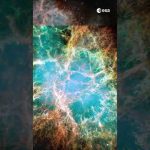
    The first image shown in this video is the 2005 Hubble optical wavelength image of the Crab Nebula. This is followed by a new image of the object from the James Webb Space Telescope’s NIRCam (Near-Infrared Camera) and MIRI (Mid-Infrared Instrument) instruments that has revealed new details in infrared light.

    In Webb’s infrared observation, a crisp, cage-like structure of fluffy red-orange filaments and knots of dust surround the object’s central area. However, some aspects of the inner workings of the Crab Nebula become more prominent and increase in detail in infrared light. In particular, Webb highlights what is known as synchrotron emission, seen here with a milky smoke-like appearance throughout the majority of the Crab Nebula’s interior.

    Credit: NASA, ESA, CSA, STScI, T. Temim (Princeton University), N. Bartmann (ESA/Webb), A. Loll/J. Hester (Arizona State University)
    Music: Stellardrone – The Night Sky in Motion

    #ESA
    #Webb
    #Space

  • Zoom into the Crab Nebula 🔍 #shorts

    Zoom into the Crab Nebula 🔍 #shorts

    This video takes the viewer on a cosmic journey to the Crab Nebula.

    The new image of the object revealed at the end from NASA/ESA/CSA James Webb Space Telescope was captured by the NIRCam (Near-Infrared Camera) and MIRI (Mid-Infrared Instrument) instruments to reveal new details in infrared light.

    Credit: ESA/Webb, NASA, CSA, STScI, KPNO/NOIRLab, ESO, Digitized Sky Survey 2, N. Bartmann (ESA/Webb), N. Risinger, D. De Martin (ESA/Hubble), M. Zamani (ESA/Webb)
    Music: Tonelabs – The Red North

    #ESA
    #Webb
    #Space

  • Zoom into the Cartwheel Galaxy 🔍 #shorts

    Zoom into the Cartwheel Galaxy 🔍 #shorts

    This video takes the viewer on a journey that zooms through space to reveal the Cartwheel Galaxy.

    This image of the Cartwheel and its companion galaxies is a composite from Webb’s Near-Infrared Camera (NIRCam) and Mid-Infrared Instrument (MIRI), which reveals details that are difficult to see in the individual images alone.

    Webb’s observations capture Cartwheel in a very transitory stage. The form that the Cartwheel Galaxy will eventually take, given these two competing forces, is still a mystery. However, this snapshot provides perspective on what happened to the galaxy in the past and what it will do in the future.

    Credits: ESA/Webb, NASA, CSA, STScI, Dark Energy Survey/DOE/FNAL/DECam/CTIO/NOIRLab/NSF/AURA, E. Slawik, N. Risinger, N. Bartmann, M. Zamani
    Music: tonelabs – Happy Hubble

    ★ Subscribe: http://bit.ly/ESAsubscribe and click twice on the bell button to receive our notifications.

    Check out our full video catalog: http://bit.ly/SpaceInVideos
    Follow us on Twitter: http://bit.ly/ESAonTwitter
    On Facebook: http://bit.ly/ESAonFacebook
    On Instagram: http://bit.ly/ESAonInstagram
    On LinkedIn: https://bit.ly/ESAonLinkedIn
    On Pinterest: https://bit.ly/ESAonPinterest
    On Flickr: http://bit.ly/ESAonFlickr

    We are Europe’s gateway to space. Our mission is to shape the development of Europe’s space capability and ensure that investment in space continues to deliver benefits to the citizens of Europe and the world. Check out https://www.esa.int/ to get up to speed on everything space related.

    Copyright information about our videos is available here: https://www.esa.int/ESA_Multimedia/Terms_and_Conditions

    #ESA
    #Webb
    #Space

  • Zoom into NGC 3132 🔍 #shorts

    Zoom into NGC 3132 🔍 #shorts

    This video zooms through space to reveal Webb’s Near-Infrared Camera (NIRCam) image of the Southern Ring Nebula.

    The bright star at the centre of NGC 3132, while prominent when viewed by the NASA/ESA/CSA James Webb Telescope in near-infrared light, plays a supporting role in sculpting the surrounding nebula. A second star, barely visible at lower left along one of the bright star’s diffraction spikes, is the nebula’s source. It has ejected at least eight layers of gas and dust over thousands of years.

    Data from Webb’s Near-Infrared Camera (NIRCam) were used to make this extremely detailed image. It is teeming with scientific information — and research will begin following its release.

    Credits: NASA, ESA, CSA, STScI, and the Webb ERO Production Team
    Music: tonelabs – Happy Hubble

    ★ Subscribe: http://bit.ly/ESAsubscribe and click twice on the bell button to receive our notifications.

    Check out our full video catalog: http://bit.ly/SpaceInVideos
    Follow us on Twitter: http://bit.ly/ESAonTwitter
    On Facebook: http://bit.ly/ESAonFacebook
    On Instagram: http://bit.ly/ESAonInstagram
    On LinkedIn: https://bit.ly/ESAonLinkedIn
    On Pinterest: https://bit.ly/ESAonPinterest
    On Flickr: http://bit.ly/ESAonFlickr

    We are Europe’s gateway to space. Our mission is to shape the development of Europe’s space capability and ensure that investment in space continues to deliver benefits to the citizens of Europe and the world. Check out https://www.esa.int/ to get up to speed on everything space related.

    Copyright information about our videos is available here: https://www.esa.int/ESA_Multimedia/Terms_and_Conditions

    #ESA
    #Webb
    #Space

  • Webb detects water vapour 370 light-years away 💧 #shorts

    Webb detects water vapour 370 light-years away 💧 #shorts

    Scientists are on a quest to understand how water, the foundation of life as we know it, reaches distant planets. The PDS 70 system, with its inner and outer discs hosting gas-giant planets, holds intriguing clues. Recently, MIRI, part of the James Webb Space Telescope, detected water vapor in the inner disc at distances less than 160 million km from the star – a zone where rocky, Earth-like planets may be taking shape!

    This discovery is groundbreaking, as it delves into the region where terrestrial planets typically form. The PDS 70 star is relatively old, yet it surprisingly harbors water vapor, offering the raw materials needed for rocky world construction. But where did the water come from? Could it be forming in place or transported from the outer disc?

    The PDS 70 system’s secrets await further exploration, and Webb’s NIRCam and NIRSpec instruments will soon dive deeper into this fascinating cosmic phenomenon. As we unlock the mysteries of water in space, we inch closer to understanding the origins of life beyond our own planet.

    📹 ESA – European Space Agency

    ★ Subscribe: http://bit.ly/ESAsubscribe and click twice on the bell button to receive our notifications.

    Check out our full video catalog: http://bit.ly/SpaceInVideos
    Follow us on Twitter: http://bit.ly/ESAonTwitter
    On Facebook: http://bit.ly/ESAonFacebook
    On Instagram: http://bit.ly/ESAonInstagram
    On LinkedIn: https://bit.ly/ESAonLinkedIn
    On Pinterest: https://bit.ly/ESAonPinterest
    On Flickr: http://bit.ly/ESAonFlickr

    We are Europe’s gateway to space. Our mission is to shape the development of Europe’s space capability and ensure that investment in space continues to deliver benefits to the citizens of Europe and the world. Check out https://www.esa.int/ to get up to speed on everything space related.

    Copyright information about our videos is available here: https://www.esa.int/ESA_Multimedia/Terms_and_Conditions

    #ESA
    #CosmicDiscoveries
    #JamesWebbTelescope

  • Zoom into Rho Ophiuchi cloud complex 🔍 #shorts

    Zoom into Rho Ophiuchi cloud complex 🔍 #shorts

    This video takes the viewer on a journey through space to the Rho Ophiuchi cloud complex.

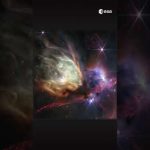
    From our cosmic backyard in the Solar System to distant galaxies near the dawn of time, the NASA/ESA/CSA James Webb Space Telescope has delivered on its promise of revealing the Universe like never before in its first year of science operations. To celebrate the completion of a successful first year, a new Webb image has been released of a small star-forming region in the Rho Ophiuchi cloud complex. While the region is relatively quiet, its proximity at 390 light-years makes for a highly detailed close-up, with no foreground stars in the intervening space.

    Learn more about this image here. 👉 https://www.esa.int/Science_Exploration/Space_Science/Webb/Webb_celebrates_first_year_of_science_with_close-up_on_the_birth_of_Sun-like_stars

    Credits: ESA/Webb, NASA, ESA, CSA, JPL-Caltech/Harvard-Smithsonian CfA, DSS2, N. Bartmann (ESA/Webb), E. Slawik, N. Risinger, D. de Martin, M. Zamani (ESA/Webb), K. Pontoppidan (STScI), A. Pagan (STScI)

    Music: Tonelabs – The Red North

    ★ Subscribe: http://bit.ly/ESAsubscribe and click twice on the bell button to receive our notifications.

    Check out our full video catalog: http://bit.ly/SpaceInVideos
    Follow us on Twitter: http://bit.ly/ESAonTwitter
    On Facebook: http://bit.ly/ESAonFacebook
    On Instagram: http://bit.ly/ESAonInstagram
    On LinkedIn: https://bit.ly/ESAonLinkedIn
    On Pinterest: https://bit.ly/ESAonPinterest
    On Flickr: http://bit.ly/ESAonFlickr

    We are Europe’s gateway to space. Our mission is to shape the development of Europe’s space capability and ensure that investment in space continues to deliver benefits to the citizens of Europe and the world. Check out https://www.esa.int/ to get up to speed on everything space related.

    Copyright information about our videos is available here: https://www.esa.int/ESA_Multimedia/Terms_and_Conditions

    #ESA
    #Webb
    #Space

  • Zoom into NGC 3256 🔍 #shorts

    Zoom into NGC 3256 🔍 #shorts

    This video takes the viewer on a journey through space to the peculiar galaxy NGC 3256.

    This distorted galaxy is the wreckage of a head-on collision between two spiral galaxies which likely occurred 500 million years ago, and it is studded with clumps of young stars which were formed as gas and dust from the two galaxies collided.

    Learn more about this image here. 👉 https://esawebb.org/images/potm2306a/

    Credits: ESA/Webb, NASA & CSA, L. Armus, N. Bartmann (ESA/Webb)

    Music: Tonelabs – The Red North

    ★ Subscribe: http://bit.ly/ESAsubscribe and click twice on the bell button to receive our notifications.

    Check out our full video catalog: http://bit.ly/SpaceInVideos
    Follow us on Twitter: http://bit.ly/ESAonTwitter
    On Facebook: http://bit.ly/ESAonFacebook
    On Instagram: http://bit.ly/ESAonInstagram
    On LinkedIn: https://bit.ly/ESAonLinkedIn
    On Pinterest: https://bit.ly/ESAonPinterest
    On Flickr: http://bit.ly/ESAonFlickr

    We are Europe’s gateway to space. Our mission is to shape the development of Europe’s space capability and ensure that investment in space continues to deliver benefits to the citizens of Europe and the world. Check out https://www.esa.int/ to get up to speed on everything space related.

    Copyright information about our videos is available here: https://www.esa.int/ESA_Multimedia/Terms_and_Conditions

    #ESA
    #Webb
    #Space

  • Zoom into NGC 5068 🔍 #shorts

    Zoom into NGC 5068 🔍 #shorts

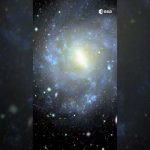
    This video takes the viewers on a journey to the barred spiral galaxy NGC 5068, whose bright central bar is visible in the upper left of this image. NGC 5068 lies around 17 million light-years from Earth in the constellation Virgo.

    With its ability to peer through the gas and dust enshrouding newborn stars, the NASA/ESA/CSA James Webb Space Telescope is the perfect telescope to explore the processes governing star formation. Stars and planetary systems are born amongst swirling clouds of gas and dust that are opaque to visible-light observatories like Hubble or the VLT. The keen vision at infrared wavelengths of two of Webb’s instruments — MIRI and NIRCam — allowed astronomers to see right through the gargantuan clouds of dust in NGC 5068 and capture the processes of star formation as they happened. This image combines the capabilities of these two instruments, providing a truly unique look at the composition of NGC 5068.

    You can learn more about this image here 👉 https://esawebb.org/images/potm2305a/

    Credit: ESA/Webb, NASA, CSA, J. Lee and the PHANGS-JWST Team, Dark Energy Survey/DOE/FNAL/NOIRLab/NSF/AURA, DSS, N. Bartmann (ESA/Webb), E. Slawik, N. Risinger, D. de Martin (ESA/Webb), M. Zamani (ESA/Webb)

    Music: Tonelabs – The Red North

    ★ Subscribe: http://bit.ly/ESAsubscribe and click twice on the bell button to receive our notifications.

    Check out our full video catalog: http://bit.ly/SpaceInVideos
    Follow us on Twitter: http://bit.ly/ESAonTwitter
    On Facebook: http://bit.ly/ESAonFacebook
    On Instagram: http://bit.ly/ESAonInstagram
    On LinkedIn: https://bit.ly/ESAonLinkedIn
    On Pinterest: https://bit.ly/ESAonPinterest
    On Flickr: http://bit.ly/ESAonFlickr

    We are Europe’s gateway to space. Our mission is to shape the development of Europe’s space capability and ensure that investment in space continues to deliver benefits to the citizens of Europe and the world. Check out https://www.esa.int/ to get up to speed on everything space related.

    Copyright information about our videos is available here: https://www.esa.int/ESA_Multimedia/Terms_and_Conditions

    #ESA
    #Webb
    #Space

  • We found water in rare main belt comet ☄️ #shorts

    We found water in rare main belt comet ☄️ #shorts

    The @NASA/@EuropeanSpaceAgency/@canadianspaceagency James Webb Space Telescope has enabled astronomers get one step closer to the answer by allowing them to detect water vapour around a comet in the main asteroid belt for the first time.

    However, the successful detection of water comes with a new puzzle… 👉 https://www.esa.int/Science_Exploration/Space_Science/Webb/Webb_finds_water_and_a_new_mystery_in_rare_main-belt_comet

    🎥 @EuropeanSpaceAgency

    ★ Subscribe: http://bit.ly/ESAsubscribe and click twice on the bell button to receive our notifications.

    Check out our full video catalog: http://bit.ly/SpaceInVideos
    Follow us on Twitter: http://bit.ly/ESAonTwitter
    On Facebook: http://bit.ly/ESAonFacebook
    On Instagram: http://bit.ly/ESAonInstagram
    On LinkedIn: https://bit.ly/ESAonLinkedIn
    On Pinterest: https://bit.ly/ESAonPinterest
    On Flickr: http://bit.ly/ESAonFlickr

    We are Europe’s gateway to space. Our mission is to shape the development of Europe’s space capability and ensure that investment in space continues to deliver benefits to the citizens of Europe and the world. Check out https://www.esa.int/ to get up to speed on everything space related.

    Copyright information about our videos is available here: https://www.esa.int/ESA_Multimedia/Terms_and_Conditions

    #ESA
    #Webb
    #Space

  • Zoom Into Wolf-Rayet 124 | A Star in Transition ⭐ #shorts

    Zoom Into Wolf-Rayet 124 | A Star in Transition ⭐ #shorts

    This video takes the viewer on a journey through space to one of Webb’s first observations in 2022, the Wolf-Rayet star WR 124, seen here in unprecedented detail.

    Despite being the scene of an impending stellar ‘death’, astronomers also look to Wolf-Rayet stars for insights into new beginnings. Cosmic dust is forming in the turbulent nebulas surrounding these stars, dust that is composed of the heavy-element building blocks of the modern Universe, including life on Earth.

    Credit: NASA, ESA, CSA, STScI, Webb ERO Production Team, DSS, N. Bartmann (ESA/Webb), E. Slawik, N. Risinger, D. de Martin (ESA/Webb), M. Zamani (ESA/Webb)
    Music: Tonelabs – The Red North (www.tonelabs.com)

    ★ Subscribe: http://bit.ly/ESAsubscribe and click twice on the bell button to receive our notifications.

    Check out our full video catalog: http://bit.ly/SpaceInVideos
    Follow us on Twitter: http://bit.ly/ESAonTwitter
    On Facebook: http://bit.ly/ESAonFacebook
    On Instagram: http://bit.ly/ESAonInstagram
    On LinkedIn: https://bit.ly/ESAonLinkedIn
    On Pinterest: https://bit.ly/ESAonPinterest
    On Flickr: http://bit.ly/ESAonFlickr

    We are Europe’s gateway to space. Our mission is to shape the development of Europe’s space capability and ensure that investment in space continues to deliver benefits to the citizens of Europe and the world. Check out https://www.esa.int/ to get up to speed on everything space related.

    Copyright information about our videos is available here: https://www.esa.int/ESA_Multimedia/Terms_and_Conditions

    #ESA
    #Star
    #Webb

  • ESA Preview 2023

    ESA Preview 2023

    At the start of 2023 the European Space Agency ESA is happily looking forward to another year filled with a host of thrilling new missions, cutting edge science and the continued effort to guarantee independent access to space for Europe. We will see the first images of the first Meteosat Third Generation satellite, the launch of the Jupiter Icy Moons Explorer, and of Euclid and another Sentinel-1 satellite launch. It will also be the year of Ariane 6 which will make its inaugural flight and the first Dane in space, Andreas Mogensen will return to the ISS as the new astronaut-candidates commence their training. Near the end of the year the second Space Summit will further cement ESA’s ambitions for Space in Europe.

    ★ Subscribe: http://bit.ly/ESAsubscribe and click twice on the bell button to receive our notifications.

    Check out our full video catalog: http://bit.ly/SpaceInVideos
    Follow us on Twitter: http://bit.ly/ESAonTwitter
    On Facebook: http://bit.ly/ESAonFacebook
    On Instagram: http://bit.ly/ESAonInstagram
    On LinkedIn: https://bit.ly/ESAonLinkedIn
    On Pinterest: https://bit.ly/ESAonPinterest
    On Flickr: http://bit.ly/ESAonFlickr

    We are Europe’s gateway to space. Our mission is to shape the development of Europe’s space capability and ensure that investment in space continues to deliver benefits to the citizens of Europe and the world. Check out https://www.esa.int/ to get up to speed on everything space related.

    Copyright information about our videos is available here: https://www.esa.int/ESA_Multimedia/Terms_and_Conditions

    #ESA
    #2023
    #Space

  • Another first for Webb‼️ 🟣 #shorts

    Another first for Webb‼️ 🟣 #shorts

    While Webb and other space telescopes, including the NASA/ESA Hubble Space Telescope, have previously revealed isolated ingredients of this heated planet’s atmosphere, the new readings provide a full menu of atoms, molecules, and even signs of active chemistry and clouds. The latest data also give a hint of how these clouds might look up close: broken up rather than as a single, uniform blanket over the planet.

    📹 @EuropeanSpaceAgency

    📸 @NASA, ESA, @canadianspaceagency , J. Olmsted (STS)

    ★ Subscribe: http://bit.ly/ESAsubscribe and click twice on the bell button to receive our notifications.

    Check out our full video catalog: http://bit.ly/SpaceInVideos
    Follow us on Twitter: http://bit.ly/ESAonTwitter
    On Facebook: http://bit.ly/ESAonFacebook
    On Instagram: http://bit.ly/ESAonInstagram
    On LinkedIn: https://bit.ly/ESAonLinkedIn
    On Pinterest: https://bit.ly/ESAonPinterest
    On Flickr: http://bit.ly/ESAonFlickr

    We are Europe’s gateway to space. Our mission is to shape the development of Europe’s space capability and ensure that investment in space continues to deliver benefits to the citizens of Europe and the world. Check out https://www.esa.int/ to get up to speed on everything space related.

    Copyright information about our videos is available here: https://www.esa.int/ESA_Multimedia/Terms_and_Conditions

    #ESA
    #Webb
    #ExoPlanet

  • The James Webb Space Telescope captures Neptune’s rings #shorts

    The James Webb Space Telescope captures Neptune’s rings #shorts

    Most striking about Webb’s new image is the crisp view of the planet’s dynamic rings — some of which haven’t been seen at all, let alone with this clarity, since the Voyager 2 flyby in 1989. In addition to several bright narrow rings, the Webb images clearly show Neptune’s fainter dust bands. Webb’s extremely stable and precise image quality also permits these very faint rings to be detected so close to Neptune.

    Download these images: https://esawebb.org/news/weic2214/

    ★ Subscribe: http://bit.ly/ESAsubscribe and click twice on the bell button to receive our notifications.

    Check out our full video catalog: http://bit.ly/SpaceInVideos
    Follow us on Twitter: http://bit.ly/ESAonTwitter
    On Facebook: http://bit.ly/ESAonFacebook
    On Instagram: http://bit.ly/ESAonInstagram
    On LinkedIn: https://bit.ly/ESAonLinkedIn
    On Pinterest: https://bit.ly/ESAonPinterest
    On Flickr: http://bit.ly/ESAonFlickr

    We are Europe’s gateway to space. Our mission is to shape the development of Europe’s space capability and ensure that investment in space continues to deliver benefits to the citizens of Europe and the world. Check out https://www.esa.int/ to get up to speed on everything space related.

    Copyright information about our videos is available here: https://www.esa.int/ESA_Multimedia/Terms_and_Conditions

    #ESA
    #Webb
    #Astronomy