Tag: Jupiter

  • Ep.17 Conjuncția lui Jupiter și Saturn, pe 21 decembrie 2020. Ce se va întâmpla?

    Ep.17 Conjuncția lui Jupiter și Saturn, pe 21 decembrie 2020. Ce se va întâmpla?

    💲 Devino membru ►https://bit.ly/35Q8vXC
    💲 Sustine-ne ►https://patreon.com/cristianpresura
    ⭐Distribuie pe Instagram! https://joinsnippet.com/

    Urmareste aici toata #seriacool din care acest video face parte:
    https://www.youtube.com/playlist?list=PLcod69NUBSYiWVp2QL98wG0hTZYO1JL7X

    Aceste videoclipuri sunt editate și conțin materiale precum animații/muzică realizate de Radu Ungureanu Grozea . ❗Instagram ► raduungureanu1996

    ❗Discord ► https://www.discord.gg/presura
    ❗Instagram ► https://www.instagram.com/cristianpresura/
    ❗Facebook ► https://www.facebook.com/presura
    ❗Facebook page ► https://www.facebook.com/pg/stiintaclub/posts/

    🔊 Spotify Podcast ► https://spoti.fi/3dbvYo6
    🔊 MixCloud Podcas ► https://www.mixcloud.com/StiintaClub/

    📙 Carte ► “O calatorie prin Univers”: https://bit.ly/3pdOfGp
    📙 Cartea ► “Fizica Povestita”: https://bit.ly/2YsKaAc
    📙 Carte ► “Care e diferența dintre un copil și un laptop?” https://bit.ly/3h4auLZ

  • Gravity Assist: Why Icy Moons are So Juicy, with Athena Coustenis

    Gravity Assist: Why Icy Moons are So Juicy, with Athena Coustenis

    Listen to the full episode of this podcast and subscribe at: https://www.nasa.gov/gravityassist
    For decades, moons of the outer solar system have proven fascinating subjects for scientists interested in the search for life. Forty years ago this year, NASA’s Voyager 1 spacecraft flew by Saturn’s moon Titan and took the first close images, revealing a thick orange-colored atmosphere that is the most Earth-like in the solar system. NASA’s Cassini probe then dropped off a lander at Titan called Huygens in 2004, and studied Titan in detail during its 13 years at Saturn. Now, NASA is preparing to launch the rotorcraft mission Dragonfly to Titan in the 2020s. But Titan is just one interesting moon. The European Space Agency’s upcoming JUpiter ICy moons Explorer (JUICE) mission will study Ganymede, Europa, and another moon of Jupiter called Callisto. Meanwhile, NASA’s Europa Clipper mission will provide complementary observations of Europa.

  • Testing Orion’s “Powerhouse” on This Week @NASA – August 9, 2019

    Testing Orion’s “Powerhouse” on This Week @NASA – August 9, 2019

    A critical test of the “powerhouse” for our Orion spacecraft, Curiosity is still going strong after seven Earth years on Mars, and Hubble’s new portrait of Jupiter … a few of the stories to tell you about – This Week at NASA!

    This video is available for download from NASA’s Image and Video Library: https://images.nasa.gov/details-NHQ_2019_0809_Testing%20Orion%E2%80%99s%20%E2%80%9CPowerhouse%E2%80%9D%20on%20This%20Week%20@NASA%20-%20August%209,%202019.html

  • Low 3-D Flyover of Jupiter’s North Pole in Infrared

    Low 3-D Flyover of Jupiter’s North Pole in Infrared

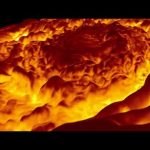
    In this animation the viewer is taken low over Jupiter’s north pole to illustrate the 3-D aspects of the region’s central cyclone and the eight cyclones that encircle it.
    Read more: https://www.nasa.gov/feature/jpl/nasa-s-juno-mission-provides-infrared-tour-of-jupiter-s-north-pole
    The movie utilizes imagery derived from data collected by the Jovian Infrared Auroral Mapper (JIRAM) instrument aboard NASA’s Juno mission during its fourth pass over the massive planet. Infrared cameras are used to sense the temperature of Jupiter’s atmosphere and provide insight into how the powerful cyclones at Jupiter’s poles work. In the animation, the yellow areas are warmer (or deeper into Jupiter’s atmosphere) and the dark areas are colder (or higher up in Jupiter’s atmosphere). In this picture the highest “brightness temperature” is around 260K (about -13°C) and the lowest around 190K (about -83°C). The “brightness temperature” is a measurement of the radiance, at 5 µm, traveling upward from the top of the atmosphere towards Juno, expressed in units of temperature.
    Credit: NASA/JPL-Caltech/SwRI/ASI/INAF/JIRAM

  • NASA’s Juno Spacecraft Reveals the Depth of Jupiter’s Colored Bands

    NASA’s Juno Spacecraft Reveals the Depth of Jupiter’s Colored Bands

    For hundreds of years, this gaseous giant planet appeared shrouded in colorful bands of clouds extending from dusk to dawn, referred to as zones and belts. Story: https://www.nasa.gov/feature/jpl/nasa-juno-findings-jupiter-s-jet-streams-are-unearthly

    The bands were thought to be an expression of Jovian weather, related to winds blowing eastward and westward at different speeds.

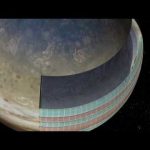
    This animation illustrates a recent discovery by Juno that demonstrates these east-west flows, also known as jet-streams penetrate deep into the planet’s atmosphere, to a depth of about 1,900 miles (3,000 kilometers). Due to Jupiter’s rapid rotation (Jupiter’s day is about 10 hours), these flows extend into the interior parallel to Jupiter’s axis of rotation, in the form of nested cylinders. Below this layer the flows decay, possibly slowed by Jupiter’s strong magnetic field.

    The depth of these flows surprised scientists who estimate the total mass involved in these jet streams to be about 1% of Jupiter’s mass (Jupiter’s mass is over 300 times that of Earth). This discovery was revealed by the unprecedented accuracy of Juno’s measurements of the gravity field.

    Credit: NASA/JPL-Caltech/SwRI/ASI

  • Fly into the Great Red Spot of Jupiter with NASA’s Juno Mission

    Fly into the Great Red Spot of Jupiter with NASA’s Juno Mission

    This animation takes the viewer on a simulated flight into, and then out of, Jupiter’s upper atmosphere at the location of the Great Red Spot. It was created by combining an image from the JunoCam imager on NASA’s Juno spacecraft with a computer-generated animation.

    The perspective begins about 2,000 miles (3,000 kilometers) above the cloud tops of the planet’s southern hemisphere. The bar at far left indicates altitude during the quick descent; a second gauge next to that depicts the dramatic increase in temperature that occurs as the perspective dives deeper down. The clouds turn crimson as the perspective passes through the Great Red Spot. Finally, the view ascends out of the spot.

    For more, visit https://www.nasa.gov/feature/jpl/nasas-juno-probes-the-depths-of-jupiters-great-red-spot

  • NASA Reveals New Discoveries on Oceans Beyond Earth During Science Briefing

    NASA Reveals New Discoveries on Oceans Beyond Earth During Science Briefing

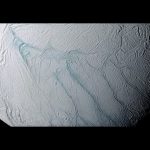
    During a NASA science briefing on April 13, representatives from the agency discussed new results about ocean worlds in our solar system based on data gathered by NASA’s Cassini spacecraft and the Hubble Space Telescope.

    The two veteran missions are providing tantalizing new details about icy, ocean-bearing moons of Jupiter and Saturn, further enhancing the scientific interest of these and other “ocean worlds” in our solar system and beyond.

    New research from Cassini indicates that hydrogen gas, which could potentially provide a chemical energy source for life, is pouring into the ocean of Saturn’s icy moon Enceladus from hydrothermal vents in the seafloor. The Cassini spacecraft detected the hydrogen in the plume of gas and icy material spraying from Enceladus during its deepest dive through the plume on Oct. 28, 2015.This means that ocean microbes — if any exist there — could use the hydrogen to produce energy

    NASA’s Hubble Space Telescope saw a probable plume of material erupting from the moon’s surface on 2016, at the same location where Hubble saw evidence of a plume in 2014. These images bolster evidence that the Europa plumes could be a real phenomenon, flaring up intermittently in the same region on the moon’s surface.

    Both Cassini and Hubble investigations are laying the groundwork for NASA’s Europa Clipper mission, which is being planned for launch in the 2020s.

  • Juice’s journey to Jupiter

    Juice’s journey to Jupiter

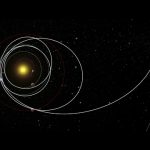
    This animation shows the proposed trajectory of ESA’s Jupiter Icy Moons Explore (Juice) mission to Jupiter.

    Based on a launch in June 2022, the spacecraft will make a series of gravity-assist flybys at Earth (May 2023, September 2024 and November 2026), Venus (October 2023) and Mars (February 2025) before arriving in the Jupiter system in October 2029.

    The animation ends at the Jupiter orbit insertion point, but the planned 3.5 year mission will see Juice not only orbit Jupiter, but also make dedicated flybys of the moons Europa, Callisto and Ganymede, before orbiting the largest moon, Ganymede.

    More about Juice:
    http://sci.esa.int/juice/

  • NASA Updates Status of Mission to Jupiter

    NASA Updates Status of Mission to Jupiter

    Team members of NASA’s Juno mission to Jupiter discussed the latest science results, an amateur imaging processing campaign, and the recent decision to postpone a scheduled burn of the spacecraft’s main engine, during a media briefing on Oct. 19. The agency’s Juno spacecraft entered orbit around Jupiter on July 4. On Aug. 27, it performed its first close flyby of the planet. It was the first time Juno had its entire suite of science instruments activated and observing the planet as the spacecraft zoomed past.

  • Second ISS Spacewalk in Two Weeks on This Week @NASA – September 2, 2016

    Second ISS Spacewalk in Two Weeks on This Week @NASA – September 2, 2016

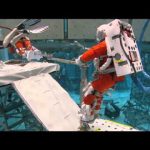
    Outside the International Space Station, Expedition 48 Commander Jeff Williams and Flight Engineer Kate Rubins of NASA conducted a spacewalk Sept. 1 to retract a thermal radiator, install the first of several enhanced high definition cameras on the station’s truss and tighten bolts on a joint that enables one of the station’s solar arrays to rotate. This was the second spacewalk for the pair in just 13 days. They installed the station’s first international docking adapter during their previous spacewalk on Aug. 19. The adapter will provide a parking place for new U.S. commercial crew spacecraft delivering astronauts to the station on future missions. Also, Space Station Cameras Capture Hurricanes, Future Space Station Crews Prepare for Missions, Record-Breaking Galaxy Cluster Discovered, Up-Close with Jupiter, and more!

  • ESA Euronews: Φως στα μυστικά του Δία

    ESA Euronews: Φως στα μυστικά του Δία

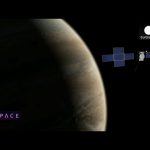
    Καλώς ήλθατε στο νέο επεισόδιο του Space. Προσπαθήστε να φανταστείτε ένα ηλιακό μοντέλο στο οποίο κάποιοι πλανήτες θα έχουν κάτω από την επιφάνεια περισσότερο νερό από ότι υπάρχει στη γη.

    Αυτός είναι ο επόμενος στόχος της Ευρωπαϊκής Υπηρεσίας Διαστήματος. Θα επανέλθουμε στο θέμα, αφού πρώτα μάθουμε κάποια διαστημικά νέα.

  • NASA Center Renamed on This Week @NASA

    NASA Center Renamed on This Week @NASA

    Two giants of aerospace history were honored at a May 13 ceremony to celebrate the renaming of Dryden Flight Research Center to Armstrong Flight Research Center, after the late Neil Armstrong and the naming of the center’s aeronautical test range after Hugh Dryden. Armstrong was the first person to set foot on the moon and a former research test pilot at the center and Dryden served as NASA’s first deputy administrator. Also, Space Station Crews on the Move, Asteroid Mission Gear Tested, Unstoppable Glacier Melt, Exploring Earth’s Magnetic Fields, Shrinking Great Red Spot, Helicopter Drop Test, Technology Transfer University and more!

  • Juno to Jupiter on This Week @NASA

    Juno to Jupiter on This Week @NASA

    The successful liftoff of the Juno spacecraft from the Kennedy Space Center begins a five-year cruise to the planet Jupiter to investigate the planet’s structure, atmosphere and magnetosphere.
    It will also provide detailed images of Jupiter’s surface and capture the first high-resolution views of its poles. Also, possible Martian water flows; Vesta’s new look; oxygen in space; and, Columbia debris. Plus, HQ crew visit; Russians spacewalk; SOFIA ambassadors; new Apollo 15 book; and dunk tank for food.

  • Cosmic Impact: Comet Shoemaker-Levy 9 crashes into Jupiter

    Cosmic Impact: Comet Shoemaker-Levy 9 crashes into Jupiter

    Spectacular images of Jupiter during and after impacts, when over twenty fragments of Comet Shoemaker-Levy 9 smashed into the planet in July 1994.