Tag: Kennedy Space Center

  • Andreas Mogensen’s second mission Huginn soars high

    Andreas Mogensen’s second mission Huginn soars high

    Huginn, ESA astronaut Andreas Mogensen’s second mission to the International Space Station, is now under way. Together with Crew-7, the ESA astronaut was launched on the Crew Dragon spacecraft Endurance on 26 August 2023, at 08:27 BST (09:27 CEST).

    Alongside him are NASA’s Jasmin Moghbeli, Satoshi Furukawa from JAXA, and Konstantin Borisov from Roscosmos. The crew will spend approximately six months on the Space Station, 420 km above Earth.

    This isn’t Andreas’s first journey into space. In 2015, he participated in the 10-day ‘iriss’ mission. However, Huginn marks his first launch from NASA’s Kennedy Space Center in Florida, USA, and his first flight with a Crew Dragon.

    Watch the replay of pivotal moments such as the crew’s arrival at the Kennedy Space Center on 20 August, liftoff, as well as Andreas piloting Crew Dragon on its 11th crewed flight.

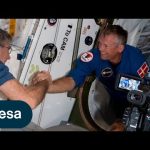
    The journey also included a special passenger, who served as microgravity indicators. After approximately 30 hours, the Crew Dragon approached and docked with the Space Station, where Andreas and his colleagues were greeted by the resident astronauts.

    For more about Andreas and his Huginn mission, visit the Huginn mission page: https://www.esa.int/Science_Exploration/Human_and_Robotic_Exploration/Huginn

    Credits: ESA / NASA / SpaceX

    ★ Subscribe: http://bit.ly/ESAsubscribe and click twice on the bell button to receive our notifications.

    Check out our full video catalog: http://bit.ly/SpaceInVideos
    Follow us on Twitter: http://bit.ly/ESAonTwitter
    On Facebook: http://bit.ly/ESAonFacebook
    On Instagram: http://bit.ly/ESAonInstagram
    On LinkedIn: https://bit.ly/ESAonLinkedIn
    On Pinterest: https://bit.ly/ESAonPinterest
    On Flickr: http://bit.ly/ESAonFlickr

    We are Europe’s gateway to space. Our mission is to shape the development of Europe’s space capability and ensure that investment in space continues to deliver benefits to the citizens of Europe and the world. Check out https://www.esa.int/ to get up to speed on everything space related.

    Copyright information about our videos is available here: https://www.esa.int/ESA_Multimedia/Terms_and_Conditions

    #ESA
    #Crew7
    #AndreasMogensen
  • Artemis I Path to the Pad: Launch and Recovery

    Artemis I Path to the Pad: Launch and Recovery

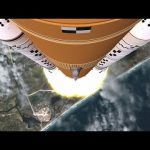
    On Nov. 16, 2022, NASA made history with the launch of our Space Launch System (SLS) rocket and Orion spacecraft – our newest transportation system that will return humans to the Moon. Relive the powerful moment SLS rumbled away from Earth, beginning Orion’s three-week test flight around the Moon, and watch as we document Orion’s splashdown in the Pacific Ocean, closing the first chapter in America’s next deep space exploration story.

    All about Artemis I: https://www.nasa.gov/specials/artemis-i/

    Writer: Danielle Sempsrott
    Editor: Francisco Martin
    Producers: John Sackman, Michael Justice & Madison Tuttle
    Music courtesy of Gothic Storm Music
    Credit: NASA

  • Artemis I Launches to the Moon (Official NASA Recap)

    Artemis I Launches to the Moon (Official NASA Recap)

    NASA’s Artemis I mission lifted off on Nov. 16, 2022, from Kennedy Space Center’s Launch Complex 39B. This video includes highlights from the event.

    With 8.8 million pounds of thrust, the Space Launch System (SLS), is NASA’s most powerful rocket. It will send the uncrewed Orion spacecraft beyond the Moon, 280,000 miles from Earth, farther than any human-rated spacecraft has ever flown.

    After 26 days and a total distance of over a million miles, Orion will return home faster and hotter than any spacecraft has before.

    The primary goals for Artemis I are to demonstrate Orion’s systems in a spaceflight environment and ensure a safe re-entry, descent, splashdown, and recovery prior to the first flight with crew on Artemis II.

    The first in a series of increasingly complex missions, Artemis I will demonstrate our commitment and capability to build a long-term human presence at the Moon for decades to come.

    Learn more at: https://www.nasa.gov/specials/artemis-i/

    Download Link:
    https://images.nasa.gov/details-Artemis%20I%20Launches%20to%20the%20Moon%20(Official%20NASA%20Recap)

    Video Producer: Sonnet Apple
    Music: Universal Production Music
    Credit: NASA

  • Artemis I launch

    Artemis I launch

    The Space Launch System (SLS) rocket with the Orion spacecraft aboard lifted off at 07:47 CET from @NASA’s Kennedy Space Center in Florida, USA on 16 November 2022.

    The most powerful rocket ever built sent NASA’s Orion spacecraft and ESA’s European Service Module (ESM) to a journey beyond the Moon and back. No crew will be on board Orion this time, and the spacecraft will be controlled by teams on Earth.

    ESM provides for all astronauts’ basic needs, such as water, oxygen, nitrogen, temperature control, power and propulsion.

    Much like a train engine pulls passenger carriages and supplies power, the European Service Module will take the Orion capsule to its destination and back.

    Learn more about Artemis I: https://www.esa.int/Science_Exploration/Human_and_Robotic_Exploration/Orion/Artemis_I

    ★ Subscribe: http://bit.ly/ESAsubscribe and click twice on the bell button to receive our notifications.

    Check out our full video catalog: http://bit.ly/SpaceInVideos
    Follow us on Twitter: http://bit.ly/ESAonTwitter
    On Facebook: http://bit.ly/ESAonFacebook
    On Instagram: http://bit.ly/ESAonInstagram
    On LinkedIn: https://bit.ly/ESAonLinkedIn
    On Pinterest: https://bit.ly/ESAonPinterest
    On Flickr: http://bit.ly/ESAonFlickr

    We are Europe’s gateway to space. Our mission is to shape the development of Europe’s space capability and ensure that investment in space continues to deliver benefits to the citizens of Europe and the world. Check out https://www.esa.int/ to get up to speed on everything space related.

    Copyright information about our videos is available here: https://www.esa.int/ESA_Multimedia/Terms_and_Conditions

    #ESA
    #Orion
    #Artemis

  • Samantha Cristoforetti’s second mission highlight | Minerva Mission

    Samantha Cristoforetti’s second mission highlight | Minerva Mission

    ESA astronaut Samantha Cristoforetti will soon complete her second mission to the International Space Station, Minerva.

    She was launched from Kennedy Space Center in late April, and since then has supported many European and international science experiments, as well as taken responsibility for all operations within the US Orbital Segment. In July 2022 she performed her first spacewalk, during which she carried out work in the Russian segment to bring the European Robotic Arm into operation.

    This report provides a summary of the Minerva Mission, which will end shortly with Samantha’s return to Earth.

    Samantha’s personal Twitter: https://twitter.com/AstroSamantha
    Samantha’s personal TikTok: https://www.tiktok.com/@astrosamantha

    ★ Subscribe: http://bit.ly/ESAsubscribe and click twice on the bell button to receive our notifications.

    Check out our full video catalog: http://bit.ly/SpaceInVideos
    Follow us on Twitter: http://bit.ly/ESAonTwitter
    On Facebook: http://bit.ly/ESAonFacebook
    On Instagram: http://bit.ly/ESAonInstagram
    On LinkedIn: https://bit.ly/ESAonLinkedIn
    On Pinterest: https://bit.ly/ESAonPinterest
    On Flickr: http://bit.ly/ESAonFlickr

    We are Europe’s gateway to space. Our mission is to shape the development of Europe’s space capability and ensure that investment in space continues to deliver benefits to the citizens of Europe and the world. Check out https://www.esa.int/ to get up to speed on everything space related.

    Copyright information about our videos is available here: https://www.esa.int/ESA_Multimedia/Terms_and_Conditions

    #ESA
    #MinervaMission
    #SamanthaCristoforetti

  • Crew-4 arrive at Kennedy Space Center

    Crew-4 arrive at Kennedy Space Center

    ESA astronaut Samantha Cristoforetti arrives at @NASA’s Kennedy Space Center in Florida, USA, with @NASA astronauts Kjell Lindgren, Bob Hines and Jessica Watkins on 18 April 2022.

    Collectively known as Crew-4, the astronauts flew in from Houston, Texas, and will spend the next week in quarantine before being launched to the International Space Station on a @SpaceX Crew Dragon spacecraft.

    When they arrive at the Station, Samantha’s Minerva mission will officially begin. This is the second long-duration space mission for Samantha who first flew to the orbital outpost in 2014 for her @AsiTV-sponsored mission Futura.

    Samantha will be welcomed on board by fellow ESA astronaut Matthias Maurer and enjoy a short handover in orbit before Matthias returns to Earth in April as part of Crew-3.

    Throughout her mission, Samantha will hold the role of US Orbital Segment (USOS) lead, taking responsibility for all operations within the US, European, Japanese and Canadian modules and components of the Space Station. She will support around 35 European and many more international experiments in orbit.

    Learn more about Mission Minerva: https://bit.ly/MissionMinerva

    ★ Subscribe: http://bit.ly/ESAsubscribe and click twice on the bell button to receive our notifications.

    Check out our full video catalog: http://bit.ly/SpaceInVideos
    Follow us on Twitter: http://bit.ly/ESAonTwitter
    On Facebook: http://bit.ly/ESAonFacebook
    On Instagram: http://bit.ly/ESAonInstagram
    On LinkedIn: https://bit.ly/ESAonLinkedIn
    On Pinterest: https://bit.ly/ESAonPinterest
    On Flickr: http://bit.ly/ESAonFlickr

    We are Europe’s gateway to space. Our mission is to shape the development of Europe’s space capability and ensure that investment in space continues to deliver benefits to the citizens of Europe and the world. Check out https://www.esa.int/ to get up to speed on everything space related.

    Copyright information about our videos is available here: https://www.esa.int/ESA_Multimedia/Terms_and_Conditions

    #ESA
    #MissionMinerva
    #SamanthaCristoforetti

  • Throwing a Cosmic Kiss – Matthias Maurer’s journey to the International Space Station

    Throwing a Cosmic Kiss – Matthias Maurer’s journey to the International Space Station

    ESA astronaut Matthias Maurer and @NASA astronauts Raja Chari, Tom Marshburn and Kayla Barron liftoff to the International Space Station in the @SpaceX Crew Dragon spacecraft “Endurance”.

    Collectively known as “Crew-3”, the astronauts were launched from launchpad 39A at @NASAKennedy in Florida, USA at 02:03 GMT/03:03 CET Thursday 11 November.

    The spacecraft docked to the International Space Station at 00:32 CET Friday, 12 November/23:32 GMT Thursday, 11 November, marking the official start of Matthias’s first mission ‘Cosmic Kiss’.

    Crew-3 will spend around six months living and working aboard the orbital outpost before returning to Earth. It is the first space mission for Matthias, who’s become the 600th human to fly to space. He chose the name “Cosmic Kiss” for his mission as a declaration of love for space.

    Matthias has a background in materials science and looks forward to supporting a wide range of science and research in orbit. The work he carries out throughout his mission will contribute to the success of future space missions and help enhance life on Earth.

    Follow Matthias: https://bit.ly/ESACosmicKiss

    Credits: ESA/NASA

    ★ Subscribe: http://bit.ly/ESAsubscribe and click twice on the bell button to receive our notifications.

    Check out our full video catalog: http://bit.ly/SpaceInVideos
    Follow us on Twitter: http://bit.ly/ESAonTwitter
    On Facebook: http://bit.ly/ESAonFacebook
    On Instagram: http://bit.ly/ESAonInstagram
    On LinkedIn: https://bit.ly/ESAonLinkedIn
    On Pinterest: https://bit.ly/ESAonPinterest
    On Flickr: http://bit.ly/ESAonFlickr

    We are Europe’s gateway to space. Our mission is to shape the development of Europe’s space capability and ensure that investment in space continues to deliver benefits to the citizens of Europe and the world. Check out https://www.esa.int/ to get up to speed on everything space related.

    Copyright information about our videos is available here: https://www.esa.int/ESA_Multimedia/Terms_and_Conditions

    #ESA
    #CosmicKiss
    #MatthiasMaurer

  • Mission Alpha launch timelapse

    Mission Alpha launch timelapse

    A timelapse from various angles of the launch of @SpaceX Falcon 9 with Crew Dragon Endeavour leaving Earth from Kennedy Space Center in Florida, USA.

    The rocket lifted off at 10:49 BST (11:49 CEST, 05:49 local time) on 23 April 2021 from Launchpad 39A in Cape Canaveral with ESA astronaut Thomas Pesquet, @NASA astronauts Megan McArthur and Shane Kimbrough, and @JAXA | 宇宙航空研究開発機構 astronaut Akihiko Hoshide.
    On 24 April at 11:08 CEST the Crew-2 caught up with the International Space Station and docked with its Harmony module, marking the start of Thomas’ Alpha mission.

    Thomas is the first ESA astronaut to fly in space in a vehicle other than the Russian Soyuz or the US Space Shuttle, and the first ESA astronaut to leave Earth from Florida, USA, in over a decade. This is his second flight, his first mission called Proxima saw Thomas fly to the Space Station on a Soyuz from Baikonur in Kazakhstan and his expedition broke records for amount of hours spent on research at the time.

    Follow Thomas: http://bit.ly/ThomasPesquetBlog

    ★ Subscribe: http://bit.ly/ESAsubscribe and click twice on the bell button to receive our notifications.

    Check out our full video catalog: http://bit.ly/SpaceInVideos
    Follow us on Twitter: http://bit.ly/ESAonTwitter
    On Facebook: http://bit.ly/ESAonFacebook
    On Instagram: http://bit.ly/ESAonInstagram
    On Flickr: http://bit.ly/ESAonFlickr

    We are Europe’s gateway to space. Our mission is to shape the development of Europe’s space capability and ensure that investment in space continues to deliver benefits to the citizens of Europe and the world. Check out https://www.esa.int/ to get up to speed on everything space related.

    Copyright information about our videos is available here: https://www.esa.int/ESA_Multimedia/Terms_and_Conditions

    #ESA
    #ThomasPesquet
    #MissionAlpha

  • Training to docking | Mission Alpha

    Training to docking | Mission Alpha

    Highlights of the launch and first day in space of ESA astronaut Thomas Pesquet on the Alpha mission.

    On 24 April at 11:08 CEST the Crew Dragon spacecraft with ESA astronaut Thomas Pesquet, @NASA astronauts Megan McArthur and Shane Kimbrough, and @JAXA | 宇宙航空研究開発機構 astronaut Akihiko Hoshide docked with the International Space Station’s Node-2 Harmony module, marking the start of ESA’s six-month mission Alpha.

    The crew spent around 23 hours orbiting Earth and catching up with the International Space Station after their launch on 23 April at 10:49 BST (11:49 CEST, 05:49 local time). The launch to docking went smoothly in Crew Dragon Endeavour.

    Thomas is the first ESA astronaut to fly in space in a vehicle other than the Russian Soyuz or the US Space Shuttle, and the first ESA astronaut to leave Earth from Florida, USA, in over a decade. This is his second flight, his first mission called Proxima saw Thomas fly to the Space Station on a Soyuz from Baikonur in Kazakhstan and his expedition broke records for amount of hours spent on research at the time.

    Follow Thomas: http://bit.ly/ThomasPesquetBlog

    ★ Subscribe: http://bit.ly/ESAsubscribe and click twice on the bell button to receive our notifications.

    Check out our full video catalog: http://bit.ly/SpaceInVideos
    Follow us on Twitter: http://bit.ly/ESAonTwitter
    On Facebook: http://bit.ly/ESAonFacebook
    On Instagram: http://bit.ly/ESAonInstagram
    On Flickr: http://bit.ly/ESAonFlickr

    We are Europe’s gateway to space. Our mission is to shape the development of Europe’s space capability and ensure that investment in space continues to deliver benefits to the citizens of Europe and the world. Check out https://www.esa.int/ to get up to speed on everything space related.

    Copyright information about our videos is available here: https://www.esa.int/ESA_Multimedia/Terms_and_Conditions

    #ESA
    #ThomasPesquet
    #MissionAlpha

  • Earth from Space: Space Coast, Florida, USA

    Earth from Space: Space Coast, Florida, USA

    The Copernicus Sentinel-2 mission takes us over Cape Canaveral, USA, in a region known as the Space Coast, in this edition of the Earth from Space programme. From here, on 22 April 2021, ESA astronaut Thomas Pesquet is planned to return to the International Space Station for his second mission, Alpha.

    Download the image: https://www.esa.int/ESA_Multimedia/Images/2021/04/Space_Coast_Florida

    ★ Subscribe: http://bit.ly/ESAsubscribe and click twice on the bell button to receive our notifications.

    Check out our full video catalog: http://bit.ly/SpaceInVideos
    Follow us on Twitter: http://bit.ly/ESAonTwitter
    On Facebook: http://bit.ly/ESAonFacebook
    On Instagram: http://bit.ly/ESAonInstagram
    On Flickr: http://bit.ly/ESAonFlickr

    We are Europe’s gateway to space. Our mission is to shape the development of Europe’s space capability and ensure that investment in space continues to deliver benefits to the citizens of Europe and the world. Check out https://www.esa.int/ to get up to speed on everything space related.

    Copyright information about our videos is available here: https://www.esa.int/ESA_Multimedia/Terms_and_Conditions

    #ESA
    #EarthFromSpace
    #SpaceCoast

  • #EZScience: Preparing to Launch the Perseverance Rover to Mars

    #EZScience: Preparing to Launch the Perseverance Rover to Mars

    In this “On the Go” episode of #EZScience, we’re on the scene at Kennedy Space Center with the rocket that will take the Perseverance rover and the Ingenuity helicopter to Mars.

    ABOUT THE SERIES: In our #EZScience video series with the National Air and Space Museum, NASA’s associate administrator for science Dr. Thomas Zurbuchen and Museum director Dr. Ellen Stofan talk about the latest in planetary science and exploration.

    Learn more about the series: https://www.nasa.gov/ezscience

  • Solar Orbiter launch highlights

    Solar Orbiter launch highlights

    Highlights from the preparation and liftoff of ESA’s Sun-exploring mission Solar Orbiter.

    Solar Orbiter lofted to space aboard the US Atlas V 411 rocket from NASA’s spaceport in Cape Canaveral, Florida at 04:03 GMT (05:03 CET) on 10 February 2020.

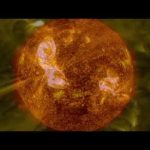
    An ESA-led mission with strong NASA participation, Solar Orbiter carries a set of ten instruments for imaging the surface of the Sun and studying the environment in its vicinity. The spacecraft will travel around the Sun on an elliptical orbit that will take it as close as 42 million km away from the Sun’s surface, about a quarter of the distance between the Sun and Earth. The orbit will allow Solar Orbiter to see some of the never-before-imaged regions of the Sun, including the poles, and shed new light on what gives rise to solar wind, which can affect infrastructure on Earth.

    More about Solar Orbiter: https://www.esa.int/solarorbiter

    ★ Subscribe: http://bit.ly/ESAsubscribe and click twice on the bell button to receive our notifications.

    Check out our full video catalog: http://bit.ly/SpaceInVideos
    Follow us on Twitter: http://bit.ly/ESAonTwitter
    On Facebook: http://bit.ly/ESAonFacebook
    On Instagram: http://bit.ly/ESAonInstagram
    On Flickr: http://bit.ly/ESAonFlickr

    We are Europe’s gateway to space. Our mission is to shape the development of Europe’s space capability and ensure that investment in space continues to deliver benefits to the citizens of Europe and the world. Check out http://www.esa.int/ESA to get up to speed on everything space related.

    Copyright information about our videos is available here: http://www.esa.int/spaceinvideos/Terms_and_Conditions

    #ESA
    #SolarOrbiter
    #WeAreAllSolarOrbiters

  • Solar Orbiter liftoff

    Solar Orbiter liftoff

    ESA’s new Sun-exploring mission Solar Orbiter lofted to space aboard the US Atlas V 411 rocket from NASA’s spaceport in Cape Canaveral, Florida at 04:03 GMT (05:03 CET) on 10 February 2020.

    Solar Orbiter, an ESA-led mission with strong NASA participation, carries a set of ten instruments for imaging the surface of the Sun and studying the environment in its vicinity. The spacecraft will travel around the Sun on an elliptical orbit that will take it as close as 42 million km away from the Sun’s surface, about a quarter of the distance between the Sun and Earth. The orbit will allow Solar Orbiter to see some of the never-before-imaged regions of the Sun, including the poles, and shed new light on what gives rise to solar wind, which can affect infrastructure on Earth.

    More about Solar Orbiter: https://www.esa.int/solarorbiter

    ★ Subscribe: http://bit.ly/ESAsubscribe and click twice on the bell button to receive our notifications.

    Check out our full video catalog: http://bit.ly/SpaceInVideos
    Follow us on Twitter: http://bit.ly/ESAonTwitter
    On Facebook: http://bit.ly/ESAonFacebook
    On Instagram: http://bit.ly/ESAonInstagram
    On Flickr: http://bit.ly/ESAonFlickr

    We are Europe’s gateway to space. Our mission is to shape the development of Europe’s space capability and ensure that investment in space continues to deliver benefits to the citizens of Europe and the world. Check out http://www.esa.int/ESA to get up to speed on everything space related.

    Copyright information about our videos is available here: http://www.esa.int/spaceinvideos/Terms_and_Conditions

    #ESA
    #SolarOrbiter
    #WeAreAllSolarOrbiters

  • Solar Orbiter launch preparations

    Solar Orbiter launch preparations

    ESA’s Solar Orbiter satellite in a cleanroom at the Astrotech payload processing facility near Kennedy Space Centre, Florida. The spacecraft is seen being mounted onto the payload adaptor ring and encapsulated into a fairing, which will protect the satellite and the rocket upper stage during the turbulent ascent through Earth’s atmosphere.

    Learn more about Solar Orbiter: http://bit.ly/ESASolarOrbiter

    The video was created with support from Airbus/Astrotech/ULA/NASA

    ★ Subscribe: http://bit.ly/ESAsubscribe and click twice on the bell button to receive our notifications.

    Check out our full video catalog: http://bit.ly/SpaceInVideos
    Follow us on Twitter: http://bit.ly/ESAonTwitter
    On Facebook: http://bit.ly/ESAonFacebook
    On Instagram: http://bit.ly/ESAonInstagram
    On Flickr: http://bit.ly/ESAonFlickr

    We are Europe’s gateway to space. Our mission is to shape the development of Europe’s space capability and ensure that investment in space continues to deliver benefits to the citizens of Europe and the world. Check out http://www.esa.int/ESA to get up to speed on everything space related.

    Copyright information about our videos is available here: http://www.esa.int/spaceinvideos/Terms_and_Conditions

    #ESA
    #SolarOrbiter
    #WeAreAllSolarOrbiters

  • NASA Administrator Bridenstine Chats with Elon Musk of SpaceX

    NASA Administrator Bridenstine Chats with Elon Musk of SpaceX

    On the latest Watch this Space, NASA Administrator Jim Bridenstine chats with SpaceX CEO and Chief Designer Elon Musk during a tour of Launch Complex 39A just before the Demo-1 launch at the Kennedy Space Center in Florida. The historic Demo-1 mission launched at 2:49 a.m. EDT on Saturday, March 2 and was the first launch of a commercially built and operated American spacecraft and space system designed for humans as part of NASA’s Commercial Crew Program.

    Learn more about the Commercial Crew program: https://blogs.nasa.gov/commercialcrew/.

  • How Do You Assemble the Largest Rocket Ever Made?

    How Do You Assemble the Largest Rocket Ever Made?

    At the Vehicle Assembly Building at Kennedy Space Center, technicians practice and prepare to stack NASA’s Space Launch System rocket. The SLS fueled-up core stage weighs around 2.3 million pounds and measures 212 feet long.

  • Orion’s service and crew modules – Finally together

    Orion’s service and crew modules – Finally together

    After a 24-hour journey from Bremen, Germany with stops in Hamburg and Portsmouth, USA, the European Service Module landed on 6 November 2018 at Kennedy Space Center in Florida.

    The shipment from Bremen to Florida is just the beginning – the first leg of an exciting journey that will boost the spacecraft to lunar orbit and back.

    The first service module is a key component that will see #Orion around the Moon for Exploration Mission-1. It will make the powerful burns required to enter and exit lunar orbit as well as softer burns to allow for space manoeuvring and course correction.
    After years of designing, building, and testing in Europe, the powerhouse that will propel NASA’s Orion spacecraft to the Moon will be mated with the rest of the spacecraft to undergo final testing before flight.

    ESA’s partnership with NASA takes the European effort to the global stage. For the first time, NASA will use a European-built system as a critical element to power an American spacecraft, extending the international cooperation of the International Space Station into deep space.

    Find out more about Orion and ESM: http://www.esa.int/orion

    ★ Subscribe: http://bit.ly/ESAsubscribe

    Check out our full video catalog: http://bit.ly/SpaceInVideos
    Follow ESA on Twitter: http://bit.ly/ESAonTwitter
    On Facebook: http://bit.ly/ESAonFacebook
    On Instagram: http://bit.ly/ESAonInstagram
    On Flickr: http://bit.ly/ESAonFlickr

    ESA is Europe’s gateway to space. Our mission is to shape the development of Europe’s space capability and ensure that investment in space continues to deliver benefits to the citizens of Europe and the world. Check out http://www.esa.int/ESA to get up to speed on everything space related.

    Copyright information about our videos is available here: http://www.esa.int/spaceinvideos/Terms_and_Conditions

  • NASA Provides Coverage of the National Space Council Meeting

    NASA Provides Coverage of the National Space Council Meeting

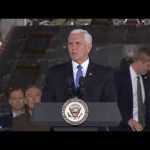
    NASA’s Kennedy Space Center in Florida hosted a meeting of the National Space Council, chaired by Vice President Mike Pence on Wednesday, Feb. 21. This was the second meeting of the council, which President Trump reestablished last year. “Moon, Mars, and Worlds Beyond: Winning the Next Frontier” included testimonials from leaders in the civil, commercial, and national security sectors about the importance of the United States’ space enterprise.

    This video is available for download from NASA’s Image and Video Library: https://images.nasa.gov/details-KSC-20180221-VP-CDC01-0001_Vice_President_Mike_Pence_National_Space_Council_Meeting_SSPF-3183467.html

  • Vice President Pence Visits Kennedy on This Week @NASA – July 7, 2017

    Vice President Pence Visits Kennedy on This Week @NASA – July 7, 2017

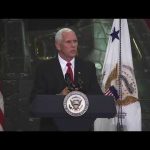
    Vice President Mike Pence spoke to employees on July 6 at our Kennedy Space Center in Florida, highlighting the public/private partnerships transforming the center into a multi-user spaceport, and changing the way we do business in low-Earth orbit. Acting Administrator Robert Lightfoot and Kennedy Director Bob Cabana accompanied the Vice President on tours of several facilities currently being leased by private space companies. The tour showcased hardware, systems and infrastructure, that will soon facilitate U.S. based astronaut launches and eventual missions to deep space. Also, SpaceX Dragon Released from Space Station, Happy July 4th from Space, and 3D-Printed Habitat Challenge!

  • Vice President Pence Visits NASA’s Kennedy Space Center

    Vice President Pence Visits NASA’s Kennedy Space Center

    Vice President Mike Pence visited NASA’s Kennedy Space Center in Florida today and addressed employees at the iconic Vehicle Assembly Building. The vice president also toured Kennedy to learn more about the center’s work as a multi-user spaceport for commercial and government clients, and he saw the agency’s progress toward launching from U.S. soil on spacecraft built by American companies. He visited the Neil Armstrong Operation’s and Checkout Building to see NASA’s Orion spacecraft that will travel past the moon, and eventually on to Mars atop the Space Launch System rocket.

  • NASA Invites Media to Talk with Cast of Hidden Figures

    NASA Invites Media to Talk with Cast of Hidden Figures

    Members of the media were invited to NASA’s Kennedy Space Center in Florida to participate in a news conference Dec. 12 with cast members from the 20th Century Fox motion picture Hidden Figures.

    The film is based on the book of the same title, by Margot Lee Shetterly, and chronicles the lives of Katherine Johnson, Dorothy Vaughan and Mary Jackson — African-American women working at NASA as “human computers,” who were critical to the success of John Glenn’s Friendship 7 mission in 1962.

  • Making Human Settlement of Space a Reality on This Week @NASA – October 14, 2016

    Making Human Settlement of Space a Reality on This Week @NASA – October 14, 2016

    An Oct. 11 opinion article written by President Barack Obama and published by CNN, outlined a vision for the future of space exploration. In it, the president echoed the words in his 2015 State of the Union address about the importance of sending humans on a roundtrip mission to Mars by the 2030s, and developing technology to help us stay on the Red Planet for an extended time. That same day in a blog post, NASA Administrator Charlie Bolden and John Holdren, assistant to the President for Science and Technology, discussed two NASA initiatives that build on the president’s vision and use public-private partnerships to enable humans to live and work in space in a sustainable way. The first was the selection of six companies to develop habitation systems as part of the agency’s Next Space Technologies for Exploration Partnerships or “NextSTEP” program, designed to lay the groundwork for deep space missions. And this fall as part of the second initiative, NASA will start the process of providing companies with a potential opportunity to add their own modules and other capabilities to the International Space Station. The move is in-line with NASA’s plan to support and foster the growing community of scientists and entrepreneurs conducting research and growing businesses in space. Also, White House Frontiers Conference, Kennedy Reopens After Hurricane Matthew, Orion Service Module Vibration Tests, SLS Liquid Hydrogen Fuel Tank Completed, and Aviation Safety Reporting System Turns 40!

  • NASA Uncovering the Secrets of Asteroids

    NASA Uncovering the Secrets of Asteroids

    NASA scientists discussed asteroids, how they relate to the origins of our solar system, and the search for life beyond Earth during this Sept. 7 event at the agency’s Kennedy Space Center, in Florida. The event was held in conjunction with other pre-launch activities related to the Origins Spectral Interpretation Resource Identification Security – Regolith Explorer, or OSIRIS-REx mission. OSIRIS-REx will be the first U.S. mission to sample an asteroid. The spacecraft is targeted to launch Sept. 8 at 7:05 p.m. EDT to the near-Earth asteroid Bennu, arriving in 2018, to survey the surface, retrieve at least 60 grams (2.1 ounces) of surface material, and return it to Earth in 2023 for study. Analysis of the sample will reveal the earliest stages of the solar system’s evolution and the history of Bennu over the past 4.5 billion years.

  • The State of NASA on This Week @NASA

    The State of NASA on This Week @NASA

    NASA Administrator Charles Bolden, speaking during his Feb. 2 “State of NASA” address at Kennedy Space Center in Florida after the release of President Obama’s Fiscal Year 2016 $18.5 billion budget proposal for NASA said, “I can unequivocally say that the State of NASA is strong.” The proposed budget is a half-billion-dollar increase over last year’s enacted budget, which, the Administrator noted, “is a clear vote of confidence to you – the employees of NASA and the ambitious exploration program you are executing.” The budget facilitates NASA’s plan moving forward, which includes development of new vehicles and technologies needed for unprecedented human missions to an asteroid and to Mars, commercial partnerships to provide transportation to and from the International Space Station from the United States and research on the station for the benefit of future deep space travelers and people living on our home planet. Also, New views of Pluto, Soil moisture mission underway and Virginia Aerospace Day!

  • Administrator Discusses the State of NASA

    Administrator Discusses the State of NASA

    During his “State of NASA” speech from Kennedy Space Center on Feb. 2, Administrator Charles Bolden touched on the agency’s scientific and technological achievements and the exciting work ahead as NASA pushes farther into the solar system and continues to lead the world in a new era of exploration.

  • “Endeavour” roars up to sky with Roberto Vittori and AMS-02

    “Endeavour” roars up to sky with Roberto Vittori and AMS-02

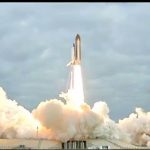
    Space Shuttle “Endeavour” was launched to space at 14:56 CEST (12:56 GMT) on 16 May from Kennedy Space Center in Florida.
    The 16-day-long STS-134 mission will deliver AMS-02, a big cosmological instrument to the Space Station and its crew includes ESA’s Italian astronaut Roberto Vittori. This is the last flight of “Endeavour”.