NASA Television’s newest offering, NASA TV UHD, brings ultra-high definition video to a new level with the kind of imagery only the world’s leader in space exploration could provide.
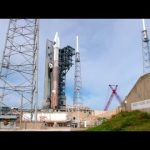
Using an array of six 4K+ cameras, Harmonic documented the Dec. 6 launch of Orbital ATK’s commercial resupply mission to the International Space Station from Cape Canaveral Air Force Station in Florida. Capturing footage at Ultra High Definition with high frame rate and in high dynamic range (HDR) options.
The company then post-produced the footage into a program showcasing the entire launch process for airing on NASA TV UHD.
During a post-launch press conference on June 28, mangers from SpaceX and NASA discuss the mishap following the liftoff of the SpaceX CRS-7 mission from Space Launch Complex 40 at Cape Canaveral Air Force Station. The mission was to deliver supplies, hardware and other important cargo to the International Space Station. SpaceX is leading the investigation of the cause of the issue.
Anyone who spots debris in the water or sees it washed up anywhere along the shore should report it by calling 866-392-0035 or emailing recovery@spaceX.com or contacting your nearest local law enforcement official.
NASA and commercial partner SpaceX discussed its plans for a launch of its seventh cargo delivery to the International Space Station under the agency’s Commercial Resupply Services contract. The company’s Falcon 9 will carry its Dragon cargo spacecraft to the station from Space Launch Complex 40 at Cape Canaveral Air Force Station in Florida and be filled with more than 4,000 pounds of supplies and payloads, including critical materials for the science and research investigations that will occur during Expeditions 44 and 45.
The science payloads aboard will offer new insight to combustion in microgravity, perform the first space-based observations of meteors entering Earth’s atmosphere, continue solving potential crew health risks and make new strides toward being able to grow food in space. Research continues to support the twins study and one-year mission investigations with NASA Astronaut Scott Kelly. This mission also is launching more than 30 student experiments, all of which are flying under the U.S. National Laboratory managed by the Center for the Advancement of Science in Space (CASIS).
The first of two International Docking Adapters for the station will be delivered in Dragon’s unpressurized trunk. The adapters will enable space station docking of commercial crew spacecraft, including the Boeing CST-100 and SpaceX Crew Dragon. Expedition 44 Flight Engineer Scott Kelly of NASA will use the station’s Canadarm2 robotic arm to reach out and capture Dragon with Station commander Gennady Padalka of the Russian Federal Space Agency (Roscosmos) supporting Kelly as they operate from the station’s cupola. After more than five weeks at the space station, the spacecraft will return with more than 1,400 pounds of cargo, including science experiments, crew supplies, hardware and computer resources, space station hardware, and trash.
In its quarter-century in orbit, the Hubble Space Telescope has transformed the way we understand the Universe, helped us find our place among the stars, and paved the way to incredible advancements in science and technology. The Hubble story is a human story. Hubble overcame much adversity early on in its mission and demonstrated the great heights NASA is capable of achieving against all odds. Much of that is thanks to the “Hubble Heroes”, including scientists, engineers, and the brave astronauts who flew five Space Shuttle missions to service Hubble.
Join NASA Television in celebrating the 25th anniversary of the Hubble Space Telescope in orbit April 24, 2015.
During a ceremony at Kennedy Space Center on Monday, July 21, NASA renamed the center’s Operations and Checkout Building in honor of late astronaut Neil Armstrong, who passed away in 2012. The ceremony included NASA Administrator Charles Bolden, Kennedy Center Director Robert Cabana, Apollo 11’s Michael Collins and Buzz Aldrin and astronaut Jim Lovell, who was the mission’s back-up commander. International Space Station NASA astronauts Steve Swanson, who is the current station commander, and Reid Wiseman, also took part in the ceremony via satellite downlink from their orbiting laboratory 260 miles above Earth.
Kennedy’s Operations and Checkout Building has played a vital role in NASA’s spaceflight history. It was used during the Apollo program to process and test the command, service and lunar modules. Today, the facility is being used to process and assemble NASA’s Orion spacecraft, which the agency will use to send astronauts to an asteroid in the 2020s and Mars in the 2030s.