Tag: Laboratory

  • Destiny laboratory – a day in the life of Thomas Pesquet

    Destiny laboratory – a day in the life of Thomas Pesquet

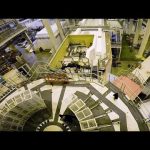
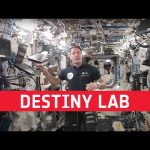
    ESA astronaut Thomas Pesquet is sharing scenes from life on board the International Space Station during his second mission “Alpha”. He shared this video moving through NASA’s Destiny laboratory, detailing the elements of a normal day in the research module.

    From the exercise bike to the robotics workstation and all the research facilities, Thomas shows how astronauts work in the US space laboratory.

    Over 200 experiments are planned during Thomas’ time in space, with 40 European ones and 12 new experiments led by the French space agency @CnesFrance.

    Follow Thomas: http://bit.ly/ThomasPesquetBlog

    ★ Subscribe: http://bit.ly/ESAsubscribe and click twice on the bell button to receive our notifications.

    Check out our full video catalog: http://bit.ly/SpaceInVideos
    Follow us on Twitter: http://bit.ly/ESAonTwitter
    On Facebook: http://bit.ly/ESAonFacebook
    On Instagram: http://bit.ly/ESAonInstagram
    On Pinterest: https://bit.ly/ESAonPinterest
    On Flickr: http://bit.ly/ESAonFlickr

    We are Europe’s gateway to space. Our mission is to shape the development of Europe’s space capability and ensure that investment in space continues to deliver benefits to the citizens of Europe and the world. Check out https://www.esa.int/ to get up to speed on everything space related.

    Copyright information about our videos is available here: https://www.esa.int/ESA_Multimedia/Terms_and_Conditions

    #ESA
    #ISSTour
    #ThomasPesquet
  • Meet the Experts: Laboratory in Space

    Meet the Experts: Laboratory in Space

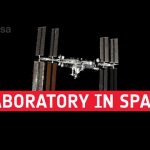
    Flying 400km above our heads, the International Space Station (ISS) is the world’s laboratory in space. But what kind of research is done there and how does it affect our lives on Earth? ESA expert Dr. Jason Hatton discusses notable research from the ISS and how the unique location of this facility allows us to explore never-before-seen phenomena in this episode of Meet the Experts.

    Find more episodes in the series here: https://www.esa.int/Education/Expedition_Home/12_-_18_years_old

    ★ Subscribe: http://bit.ly/ESAsubscribe and click twice on the bell button to receive our notifications.

    Check out our full video catalog: http://bit.ly/SpaceInVideos
    Follow us on Twitter: http://bit.ly/ESAonTwitter
    On Facebook: http://bit.ly/ESAonFacebook
    On Instagram: http://bit.ly/ESAonInstagram
    On Flickr: http://bit.ly/ESAonFlickr

    We are Europe’s gateway to space. Our mission is to shape the development of Europe’s space capability and ensure that investment in space continues to deliver benefits to the citizens of Europe and the world. Check out http://www.esa.int/ESA to get up to speed on everything space related.

    Copyright information about our videos is available here: http://www.esa.int/spaceinvideos/Terms_and_Conditions

    #ESA
    #MeetTheExperts
    #ExpeditionHome

  • OPS-SAT: the flying laboratory

    OPS-SAT: the flying laboratory

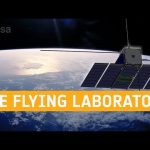
    On 17 December, ESA will launch a first-of-its-kind space laboratory, OPS-SAT. The small, low-cost test satellite has been specifically designed for operational experiments in space, and includes the most powerful flight computer on board any current ESA spacecraft.

    Consumer electronics have gone through a revolution over the last 30 years with computers becoming ever faster, smaller and better. But when it comes to million- or even billion-euro satellites, their onboard hardware and software have not seen this revolution because of the risks of testing new technology in flight.

    As spacecraft managers dare to fly only tried-and-tested hard and software in the harsh conditions of space, innovation on the operational side of satellites is a very slow-moving process. This is where OPS-SAT steps in, bringing down the barriers to spacecraft operations it provides a chance to safely test out new mission control techniques.

    Anyone can apply to become an ‘experimenter’ and test their innovative software and new mission operations techniques in space. Proving technology for future missions and paving the way for satellites to further evolve with minimum risk, OPS-SAT will be launched with ESA’s Cheops satellite from Europe’s Spaceport in Kourou, French Guiana.

    ★ Subscribe: http://bit.ly/ESAsubscribe and click twice on the bell button to receive our notifications.

    Check out our full video catalog: http://bit.ly/SpaceInVideos
    Follow us on Twitter: http://bit.ly/ESAonTwitter
    On Facebook: http://bit.ly/ESAonFacebook
    On Instagram: http://bit.ly/ESAonInstagram
    On Flickr: http://bit.ly/ESAonFlickr

    We are Europe’s gateway to space. Our mission is to shape the development of Europe’s space capability and ensure that investment in space continues to deliver benefits to the citizens of Europe and the world. Check out http://www.esa.int/ESA to get up to speed on everything space related.

    Copyright information about our videos is available here: http://www.esa.int/spaceinvideos/Terms_and_Conditions

    #ESA
    #OPSSAT
    #Satellite

  • ESA astronaut Luca Parmitano talks science in space

    ESA astronaut Luca Parmitano talks science in space

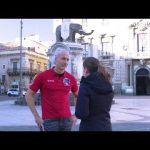
    From ESA astronaut Luca Parmitano’s hometown in Catania, Italy, Luca talks about the science he ran on the International Space Station.

    The European laboratory Columbus was launched in 2008 and offers scientists a permanent place in space to conduct research that is out of this world.

    Luca’s first spaceflight was in 2013 with Russian cosmonaut Fyodor Yurchikhin and NASA astronaut Karen Nyberg. He conducted over 20 experiments during the Volare mission as flight engineer for Expeditions 36 and 37 and he was the first of ESA’s new generation of astronauts to fly into space.

    Luca talks about space research, being a human guinea pig, dieting to avoid bone disease osteoporosis, human physiology, using ultrasound remotely to diagnose back problems, measuring eye pressure and how his body and mind reacted to living in weightlessness.

    Luca is set for a second mission to the International Space Station in 2019.

    Follow Luca and his adventures in space and on Earth via http://lucaparmitano.esa.int

    More about Columbus here: http://www.esa.int/Columbus

  • ESA Euronews: Mars on Earth

    ESA Euronews: Mars on Earth

    The Rio Tinto river snakes through the Spanish countryside for 100 kilometres, a dark, blood-red stain of acid water and rusty-looking rocks that scientists love to study. Both ESA and NASA experts regularly spend weeks in the Rio Tinto, examining the life underground, and using it as a test bed to look for life on Mars.

    This video is also available in the following languages:
    German: https://youtu.be/K2D8T5i_Myk
    French: https://youtu.be/7cynIaX5O0I
    Italian: https://youtu.be/LOYgvHSR84g
    Spanish: https://youtu.be/YI9Prr0ZVrw
    Portuguese: https://youtu.be/VSDmRn-rRTE
    Greek: https://youtu.be/7KW2SJc2Yjo
    Hungarian: https://youtu.be/M0c6Ev63acs

  • ECSAT: Space for daily life

    ECSAT: Space for daily life

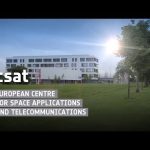
    ECSAT (European Centre for Space Applications and Telecommunications) is the European Space Agency’s centre in the UK. With a commercially driven ethos, it supports European and Canadian industry in developing commercial satcom products and services, downstream applications and the ‘spin-out’ of space into non-space sectors.

    ECSAT also the home of ESA’s Climate Office and has units dedicated to space exploration and technology development, one of which oversees the ESA–Rutherford Appleton Laboratory Advanced Manufacturing Laboratory.

    More about ECSAT:
    http://www.esa.int/About_Us/Welcome_to_ESA/ECSAT

  • ESA-RAL Advanced Manufacturing Laboratory

    ESA-RAL Advanced Manufacturing Laboratory

    Located on the UK Space Gateway, Harwell Campus, the ESA-RAL Advanced Manufacturing Laboratory provides expertise and test services to investigate and optimise advanced materials and manufacturing processes in support of cutting-edge research and development. The facility is physically located within the Science and Technology Facilities Council’s Rutherford Appleton Laboratory (RAL).

    The laboratory takes in samples of material destined for future space projects and puts them through various tests. A wide range of material properties and characteristics can be investigated in order to provide recommendations on how the materials can best be applied or improved before they can be considered for further development and used in a fully-fledged space mission. It has access to a metal-based 3D printer and is equipped with a suite of powerful microscopes, an X-ray CT machine and a range of furnaces.

    Mechanical testing such as tensile and micro hardness testing is also performed.The lab is a gateway to accessing some of the extensive on-site testing facilities based on Harwell Campus, such as STFC’s ISIS Neutron Source, the Diamond Light Source synchrotron and the UK’s Central Laser Facility.

    More about the new lab on our website:
    http://www.esa.int/Our_Activities/Space_Engineering_Technology/New_lab_for_advanced_manufacturing_techniques_and_materials

  • Space Station 360: Kibo

    Space Station 360: Kibo

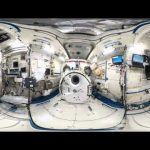
    Explore Japan’s Kibo space laboratory with your mobile phone or VR headset in this panorama.

    This 360° panorama lets you explore the International Space Station’s seventh module, Kibo. It was launched in three parts in 2008 and 2009 aboard Space Shuttles Atlantis and Endeavour.

    The laboratory is renowned for its volume and extra features such as its external robotic arm, an airlock to send experiments outside, and an external facility to expose experiments to space. Nanosats can be launched from Kibo through the airlock, making the Station a base for deploying satellites as well as a weightless research centre for biology, physics and medicine.

    Explore Kibo in YouTube, Flickr or Facebook format with your mobile phone and virtual-reality headset, or take the full tour including all Space Station modules with videos and extra information below. We will release a new Space Station module in 360° every week on Thursday.

    Flickr:
    https://flic.kr/p/FvFV6t

    Facebook:
    https://www.facebook.com/EuropeanSpaceAgency/videos/10153487683065667/

    Full tour:
    http://www.esa.int/Our_Activities/Human_Spaceflight/International_Space_Station/Highlights/International_Space_Station_panoramic_tour

  • NASA-TV’s Curiosity Landing Coverage Begins Aug. 5

    NASA-TV’s Curiosity Landing Coverage Begins Aug. 5

    The Mars Science Laboratory, the hardest mission ever attempted in planetary robotic exploration is about to prove its mettle with the landing of its Curiosity rover on the Red Planet. Live coverage begins at 11:30 p.m. Eastern on NASA TV.

  • ESTEC: ESA’s Space Research and Technology Centre

    ESTEC: ESA’s Space Research and Technology Centre

    ESTEC: ESA’s Space Research and Technology Centre

  • Challenges of Getting to Mars: Curiosity’s Seven Minutes of Terror

    Challenges of Getting to Mars: Curiosity’s Seven Minutes of Terror

    Team members share the challenges of Curiosity’s final minutes to landing on the surface of Mars.

  • Mars Science Laboratory Curiosity Rover Animation

    Mars Science Laboratory Curiosity Rover Animation

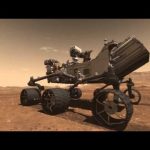
    This 11-minute animation depicts key events of NASA’s Mars Science Laboratory mission, which will launch in late 2011 and land a rover, Curiosity, on Mars in August 2012. A shorter 4-minute version of this animation, with narration, is also available on our youtube page.

  • Columbus: ESA’s real estate’ in space

    Columbus: ESA’s real estate’ in space

    In February 2008, the Columbus module was launched on the Space Shuttle Atlantis, creating space history when it was attached to the International Space Station as the first European laboratory dedicated to long-term research in microgravity.