Tag: large

  • How the Large Magellanic Cloud survived a galactic collision! 🌌

    How the Large Magellanic Cloud survived a galactic collision! 🌌

    Did you know the Large Magellanic Cloud, one of our galaxy’s closest neighbors, survived a dramatic collision with the Milky Way’s gaseous halo? Despite losing most of its gas, the Large Magellanic Cloud is still forming new stars—a testament to its resilience! Thanks to Hubble Space Telescope, astronomers measured the Large Magellanic Cloud’s halo for the first time, revealing incredible insights about galaxy interactions.

    📹 ESA – European Space Agency
    📸 NASA, ESA, R. Crawford

    #ESA #Hubble #LargeMagellanicCloud
  • Large antenna deployment

    Large antenna deployment

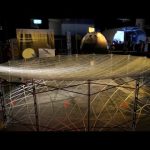
    A 5 m-diameter antenna reflector, designed for orbital operations, seen during a test deployment during ESA’s latest Large Deployable Antenna Workshop.

    Large-scale antenna reflectors are increasingly required for telecommunications, science and Earth observation missions.

    This metal mesh reflector has a ‘double pantograph’ design to form a deployable ring. Once deployed it tensions two opposing, but connected, parabolic shaped nets, one on the top and one on the bottom.

    Read more here: http://www.esa.int/spaceinimages/Images/2016/11/Large_antenna_deployment

  • Paxi in the Large Diameter Centrifuge

    Paxi in the Large Diameter Centrifuge

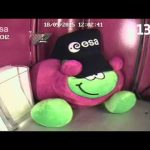
    ESA Education mascot Paxi was placed in a Large Diameter Centrifuge gondola which normally houses researchers’ and students’ experiments at ESA’s ESTEC establishment. As the centrifuge starts spinning, the relative g-levels within the gondola increase and this causes Paxi’s weight to increase. At 20 g, Paxi weighs 20 times what he normally does on Earth. As the centrifuge spins down, the g levels decrease and eventually when the centrifuge stops, return to normal.

  • ESA ESTEC Large Diameter Centrifuge

    ESA ESTEC Large Diameter Centrifuge

    Video of the ESA ESTEC LDC from the central gondola, accelerating and decelerating.

    Credits: Life & Physical Science, Instrumentation and Life Support Laboratory, TEC-MMG Department